Ep. 37: The Power of Purpose and Cause in Running: Carlie Bixler
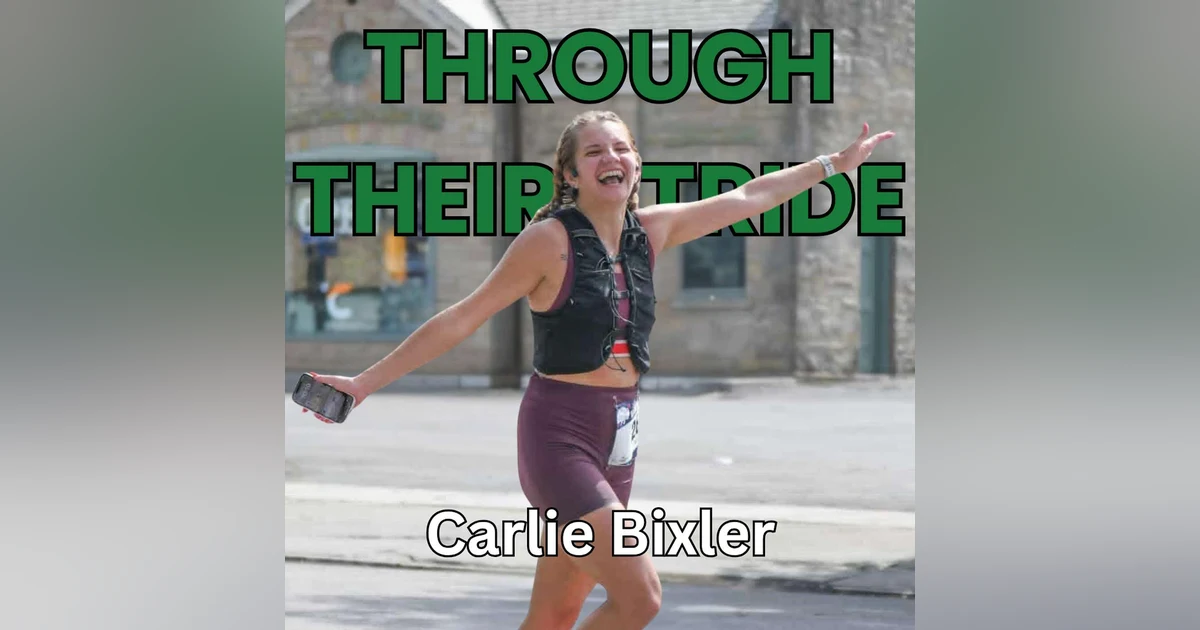
What does it mean to run for something bigger than yourself? In this episode, I sit down with Carlie Bixler, a marathoner and key part of the Run Uplifted community in Georgetown who's taking her running all the way to the Copenhagen Marathon as a charity runner for #StacheStrong, raising money for brain cancer research. Carlie shares how her perspective on running has been shaped by the people in her life, from family members affected by cancer to her mother's ongoing recovery from a brain...


What does it mean to run for something bigger than yourself?
In this episode, I sit down with Carlie Bixler, a marathoner and key part of the Run Uplifted community in Georgetown who's taking her running all the way to the Copenhagen Marathon as a charity runner for #StacheStrong, raising money for brain cancer research.
Carlie shares how her perspective on running has been shaped by the people in her life, from family members affected by cancer to her mother's ongoing recovery from a brain aneurysm. Her story is a powerful reminder that running can be about so much more than pace and performance. When you run for others, you learn more about resilience, gratitude, and showing up while you still can.
We talk about community, purpose, and what it looks like to run with meaning behind every mile. If you've ever needed a reason to keep going, this one hits.
- Find more about Run Uplifted: https://www.upliftedmovementpt.com/run-uplifted
- Donate to Carlie's endeavors: https://www.givengain.com/project/carlie-raising-funds-for-stachestrong-113543
- Follow Carlie on Instagram: https://www.instagram.com/carlierunsamarathon/
#running #podcast #runner #runningmotivation #texasrunners
Gives me that that greater sense of purpose. And and a lot of the time, you know, people have mantras when when they're down bad, when you're, you know, not making it through. And that's really one of the things that, you know, when I'm having my hardest moments on my runs and I want to quit. And I'm thinking to myself, you know, people that are going through this don't get the chance to quit. They don't they don't pick their heart. They are showing up every day. And if you can't make it through a half mile tired with both of your legs and your full brain, like, come on now. Like, like, let's get going. And I think that that's much more of a motivator than just having a personal, just trying to get a PR, you know. So that that has really pushed me along, and I think will be carrying me through the marathon.
SPEAKER_00Welcome back to Through Their Strive. I'm your host, Sam Sutton, and today's episode is one I've really been looking forward to. I'm joined by Carly Bixler, a marathoner who's also deeply involved in the Run Uplifted TX running group in Georgetown and plays a big role in helping grow and support that group. But what really makes Carly's story stand out right now is what she's training for. She's headed up to the Copenhagen Marathon as a charity runner for Stash Strong, raising money for brain cancer research. And her why behind that is incredibly powerful. From family members affected by cancer to her mom's ongoing recovery from a brain aneurysm, Carly brings a perspective that goes way beyond pace and finish lines. It's about resilience, gratitude, and not taking a single run for granted. Her mantra says it all. One day I will not be able to do this again, but that day is not today. So today we're going to talk about her journey in running, the role community has played through Run Uplifted TX, and what it means to run for something bigger than yourself. Let's get into it. Welcome back to Through Their Stride. And on today's episode, I am joined by Carly Bixler. Is that how you say your last name? Is that correct? Yes. Yes. Thank you. Awesome. I was hoping I didn't butcher that.
SPEAKER_03No.
SPEAKER_00Um well, Carly, I've been uh following you for a while now and kind of seeing your your times drop. And I'm I'm was been pretty impressed with your story and your running story. So before I talk more about you, can you introduce yourself and talk a little bit about yourself?
SPEAKER_02Sure. Thanks for having me. Yeah, my name is Carly. I am a recreational runner. I live here in Texas. Um, I really got started really with my running journey when I moved here to Texas. So um perfect time to start when I moved to a climate that is 100 degrees every day, which I was really not used to. But um I think, you know, and maybe we'll get into a little more of this later, but I think it was a really great way for me to meet people in Texas. And I'm a military spouse, so moving around a lot, you know, is our third move in six years here to Texas. So really good way to just kind of integrate yourself into a new community and and meet people, and that's kind of how I started my running journey.
SPEAKER_00Awesome. Where did you uh where did you move to Texas from?
SPEAKER_02We came to Texas from Tennessee. So we were just outside of Nashville at the base there. Prior to that, we'd been in Georgia at the base in Augusta. Um, and prior to that we'd been in Seattle, so we were bouncing around a lot.
unknownYeah.
SPEAKER_00So you've been in some relatively warm climates in Tennessee and Georgia, but nothing, nothing like Texas.
SPEAKER_02Right. Yeah, I grew up from New York, so I was born and raised really in in cold weather seasons, which we do not get here.
SPEAKER_00Yeah, no, we just get that one spout of cold in the winter, like that one week, and then that's all.
SPEAKER_03Yeah, and and the recent rain for one week a year. Yeah.
SPEAKER_00Yeah. Which I mean, thankful, thank, thankful for the rain, because my grass has never been this green.
SPEAKER_02True.
SPEAKER_00True. Yeah. Well, cool. Well, um, how did so um did you always have like a relationship with sports? How did the uh how did running find you? Did you uh or how did you find it? Um was it a background that you had?
SPEAKER_02So I did running in high school, uh, which is so long ago now, and then never anything that I did seriously, I was never good enough to be a collegiate athlete or anything. But when I was in college, I wanted to continue some form of physical fitness, and so I took it upon myself to join the rugby team because I thought, you know, that requires a lot of running. Um but a lot of a lot.
SPEAKER_01I broke my collarbone doing that, and then I kind of quit sports for a while.
SPEAKER_02So that um was kind of like my gateway out of sports, out of running. I hadn't really done anything for a while. Um and then, you know, COVID hit. We had moved here right after that, and I think I was feeling like I really didn't have a lot of structure. I did not have a lot of community. You know, I need to do something to get my butt moving. And I started running again. And I think it was more so setting a goal for myself was I went ahead and I just signed up for the San Antonio marathon when we moved to Texas. Oh, I was like, all right, this is what I'm gonna do. I'm gonna run, I'm gonna meet people. I, you know, so that's kind of a way to motivate myself back, not only into running, but back also into integrating with society, integrating with community, um, things like that.
SPEAKER_00Yeah, and that was probably back when it was the rock and roll marathon. So that's was a much different course. Yeah, that's awesome.
unknownYes.
SPEAKER_00I had a friend, I had a friend run the rock and roll uh back in 20, was 2024 that last year they did it.
SPEAKER_02Um I think yes, because I think, yes, my first marathon was in December of 2023, and then I think the following year was the last year that they did the rock and roll.
SPEAKER_00Yeah, she uh she said she liked the rock and roll course. I um I I never got to run it, but um, I'm curious to see what the new course is and and what people think about it as years go on. Um well, cool. And then uh, so did you because you and I are both coached by Lauren McGetterick, who's been on the podcast um several episodes ago, but um so did you originally get coached by her or like how did y'all meet and how did that connection go?
SPEAKER_02Yeah, so Lauren and I met through the run club here in Georgetown, Texas, which is Run Uplifted. And she and two of our friends, um the Dr. McGraths, coding Caitlin McGrath, they own a PC clinic here in Georgetown. And I think they and Lauren really saw a need. You know, the running community in Austin is visibly large, visibly oversaturated. Um, but we live in a little suburb here outside of Austin that unless you want to hike an hour a day there and back just to go for a run, you know, you're kind of stuck on your own. So there was really a need here, and I think they saw that and kind of took it upon themselves to fill that with um our run club run uplifted. So they had started advertising for that at the beginning of 2024 and kicked that off. And that was just around the time I had just run my first marathon and really had no idea what I was doing whatsoever. You know, just did my first marathon, kind of showed up, completely hit the wall, um, but kind of had caught that bug of like, okay, I've done this. I didn't do it very well, and I know that I can do it better. So let's do it again. Um, so you know, I was really looking kind of at that time for a community for people that could help me kind of figure this out. And so I had found that they had just started advertising for that. And day one, the very first run, I showed up um in Georgetown. And I think at that time there was maybe like four of us that showed up to the first run. And so that's where I met Lauren. Um, and she was she's great. Obviously, Nora, she's amazing. She's been on the podcast. Um, and I think I think it's a really important thing. Like I talked in the beginning about you know, building community and and things like that. And, you know, Lauren is a run coach. Cody and Caitlin are physical therapists, like they bring so much to the community, and that's really what I've learned over the past couple of years. That in the time, you know, if you keep showing up, the community is gonna show up for you. It it goes, I love that phrase that's you know, everyone wants a village, but not everyone wants to be a villager. And I think I really find that a lot, especially in this community, especially through Run Uplifted, is if you're willing to be a villager, if you're willing to consistently show up, um, people are gonna show up for you. And that's really what I found. You're showing up, that's how I met Lauren. That's how she got into coaching me. Um, and uh yeah, I guess that's that story.
SPEAKER_00Awesome. And um, so uh you brought it up a second ago, but before um before we talk about Run Up Lifted, um, you talked about your first marathon and you were like, I could do it better than that. That was horrible. I love to hear people's first marathon stories. So can you talk a little bit about what that race was like?
SPEAKER_02Yeah, yeah. I mean, at that time, which I do think is maybe the experience of a lot of people, is that really your first marathon, you're just trying to survive. Um, you know, I really didn't know much about nutrition at that time. I did not know much about, you know, I was worried I wore camelback the entire time because I was worried that I was gonna dehydrate and I didn't really have any time goals. It was just to get across the finish line. And I went into the race, not really with a pacing plan. Went out too fast, as you know, tail is old as time people do. And at mile 20, I was done. I was walk running.
SPEAKER_01I was like, all I have to do is just, you know, walk six more miles and get across the finish line. Um and I made it. I did. Was it a great experience for me? Not really.
SPEAKER_04Yeah.
SPEAKER_02But I do think that looking back on it, it is kind of what fueled my run running journey because you can look at that one of two ways. You know, I've done one marathon, it was terrible, that was enough for me, or I've done one marathon, and I know that these are all the things that I can fix now, and let's go do it again.
SPEAKER_00Yeah. I think from what I hear from a lot of people, it's like you tell yourself never again, like the day after. You're like, I'm good, like that's that's set, and that's how I was too. I ran Austin for my first in 2023. And I think I ran it like six hours and 50 minutes because I had no idea about fueling, like I was relying on course hydration, so all I had was like I kept getting the noon electrolyte water instead of like regular water, and I got and so again, like just like you, the mile from mile 20 to 26, it was just like, okay, I'm gonna suffer for six miles and we're gonna get through this, and it's gonna be fine. Yes, but every time you say never again, and then like the third day you're like, uh maybe, and then like a week after you're like, nah, I'm signing up with it for another one.
SPEAKER_02Oh, wait, who said they're signing up? Okay, fine.
SPEAKER_00Exactly. Well, cool. And then so let's go back to to run up lifted. So you uh weren't the original founder, but you've been a big promoter, a big you know, part of their group. So, how has building that been and uh what have you seen grown in the community of Georgetown through that Red Club?
SPEAKER_02Yeah, I think I mean it's crazy now. Like to me to see the growth in the past couple of years, just on a Saturday now. I think you know, we have 50 to 100 people showing up, which you know, I said in the beginning there was maybe only five of us on a Saturday. Um, but I think really, you know, it was a niche that needed to be filled of people that didn't want to drive to Austin. But also like showing up for a run club, I think is a lot of the same principles of showing up for yourself and running. And really, it's a place where, you know, you learn to show up even when things are uncomfortable, even when it's not ideal, even when it's lonely, when it's intimidating. Those are all things that if you don't want to go to a run club, it teaches you to do that. But those are things in running that you're overcoming when you show up to a race or you're setting a hard goal or doing any of those kinds of things. And it's easier when you're not doing it alone. It's easier to get up on a 5 a.m. and on a Saturday and run 18 miles when you know someone else is gonna be waiting there. It's accountability. So I think that that has been a huge game changer for me because running up and down the Georgetown trails alone for 20 miles by yourself isn't so fun. Um, but I think that you know, community happens and community builds when you keep showing up and other people show up for you. Um and again, you you know, you're building that village and it's I think that we have kind of as a society shifted towards you know more introversion and doing whatever is best for you and not inconveniencing yourself in the slightest, which I totally support protecting your peace. So I'm not saying anything that against that at all, but I also think that in order to be a part of something bigger than yourself, you're gonna have to be inconvenienced at times, you know. Like, for example, you know, run-up lifted meets three times a week. At this point, I pretty much change my weekly schedule so that I can go to all of these runs because it's important to me. And I work from home. I am not a person that needs to run at 5 a.m. on Thursday mornings because I have to drive or I have to take my kids to school. But there are other people that are in that position. And so I get up on Thursday mornings and I go because I think it's important to show up for people, and then in return, you know, there's people that maybe don't need to show up on at 5 a.m. on a Saturday, and they show up for me. So um I I have really felt a lot being a presence in this community, and it's really meant a lot to me. Um, and it's really shown with the growth of the group.
SPEAKER_00Yeah, I love that. I um it's something my wife said actually to me yesterday about like, you know, every day is a gift. It's you know, it's a gift that that you're given. And one of the ways that you can like be show grateful and gratitude for the gift is showing up for others and being a gift in somebody else's life. And like, you know, giving back to someone in whatever way you can. And with a run club like this, you know, you're like, man, it is five o'clock in the morning. I would rather sleep. I don't work till 8 a.m. I'm working on my computer in my house, like, no, thank you. But you're like, but other people are gonna get a lot out of this, and maybe I'm the only one who shows up today. So like I could be the one who's just running with this person, or you know, it's a whole group of people and it lifts someone's spirits. So I think that's pretty amazing.
SPEAKER_02Yes, yes, people make fun of me because I am always saying, you know, there are people, and I guess this also ties into the the stash strong thing, but there are people who don't get to choose their heart, you know. And if I get to choose what my heart is, and my heart is waking up at 5 a.m. or my heart is running 12 miles, you know, that's a choice that I'm able to make. And there's other people that that are going through way harder things that they didn't get to choose. And so I like to keep that in mind. I always say, like, we get to do hills today, we get to do track repeats today, and then people laugh at me.
SPEAKER_00Yeah, they never really understand it the way the way we understand it sometimes. Well, cool. And so that's a natural transition into Stash Strong. I see you're wearing the Stash Strong t-shirt. So I love that. And I um I read your most recent, I guess it's your pinned post on your Instagram um about like your your passion for raising money to help people in need. But talk a little bit about what Stash Strong is, how you got into it, and why you why you wanted to do it.
SPEAKER_02Yeah, yeah. So Stash Strong is is a nonprofit. They raise money for brain cancer. That's the the shortened version. Um, but the CEO, his name is Colin Gurner, and he lost his brother to glioblastoma, GJ. And the reason why I I heard about it or I know about it is because they're both alumni of the same university as me. We went to school at the University of Albany in New York. And so as GJ was going through his his battle with brain cancer, his brother Colin really started this foundation to support GJ. And it started really was just fundraising kind of at a grassroots level in in upstate New York at our our college and you know in New York City later on, and it's really grown so significantly. But again, um I'm really uh tying this in here all with community, but that's kind of how I found out about it. And it was really an anchor to my college community. Um, a lot of people were very, very involved in this, and it was, you know, kind of a sense of grief in a place where people could belong and bring people together for a cause or a purpose. And again, like showing up for something that's bigger than yourself. I think that when I'm fundraising on behalf of this cause, that's my way of contributing to to this community, this village, something that's bigger than me. Um, and so that's really why I decided to run. So, like I said, it's it's grown immensely. They started doing marathon teams in the United States a few years ago. Most recently, Colin just ran the Boston Marathon. So that was very exciting. He um he was the second largest individual fundraiser. He raised over$260,000 for the Boston Marathon just on his own. So they're doing great things. Um, I mean, just the Boston Marathon team alone is able to fund a$1 million uh research grant at Mass General next year for brain cancer. So I mean that's it's really it's moving the needle. It's it's really changing things. And to see the CEO, you know, doing things like that, and and you see the real life impact with the grants and the research and things like that, it's I find it very inspiring. Um, and so when they said that they were having an international marathon team and they were looking for folks to run internationally, I was like, yes, sign me up. I'm I'm ready. So it's it's coming up soon. I'm running Copenhagen on behalf of the team, and that's May 10th.
SPEAKER_04So wow, real soon.
SPEAKER_02In the thick of my taper right now. That's probably why I'm smiling if not.
SPEAKER_03Yeah. Yeah, I'm I'm getting gearing up for that.
SPEAKER_00So yeah. Cool. Um, and when you when I read the post, what I liked most about it is you wrote in there um like you didn't really feel like you had a direct connection personally to cancer at first. And then you were like, Well, actually, you know, I had some family who have gone some gone through cancer. You had uh, I think it was your grandfather who um who had gone through it, and uh, and then your um I can't remember all the people now. I'm like drawing a blank, but you had some cancer survivors in your family and and some people who did not survive, unfortunately. And so, but you you're like, well, it's not really the cancer that is the most remarkable thing about them. And I love that you see people more than just just cancer. So, like, can you talk a little bit about that and what uh what what made you decide like I really want to be a part of this because like these people are remarkable and they deserve to have great lives.
SPEAKER_02Yeah, yeah, that's a a great point. You know, when when I was thinking about joining the marathon team, I sort of saw myself as you know unworthy because you know, Colin had just gone through this major life event with GJ, and I was like, you know what? I I don't I didn't personally go anything through anything like that with a family member, you know, maybe this isn't the place for me. Um, and then as you said, I kind of started thinking more about it. And I was like, you know, I I have, I've known a lot of people just as an example, my aunt that lives here in Georgetown, she went through a long battle with with breast cancer, but I don't mean to diminish what she went through, but when I look at her, that's not what I think about. I don't think about someone that went through this battle with cancer. I think about someone that's showing up for me every single day. I think about someone that, you know, I was sick last week and she dropped off Mexican food at my door and didn't even tell me until later because she was like, You're probably sleeping. And, you know, these people, everyone is fighting a battle, right? And it really hit home to me when I started seeing it from that perspective of I can show up for people who are fighting a battle that may not be fighting it loudly. Or something else that I wrote about in the bio was that although it wasn't cancer, my mom has had a traumatic brain injury, you know, which could can have similar effects. Of glioblastoma, and that is something that you know she's had several brain aneurysms and has had to learn relearn to walk and talk and do all these things, and that's something that she fights against every single day. Um, is relearning all those skills. And if these people are showing up for me every single day and giving me everything that they have, it's really not that hard for me to show up in a way for them that even minimally can push forward the needle on research or things like that.
SPEAKER_00So that's amazing. Well, as someone who just lost their their mom to cancer, you know, it's uh it's something that like makes me kind of tear up a little bit because it's like these, you know, they are fighting their own battles and there's like there's nothing they can do about like surviving cancer at some point, you know what I mean? Like it's gonna take over, it's gonna you're gonna lose your life. But like people like you and people like this team, you know, they're they give they give the world hope. Like it's you know, you like there's a hope that someday uh less people are gonna have to, you know, to go through this. And so I think that's that's super inspiring. So I I think I I just had uh a lady named Dorina Carillo on last week who's been uh raising money for for cancer and uh during her um uh six star finish, she raised like tons of money for for cancer, and like it's it's people like y'all that I'm like, man, that's so inspiring, and it's just incredible. So thank you.
SPEAKER_02Yes, yes, you're gonna make me cry too. I I saw that on your profile, and and you know, one of the things um Colin, when he finished the Boston Marathon, you know, he said it it at this point it's not helping my brother, right? My brother has passed, but it will help the next brother. And that really was a powerful statement to me because it kind of puts it in perspective of what are we doing this for? To your point, you know, people we've lost people or maybe people that we've known, it's not helping at this point, but the grants will help. Research will help, um, and there's there's hope, right?
SPEAKER_00So yeah, I think um, and it's like like I don't know if if you're a believer or not, but like uh, you know, they can like their spirit sees that, you know what I mean? Like you are the the work that people are doing, it's like you know, they they are smiling down in my opinion, saying, like, you know, this is I'm so glad to see this, you know.
SPEAKER_02I have to tell you something because you brought that up. Um I was just texting Lauren last night about I I don't know if you've heard about like angel numbers or like signs. And so the concept behind the angel number is that you know, if you ever look at a clock or you're doing something and you see three numbers in a row, that's kind of a sign from the universe or a sign from heaven, or you know, whichever whichever way you interpret it. And um, you know, I've kind of been feeling really nervous about Copenhagen and I have really big goals for the run. And I was looking last night. I I have to learn kilometers because I don't know kilometers because I moved to the United States. So my goal marathon pace that I've really been focusing on, I did not look at the kilometers until last night, and it's um four minutes 44 seconds per kilometer is my goal pace. And I was like, oh my gosh, angel number four, four, four. And I Googled it, and because I don't know them off the top of my head, but four is the representation of civility and hope that those lost are with you. And I was like, this is such a powerful sign from the universe. It feels like all of these things are falling into place. Um, if you believe in that kind of thing, but I'm gonna choose to believe in it. Um, I think it really ties in kind of with what you were saying is you know, kind of goosebump kind of moment.
SPEAKER_00Yeah, I was like, that gives me chills just just talking about it. Um my um it wasn't three numbers in a row, but when when my mom was going through what she was going through, she um went the the weekend that she was hospitalized, um the first time in this last, you know, few months, we went up there and she was staying on the seventh floor. Um and we were staying on the seventh floor in our hotel, and I I was riding the floor because I was riding the elevator down from the seventh floor to our to the lobby of the hotel. And then we had to get into the hotel at the hospital to go up, and I saw this it was seven, and I was like, Dad, it's like do you do you see that? And he was like, You can't tell me, you can't tell me something, not yeah, you know what I mean. He was like, There's something there, like you know, moving. So yeah, I definitely believe in that. That's that's very powerful. Yeah, so when you mentioned you had big goals coming up, so um you are you you're trying to I've remember you telling me last year you're trying to Boston qualify. Is that still the goal?
SPEAKER_02Yes, yes. So I had big goals to Boston qualify last summer. Uh the qualifying time for my age group is three hours and 25 minutes. I uh ran last summer 325-29. So it's a heart, it's a heartbreak, but um yes, so my goal this time around putting it out into the universe is a 320. I'm I'm trying to give myself a pretty significant buffer. So, you know, in case anyone's trying to fact check me, that's uh a 738 or a 444 kilometer.
SPEAKER_00So yeah, not a 444 mile. That's that's like almost world record base.
SPEAKER_02Yeah, I'm not trying to break the the two-hour barrier. Um so yes, um, I'm excited. I I'm as ready as I'm gonna get 10 days out.
SPEAKER_00So yeah, it's like there's nothing you can do between now and then that's gonna make you more fit than you already are.
SPEAKER_03Exactly. And you know, I kind of take solace in that with all I can do now is carb load, just pasta and have a good time.
SPEAKER_00Well, cool. So um, and I saw also that you had been kind of adding in a little bit more strength training um in this build, and that's kind of a little foreign to you. So, do you want to talk about that and your build coming up toward Copenhagen?
SPEAKER_02Yeah, yeah. And I mean, I think that this kind of goes back to what we were talking about with your first marathon, you know. I think you take a little something each time. And the first one I think probably it was nutrition because I had gotten pretty sick those last six miles and I started layering in the nutrition. And this time around, I was like, all right, there's gotta be something if people go into the gym, you know. What do I have to do? And and really, actually, that's where I enlisted the most help from Lauren because unlike running, I where I had previously done some of it in high school and college, I actually never lifted weights. Um, and I'm 30. So the weight room was completely foreign to me. I did not know what I was doing, and I was like, I really, this is what I need the most help with. Um so we settled on one day lower body, one day upper body. And that was a huge adjustment for me at first as a runner. Adding that into my schedule, I felt like I always felt tired running. And I did not like it. Um, because as someone that, you know, is used to just running consistently every day and getting up and feeling fresh, I would get up and my legs would feel exhausted from lifting the day before. And I was like, I don't like this, I do not want to continue doing this. I'm always tired. Um, but then again, talking about things that there's always something to learn, you know, at that point. If I'm working out more, I need to be eating more and feeling more, and then I won't be so tired. So I was just uh texting Lauren. Yesterday was my last leg day before leading up, and I was like, you know, I cannot believe I'm sending you this text right now, but I might miss leg day.
SPEAKER_04Oh my gosh.
SPEAKER_01So it's like I'm gonna reformed. I, you know, it's part of my routine now. I think it's helped.
SPEAKER_02But I've I've stuck with it the whole time, which I'm really proud of myself for. Um, and you know, I think one major thing that I learned from it in general, and I'm sure this is no surprise to people who work out, but it was really more physical therapy for me than it actually I think was about strength. You know, at least this training block, I think I felt a lot less pain like in my lower back than I'm used to feeling, a lot less pain in my knees. And that's just from lifting and squatting. And I I didn't even know that. And now I know. So if you've been slacking on your strength, here's a reason to try it.
SPEAKER_00Yes, that's it's very true. I mean, like, it's one of those things that as runners, we're like, oh, it's just making me tired, and I don't have time for it. And like, you know, we can make all the excuses in the world, like, and it's like you're tired, eat and sleep more. And it's like, you know, you know, exactly. You don't have what you say, you don't have time for it, but you've got like, you know, you've got these hours in the day. Everyone's always got time if you actually make the time. And so, like, and once you start doing it, like I did it pretty consistently with my sub four build last summer, and um uh I mean I felt great. Like my body felt strong in the last like 10k, and you're like, wow, this is kind of not what you'd expect in America.
SPEAKER_01Okay, I'm looking forward to that feeling. I like I like that feedback.
SPEAKER_00Yeah, no, it definitely, I mean, I'm obviously can't say it's gonna happen for you because you never know, but like um that last 10k, I because I you know, I always hit the wall if I if I hit the wall, like mile 17. And so I love this running, and then I got to 17, and I'm like, well, I haven't hit the wall yet, so maybe it'll come at mile 20. And at mile 20, it didn't hit, and I was like, oh my god, like I feel like the best thing ever. Yeah, and so like I got done, I hit my I hit my goal by like 10 minutes, and uh I uh I told like I told my wife, I was like, let's go have a drink, and she was like, You want to go nap? I'm like, nap? No. So yeah, hopefully that weightlifting brings you to great in the later miles.
SPEAKER_02Well, that's what I just I keep telling myself that the whole purpose of training on tired legs is so that when you're tired in the marathon, it will feel normal, right? That's I keep telling myself this.
SPEAKER_00So if you keep if you keep envisioning that, you know, like envision that that that helps too.
SPEAKER_02So yes, I'm all about the positive visualization between now and then.
SPEAKER_00Awesome. And then um, so going back to the running and and raising money and uh for for for brain cancer research, um when you're training now and training with this behind you, do you feel like you're training like in your training runs and your workouts that you're doing this, like does it feel more important, I guess, than a previous build where it's just for a time?
SPEAKER_02Yeah, I think so. And I also think that it kind of reframes the expectations I have of myself. And what I mean by that is I was really, really disappointed last summer when I didn't hit my goal. And I think part of that was my only reason for hitting the goal was because I wanted to. I wanted to Boston qualify, and when I didn't do it, I was really disappointed. And I think this time around, you know, the conversation I was having with my husband is, you know, I'm gonna be really disappointed if I don't get the Boston qualifying time. But on the other hand, it doesn't really matter because of all of the great things that I've done along the way and the money that I've raised for Sasha. I'm like, that was the goal of this. That was the important thing. And if I show up on that day and I run the race, then even if I don't get the best time, I still will have contributed to this amazing team team and in this cause. And kind of to the point that I was saying earlier and what you were asking me, and you know, does the training feel different? I think it does because it gives me that that greater sense of purpose. And in a lot of the time, you know, people have mantras when when they're down bad, when you're, you know, not making it through. And that's really one of the things that, you know, when I'm having my hardest moments on my runs and I want to quit, and I'm thinking to myself, you know, people that are going through this don't get the chance to quit. They don't they don't pick their hard, they are showing up every day. And if you if you can't make it through a half mile tired with both of your legs and your full brain, like, come on now, like let's let's get going. And I think that that's much more of a motivator than just having a personal, just trying to get a PR, you know. So that that has really pushed me along and I think um will be carrying me through the marathon.
SPEAKER_00Awesome. Yeah. Um yeah, it's it's one of those things I I always think back of like, you know, when mom was going through her cancer, like she showed up every day, and she's been it was a 15-year battle for her. So um, you know, even when it was, even when the cancer wasn't like bad, I guess you could say, where she had was still out and about, she would, you know, she was riding her bicycle 20 miles every day, you know, like going to the gym, like, you know, and finding gratitude in, you know, in every way that she could. And so it's like, you know, we as able-bodied human beings, you know, like let's find some gratitude in in what we're doing, because if they can, dang it, we can.
SPEAKER_02So I love that. Yes.
unknownYeah.
SPEAKER_00Definitely. Cool. So um, well, before I let you go, first off, so where uh where can people um go to donate uh to your uh to your research? How how how can people do that?
SPEAKER_02Yes, there's a link on giving game, um, givinggame.com. You can go and search my name, Carly Bixler. Um, so that's it's just a donation platform. And like I said, you know, I know the CEO personally, so anything that's donated, it's it's going to a good cause. I know there's sometimes people are hesitant about donating on platforms, but um, that's where you can donate. And then what else?
unknownYeah.
SPEAKER_00Um, and then lastly, um, I always like to ask my guests before I let them go just some rapid fire questions. Um, and so if you don't mind if I if I ask you some rapid fires.
SPEAKER_02Let's do it. I'm nervous.
SPEAKER_00Okay, so um what was there ever a specific run that you did that made you think, man, this sport is like totally for me, outside of your first marathon. But was there ever a run in a training that you're like, man, this is I love this. This is why I love this.
SPEAKER_02Wow, um I think yes, and I think for me, did do you want an explanation or is it just facts?
SPEAKER_00Yeah, you can yeah, you can it's less rapid fire, it's just kind of wrap-up questions.
SPEAKER_02So I think for me, I really get that the most like or get the most out of it. For example, the first thing that came to my mind is this past February, I ran the Austin Marathon pacing a couple of of my friends from the Run Uplifted group. And it was their very first marathon, specifically my friend Ashley. And for me, I just thought it gave me the sense of confidence that I could run and help another person. But just seeing her accomplish that goal and of everything that she went through to get there and just the happiness that she had when she finished, it was like, wow, this is why we do this, this is why we show up for each other. And I was like, that that sets things into perspective so much. After, you know, you see, I think we can kind of get sucked down a social media rabbit hole, especially following elite runners and you know, following these people of, oh my gosh, I'm not improving as fast as they are. I'm the only one in my run group that didn't Boston qualify. I'm this and it starts spiraling. Um, and then when you kind of step back and look at it, like what we're doing is actually quite an amazing feat. A half marathon, a five gate is an amazing feat. You get one person to show up to run club and to continue showing up, that's an amazing feat. You've made a difference in the trajectory of someone's life, in my opinion. And I think that that's what's important about it.
SPEAKER_00Yeah, I love that. I love that. And then uh what is the best place in your in your mind to run in Georgetown?
SPEAKER_02Um I guess this best place is the San Gabriel Trail. It's very long. Um, but they just redid some of the bridges that were taken down by the flooding last year. And so there's brand new bridges. You can run right along the water. Um, but if you are looking for long, long routes, you can hit me up because I've figured out all of the ways that you can run all around Georgetown and make 20 plus miles. So I'm happy to give recommendations.
SPEAKER_00Awesome. And then what is your uh fuel of choice in a marathon?
SPEAKER_02I am a Huma. The the H U M A gels are my favorite. Uh, they the reason I like them personally is because I feel like they're more kind of like liquid. Like I like the strawberry lemonade ones. I feel like I'm drinking lemonade versus you know other ones that are a little more thick. Like I find the goose or something a little more thick, and I find it hard to kind of ingest on the go. So that's my recommendation.
SPEAKER_00I I actually fueled, I used Huma back in my second marathon. Um, and uh I really liked it, but I accidentally got uh a coffee flavor, which I didn't know I had. And the coffee and chocolate and like caribou flavors for me, I'm like, I get one of those and I'm like, oh gosh.
SPEAKER_02So yeah, I stick I stray away. I tend to stay with like the raspberry, the strawberry lemonade, yeah, the fruity flavors when I'm running.
SPEAKER_00Yeah, for sure. I use uh I've been I've been this past build I used BPN, but um before that I used Morton. Um and that's like flavorless, but you know.
SPEAKER_02Oh man, a friend recommended that it it's just what your body is used to, right? And I was on the run the other day and a friend of mine handed me the Morton one. I'd never had one before, and I'm used to the humas being so liquidy and light, and the morton is kind of like gel, like literal gel.
SPEAKER_01What am I ingesting?
SPEAKER_00Yeah, I I loved the way the Morton made me feel, but I did not like the way it tasted. So I'm like in the market right now for a new so maybe I'll go back to Huma. So we'll see.
SPEAKER_02Cycle back through, you know, to test it out again. Yeah, and you what is your next race? You're racing this weekend, right?
SPEAKER_00Yeah, so I'm retrying sub-20 um for the 5k. I did uh 2011 in this last weekend race. Yes, and that was that they led 90% of the runners off course um at like one of the term, like one of the crucial turns early in the race. And I had taken a right down that street where everyone else was going, and I was like, I don't think this is right. Because like I've run, I was like, I've run this route before, and so I kind of asked a volunteer, I was like, hey, where um are you sure this is this the right way we're supposed to go? And she was like, I don't know. And I was like, oh no. And so I a friend of mine who was also racing, like tapped me on the shoulder, and she was like, We gotta go that way. And I'm like, oh, okay. So I we ran the other way, and then I was able to run the correct route the entire rest of the way, but then um in the last 400 meters, my shoe came untied during like the sprint, you know, and so I was like full on sprinting, and then it felt like I had a flat tire, and I was like, I don't care, I'm gonna run like run with it flat, and then it was like coming off, and I was like, this is a$300 vapor fly, I'm not gonna lose it. So like I had to stop and tie it back on, and then just kind of slog my way in. And yeah, 20-11 was still good, so hopefully that'll fall this.
SPEAKER_03I love it. That's great, I'm sure.
SPEAKER_00Yeah, I don't have a marathon on the uh on the on the calendar right now, but I'm maybe thinking about uh just take taking a long build toward uh cowtown next February. So I wanted I want to break 340, and that's where that's what I'm trying to get to. So I'm like, I got it at 50 352.30 in Austin in February, so get a long way, but oh yeah, Austin's a tough course.
SPEAKER_02You go from from race in hills to a flat course, you're you're gonna drop minutes instantly.
SPEAKER_00Yeah, yeah. Austin's tough, but it's one of my favorites because it's so tough, and like the community just shows out, and I'm like, man, like you're doing such a hard thing with so many people. So that's yeah, that's a favorite of mine.
SPEAKER_02I'm excited for Copenhagen because it's 30,000 runners, and I've heard that you know the whole city is is really just out there, and I'm like, that will be great, great energy.
SPEAKER_00It's good to get a high energy race like that, like a high community driven race. So and where um this is a dumb question, but where is the Copenhagen marathon again? It's in Copenhagen.
SPEAKER_02In Denmark. So yes, they're it will be fun. It will be at sea level. It will be 55 degrees. It will be flat. Notice I'm naming all things that Texas doesn't have right now. So you know, hopefully the all this this heat training and hill training and all that I've been doing will lend itself well to a cooler, flatter course.
SPEAKER_00Awesome. That's cool. And then my last two questions is um what um what do you feel is the three most uh um besides strength and and um besides strength and fueling, what are what are three extra things that you can do to improve that that you've done to improve your time?
SPEAKER_03Size, strength, and fueling.
SPEAKER_02I think for me the number one thing that I have found the most beneficial is positive visualization. And I think the best race that I ever had, um, I think was the first time that I ran Austin and I was really trying to PR on a tough course, and because of that, I was taking it very seriously. Where like the week leading up to it, I wrote down three mantras, being like, you know, you've trained for this, you can do it. And I put them on my mirror and I read it every single morning to myself for like two weeks leading up to the race. But I feel like race morning, I had so much confidence because I have been repeating these things to myself for two weeks. And then also, you know, when you get down in the race and your brain is not working and you are exhausted, what starts going through your mind is those things that you've been repeating to yourself. And so I think that instead of going to a dark, dark place, my brain was reverting to those little messages I had on my mirror of you've got this, you've trained for this. Um, so I found that that really helpful. Um, I think the second, you know, I've kind of spoken a lot too in this, but finding like-minded people with the same goals, you know, when you have a tempo run in the 90-degree heat, and it's much easier to just say, I'm not gonna go out and do it today, but you have people in your run club that are all going out and doing it, it's much easier to show up and get it done when you have people there supporting you and have have the same goals as you. Um and then third, let's see. I think for me, this sounds kind of silly, but I have my little running Instagram, and I think that that really holds me accountable because if I do not post my run, then I will get people saying, like, oh, did you run last weekend? Oh, I didn't see you. You know, and it's kind of similar to Garmin in in the way of you know, connected to Strava and people are commenting. It's another form of social media, but it kind of is that little guilt accountability thread that that works for me. Um and so I kind of use, like I mentioned earlier, social media can be a bad thing. I think it can also be used as a tool if you're doing it the right way. You know, I I uh tend to use that to hold myself accountable.
SPEAKER_00Yeah. I yeah, I I love watching your uh like your stories and your uh posts because it's like it's it's honest too. Cause like if you have a bad day, you're like, I literally died in this, you know. And I'm like, I'm like, that's exactly how we all feel, especially in as the text of like mugginess starts to creep in.
SPEAKER_03So I know. I'm literally sweating right now.
SPEAKER_00I'm like, wow, I'm actually it's it's brutal out there. But um, so my last question is if you can give anyone a reason to go for a ride today, what would it be?
SPEAKER_02Oh my goodness, that that is a that's a tough question. I mean, if you if you have a reason to go, it's because you can, you know, and I think that that ties into the whole thing that we've been talking about this whole episode is you have the ability to get up and do it, take advantage of that ability. And something I write on my arm when I'm running is um someday you will not be able to do this, but today is not that day. And that I think is really what motivates me to get out there because yeah, one day and anything could happen tomorrow, I I could become paralyzed tomorrow. But today I have the ability to do it and I need to take advantage of that.
SPEAKER_00So awesome.
SPEAKER_02I can leave it with that.
SPEAKER_00Yeah. Well, Carly, this has been great. Um, it's funny because it's a lot of the like the stuff that I talked to with like my wife last night about like living in the community and like doing the hard things because you still have still have the ability to, because I last night I had seen a friend of uh a friend of mine's friend had lost her life to cancer. And um I was thinking about that and thinking about my mom, and I was like, man, I was like, if all we have to live for is death, then like, and I'm gonna get deep here. So I was like, all we will have to live for is death, and what's the point? And like, you know, I was just kind of getting down, and that's what she said. She was like, you know, it there's a lot more to life because every day is a gift, you know, and it's like if we treat it as a gift and we show try to be a gift for other people in this life, then like that's what's worth living for. And I was like, Okay. And then I heard all of that today. So I was like, I was like, God's trying to tell me something. The universe is trying to tell me something.
SPEAKER_01It's very serendipitous. It was all tying together.
SPEAKER_00I love it.


