Ep. 32: Austin Marathon Champion Joey Whelan
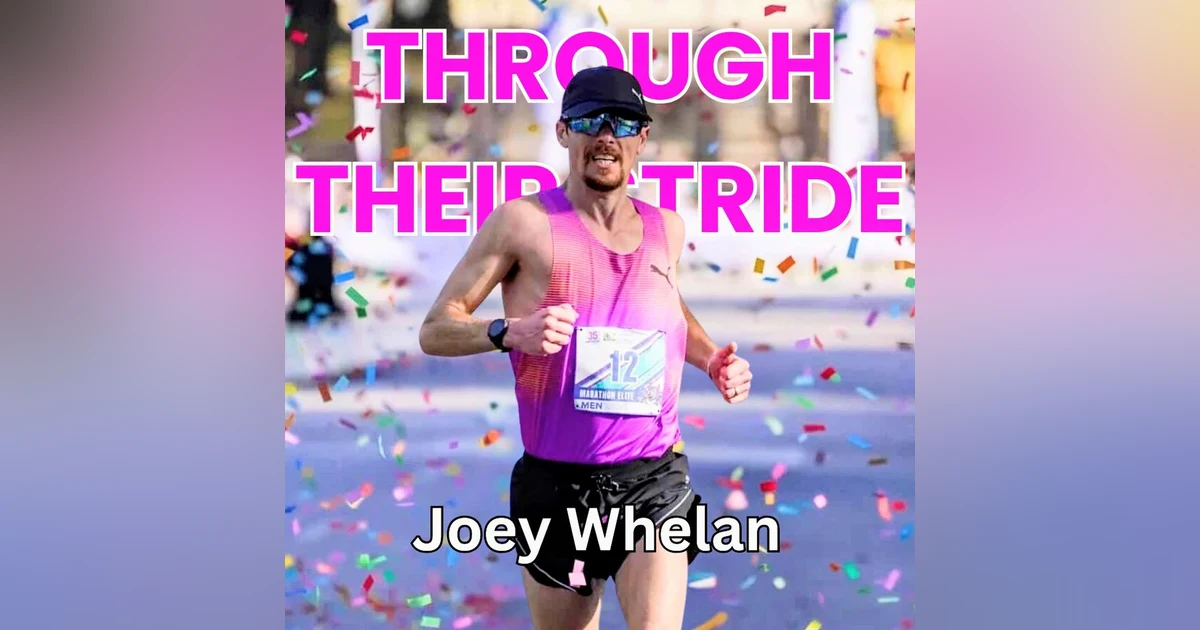


In this episode of Through Their Stride, I sit down with three-time Austin Marathon champion Joey Whelan. A Buffalo, NY native and former Syracuse runner, Joey stepped away from the sport after college due to injuries, only to rediscover his love for running while working hard labor for a rock milling company in the Texas Hill Country.
He made his marathon debut at the Buffalo Marathon, finished second, and never looked back. Since then, Joey has made two Olympic Trials appearances, won multiple races, set a PR of 2:09:42, and this year set a new course record at the Austin Marathon with a time of 2:13:18.
This is a conversation about perseverance, rediscovering your passion, and what it takes to compete at the highest level of American distance running.
Did you enjoy this episode? Find more at https://www.throughtheirstride.com/.
0:00 I feel like whenever you go into a race, you kinda don't really wanna worry too much about the time and you kinda wanna like compete, but I've run this course a lot, so I kinda know what the times mean and typically like weather's pretty consistent around in in in February in uh like central Texas. So I knew it'd be good to have like a metric and I thought if I was if I was at all fit I would be kinda close to the record.
0:40 Welcome back to Through Their Stride. I'm your host, Sam Sutton, and today we have a truly special guest, a three-time Austin Marathon champion and one of the most compelling stories in American distance running. Joey Whalen grew up in Buffalo, New York, ran competitively at Syracuse, and then, like so many collegiate athletes, stepped away from the sport after injuries began to take their toll. But life had other plans. Joey found himself out in the Texas Hill Country working hard labor for a rock milling company, and somewhere between the long days and the wide open terrain, running found him again. He laced back up, fell in love with a 26.2 mile distance, and hasn't looked back since.
1:22 From a runner-out finish in his debut at his hometown Buffalo Marathon to three Austin Marathon titles, two Olympic trials, and a personal best of 209-42. The resume speaks for itself. And just this year, he etched his name into Austin Marathon history with a new course record of 213-18. This is a story about rediscovering your passion, embracing the grind, and what it looks like to truly run through it. Joey Whalen, welcome to Through Their Stride. Welcome back to Through Their Stride, and my guest today is 2026 Austin Marathon Champion and new course record holder, Joey Whalen.
2:02 So thank you so much for coming on. Yeah, no problem. Yeah, so um, so the the day, I mean, I ran that race as well and was no nowhere close to your time. I got like 352 30. Um, but I remember that day being windy, hilly, and hot. So tell me a little bit about the conditions. And I I heard once that you're you're you call yourself like a bad weather, bad conditions runner. So tell me a little bit about how all that went down. Yeah. Well, I'm typically not like the best like heat runner, but like for this build particularly, um, I have been because I live in western New York. I live uh right on Lake Ontario, just outside of Rochester, New York.
2:47 And like this winter's been really tough in the Northeast, and we've got a ton of snow. So I was training on a treadmill, but like with positives that come with running on the treadmill is you are running inside. So like it will it's better than running when it's zero degrees out. So maybe that did help me a little bit with running in the heat per se. But uh, yeah, so I think that that may have helped a little bit. Yeah, did you uh did you turn did you turn up the heat a little bit whenever you uh run indoors, or did you just kind of go regular 70 something degrees? Yeah, just regular. That was it what was in the house, but okay. I mean it's yeah, it's still like better than uh better than what was running outside.
3:32 So yeah, it was uh y'all y'all experienced a crazy like winter storm like kind of late in the winter, I would I remember. So that was crazy. It was yeah, it was kind of this winter's been really like it's been weird because we got winter really soon. So like we our first like snow on the ground, like shoveling was early November. And like typically like November's like a pretty good month. So like we had snow in because I we were getting our uh we were embracing the winter coming, and uh we had we had just got a house over the summer, and we're like, all right, one of the first things we need to get for the house is a treadmill, and we were gonna put the treadmill in the basement of uh our house, and we have like a a uh a walkout to our basement that's like easy to like transfer like a treadmill through.
4:25 So like I was like, all right, let's schedule the delivery for like early November that way we could get the treadmill inside, no issues. And then like the first weekend of like November, there was like six inches of snow, and there was no way of transporting it through the backyard anymore. And uh, we had to have them come down the main stairs of our basement, and it was just like uh, but then in January, but then uh early January, first two weeks in January, I would say, like I was running outside on the trail. Oh wow, so it was like we had winter, and then like the when the second winter came, it just kind of stuck for a while. Yeah, and now we're still now we're back into winter again.
5:07 We have like uh like six inches of snow, had to run the terminal yesterday. So eventually, eventually the winter will be over. Eventually the sun will come out, yeah, yes. Uh well, cool. Let's talk a little bit about the Austin Marathon. So uh you ran 213 in some change, and that's uh big course record. And when you came into this build, did you were you thinking course record? Were you thinking, man, I could I could do this, or was it kind of but or were you just thinking I'm fit enough to be top, top three, top five? Yeah, I mean I feel like whenever you go into a race, you kind of don't really want to worry too much about the time and you kind of want to like compete, but I've run this course a lot, so I kind of know what the times mean, and typically like weather's pretty consistent around in in in February in uh like central Texas.
6:04 So I knew it'd be good to have like a a metric, and I thought if I was if I was at all fit, I would be kind of close to the record based on other performances and how my year has been going. Uh yeah, just so I kind of knew that and a big reason of like choose like yeah, picking Austin is uh to keep me accountable for this winter. Because like how chat like it is challenging to just be out of treadmill, like I was on the treadmill for my whole buildup, which is difficult. Like, I mean, I got up to running 120 miles a week in my basement and doing like a 27-mile long run in my basement.
6:47 And it's like, all right, it's like really challenging, but I'm like, at least if I have like something like winning the Austin Marathon, keeping my goals there. I had like I'm doing this for Austin, so it's like it always kept me accountable every day to just like show up, put the work in. Yeah, yeah. Yeah, that's yeah, it's um the it is that's something interesting about what a race does, is it keeps you accountable, especially in bad weather times, like for me, it it's the summertime, right? Here in Texas when it's a hundred plus degree heat and you're like, oh, I don't want to do it, but I need I want to keep my fitness.
7:27 So I was like, last year I scheduled a race in like late July because I was like in Utah, so it was in nicer weather. Yeah. Um, and um I was like, if I get a race on the calendar, I I won't not run because like you know, I'll I'll I'll want to chase a goal. And um it it helped for sure. Like that that thought of like, okay, I'm working towards something, even though it's a treadmill in the local gym, like it's still working towards something. Yeah. Well, cool. So um, yeah, you said um this uh Austin Marathon, you've run it a couple of times. Um what keeps you coming back to Austin and what what kind of took you there in the first place?
8:08 Um, I mean, I like that it's uh it's like a uh it's almost like a cross-country course. It's a course where you don't really have to worry about time and you just have to worry about like competing and the fields are uh pretty good. So like in marathoning uh at like a higher level, it's it's hard, it's it's hard to like win races, and it's all it's always good to be in races that you can win. Because like a lot of the marathon majors, like I have no shot of get of getting like on the podium, essentially. So it's like to to come to uh races like Austin gives presents like an opportunity for me to actually compete for a win as opposed to like trying to compete for like a top 10 at like a major.
8:55 So I always like that. Uh I like that it's a hard course and one that I've always like done, which is cool, like because like now I'm like a veteran in the sense of like I've run it so many times. Like yeah, uh, like that was like my like I think it was like my fourth or fifth time running it. So and I've run it twice in practice. So it's like I have so much experience with the course that uh try to like use that as like my advantage, yeah. Like when I'm like trying to like game plan for how I want to like tackle the race and really use it to like practice like practice racing. Because I feel like so many times it's just a marathon, you're just you're almost practicing to survive, but it's like it's fun to like be like, all right, like before Austin, I was anticipating, I'm like, all right, at 30k, I'm gonna make a hard move, and like I don't get to do that a lot of times at races, and it it doesn't always it it didn't even work out that way, so it didn't even matter that I even was anticipating doing that, but it was nice to be like at 30k, I'm gonna make this hard move, but yeah, the race played out a little differently, but that's okay.
10:07 Yeah, well, um, but you said something interesting there. I mean, um, like you like well, you earlier you said you like hard courses and you like the the challenge. Um uh do you feel like a hard course where it you know has a lot of hills and has maybe some headwinds that you can you know that are you it can expect are coming. Do you feel like that and the strategizing for that is a lot more fun than something like a fast flat marathon? Yeah. And like I do, I I mean I I I enjoy a flat, fast marathon too. Like I have I have I have the I have two coming up, but I think it's good to have different options on your schedule that they're like not all the same.
10:51 And like just yeah, just picking out like the Austin course, like just knowing like beforehand, like when you get the weather, I mean you follow the weather for a week before a race, but then like the night before, when you officially get like, all right, this is what the weather is gonna be like. And like I look at the course map, I'm like sitting in my hotel room, and I'm like, I am taking notes uh of like alright, at like when we're heading north, uh going through the university, we will have a headwind, and you are slightly going uphill, so just like be aware of that and like know what's gonna be coming and like know when you're when we when we're gonna be going downhill late in the race that wind's gonna be at our back.
11:34 Yeah, but then also knowing temperatures are gonna be slightly rising, so like don't get too carried away, but like just kind of knowing all like the little things, and yeah, that just makes it like better because like those flat races, the the flat ones where you're you're you're like time trialing in a sense, and you're just trying to hit one marker and you're just going like K by K or mile by mile, it's that that's just like monotonous and does it's like not as like fun to me. Yeah, yeah, no, I I agree. When it's all for a time, sometimes it kind of can kind of feel like you know, like you're you're there to do something in one thing only.
12:15 Whereas when they're you're going to a race with there's a lot of challenges and hills, it just kind of keep your keeps your mind in it the whole time. You're like you're you're doing something instead of just running straight for a time. Yeah. But um, and then you you mentioned you've run this race several times before, and um you you have a lot of course knowledge, and this yeah, this topic has been covered pretty uh frequently from other podcasters, but I wanted to ask you about it. There was a portion of the race kind of close to the half marathon where one of the racers that you were with went toward the half marathon and followed the leader of the half marathon guy. Yeah um, and you tried to grab his attention, you're like, hey, hey, hey, like, you know, and um do you feel like that course knowledge kind of does help you?
13:04 Because you don't have to rely on like you know, truck trucks that you're following or signs or anything. What's what's that uh course knowledge of your yeah, just like me knowing the course and like kind like a lot of times when you get racing, you get kind of a little like you get a little lost in racing, and that's kind of what happened with those two other runners. Yeah. Um one was a half marathon runner, and uh me and the other foreign athlete was um were marathon runners, but the foreign athlete didn't recognize that he was wearing a different bib number. And uh when the half marathon guy turned didn't make his turn, I like ran up to the half marathon guy to let him know that he needed to turn around and like like finish the half marathon.
13:55 I mean, we were already at 12 and a half miles. I'm like, you're adding more on than you need. Uh and then uh it was kind of like uh he didn't understand like the uh the marathon guy didn't understand uh what was going on, and when he saw the half marathon guy panic and turn around and uh start sprinting the other way, he followed him instead of me. Yeah. Uh and then uh then I was like, I I'm not gonna chase them both to like retell them. Like I did what I I did what I could in the situation. You tried, yeah. I tried, I tried, and it's on camera to show that I tried.
14:36 So it was just like I wasn't like trying to like send him the wrong way or anything. Uh but then I knew like when we were going, then we had to make the turn, the left turn to go up towards the university when it's slight uphill and we were going into the wind. I'm like, shoot, now I don't have that guy anymore. But then my mind thinks, all right, like use this as an advantage. Uh we're gonna be going slightly uh uphill into the wind. He's gonna panic and try to catch catch back up to me when he when they tell him that he made the wrong turn. Yeah, and he's gonna burn a ton of energy. If I saw I was like, let me uh put my foot on the gas a bit and try to get further ahead.
15:20 And I went through I got through halfway and they they told me my half marathon split, and then some guy yelled out like 22 seconds or something. So I knew I had like a metric of how far I was ahead at the halfway split and how like so. Then going further into the race, I just kept telling myself, like, keep your ears out, like listen, listen for any any data that you can throughout the race. Like I knew I had a friend that was gonna be at mile like 20 to 21, and he was gonna tell me how far what distance was. Um, so yeah, I was just listening out, and then I just kept hearing people say it was further and further away, and it was just nice, because then I got to mile like I got to mile 21 and then heard it was like 40 seconds, got to mile like 23 and then it was a minute, and then I was able to like just chill and just kind of coast my way through and just kind of uh just wait for that last hill, that Congress Avenue hill.
16:23 Oh, it's a brewer. Like, doesn't yeah, it doesn't matter. Like I felt really, really good. Like I felt like I was chilling towards the end of that race, and then I hit that hill, and I'm like, this is just brutal. It's like it doesn't matter like if you feel good, if you're fit, it it just doesn't matter. That hill is always gonna be brutal. Yeah, I always have to remind myself on that course that it's a downhill after that. Like you just gotta like keep it in your mind. It is a downhill, but it is so freaking brutal. Like you make that left turn and you're like you're just going straight. Yeah. Because I also the like two two days before the race, I ran the last uh I ran the last few miles of the course like backwards and forwards again, just to kind of remind like remind myself because I thought maybe it was the race was gonna come down to the maybe the last few miles.
17:18 Yeah. So I wanted like because when you're going um on East Chavez uh boulevard, it's a long stretch. And for a course that was doing all that turning, it feels like you never turned down waller. It's like you're like waiting for Waller the whole time. So I was like looking at like there was like a sports, a sports bar called like Buckets. I'm like, all right, like there's Buckets Sports Bar, like, and like just keeping like things in my mind to be like, this is like a marker, like when you go on to Sixth Street, this is how long you have, and that's slightly downhill. And like there's like taking like really uh analyzing the last bit of the course.
17:58 And like you said, on top of Congress, after you after you get that hill, you have a good it's a good downhill. It is, yeah. It's like a it's one you can sprint, like yeah, yeah. Yeah, so yeah, yeah. I mean as much sprinting as you can do at the end of a marathon. Exactly. Yeah, what is fun that that of it, yeah. I I love yeah, Austin's fun. Yeah. What do you think which hill do you think is harder? Enfield or um Congress? I mean uh Congress, uh Congress always just feels so hard. But that miles mile 12 is hard like hard too. Like yeah, because it it's it's so it's like pretty early, like obviously it's not even halfway yet, and you're hitting this monster hill, and you're like you face it for a decent bit.
18:45 Like with Congress Hill, you turn and then see the hill. Yeah, and then you're like you're like, all right, this is gonna be a bad minute. Yeah, and you just like this, you had just done you're like waiting to get punched in the face. Yeah. I think it was easier, I think infield was easier for me this year, um, because I had a bathroom break right at Enfield, and so like I had like a little bit of a mini break. Um but yeah, you're also like the what the way the course is, uh the sun's in your eyes going up it. It is, yeah. So like that makes it also a little a little tricky. Yeah. And like I do think about that too. And like I feel like a lot of times, like the like the foreigners, like ignorance is bliss, like they just don't even I don't know if they even look at how much they look at the course, and like I'm like overanalyze it till I'm like dead.
19:40 And like I like I don't think these guys even like don't even look at a course map before they go. They just they're they're gonna they're just gonna run hard with whoever's leading, they don't care if it's a half marathon guy or whatever. They're just like, whoever's gonna lead in this race, I'm just gonna run with them until the race is done and the last few miles I'll I'll kick it in. Yeah. So yeah. Um on this course on Austin, do you have any favorite scenes that you kind of look out for? Is there any like favorite parts of the course that you're like you think are are beautiful or fun or anything? Uh I mean, I do I do like ripping down the hill, but it's so early at like mile mile like five or six, uh going back to like I do like when you when you turn when you're um what is it?
20:27 Um you're like on second AV or whatever, and yeah, you make you make that turn, you enter the city, and like there's all that all the crowds back when you enter the city and you make that left. Yes that part's always fun. But I like I also don't like I like the parts when you run through the little neighborhoods on the east on the east side, where like I don't mind when it's quiet and you could kind of be in your own element. Yeah. My wife used to uh live in East Austin before like before I met her, and uh we I've been down there a lot just to see her old stomping grounds. And so every time we go through East Austin and we go through like Austin Bouldering Project and everything, yeah, like that it's fun to see all those places because it's like you know, I'm like, oh I've been here so many times, you know.
21:15 So it's also fun to see like I feel like the cause Austin's such a growing city, so like it's always changing a bit. So like you're seeing like new things, you're like, this wasn't here before, like just like new like new buildings and stuff. So yeah, I gotta say, so there's this one, and I and I wanted to ask you about this. Uh so thank you for bringing it up. In 2018, you ran the Austin Marathon. Um and be at that time, there's this building in downtown right right next to Town Lake that almost looks like a staircase. Um and it wasn't there in twenty eighteen. And so it's funny like the Line Hotel, maybe.
21:56 Yeah. Yeah, yeah. Yeah. And I'm like Yeah, I felt I think it's funny because there's a tons of buildings over there that just weren't there and like you've gotten to see like the construction of Austin over the years in this race. Yeah. Yeah. So uh talking about the uh race too and the training. So um training for a hilly race bet versus training for like a race like I'm trying to think of a fast race that you've done over the years, but um training for both of those. Oh, California International. Um between something between those two, uh what is the difference in training? What are some things that you change to uh to get that advantage on hills?
22:41 Um, so like when I'm typically able to um like I have like design routes for like Cale International, for instance, is a net downhill. So uh, but it is it does have like nice rolling hills to it. So I was planning routes uh based on doing workouts where it's net downhill, but it has like rollers in it. Uh for courses like when I was training for Austin, I was doing I was in the beginning of the training, I was doing a lot of uh uh playing with the incline a lot. Uh and it I think it was more so of like like maybe boredom too.
23:25 Like I would I would mess I would mess with the incline on all my easy runs to like see how much feet I could climb. So like 11 mile run, I would try to get like a thousand feet, which is a lot. Yeah, for sure. Uh and then just but I would just I was only doing that on easy days. Uh there was a few times where I did do like threshold work where it was like uphill intervals, like 10-minute intervals uphill. But then I got to a point where I'm like, I don't know. I'm like, I think it may benefit me more to like just run flat and just try to run fast. Uh while I like, because I will have to be running those paces because the Austin course that it has a like a decent amount of downhill, and I can't get the treadmill to go downhill.
24:11 And the closest thing you to downhill is flat. So I'm like, I hope this works, but I was like, I was doing my easy runs uh based on my easy runs I would throw in the hills, and then my like long run workouts and uh just long workouts, I was just going flat and fast and just like because that at least made it fun for me too to like go run. It's like just fun to run fast. Like when you're doing intervals uphill, you're just getting nowhere, like on the treadmill, and you're just it it was kind of getting me a little like mentally. I'm like, I don't like like I know I'm getting stronger, but I I don't really see the results.
24:54 Whereas like when I'm on the like when you're running just flat on the treadmill, I'm able to just see actually like oh the tr I can't go faster than 12 and a half miles an hour. Like that means I'm pretty fit. Yeah, if I'm doing tempo runs at 448 pace, I'm pretty fit. But like I don't know what that translates to when I'm like, well, I'm at a three percent grade and I could run 530 or something, and I'm like, yeah, type it into all these calculators, and I'm like, I'm just wasting energy. Just yeah, I'm just gonna just stay flat. So I didn't run as many hills as I would have typically in previous like Austin Marathon builds.
25:35 Um but like when I uh like my first Austin Marathon I did in 2018, that was like a lot of uh a lot of my long runs were based on the hills, and I was able to like living just outside of San Antonio, I would I went to the course twice and ran the course twice in full. Yeah. And like that really helped me, I felt. Yeah. San Antonio is a good place to get to get some hills in, to get some elevation. Because that's like squarely in the hill country pretty much. Yeah. Yeah. I lived in uh like Spring Branch.
26:15 Okay, yeah. Mm-hmm. I I live in Fredericksburg, so I'm not I'm not too far away. And then uh I was I was doing a lot of work in like Texas Hill Country. So like Concan and Lakey and uh like Comfort, Bernie, like all those areas. Uh I was there during the week and then pretty much like San Antonio or Austin during the weekends. Perfect. That's perfect training. Yeah. But it was funny because yeah, I would just when I was first marathoning and just not knowing really how to train for a marathon, uh, I would go out to it was like Spring Branch Road out like where I lived, and out and back on that road was like I think it was like 1300 feet elevation for 20 miles.
27:04 Oh wow. Uh so you got quite a bit. And uh every week I tried to just do like my training was just like try to run under six minute pace for this route. And like I would try and I would fail so many times. Uh just because the nature, like the core the course is hard, so I'd always run like low six minutes, or like I'd put bottles out by people's mailboxes, and then people would take them. No, and then I'd be like, like I'd be like, uh I should have left a sign or something, like they thought I was like littering or something, but I was just like I was like hiding it behind so it wouldn't be in the sun. Yeah. Uh and then like every week I was just trying to break uh break two hours.
27:49 And like uh it like that training actually worked, and that's kind of like the backbone of like kind of like what my training is with doing like hard long runs. Yeah. Quick question Do you still uh set out water bottles um for long runs, or do you carry water with you, or how does that kind of work out for you? I I do a little bit of both. Uh now I have set up like I have like a little like uh like that TV table. Yeah. Those little TV tables. I like put uh I have a workout loop that's like three and a half miles that's like by my house. Uh but I uh so I'll set that table up sometimes and uh just run by it and then uh I set up like a a little garbage bin, like uh a little over a quarter mile past, or maybe a little further.
28:40 So like I'll I'll I'll drink out of my bottle like I will during a race and then chuck it in that. But there has been times where because I will use like uh just like a Gatorade bottle, like Gatorades, uh like the the little mini ones, and just like crack the crack the crack it open a little bit. Um and I have put like a ton out on there, and like where I lived, like there's a lot of people like walking around, and like the one day, like two of the bottles went like missing. I'm assuming like they thought I was just leaving it out for like runners or something. Yeah. And like this, so they just like ended up taking it. I'm like, oh man, I was looking forward to those. I don't think yeah, I think they're yeah, thought I was being nice, but I remember that in uh San Antonio, there was a couple of routes in San Antonio that I did where uh people in their front lawn, there's like a popular running route um by McAllister Park where people leave coolers out by their mailbox for runners for running by.
29:43 It's like because it's like they did the long runs at the same spot like every week. So it's like you go you go through that that part and you could always have like a nice cold catorade and they'd replenish it. That's so cool. Yeah, but like I have put the the TV table with the my drinks uh in front of my house before, and I'm just like running by my neighbors all think I'm a weirdo. Partially because I am, but I mean all of us runners are weirdos, but uh uh I remember uh Kira Kira D'Amato a couple of years back was would post like these stories on her Instagram of like the uh the stories of like bottles and leaving out bottles, and uh people would would take a bottle and they'd be like, she she'd be like, All right, start putting out signs, like please don't touch Marathoner in training, and like that's actually what um my wife saw at first, and she was like, Oh, this is a good idea.
30:43 We should start doing that for your um yeah, like for your bottles. And so we would do we would write in like sharpie, do not touch for a runner, and then like it would be there. So yeah, I did that on my TV table. I uh I did write marathon training um on it, but I didn't like a lap laminate it and like the weather's bad, so like it was like raining and it just all like bled like away that like looked really bad. So I had like the poster board I only used like once or twice because it all went away. But like one of the wor one of the worst times I've had one of the top five worst runs I've ever had was in like San Antonio.
31:25 I was on I would do uh I was working at uh I was making like a a a parking lot at uh UTSA. Um in I lived in Spring Branch, which is like 30 minutes north of the of the city. So I would do my runs at because I would get off work at 5 p.m. So I would run at 5 p.m. to let traffic die down to like get back home because otherwise it's gonna take me over an hour to go a normal half hour route. So I would run in like the heat, but like I kind of used that as like my my training thing too. Yeah. And one of the bike paths there, um, you know where like the water fountains are along the path.
32:10 And I was doing like a I was doing like a workout, and uh I knew where the water fountain was, and I when I went to it, the water fountain was off. And I was I was like, I was like, oh no, I was like, I know there's another one, and I went to the other one that was like further down, but I knew it was adding more onto my run. That one was out too. And then I'm like, I have to just turn around and like I but I didn't have like my card or like anything to like pay for like a drink or anything to get off. And like now I'll run with my phone, like I don't care. Like I'm in like a different spot, like I'll run with a card and like or like five dollars in my pocket at least to like have like something.
32:52 Uh but I was like running my way back and like I started to get cold, and I'm like, oh no, like I'm in like I'm in trouble because it's like 105 degrees. I'm on this bike that and like there was like a biker like coming by and I saw that he had the two water bottles. And we got I like nudged him, and I'm like, Hey, do you mind if I have like a bottle and I like a signal this? And then he shook his head no. And I was like, I was like, it was the most demoralizing thing, and like because I would I thought for sure he'd be like, if he saw me, if you saw me, you would have just given me anything. Uh and then I just started, I like walk ran back, and it took me like forever because I was like, I was like stumbling.
33:38 I got back some I got back to my truck, uh and like I sit down in my truck and um I it's a push start, so I I push it to like to to start, but uh I'm like trying to like shift it, and I'm like my truck's not shifting, and I realized that like I didn't put my foot on the brakes. My mind was like my mind was just so fried, and I'm just like serious, and then I'm just like I had to like I had to like get out of my I I had to like get out of my truck and be like, you need to like take a second to like breathe and just like get through this, and then yeah, it was like a top five Gatorade I've ever had at like the gas station.
34:21 This I think this is genuinely why the uh smartphone companies started to put like Apple Pay and like Google Pay on their phones so people can just like run into a gas station and like swipe it so that so just specifically for runners to do that. Yeah, I should have just asked more like I like somebody else would have said just yes to me. Like but like after I got denied once, I was like mentally, I was like, if I get denied again, I'm just gonna like die. I'm gonna lose it, yeah. Yeah, like after you ask that dumb question in class, and you're like, I'm not gonna answer ask any more questions. Yeah. So uh curious, do you prefer the brutal cold weather of New York running or the brutally hot summer in Texas running?
35:08 I would rather for like training purposes have it be hot. Okay. Yeah. Because I think like you get a lot more adaptation to it than it being cold. With it being cold, it's like it's like icy and sometimes just like unrunnable. Right. And like I just can't stand it when it's like the wind chill is like negative twenties and you're just getting nowhere. Yeah. Um but like if I were to say like I don't know, like 20s are good. Like I would like it to be like if it'd be nice if it was just like I could tolerate it being in the 20s and I could tolerate it being in the 90s.
35:51 It's just like when it's in like the hundreds, yeah. Or like single digits, that's when it's like yeah, that's when it gets like this is just unbearable. Yeah, on either end of the spectrum. Yeah, for sure. Well, cool. So uh so tell me a little bit about your marathoning and how you got started. Um, so you ran for Syracuse and then you moved out to Texas. Uh I think I uh read you were working for a rock milling company here in the hill country. Yeah. And how did you find marathoning through all that? So yeah, it's just funny because like I was I was working for like my my cousin's uh company.
36:34 We like we were going uh on ranches and making ranch roads, uh and then at like the end of the shift, I was I took I took some time off after like competitive running after college. Um I was getting I was just like kind of uh getting a ton of injuries and stuff and didn't really want to do it like anymore uh competitively. And then uh then when I started working again, uh there was like physical labor involved with the work that I was doing. Like I would oversee a lot of like the laborers, so like they'd be like running chainsaws, but uh I never like to be the person to be like, hey, go do this, like I'll do that with you.
37:20 So like we work as a team and like I'll run a chainsaw with them. And like those that was like a lot of hard work because we would do it, we would do 10 hour days like running a chainsaw, and it was better for me to lead uh while doing it, so I know like when we should take breaks and like do everything involved with that. And at the end of uh at the end of a lot of those shifts, uh I would like do like conditioning, I would call it, where I would just do I would do like a cool down where I would like put on my trainers, take off my work boots, and like uh just go out for like a short run and then uh do like push-ups and stuff just so that just so it wouldn't be so hard like in the following weeks, like depending on what the project was.
38:08 And then I just noticed like I started getting pretty fit, and I also didn't know like a ton of people like in the uh like San Antonio area, like coming from New York. Uh so I'm like, well maybe maybe I'll sign up for some races and uh because there's a there's a ton of like good races in like uh San Antonio, Austin. I was like, I could sign up for some races, like it's hard to make friends when you're in your late 20s for some reason. Especially like yeah, especially like uh yeah, it's just hard, it's just hard to make friends like when like you think it's easy like when you're in college on a team. Yeah, like when I was in college on a team, like we had like 20 guys and 20 girls, and we got six new friends a year every year.
38:56 It's like I never I never had to learn to make friends, and then you you do that for six years, and then all of a sudden you're out in the real world and you're like, all right, yeah. I it's crazy like with making friends, and like with c like you said, with college, I feel like college is this unique like community that people that some people get to experience where you're all on kind of the same trajectory and you're all kind of doing the same things, even if you're not like the same, like you you may be a freshman, whereas someone else is a junior, but you guys are all doing the same things, and it it it's so easy to mingle with like so many friends. Whereas when you get into the real world, it's like the people at work don't want to talk to you because they got their own lives, and then like you know, like I just work with them for 10 hours, like I don't want to really hang out with you much afterwards.
39:48 I mean, we would we would still like go to like a dive bar or whatever after work, but I mean it was just like all right, I kind of want to like see different people, right? And like uh it was much easier to like meet people at like races and like running communities. I'm like, these are kind of like my people and already. So like then I yeah, just started diving into that. And at the time I was I was 26 years old, uh, and I had never run a marathon before. And I thought 26 years old, 26.2 miles. Let's just run, let's, let's run a marathon to like 26. Yeah, to to say that you ran a marathon. So I signed up for my like hometown ones.
40:29 I'm from Buffalo, New York, so I'm like, it'll be good. Uh like training's pretty good coming out of the winter, like Buffalo Marathon is Memorial Day weekend. So, like when it starts to get hot, like pretty much like when that race is like 50 degrees, it's gonna feel really cold coming from Texas. Uh, so I did that, and it was like that aha moment of like, I'm like, oh, I actually feel like really good at like mile 20. I'm like, it felt much different than any other races I've like ever were in in college. Good at mile 20. Yeah, I felt I felt good at mile 20, and I'm like, I'm like, I I think like this is like my event.
41:12 Like I kept like, yeah, I was picking it up a bit, and I'm like, and ended up, yeah, getting second place. And I'm like, all right, like I think I'm gonna be pretty good at this. Uh then I was like, I'm gonna sign up for another one, but I want to do it in Texas, and like that's when I did Austin Marathon, and that was my second marathon that I did, and like that's when I'm like, all right, like this one I'm gonna actually train for a bit, and that's when I was doing like let's try to like run a hilly route and let's try to run uh 20 miles under six minute pace, and then I just do that every week, and then uh I went to the Austin marathon and I ended up winning. Yeah. And I'm just like, all right, and then I caught the bug and it's been just off of the races since getting second getting second place in your debut and thinking that you feel great at 20 miles.
42:01 That does that tells you like, all right, this is that this is for me. Yeah. Yeah. Mile 20, I don't think mile 20 at a race has ever felt good for me, but you know, but yeah, little little jealous over here. Yeah. Um I mean we've all we've all had days where we felt good or felt bad, and uh yeah, just I I felt like I that first race I did, I'm like, everyone's telling you how scary the distance is, and I was like my first 10k was pretty conservative, and I'm like, all right, like I'm I feel like I've had like a nice warm-up into this. Yeah, cool. Well, um for you, so have you always been kind of a uh I have had a competitive mindset?
42:47 Like have you always been athletic? What's your athletic background look like going back to you were a child? Yeah, so I've like played uh baseball, I did like wrestling, um yeah, just all sorts of just like backyard sports. Like I had an older brother that was two years older than me, and I feel like that like helps mold you like when you're playing like because we played like a lot of like hide and seek and tag, and you're wanting to be with your big brother and their friends because they're cool, they're the cool guys, and tr uh trying to get to their level, yeah, just growing up like that. And just always like we were always like beating the crap out of each other, like we were getting stitches all the time, like fighting and just like getting like random, like uh we were going to the hospital so much that the doctors had to like pull us aside and ask if if we were getting hit.
43:44 Oh my god. Yeah, yeah. It was a yeah, I got pretty bad. Uh but yeah. It makes you it makes you a better athl but it makes you a better marathon later. Yeah. The pain of a bleeding face bleeding eye or a You know, like my like my like because I've fallen like hitting my head with so many things that like I have so many scars on my head when I get like my haircut, Barbara was like, What happened here? And I'm like, Oh, I flipped and that was a door hinge. Oh my goodness. Oh yeah, that's uh that's way bet way worse than the pain of a marathon.
44:25 Awesome. Well, um, and what uh what is your is your brother uh still in athletics? Is he still competing in so like right uh so he he's in uh he's in like a band? Oh cool. But he um he started to um be a he's like a runner now. He's actually running his first marathon at the Buffalo Marathon this year, which is like cool that like he's he's grown to like like the sport uh like a little bit later in life. Like he didn't run in like high school or college or anything. Uh so he kind of picked it up later, like most like most your friends now that like like I don't know if how long you've been running for, but like uh like I find it like a lot of my friends that I never thought would run are like now like doing marathons.
45:12 Yeah. Or like run clubs, yeah. I uh I had a friend um back in 2020 2024 who uh like I met him at a run club and he had never run before. He was uh he was did some athletics as a kid, but he had never run and he he couldn't even make it through three miles, and uh now he's out here like running 130 plus, like 135, 137 and a half, and like yeah crushing it. And I'm like, yeah, the running bug is is contagious these days. Yeah, it's like one of my buddies in high school, he didn't run or anything, and this is also like somewhat part of the reason why I did my first marathon was he was living in Pittsburgh and uh he like texted me and he's like, I'm running a marathon and I'm running one before you.
46:02 And I was like, I was like, I was like, Kyle's running a marathon before me. And I'm like, I'm like, I gotta just run one. Just I'm like, I can't believe that. Well what was Kyle's time? Uh I don't know. He was I'm not, yeah, I'm not quite sure. I'd I think around four hours-ish. Yeah, yeah. Oh, yeah, yeah, but but yeah, he's got that on me. He's run a marathon before me. And you can't take it that way. So he rubs that in, he rubs that in when I see him sometimes. So awesome. Well, cool. So uh now going, I mean, you've run like ever since then, your marathon journey has taken off.
46:44 You're uh if I read it right, you're a two-time Olympic trials qualifier. Yeah, um, and you're a 209 marathoner, which you got in uh last year. Where did you get 209 again? Uh cal international. So back in December. Yeah. All right, cool. Dang, that's pretty close. December to February. That's not a whole lot of rest. Yeah. I did I did rest the the like the week after like Cal. And then like uh then when I started building up, I'm like, I don't have much time and I have to do it all on the treadmill. So like I did, but I did get my mileage up to 120 and then was able to like our arc it down, but uh it was kind of it did seem a little like maybe a little aggressive, but I was trying to like be a little relaxed with it, but it all worked out.
47:34 So man who never sleeps over here. Awesome. Well, um, and like you know, two two two Olympic trials. I'm sure you're going for the trials again in uh in for 2028. Um what has that the process of becoming an elite marathoner looked like? And what are your goals going forward with this sport? Yeah, it's uh a lot more like a lot more committed uh to it, um and like more so like putting in the work. Um like in prior years, like I had like a big breakthrough this year, um and but but like the prior years I was kind of like stuck at like a certain point um because I wasn't really putting in the necessary work to make that breakthrough.
48:28 Like I was expecting to run certain times uh while running, like if I'm gonna throw like numbers at it, like if I'm trying to run, I was running between like 50 to like 80 miles a week, expecting to try to run under 210. It's like it's like that's a very that's a tall order, and like yeah, I'm not that talented to be able to do that. And like now that I've been able to like uh put in the necessary work, recover, like getting my mileage consistently over a hundred, it's been really big for me uh to like make those breakthroughs and like having the uh like a level playing field with some of like the top guys in the country.
49:13 Because I went I did go full-time with running this year as kind of as kind of a project to see how uh how it would all go. And so far it's been working, and I just gotta like stay committed to it. But like the goals itself are like I want to really climb up the like leaderboard of all-time US. Um so like there's uh it's all on like record eligible courses, so like courses like Cal International or Boston don't count towards those. So I'm trying to run on certified courses this like this coming year.
49:56 So I'm going to Hamburg, Germany. It's a flat-paced race, and then I'm doing Chicago in the fall, flat-paced race to try to like work up that ladder of all time. Because I think I think if I run under 209, I'm in the top 20. Yeah. So that's kind of the goal. I know like the the times are all gonna get faster and eventually get broken, but what it what's all said and done, I want to say at least at one point in my career that I was like a top 20 marathoner ever in the US. Yeah. And like I really want to try to make like the uh Beijing world team for 27. Uh cool. Like there's a the marathon team, which is they select th uh three people based off world athletic points.
50:43 So figuring out what races I need to do that would score me the highest points uh necessary, which a lot of times it'll come down to running fast and like getting uh like the bonus points for like championships like US marathon for instance, US Marathon champs, for instance, they give you bonus points if you're in the top three. So just trying to plan my schedule out towards that. Cool. I want to wear the USA vests. Yeah, definitely. Yeah, I think you're yeah, I wouldn't have yeah. I wore it once in high school. I I made it uh a US junior team in the steeplechase, but that was back in uh 2009.
51:28 So like I think it'd be pretty cool to make it like X amount of years later. Yeah, definitely. And um is uh so is Olympics also on your uh on your kind of mind, or what what do you think about that? It's a little like I need to bridge the gap a little bit more, but it's it's uh just stack uh stacking a lot of these races and uh trying to like yeah climb up a little bit higher. Yeah. Because like right now it's a little it's a little out of reach, but um I'm just like uh callousing my body now to embrace that first pack and learning how to like uh like learning how to race.
52:13 So it's like going to races like Austin and just learning how to compete. Because I mean I raced when I raced Austin, there was three guys in the race that had better PRs than me. There was a guy that there was a guy that ran 207, there was a guy that ran 209, uh, and the there was a guy that ran 210, and they're all on the same team. But like if I could uh if you beat these guys enough, you'll end up running those times. Yeah. Well, it's just well and think it, I mean, you're thinking about like comparison of times too, like with the Austin Marathon and how how hilly it is, how hot it is often, and you're able to beat them. I mean, that I I don't know what that equivalent that's equivalent to, but I feel like a 209 is definitely reasonable.
52:58 Yeah, you just gotta just keep showing up and trying it time after time and uh just capitalize on every opportunity. Yeah. Now, talking about that and talking about the expectations of that, whether it's put on by media, uh, you know, external factors or by yourself, how do you kind of um deal with that? Is that kind of a mental pressure that you feel or and and how do you overcome that if so? Uh not really. I mean, it's all kind of uh this stuff has all been new to me, like going on podcasts, but um I feel like it's it's good to set your goals and like say what you want to do.
53:39 It's like I was on uh I think it was yeah, Life in Stride podcast, like uh after I ran Indianapolis and I ran 212 at Indy, and they had me on as a guest, and they said like uh the episode number at the end of the episode, they're like episode number 209, and I said that's a sign. And then yeah, then like then I did it, and it just but it seems like that was my goal like internally, and I I'm never like I don't like to be the one to like talk like just say it all the time and like say my goals out loud, but I feel like the more if I say it out loud, the more it will hold me accountable to to keep chasing it.
54:26 Yeah. I read um a couple of days, a couple of days ago, it's um you know, it's kind of about like proving yourself right. And so like if you can speak it into existence and continuously tell yourself, like, I will run a sub 209 marathon, I will make a US team, I will, you know, like that you your brain will start to tell your body that you can and you can you can take that in. Whereas if you say, I'm not sure about the time, I don't know, like your body will your mind will compartmentalize that, you know? It's like there's yeah, it's just the whole mental side of it all.
55:07 Yeah. It's just like like that's why every like doing every race and putting yourself through all these situations, it's like I I like relate it a lot to like uh like how uh like how comedians do things. Like comedians are constantly running their hour, their hour special on the road, but they're always like tweaking what they're saying. And in the beginning of the year, when or like however man however long it takes them to make their special, that that hour may not be good, but like by the time they they travel to every city and and like do all this, they eventually tweak it and they have it really fine-tuned, and they put themselves in all these situations, and that's kind of how I see myself doing things, like drawing that parallel of like, all right, I'm gonna do a ton of like I'd run 20 races a year.
55:58 Not a lot of people do that, but um, but I just see it as like working on my craft, yeah, and then well, yeah, yeah, and especially now that you're full-time, like you have the ability to do that and and and push yourself because you get to rest a lot more, probably. Yeah, yeah. The sleep has increased a lot, so I feel like that was a pretty big difference. That people always say it too. They're like, you need to get the sleep, and it's just like people are still working on like five hours of sleep. Like, I don't even know how like my wife's incredible, like she works so hard and she'll work out in the morning and she'll work out in the afternoon, but she gets like five hours of sleep.
56:43 I'm like, geez, like now, I've like I'm getting like close, like nine, ten hours of sleep, and I'm like getting double her sleep, and she's doing like almost just as much as me. And I'm like, man, some some days I feel like a buff. That's funny. But I mean, like, you know events to your wife, you getting the more sleep, like, is gonna help you in the long run. But yeah, she probably has a job and everything too. Yeah, yeah. The sleep uh sleep, I couldn't believe how much it goes like how much it plays into like recovery and everything, like how much like better you could feel and how much how much more I'm able to like take on like every day.
57:24 It's like when she when you're doing five to five and a half hours and you start to kind of get used to it, you like don't even really think about the toll that it's taking on your body because it's just what you get. And then like once you start getting the seven, eight, nine plus hours, you're like, Oh, like yeah, this is incredible. I'm springy, you know what I mean? Like, I can actually like show up for stuff outside of just running. Yeah. Yeah. Well, cool. Well, um, uh, talk to me a little bit about running. So for for you, what is running for you mentally, and like what does it give you outside of just the numbers and outside of uh performance? Yeah, I mean, at first if it was just like the escape of like when I was like when I was at work, it was like that release of like taking off the work boots, going mentally through my day of like what's next.
58:20 Um and kind of like that cool down effect and like a break from like the my coworkers and thing that I was like staying with. Now it's now it's a little different, but like I definitely feel like more like free like when I'm running. Uh it just a lot more like I just feels like more relaxed. Like I don't have to like I don't have to like rush to get it uh like when you're in that routine of like when you're working, you have to wake up at a certain time every day and you have to get it in like in the morning and you have like these like minutes that you that you like it's gonna shorten your run if you kid if you only get out the door at like 6 05 or you're only gonna get so much so much amount of daylight.
59:05 Like I don't have those like negative effects, so it all just feels a lot more laid back now. Yeah, and like I feel like in the long run, like like there's not a lot of stress involved with it, and it's fun, like it's a privilege to be able to like do these races and like uh like I love I love racing because it also shows like all the work that you put in, and it's like it's like at the end of it, it just justifies everything that you've done. Yeah, that's awesome. And uh now that you're like full-time running, you might you sound like you probably have more time for Buffalo Bills games. I see the Buffalo Bill logo in the background, so uh yeah, you're a huge fan.
59:47 Yeah, yeah, we're we're both big fans. Though the games, the games take more out of me than uh than us a lot of marathons do. I would say that, yeah. But they're fun. It's uh it's yeah, it's fun, it's fun to follow them. And like the we're a fan of the Buffalo Sabres hockey team now, and like like they were in I think the playoff drought for them has been like 15, like it's been a while, like years since they made the playoffs, and they'll make the playoffs this year. And like with the Bills at the time they were in like a 17-year playoff drought, and like that was all of my childhood, all my whole childhood.
1:00:30 Like, I was born a loser. Like, we lost every suit, lost every Super Bowl when I was born. Like, from when I was one to four, we lost every Super Bowl. So it's like there's something to be said that like how like all of our friends were like we were all raised by Buffalo Bills fan parents, and like that had to live through that. And like they say, like everything you do as a kid is impacts you like later in life. So I felt like that, like me and all my friends were all forged from like losing, and like we have like these callous brains that probably help us in the long run and life. Yeah. I'm gonna I'm gonna say my uh my success in in life and in running is due to being a Dallas Cowboys fan then because I mean I was born I was born in 1995, and 1995 was the last year they've won the Super Bowl.
1:01:22 And so, like literally in my whole lifetime, they hadn't won a Super Bowl. So it's been uh it's been pretty rough, but you know, you're just hoping. Yeah. Um are you one of those Buffalo Bill fans who would come to the stadium and shovel snow for the team if um if they asked? I I am not. Uh we live a little too far away now to do that, but um, but yeah. Uh I'm I'm not, I I probably I probably would be more inclined uh to do it if we lived a little closer or if it worked out. This year we've done I've done so much shoveling, like we're first time we're first time homeowners, and like I have to do all like all those little things because we used to live like in an apartment, and like at first I'm like, oh sweet, like because I have a snowblower and shovel and stuff.
1:02:13 And at first it's like I'm like fun, like I get to do this. Like you think you only have to do it like once a week. It's like I was having to do it like twice a day, every day. I was like, uh the my part of my routine was like running on like shovel in the driveway, running on the treadmill, shoveling the driveway, running on the treadmill, shovel the driveway. I was like, uh, this is like so mundane, but but that strength helps. Yeah, yeah, yeah. That's your cross training right there. Yeah. Yeah. Well, cool. Well, um, thank you so much. I don't want to take too much more of your time. Um, we've already been over an hour here, but um wow. What yeah, I know it's got it's gone by fast. So um, but what is your uh next, what does 2026 look like for you as far as races?
1:02:58 Um what are I got well, you told me that you wanted to race the um a few marathons later in the year, but uh tell me kind of a list of what you got going on. So um the next two races that I'm doing are um well the next the one my target races are uh Hamburg Marathon in Germany. That's gonna be like a uh paced race. Uh that's April 26th. And then um, and then I'm doing Chicago Marathon in the fall, and that's also a paced race. So I kind of scheduled both as like let's see, like I want I really want to run fast in Hamburg, but I really want to practice like running in a pack of people, like trying to stay on that, like you're just playing a long game game of hangman and just like playing doing that approach.
1:03:53 That way I could like mentally when I go into Chicago, I could mentally uh do that same thing again and hopefully go a little faster in Chicago. Um, so yeah, those are the two, and then after Chicago, uh I'm doing a double build for that where I'm then I'm gonna go do CIM again, which is like seven or eight weeks later, uh and yeah, gonna try to win a US championship. Yeah. Yeah, so like yeah, they're they host uh Cal International hosts uh US Marathon Championships. So I really want to compete and definitely podium, but uh be running towards a win.
1:04:39 Awesome. And then for Chicago and Hamburg is trying to run that certified course to get me on that leaderboard. Yeah. Cool. Well, could deal. I mean, I think you're gonna do it. I think uh if if Austin Marathon proves anything, it proves you've got the fitness and like to get to get those races under your belt, if if if the weather is a lot better, I think it's gonna be I mean, all you got no problems. Thank you. Yeah, and uh I'll definitely keep following along your journey, and um yeah, I'm excited to see how 2026 goes and uh and and beyond. So thank you so much. Yeah, no problem.
1:05:20 That's it for today's episode of Through There's Drive. A huge thank you to Joey Wayland for taking the time to sit down and share his story. From the Hill Country to the Olympic trials, it's been a ride worth hearing about. If you enjoyed today's conversation, please take a moment to leave a rating or review wherever you listen and make sure you're subscribed so you never miss an episode. Until next time, I'm Sam Sutton. Keep moving forward.


