Ep. 31: A Sub-3 Marathon in 90 Days? McKay Nelson Chased the Impossible
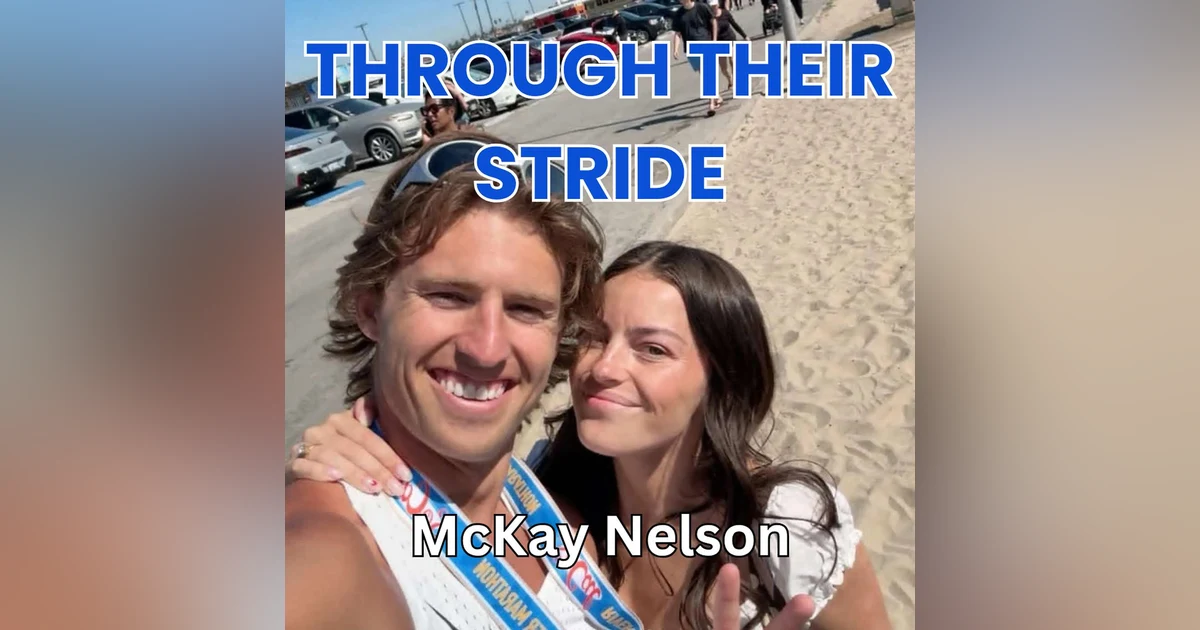


McKay Nelson had never trained for a race in his life. His athletic background was in high school baseball and football — not exactly the resume of a marathoner. But armed with an unshakeable belief that the human body and mind are capable of more than we give them credit for, he set out to prove just that.
90 days. 26.2 miles. Under 3 hours.
In this episode, McKay takes us through the full journey — the training, the doubt, the moments he wanted to quit, and what it actually felt like to toe the start line knowing everything he'd put on the line to get there. His story isn't just about running. It's about what becomes possible when you stop believing in your own limitations.
Whether you're a runner, an athlete, or someone who's ever talked yourself out of something before you even started — this one's for you.
🎧 Listen, subscribe, and leave a review if McKay's story moved you.
0:00 Really, the whole mission of this is like who I am and what I believe is that truly we are limitless, and our potential is far beyond what we can even imagine. And I'm testing that with myself. Welcome back to Through Their Stride. I'm your host, Sam Sutton, and today I'm sitting down with McKay Nelson, who asked himself the question: what does it take to attempt something most trained runners wouldn't dare try? McKay came into this challenge with no background whatsoever, just the grit and athleticism he built on the football field and baseball diamond back in high school.
0:43 That was it. No marathon training, no runs, no idea what he was truly getting himself into. And yet, he set his sights on one of the most respected benchmarks in all of running, a sub-three-hour marathon. That's 26.2 miles in under three hours built from scratch. What happened over those 90 days, the grind, the setbacks, the moments of doubt, and the ones of pure determination, that's exactly what we're getting into today. This is McKay Nelson's story, and I think it's going to leave you thinking a little bit differently about what your cap is. Let's get into it. So, welcome back to Through Their Stride. I'm your host, Sam Sutton, and today I'm joined by McKay Nelson, who tried to run a sub three-hour marathon in 90 days.
1:31 That's that's a pretty incredible journey. So welcome, welcome to the show. Thank you. I'm excited to be here. So tell me a little bit about your story before we get into that. Have you were you a runner growing up? Or how did how did running come to you? Yeah, so growing up, I played baseball and football as a kid, as long as I can remember. So when I was super little, that led me all the way into high school, just playing baseball, football. I wanted to play baseball at the collegiate level. Turns out I wasn't super passionate about it. I was good at it. I was an outfielder, so I wasn't like a first baseman or third baseman, you know, whether a little bit slower. So I was fast. And then in football, I was really good at football, but I don't know, I just it never went anywhere, which is totally fine.
2:15 But and then, you know, you just go into your normal life. You know, I got married to my wife in 2021. Oh no, 2020, sorry. No, yeah, 2021. Oh, cool. Or two, 2022. But anyways, I know seriously. I was like, wait, wait a second. Yeah, I was thinking. I was a lot of times in my head right now. But uh, and all I did after like high school sports was lift weights. I I did always do athletic training though, so like I didn't I don't love like just going to the gym doing bodybuilding stuff. And I started up as of like recently, so this is actually where this running thing came in. I went and trained at a gym. I live in Utah. They train a lot of like actually like NFL athletes there.
2:59 So I don't know if you know Puka Nakua. He's a big one, receiver for the Rams. And my buddy trains out of that gym, so he started training me. I know I started doing a lot more athletic training, and we do uh he asked me, he's like, Do you want to just lift weights or do you want to do like speed and mobility? I was like, I want to do speed and mobility. So, you know, you're doing that means you're doing the 10-yard shut, you're doing the shuttles, you're doing the 40-yard dash, and and my times were pretty good. I'm like, all right, I'm pretty fast. Like, how could I do something where I can move and run because I enjoy moving like this? And my first stop was running, and it wasn't a marathon. I was like, hey, maybe it'd be like 5K's, or maybe do a 10k, but I was like, you know what, I'm gonna do the marathon.
3:40 I've never ran a marathon, I've always wanted to do it, and then I just had this idea of the challenge, and at that same time, I wanted to like I've always wanted to get onto social media, and I was like, this is a good way, like, let's do the challenge, let's publicly put it out there, it's gonna keep me accountable and let's go for it. Yeah, so that's where it all came to be. Awesome. And did you grow up in Utah originally? Yeah, grew up in Utah. Nice. I went to I went over to Utah back last summer for a race, and it's it's beautiful over there, so I'm kind of jealous. Yeah, no, I love it. Yeah, the mountains are pretty, air quality is not good though. Sucks here. Oh, really? I didn't know that. Well, there's just a lot of inversion because of the mountains. Yeah, okay. So the air quality is pretty bad, but uh and then I don't know, Utah has a like my high school, I went to America Fork High School, that's where I grew up.
4:25 They they're like great and cross-country, they've won nationals like year over year over year, and my brother was a big runner, so I'm like, hey, let's just like give this running thing a shot. Let's see how it goes. Yeah, awesome. And then uh and I learned a lot, yeah. So it talked to me a little bit about the the journey. So, first off, which marathon did you did you end up going to do? So I did the SoCal River Marathon in California, obviously. Yeah, and when you started it, when you were thinking about sub three, did that seem daunting or did that seem well, I got I've got three months. I can think, I think I can get there. What was that kind of feeling like? Yeah, I'm gonna say this without sounding like I have a massive ego because I got humbled, right?
5:05 I was like, okay, sub three marathon can't be that hard. That that was my original thought. And then I would like see a lot of like, you know, like running influencers on social media that have hit sub three, yeah, and I'm like, all right, like these guys, I I could do this. That's what I was thinking. I was like, it just depends how long. I asked my brother, first thing he says to me is like, there's no way. And I'm like, no, like I think I can. I was like, why not? Like see and try. And I was like, cool, I'm gonna post about this. I was like, what time constraint should I put on it? And I was like, three months or six months. And I was like, six months, I don't know if I'll stay interested because it's too far out. I was like, three months though, it's like, well, I really got to train in order to get there. I was like, let's do 90 days, so three months.
5:45 Yeah, so that's how I came to that. Had your brother ever run a marathon before? Did he have some experience and some thoughts behind it? Yeah, so he had never run a marathon, but he did cross country in high school for like a little bit, like one year, and a lot of his friends ran cross country. And he, I mean, I remember the day I I brought up the challenge to him. He's like, Watch, I'll text my friends, let's see who can do it. He asked like a couple of his cross-country friends, some that actually run for D1 schools, and they're like, uh, like it's possible if they have an athletic background, the right coaching, right strategy, right training plan, like could probably get him there. And then some were like, No, there's no way. Yeah. And I was like, okay, all right, I've gotten answers where some people think it's possible, some think it's not. Like, let's go try this. Yeah.
6:25 And then Did you did you run any 5Ks or 10Ks ahead of this race? And what were your if if so, oh no. You just jumped right in. Yeah, I just jumped right in. I mean, I had a so like I know I said zero running background. I I don't count this as running background. This is also where the idea came from. So I was living in New Jersey. Okay, and I started training like like lifting weights again, and I was like, let's try this running thing. I was like, I'm just gonna go run a mile and I'm gonna run a mile as fast as I can. I kept doing that every about every two to three days, I just go run a mile as fast as I can. I did that for like four weeks, and I still actually have it on my Garmin, but in four weeks I got my mile down to a 532.
7:08 Oh, not and I was like, I was like, hey, that's pretty fast. And so, like, you know, fast forward to 90 days ago, I was like, I mean, I ran a mile completely different, right? Like marathons are completely different. But I was like, I ran a mile in four weeks, I got my mile down to a 532. Like, how hard could this be to run a marathon? Yeah, I don't know. I just yeah, the the naiveness like protected me from getting like wrecked, but like also was my biggest downfall. Yeah, for sure. And then when when it came to the training in the you know, in those 90 days, so talk to me a little bit about the training. Did you run five days a week? What was the the running like for you? Yeah, so I was managing injury, not injury, is managing a lot of pain.
7:48 I that was the whole goal was just to be able to do it without getting injured. Yeah, so I went week one with again no zero zero running background. I I did like 21 miles, I think it was week one, and my body was hurting and feeling that, and I ran five days that week. So like I was like adjusting the whole time. But the goal was three days on, one day off, three days off. Okay. I didn't end up doing that because it was too much, but I was gonna do three days on, yeah, one day off, three days on. Gotcha. And uh I was trying to do six days a week, but it it it would vary. Yeah, six days a week is a lot, especially if you're jumping in from like zero to six. That's and especially like 20 plus miles a week, that's hard to manage right at right at the beginning.
8:31 Yep, exactly. And I was on actually the week one, I went on vacation with my wife to Hawaii. So I was running in Oahu, and the humidity was killing me, and I was like, wow, this is actually like hard. I remember like day four, I had a three-mile run. Again, this is me, just lack of knowledge, and I went and ran the three miles as fast as I could. Yeah, like I remember I ran that with like 185 average heart rate, and I ran it with at like a 730 pace, and I was like, Oh, I got this, like just thinking I can crush it, but you know, you know how I went. And this was all self-coached, right? You didn't have a coach for this? Chat GPT and me. Yeah, yeah, it's funny because a lot of people like who who talk to me these days actually do use chat GPT.
9:13 So I think that's kind of an interesting like phenomenon going on today, like where like AI can really help you train, but for a sub-three marathon, it's pretty tough. But what was the yeah? The the funniest the funniest thing is AI told me it's not possible before doing it. Yeah, and I had to like re- you know, my prompt, I had a reprompt it, like, okay, well, no, you're gonna train me as if it is possible. And they're like, All right, yeah, yeah. So they tried to protect, they tried to work you. Yeah, they tried. And then with the training, so what are some things that you learned? And talk to me kind of step by step of like how it felt and the emotional and physical journey that it was. Yeah, so again, no knowledge. I I got on social media.
9:54 I was like also getting trained by like social media, like my algorithm quickly changed to just be pure running content. And I'd just see videos after videos, and I'd try to like follow people that seem pretty reputable in the running community and like go off their advice. And you know, it was in my comment sections, it was all about you need to build your aerobic base, you need to build your aerobic base. My understanding was I was like, there's no way I have time to build aerobic base in order to sub three. I was like, I gotta run fast and I gotta run fast a lot. Yeah, and so that was my training. I do believe that zone, you know, zone two training, spending the time to build your aerobic base makes a hundred percent sense. Like everyone should do that. But with the time constraint, I and no running background, it's like I couldn't do that.
10:36 So emotionally, I was knew that I was gonna feel pain and a lot of pain, and that was the biggest factor. I was just constantly hurting. It was never my muscles as much as it was my tendons, my knees, my IT band, my feet too. Like that hurt a lot. And there was times I'd go out on runs, and I would like yeah, I would try to run. It's like, okay, so I was like, I would have to like switch between this. May sound weird, it's like what I did to just keep my body going. I would switch between like four foot striking and heel striking. Because like when you heel strike, it's you know, moving using more about like the front of your body.
11:16 You when you four foot strike, you're using your hamstrings, calves, glutes a little bit more. So in order to like manage being able to still run, I would like switch from like heel striking to four foot striking. Interesting. And then I learned about increasing my cadence too. That changed probably more than anything was shortening my stride and increasing my cadence helped me the most. Okay, cool. But yes. So what was your cadence before that? And then how did you what was your cadence when after you shifted and what did you do to work on that? Yeah, so I think it so day 30, it was like I was like, okay, I'm one third away, I'm gonna go run a half marathon. This is when I actually thought that it was possible. I went out, ran the half marathon at an 812, just you know, on a on a training day.
11:57 My heart rate was like 172 the whole time. So I was completely cooked. Redlining it. Yeah, I redlined the whole thing. And my body felt that for like a week to like probably like realistically, like two weeks, because I was only 30 days in. But I ran it at that 812 pace, and I was like, dang, that's like pretty good for 30 days, like, right? Like, and some people were telling me that it was, and that was my first video that it got over like 10,000 views. It got like 20k views. I was like, okay, there must be something there that someone saw that, like, hey, that's pretty good for 30 days to go run a half marathon and 812 pace. And uh, but then I looked at my people were mentioning cadence, and I went to Strava, I looked down, my average cadence on that was like I think it was like 156 steps per minute, I think that's how they measure it.
12:41 And I was like, this is all new to me, so I'm like learning everything as I'm going, and I was like, oh, that's like super low. It's like they say like elite marathoners are like 170 to 180 plus. I was like, I was like, what? And I was like, I and it took me like probably two weeks to figure out how to increase cadence, and it wasn't, I would like try to like move my legs faster until like again I go to Chat GPT, and it's like the number one way you can increase your cadence is just shorten your stride. Yeah, so I shortened my stride and I started four foot striking at that point, and I don't know, my cadence, I just like would focus on it and I try to get it to you know 160 to 170 because it felt so awkward at first. So at the same time, I'm like managing pain, but also trying to like change my running mechanics.
13:22 And I come from football, so it was always like explosiveness, right? Quick, short bursts, and that was kind of how I would run, but that was costing me. Like, I don't know if a lot of people know that that haven't ran before, because I didn't. Running mechanics like for a marathon versus like even a 5k are probably different. Yeah, I mean, you you you you're a runner, you know, but like that was the biggest thing that I learned was you can't run a marathon like you're gonna run something else, like or the way that you used to play sports. You actually have to change the way that you actually run. Yes, and that was a huge takeaway for me. Yeah, that's that's super interesting. I haven't done a whole lot of uh cadence training work, so just like I haven't really thought about it, but maybe it would be something that could help me.
14:06 But yeah, you're right. Like running your the your form and everything, your pace and everything in a marathon is so much different than like a 5k. Like oh my gosh, it's completely different. Yeah, and uh not even close. Yeah, I my 5k time currently is like a 650 per mile, whereas my marathon is like an 834. You know what I mean? So yeah, yeah, no, it's complete, yeah, it's two different games. But but being in this though, learning and hearing from people and getting like tips and tricks. Of course, you got some haters, but like you got a lot of good tips and tricks as well. Were you able to implement what other people were saying into your training?
14:49 Yeah, if I were to list them like bullet point, it was increasing cadence and shortening my stride, run posture. So I always thought you had to like run tall. It's like, or no, sorry, running posture matters, right? Run tall, chest uh open, but like the forward lean, I adjusted that, you know, always got to run with forward lean. That increased my speed. Um, and then I started like learning a lot about someone talked about breathing cadences, even so like rhythmic breathing. Yeah, and so I started implementing like rhythmic breathing, like like you can do uh a 3-1 or a 2-2, and that has to do with your stride and your breathe and like how you breathe.
15:30 That was that was also huge. Yeah, I would say those things cadence, shortening my stride, so increasing cadence, shortening my stride, rhythmic breathing, and then run form, like by posture, yeah, and then also too, like not running with like clenched fists, loose hands, and like hold the potato chips. So I was I was trying to learn everything, and then the biggest thing was running on a midline. I would run kind of like a little bit farther apart, so I started to try to like learn to run on my midline, and that helped too. These are all things that like helped the most. Awesome. That's super cool. And I was thinking about that. Like, while you do get a lot of like flack and hate, I guess, on social media, like there are a lot of people who genuinely are like, ooh, that's it, that's interesting.
16:17 I want to help him. This is could be so cool to see, you know what I mean? And like they become invested in your journey. Yes, yeah. I I noticed that. That was when I like at first, like, I didn't know what to expect of posting, but then I started getting, you know, a lot of like comments, and even on my last like five or so videos is like when it's happened the most. But yeah, it was like at first, it's like you know, I knew hate was gonna come in because I was making a crazy claim. Like, sub three with no background in 90 days is like crazy, and I knew that people would tell me, Oh, this is just for clicks, this is just for engagement. No, like I was like genuinely interested in seeing if this was possible now, and I tried. Like, I tried to learn everything that I possibly could in order to do it, and believe it or not, yeah, the naysayers or the haters, they they helped a lot through the process.
16:58 You need to do this, you need to do that. And I was like, I'd respond to them like, hey, like that's negative, or whatever I would say, hey, no, we're limitless, we can do it. But then I would like take a step back and I'd be like, No, like that's actually really good advice. I should probably like go a little more about that. Yeah, and I wanted to touch on that a little bit too. So, as far as like the emotional side of sharing this on social media, and as you, you know, got more flack and hate, and then as you got closer to race day, did it ever start to kind of wear on you psychologically of like, man, this is just really hard. Like, I don't know if I'm gonna do it. It's like I don't want to put this out there, and then people be like, see, told you so, and all this and that. What did that ever kind of cross your mind?
17:40 Yeah, so I'd say around day 40 to no, yeah, day 45 to 55. I I started getting like migraines daily. Oh no. So I didn't post about it, but like I was getting, I think in one week, I got like three or four migraines, and my migraines are crazy. Like, I'll lose my vision, I'll throw up, my tongue will go numb. Like sometimes the left side of my body goes numb. Oh no. And I was like, is this from overtraining, or is it just from the psychological stress of you know, the like what everyone says I can or can't do? And I realized it was a mix of all things, so it was like overtraining, the stress of, hey, can I be able to do this?
18:20 And then also too, like it took an adjustment to like put myself out there and just like own how things were going. And so it was it was a mix of all three of those. But yeah, it was hard. I even told my wife sometimes like some of the things some people would say, I'm like, like that just bothers me. I'm like, why did someone say something like this? Or psychologically, yeah, it was kind of hard. Yeah, it affected me. But yeah, so I went through that stint where I was literally getting migraines and my body was breaking down. Oh my gosh. How did you what did you do to manage that and get over and like get through it? So migraines, the typically the trigger is stress, but it was like putting my whole nervous system in fight or flight. So I started learning about nervous system regulation, and in order to actually recover, you need to get your body out of it's you know, there's the sympathetic and parasympathetic nervous system and whatever one's active, so like parasympathetic, it's rest and digest.
19:11 Sympathetic is like fight or flight, right? It's survival mode, it's where you go on race day because your body is like over exerting itself. And when I started like realizing that, I was like, okay, after my runs, the number one thing that I'm trying to do is to get out of my sympathetic nervous system and into my parasympathetic migraines went away after that, and I started recovering better too. So like it may sound cheesy, but I think what I'll and this isn't just for runners, just athletes in general. It's like, no, you can't like argue with your wife or your your relationships. It's like you got to keep your environment very low stress because like your nervous system feels it and it knows it and it keeps score, and that's gonna affect your running.
19:51 Yeah, so I tried to really like de stress my life at the after that 10-day stint where I like everything was going wrong, and that helped, and I stopped getting migraines and I started recovering actually a lot better. Yeah, no, that's totally true. Like, it's one of those things where if you tell or like hear it enough that you're you're not capable, you're not good enough, you're you know, it's like your body, your brain will start telling your body that because it's just like exactly you're not good enough. Like that's what you're hearing, and it's not true, but it definitely starts to wear on you and and and stress and overwhelm you. So that's cool that you were able to kind of take those those proactive steps in that moment. Like, I gotta get out of this, I gotta stress, like, take out the stress in my life.
20:35 That's pretty amazing. Yes, yeah. Your body really does like I don't know, it's like a computer system. You give it the code and it will respond to whatever you give it. Exactly. And that's that's honestly kind of a fun thing about running. You start to learn about your body and how it like reacts and interacts with things like over over a training period. Oh, a hundred percent, yeah. It's it's actually really fascinating. It applies to other all aspects of life once you running does, all sports do, but running has been a huge eye-opener for a lot of things for me. Yeah. All right, and so going to race day, when you when you got to race day, race weekend, what were the nerves like leading up to that starting line?
21:18 What was the feeling like? I saw you posting a little bit, or like you said your body doesn't feel like it's it's in sub three shape. Um, you're in good shape, but you're not sure how what it's gonna happen. So talk to me about those thought processes. Yeah, so going into race day, I knew that my fitness level was not sub three. Like I knew it wasn't. What I was banking on was the elevation change from Utah to California, wearing a race shoe, and like being able, you know, in in California, Laura, at sea level, you're gonna get more oxygen in your body. So I was like banking on those things to give me the extra push in order to do it. There was like an inkling in me that was like, hey, maybe.
22:00 It's possible, but I was like, it's probably not. Yeah, I wanted to go out at a 730 pace, but even now running post-marathon, I probably would have gone out at an 815 pace, eight to eight fifteen. And I think I would have been fine at that pace, like the whole marathon. But I obviously didn't. And so yeah, I didn't know what to do. Like for the whole week, I was like, hey, do I just send it? Because that's what this whole journey was about, was doing the sub three, or do I actually just go run a good marathon and get you know a bunch of like a lot more respect for at least running a good time? And then I was like, you know what, I'll just like leave it up to the people that I've been watching. I was like, let's just post a video. So I posted a video, I was on the beach that day. I was like, hey, what do you guys want to see? Do you want to see me go for it?
22:40 Or do I go out and run a respectable pace and get a good time? And everyone, and that post got a hundred thousand views, and like we got like 200 comments, and it was and you know, people were saying, You know why we're here. I didn't follow you just to see you go out and run the respectable release. I was like, all right, I was like, all right, I'll okay, I'll go for it. And I didn't want to, I'll be honest, because I knew that I like I knew I was gonna blow up, like I knew that was gonna happen, and oh, and the course was a little bit downhill, like it's like 365 feet net downhill, okay. And I was like, okay, maybe that will help too. Maybe I can do it. And so I tried to like reconvince myself that I could. Yeah, and then the first like by mile three, I was like, yeah, this ain't happening.
23:22 But but I went out at sub three pace. I sent it. Yeah, yeah, I saw your splits. I saw your splits, and as far as though, as a respectable time, I mean, you were holding quite a respectable pace uh for like several miles. I don't think it was until the mid to late miles that you hit the tens. So um, were you able to kind of dial it in for a little bit in those early to mid miles? Yeah, I want to say it well, a funny story too is my watch was misreading my heart rate for sure for the first eight miles. Oh yeah. Because yeah, so like I'm looking at my splits, I came out at 647, next one was six fifty-two, six fifty-three, and then it was seven twenty-three, seven fifteen, seven thirty-two, seven fifty-five, seven thirty-nine, seven fifty-six.
24:05 And I'm like, okay, this like I was feeling pretty good, but it just kept getting slower. And I was like, Okay, if I don't dip back to like an 830, or like I this race is toast. I'm gonna be walking in over four hours, and sure enough, that's what happened because I was like, Okay, I'll just keep pushing. Yeah, but to answer your question, I was feeling fine for probably four miles, and then I got this like reading on my heart rate, and I was running at like 185 for like the first like five miles. Yeah, I had no idea because it was reading like 150 to like 160, and I was like, that's normal, that's like a good range to run a marathon for sure. But then like I saw it like shoot up to like 180 to 185, like for like a couple minutes in a run.
24:47 I was like, wait a second, and I think my watch was misreading my heart rate, and that was when I actually got kind of scared because I was like, and then now I felt like I was shutting down. So I think that's an interesting thing actually about the body is I think we get way too tied up into our watch and what the heart rate says, and it sends a signal of like of fear to your body, and your body responds to that. Oh, yeah, for sure. So, like, I was almost like, yeah, the takeaway for me was like I almost brainwashed myself with that low heart rate for the first like five miles because it was reading 150 to 160, and I was like, I'm fine. I didn't feel fine, but I was thinking that I was fine. Yeah, and my body felt better, but then the second I saw it go to 185, everything felt different in my body. Fear kicked in, I started to slow down, pace got slower and slower mile by mile.
25:29 So that was an interesting thing that I learned. I was like, maybe you can just kind of gaslight yourself into a you know a faster pace. No, for sure. I I felt the exact same thing before with heart rate and like getting too too caught up in the watch where it's like you like I tell my because when I try to do zone two training, I'm like, okay, I gotta stay in zone two, which what zone two for me is like 120 to 130 something. And so I'm like, if I stay there, like I'm good. And then like my watch starts to tick up later in the miles, like to 138, 140. And then I start panicking, and I'm like, oh no, I'm not in zone two anymore. Like, I've changed the workout, and then once that happens, the heart rate goes up to like 150, you know what I mean?
26:11 And you're like, yes, you're just panicking. So yeah, the science the science can kind of screw you over sometimes. Yeah, that that's what I would say is some sometimes you can get too involved in the science. Yeah. So and I did. Yeah, but that's on race day. Yeah, that's okay though, but like that's one of the things that you kind of learn and take going forward. So in the race, though, did you ever have a moment like that what were your thoughts like while racing? What kind of carried you through all the way to the finish line? Because to finish that after going out so fast, like takes a lot of willpower and grit. Thoughts that were going through my head, it it kept changing. So at the beginning, I was like, I've got this, and then I was like, Okay, I need to slow it down, and then I was like, oh my gosh, I need to slow it down more.
26:57 I'm like, oh my gosh, I need to slow it down even more. And then it got to a point where I was like, okay, just don't walk. Like, just do not stop, do not walk, do not walk. And then it got to a point I started getting chills and I was overheating like really bad. And my brother, my wife, and and his wife, my brother's wife, were like me. I put an air tag in my back pocket so they could like hand me electrolytes because I didn't know if they the aid stations just had power raid and I don't I don't like power raid. So they were dropping off electrolytes and he handed me that water bottle and then I walked. And I that was when I think I kind of felt defeated. And that was at like mile, I think it was like mile 11 or 12, something like that.
27:38 And that was when I first walked, and I was like, for, or it might have been at like 13, mile 12 or 13, and and he handed me that water bottle and I walked, and I was like, all right, I think this is over. Like what I wanted to do, which was run like a three because I was thinking sub three, and then I was thinking, okay, 315, okay, 320, 325, 33, 330, 335. And at mile 13, when I was like, that was when I was like, I could probably do 335. And then it just kept getting worse and worse from there. Like, but uh, and then it and then it got to a point where I like couldn't even move now because my body felt like a thousand pounds of bricks, like a bag of bricks, and then I just I would walk and run and walk and run, and the rest was just the willpowering it to get to the finish line.
28:23 I was like, you know, no matter what I'm finishing though, I'm not gonna walk off this course. Yeah, and you mentioned something while talking about that about the heat and humidity and of being on the beach and how that kind of affected your marathon. I saw you post a little bit of a little video about it saying, like, what is up with this heat? Like, it really does have have an effect on your running. So did you imagine that it was gonna be as bad as it was? No, like so. In Utah, I was running in 30 to 45 degrees, and I could, it's weird because it feels like when you're outside and it's cold, you actually can redline. Like I could run, because that was what I was banking on. I was like, I'm just gonna redline this whole marathon. I'm gonna run 170 to 175 heart rate, the whole marathon.
29:06 Yeah, because I was doing that in my training in Utah and I felt fine, like obviously didn't like feel good on my body, but I wouldn't I'd I could do it. Yeah, you weren't gonna like die. Yeah, yeah. I was like, I'm not gonna die, but then I get to California, you add 40 degrees of heat and now humidity. My heart rate was actually lower, and now I actually felt like I was gonna die. I'm like, oh my gosh, like completely different ball game. So yeah, that was the biggest thing. And I tell on social media on my videos, I say, like, that's my excuse, is the heat was what blew up. I shouldn't have gone out that fast, no matter what. That's the real excuse. I should have gone out at my fitness level, but like my second excuse is like the heat completely changed everything for me, and I was definitely not prepared for that and didn't even expect that.
29:50 Yeah, I was sweating, I had the chills, my body felt super heavy, like everything was shutting down. I've kind of felt nauseous sometimes too. So, and I needed way more water. I never would run on my runs with water ever. Oh, wow. So that's another thing. Like, I wouldn't drink water in Utah when I'd go run. Like, even my half marathon, I took two gels and that was it. No water. Yeah. And that's crazy. Yeah, it's crazy. That you yeah, uh, you said during that video, you were like, you know, the heat's not an excuse. I ran what I ran and I'll own it. But then there was a comment that said, no, the heat is an excuse, like heat changes everything with running. Like, you know, I train here in Texas, and most of the yeah, like late fall, winter, you know, it's it's pretty comfortable, even like early spring, you know, the highest it gets is like in the 70s, and you're like, this is fine.
30:43 But then like you get into the summertime and it's like 104 degrees every day, and you try to go out and run at 104 degrees, and you're like, Man, three miles feels like impossible. Yeah, no, like yeah, I yeah, that's why I posted that video. I really didn't know, and there was a lot of people that actually said a lot of insightful things about what heat changes and what it changes in the body, and even nutrition too. And so this next time around, I'm actually running in June, so it will be a little bit hotter, it's an earlier start time. Yeah, like also too the SoCao River Marathon started at 8 8 a.m. I'm like, yeah, sorry, 8 a.m. I'm like, where's this 6 a.m. start time? Like it was already 64 degrees when we were starting, uh-huh, and then within 45 minutes, it was already approaching 70s, and I was just like, dude.
31:31 And then during this build, during this race and everything, I mean, posting 90 whole days of this, you must have gotten also some comments of like, hey, you've like you're this is such a so it's such inspirational to me. Like, I'm I'm getting a lot of like you're motivating me to get out there and push myself. Did you get any of that kind of stuff? Yeah, tons. That was actually what kept me going. I would get people that would just DM me and and they'd say, Hey, I just wanted to say I just started running, I was going for a goal of this, but now I saw that you're doing this, and I've seen your runs, and this was actually what made me feel really good.
32:11 They're like, I don't know how you've been progressing so fast. So that like kind of inflated my ego a little bit. I'm like, oh sweet. Like you know, people think I'm actually improving fast, but it made me feel really good. And this one, I remember it was like this one guy, he's like, Yeah, I was gonna go train to go run a sub four-hour marathon. He's like, But I've seen your videos and how fast you're progressing, and he's like, I've been running even longer than you, and I haven't progressed to the level that you have. He's like, I'm gonna go change my goal. And that was what really kept me going. That was what kept me inspired and kept me focused on hey, I gotta keep trying because people are loving to see this. Yeah, and it's helping someone and it's inspiring them to push themselves. Yeah, that's amazing. And it's so funny how like a goal to just like, I'm just gonna see if I can do it, why not?
32:53 Like, you know, see what happens, can turn into like, man, like I'm helping people, I'm inspiring people, and this is more than just a why not just for me? Like, this is for this is helping other people too. Yeah, exactly. That was it was awesome to see that. I even had uh to be honest, even more came after I blew up and I posted it. Even more of those types of DM, like I got hundreds of DMs after those two videos because the most recent two videos were the only ones that really like blew up. I got over 100k views on both and hundreds of comments, and then I got like hundreds of DMs and I was just going through all the DMs, and even though I blew up and it didn't go as I'd planned, and I made huge bold claims that I could and I would, everyone was like super positive and like mad respect for owning it.
33:43 I love the way you approach this. You've inspired me to you know go go push for a better time, etc. etc. So that was the most rewarding part about all of it. That's amazing. Yeah, I I think I followed you in like this like the 60s, day 60 something. Um I had seen a video pop into my feed and I was like, I'm following this guy. Like, I want to see it, see if this can, you know, this can be done. And like every few days I would check in to see how it was going, and then I saw the day 90, and I was like, Oh, did he do it? And I looked and I was like, Oh, but that's okay. And so, but I was like, Thank you. I saw that I was like, I'm gonna reach out to you because like you know, this is an incredible story and like a incredible like story of willpower too, and just like seeing what the body is capable of.
34:29 Yeah, no, thank you. I wish the result was better, but this next time around, like I genuinely think it's gonna be different. Yeah, so you keep saying next time around. So I want to hear like what the goal is going forward. Are you still gonna do a uh try to do 90 days, or what's your what's your outlook? Yeah, so again, goes to the comments. Really, the whole mission of this is like who I am and what I believe is that truly we are limitless and our potential is far beyond what we can even imagine. And I'm testing that with myself. So people are like, this is rage bait, this is just for clicks and engagement. It is for engagement and to like grow social media, but like it's a self-experiment. I want to see what my like what limitations I can like shed and how fast I can shed them.
35:15 But yeah, I want to do sub three and now under six months, and I am hiring a coach, so I already have a coach, that's gonna help a lot. I'm gonna increase my mileage like crazy and run a lot slower. So like the most I ever ran was 40 miles in a week. Like I'm gonna get up, build to those 50, 60, maybe 70 mile weeks. All right. But like, yeah, this the approach this time is just doing the things that everyone said I wasn't doing and like and now doing that. Yeah, because it was just like self-experiment. It was like, I'm gonna roll this with myself. I don't need a coach, I don't run, like, this isn't my thing. I'm just gonna go for it. But this time it's like I really do want to prove to people like what's possible.
35:55 Because even in my comment sections currently, people still are like, yeah, it took me 20 months to run a subtree. Yeah, there's no way this is possible. Took me three years, there's no way this is possible. But believe it or not, I've had DMs, probably three, four, yeah, three or four DMs of people that have told me, hey, in six months I went from zero running background to a 255. Jeez. I'm like, okay, so this is this is possible. Yeah. And I don't know what their background was. Maybe they were an athlete in some other sport, but I like truly think still, as delusional as it may sound, that I that I can do it. No, yeah. Uh and no, and no one no one knows like what I did to even get to where I was. Yeah, I blew up, ran a 422, but like I spent like I mean, between race shoes, gels, nutrition.
36:39 I would get bodywork once a week. Like I spent for sure over 2,000 bucks just in the 90 days on just doing stuff, like trying to figure it out. I bought my watch, it's probably like closer to three to four grand just trying to do this. Yeah, and so like this time around, I'm down to do it even more. Like, I'm I'm down to like go spend the money and get the training and get the proper nutrition. I'm gonna do a VO2 max test. Oh, cool. It's called a step test. Yeah, I'm gonna do the VO2 Max test, the step test, the coach. I'm gonna do a nutrition plan. I'm not gonna eat sweets this time. My sleeping was bad, so I'm gonna dial in the sleeping, and then I'm gonna increase my mileage like crazy. And I think it'll happen. I think I've got it. I think it's a net downhill course. It it really is. So that helps a lot too. I mean, it's still a Boston qualifier, so I hopefully there's some respect with the at least running a Boston qualifier, and and then I'm gonna push for it.
37:26 What what race are you doing again? I think you said it, but I just it's called the Utah Valley Marathon. Oh, okay. Yeah, nice. It runs down Provo Canyon in Utah, and then you finish the last, I think, like eight or so miles, like when you come out of the canyon. Nice. I did last year the one I did was the Deseret News Marathon in July. Oh, nice. Yeah, and then that one's all downhill. I love that. It's good, it's all downhill, so it's like they start you kind of up in forgot what the elevation is, but it's up in the mountains. And you start at like 5 30 a.m. and you run down all the way to into Salt Lake City, Utah. Oh, yeah. It's uh is it the Ogden Marathon? No, it's uh it's uh it's called the Desmond Marathon.
38:07 Yeah, so it's it happens on Pioneer Day in Salt Lake City, and okay, yeah, and so it's like you have to get to the bus station at 2 30 in the morning and then like get on the bus around 3 15 and they bus you up and then you run down at 5 30 a.m. So it's it's quite the early start, but it's it's a fun race. That's awesome. Yeah, but I'm yeah, that that's awesome. Yeah, but I'm excited about like watching you. So uh you said you're not eating any sweets, but are you gonna take any like gels or what's your fueling strategy for this? Yeah, that, yeah, I don't know. I'm gonna leave that to the coach. This last time I just took Martin Gels, if that's how you pronounce it. I tried the BPN Go gels, those would make my stomach freak out.
38:49 But they did have yeah, I don't know why, but but they did make me feel like I had a little bit more energy than the Martin Gels, even in the comments, they're like, You're switching up gels like a week before race. Like, I think everyone acts like that's such a big deal, but like it really wasn't a big deal. It's like it well, they went down fine. Yeah, it's just carbs. And so I'll I'll do uh I'll figure out what how I should fuel with my coach. Yeah, see, I didn't know how to do that either. It was four days before hey chat GPT, like one shot. Yeah, it's it's fueling is a weird game. It's I did Morton back from my previous marathons ago, and I actually found out found that Morton hurt my stomach, and so I've switched to the BPN gels, and they were better on my stomach. So it's everyone's different, it's so personal, yeah.
39:31 It's so personal. And she my coach has me doing a gel every 30 minutes. So yeah, that's what I did on race day, it was just a gel every 30 minutes. Yeah, that's a pretty, pretty good, you know, gauge. But yeah, I don't really it seems like everyone kind of says the same thing for nutrition. It's like make sure you get carbs if it's hot and you're sweating, make sure you're you know you replenish your electrolytes and then take a gel every 30 to 40 minutes. That's what it seems like everyone says. Yeah, so I don't I don't really know what other fueling strategy there'd be because that seems like the general consensus of fueling, but yeah, I I hear up to race day there's a lot of things I could have done different too. Yeah, I did, you know, talking about nothing new on race day and like how it's not a huge deal all the time.
40:12 I did something two marathons ago. I do you know what the ketone IQ bottles are? Yes. So I got one at the race expo, and I was like, I've always wanted to try this, and this could ruin my entire race. Like, I'm well aware of that, but I'm gonna just like toss it back at the halfway point and see what happens. And so at mile 13, I opened it up and threw it back, and I was like, like I was wired after that. The the energy level went like sky high, and that second half actually felt better than the first half. So if you want to try ketones, yeah, I was like, yeah, this is uh not an advertisement for ketones, but I I thought they were pretty good.
40:53 Yeah. Well, yeah, no, I I I will try that. I don't even know what the concept isn't the concept of it, it's you start using like fat for fuel instead of carbs. Yeah, that's like what it does. Yeah, and so I still used carbohydrates, like I still took carbs after that. So I think maybe it was like balancing my system a little bit of using carbs and fat a little bit more efficiently. I don't know. I don't know the science behind it, but it worked great. So yep. Yeah, that's exactly yeah, that's how I am. I don't know the science behind it. Someone told me if it's good enough for them, it's good enough. Exactly. Well, cool. Well, I'm excited. And are you gonna continue posting like daily for this journey as well? Or is it gonna be more of a weekly post, or what what are you doing? I think I'll post like every few days and just kind of like by feel.
41:36 It won't be daily this time around. I want to focus a little bit more on training. Just and I don't think everyone needs to see my run every day, they just need to see my progress that I'm making. So, yeah, I'll probably do one every three to four days. That's my plan going forward. Nice, but I have some momentum right now, so I want to build off the momentum. No, for sure. Yeah, I think hopefully this podcast helps. That's gonna be the yeah, exactly. I but yeah, I'm gonna definitely keep following your journey, and I would love to have you on again in six months just to see what the progress is. So if you're if you're willing, I'd love to. Yeah, I'd love to. Awesome. It'll be a lot better than it the second time around when I actually do it. Yeah, and before I let you go, uh talking to people about like chasing ambitious goals.
42:17 Some people may thank a goal is ambitious and they're like, I think I can do it, I'm not sure. And they're kind of on the fence of jumping into it. What would you tell them? Of course, do it because number one thing that I've learned is failure's feedback. Failure doesn't exist, it's just feedback, it tells you where you went wrong and what you need to change to be better. Yeah. And I would say, like it's gonna sound uh maybe like just don't listen to anyone. Yeah, like listen to the advice that they have to give, but don't listen to what uh they tell you you can't do that. Right. So the advice is great, but when they're telling you what you can't do, don't listen.
42:59 Because like you you again, it goes back to that thing that we talked about. I really am a firm believer that it's like a spiritual thing, your body does respond to what you tell it. Yeah, like it knows the story that you give it, it feels it, and so when you listen to outside noise, that's gonna affect the story, which is gonna affect your body and your performance. So listen to the good stuff, kick out the negative stuff, yeah, and go for it. And who cares if you fail because you never know what that failure may bring. Exactly. And you have a lifetime to do it again. So, like try again, try again the next time. So there's no hurt in trying. Exactly. Awesome. Well, McKay, thank you so much for coming on.
43:40 And where can people find you if they want to continue following your running journey? Yeah, Instagram and TikTok. My Instagram is MCK Nelson underscore seven or just McKay Nelson, and then TikTok, just the same same username, same thing. Awesome. Well, cool. Well, thank you. That's where I'll be putting. Yeah, thank you so much, and I I look forward. To continue following your journey. Thanks, man. It was nice to meet you. McKay came into this with nothing but heart, a deadline, and a goal that most people would have laughed off before even lacing up their shoes. And whether the clock said what he wanted it to or not, what he did over those 90 days is something most people will never do. He showed up every single day and he learned what he's truly made of in the process.
44:25 And that's what this show is all about. Not just the finish line, but everything it takes to get there. If McKay's story moved you or challenged you in any way, share it with someone who needs to hear it. And if you're sitting on a goal of your own that feels just out of reach, let this be your nudge. Thanks for spending time with us today, and we'll see you on the next one.


