Ep. 38: The Miles That Help Us Carry Grief: Robert Jackson
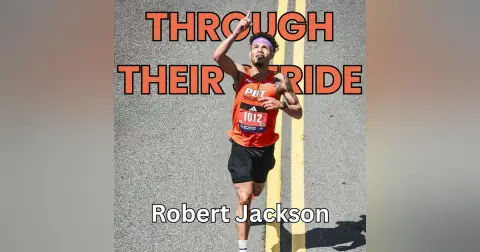


In this episode of Through Their Stride, I sit down with Robert Jackson for a conversation about running, grief, and what it means to keep moving forward after loss. Robert shares how running became a place to process sorrow after losing family members, and how the sport has helped carry him through some of the hardest seasons in life.
We also talk about his marathon journey, Boston, the people who have helped shape him as a runner, and the role his support system has played along the way. This one was especially personal for me too, because after losing my mom earlier this year, I was able to connect with Robert as a runner and as someone who understands that grief can change the meaning behind every stride.
If you've ever used running to work through something heavy, or if you just love hearing honest runner stories, this is a conversation I think will stay with you.
And I s I've said this before, and those are sometimes those are my best friends. Like I I love my friends, I love my guys. Sometimes I just need to talk to my mom. And when I'm running in those 5 a.m. mornings, I'm like, I'm legit like talking out loud to her. Like we're laughing, I'm talking. And if you had if you had a ring doorbell that could probably pick up my conversation, like, what is this dude doing? Running in the neighborhood talking out loud. Is he like on drugs? Is he need help? No, I'm just I'm just talking to my mom. So when I really need a moment, I'm really down in the dumps, I'll be like, I'm like, alright guys, I'm not joining tomorrow. And they usually they know for the most part what it is that that's the case. So with me, that's my way of dealing with it. I'll just run solo. I'll just be talking out loud. Yeah. And then I'll come back and then I'll usually look at a few pictures, hover, and welcome back to Through There's Drive.
SPEAKER_04I'm your host, Sam Sutton, and today I'm joined by Robert Jackson. Robert shared openly about losing his mom a couple of years ago and about the way running has helped him move through grief and sorrow, not by taking that pain away, but by giving him a place to carry it. That honesty is a big part of why I wanted to have him on because this conversation felt personal to me too after losing my mom earlier this year. In this episode, Robert and I talk about running, loss, and what it's like to keep putting one foot in front of the other when life changes you. More than anything, this was a chance for two people who have both lost their moms recently to share a conversation about grief, healing, and the role running can play in both. I'm really grateful for Robert's openness, and I'm grateful we got to have this conversation the day a couple days before Mother's Day. So without further ado, here's my conversation with Robert Jackson. Welcome back to Through Their Stride. Uh, I'm your host, Sam Sutton, and today I'm joined by Rob Jackson. And this is super exciting because Rob, I've been following you for quite some time now, and you just got done with Boston. So congratulations. You got a course PR there?
SPEAKER_01Yeah, thank you. Yeah, it was it was exciting. You know, uh this block, uh, beginning of the year is kind of hectic. Life was lifing, as I would say. Um I didn't want that pressure of like going for an actual like PR, like big time PR. Because at the end of the day, when I do that, it's like that's all I'm zoned in on. And you know, uh family, family took the front seat as it always should. Uh my dad was battling cancer for most of the block. Uh he beat it, so that was great. But he had radiation appointments Monday through Friday. Uh my my middle daughter picked up gymnastics like uh competitively, so we was on the road a lot, had to schedule long runs differently. I was just like, this isn't the time to focus a hundred percent like on PRing.
SPEAKER_03Yeah.
SPEAKER_01So it was like, it was good though, because I was like, I'm not gonna race the spring as far as like I skipped a race here and there, and then I wasn't putting the pressure on myself. And people were like, you're still training hard though. I'm like, yeah, I mean, because I'm not burnt out. So I didn't want to like not run or work out. I looked at it as well, I'm gonna continue, I'm gonna continue to go through at Boston, but I'm gonna work out like I'm trying to PR, but I'm not gonna put that pressure on me. If it happens, it happens. If it don't, it don't. Because you know, at the end of the day, like all of us, we're all competitive, and we always want PR. But man, you'll get burnt out real quick if that's always your goal. Yeah. And at this time, I was like, I know, it's not to flex, but I was like, I know I'm in a better shape than what I was two years ago when I ran 242. So it was like kind of like pretty much in the bag. I just needed to show up and get to the race, uh, start line healthy, and that's what I did. Ran 235, knocked off seven minutes of some change. I was I was super happy with the day. I was on a very good PR track for a while. Uh the quads just weren't having it, and then had a I had a bunker down and just finished through at that point. Yeah.
SPEAKER_04Yeah, uh, it was a beautiful day too. I saw uh coarse conditions and I was like, man, I'm jealous of that.
SPEAKER_01Yeah. So I went to Boston in 2024, that was my third one. And uh some people may know about that story, but that's the one I had a I had a fever. Um I ended up going to the med afterwards, had the thermometer story, which is I do not recommend that. Um so long story short, thermometer wasn't the thermometer I thought I was taking. Uh it was from the it was the other end. Uh, because it was the more direct way. I never at that point my I was already cramping up too, so it was hard enough to get my my tights halfway down for that to happen. So I get made fun of for that a lot, but I had PTSD from that boston because you know, uh I'm in the Midwest, so I'm we're training our long runs are like either anywhere from negative 10 to 30 degrees, and then you run 65 degrees, and that doesn't sound hot, but when you're coming from the temperatures that we're coming from, that sounds super hot, and I just got absolutely cooked, and it was horrible.
SPEAKER_04Yeah, yeah. Um no, I like the Midwest, like I don't understand how y'all do it without well like negative degree temperatures. Like coldest I've run in is probably like 20s. I did a like a 22 mile rock long run in the uh uh uh ice this last February when we had that mid-ice storm, but I can I could never do negatives.
SPEAKER_01Like negative 15 is the lowest I went outside out after that. I'm inside.
SPEAKER_04Yeah. Yeah. Um, well, cool. So so um, you know, I know I obviously know who you are, and I think uh a lot of my uh listeners probably do, but for those who don't, can you kind of give a little bit of a brief summary of who you are, how you got into running, and what your story is?
SPEAKER_01Yeah, so first and foremost, uh my name is Robert Jackson. I'm from Indianapolis, Indiana. Now I live in Fishers, Indiana. But I picked up running uh late 2021. Uh so COVID time, pretty much. I had a best friend. Uh well, he's still my best friend, but I have a best friend that was hounding me to run a marathon. We worked together at the time. He was the VP, I was the head of HR, and uh we were the two health nuts of the company, but I was more so into lifting, he was more so into running. Uh, so he was scrawny, I was built, and he's like, Oh, you should run. Uh, I was like, no, I just run a couple miles here and there on the treadmill just before I lift to get the blood going. And then he's like, No, just run a marathon. I was like, I've never ran a half marathon. And before that, I've never ran more than like three miles outside. It was just like your typical Thanksgiving 5K. And it wasn't, I wasn't blazing speed or anything. It was just like to, hey, it was cool to do a 5K on Thanksgiving because that's what people do. Uh so I did a couple of those before. But uh he talked me into the marathon, and it was it was a running joke to us. And I was like, all right, I'll do the marathon if we try to qualify for Boston. And he was like, Do you even know what Boston is? He didn't think I knew what it was. Uh, but being a sports guy, I knew what it was, but I couldn't tell you anything about it. I just knew it was a marathon, and it was pretty big because it was on TV, didn't know anything about uh cutoff times or standards, none of that. And he's like, All right, uh, you got to run this time. I was like, Okay, that's cool, we can do that. So 95% of my training for my first marathon was all done on treadmill. I am portable with directions, and I was new to Fishers while he was already living in Fishers, so and due to our work schedule, being at work a certain time, we could only meet up on Saturdays to run our long runs together. So Monday through Friday, I was on the treadmill, just and it's the worst way to train. I was just going up 0.5 like every five minutes, boom, boom, boom, boom, boom. Uh and then we would run our long runs together. And after a couple, he was like, You're getting too far ahead of me. I was like, I don't know what I'm doing, I'm just running. It got to a point where he had to yell at the directions because I I am bad. My teammates do the same thing. I am so bad. Direction. But as we get closer to our my first race in 2021, he was like, I think you actually might qualify for Boston. I was like, nah. And then he was like, Yeah. So and the thing was, I was like, I didn't want to put it on social media or anything like that because it was a big goal. And I was like, people are gonna think, look, I look at me like I'm stupid. Like, Rob, you don't run, you play basketball, you play football, always injured in high school. You're not gonna try, you're not gonna do it. I was like, all right, cool. I just keep I can just keep it quiet. And then the first marathon I ran 258 flat, even I was like, holy crap. I crossed the finish line, I looked at my wife, I said, I'm never running a marathon again. And I as I'm in tears, and I tell you, like a week later, I registered for Boston. And then I got in. So it was it was a blessing. But that's just that's the story about how I got to my first marathon where I'm at now. Um, you know, I'm loved and supported by my wife and my three daughters, so I have a really busy schedule. Most of my running is while everybody else is asleep. I make sure the family schedule comes first. The only time that I really run while everybody is up is Tuesday nights because we have like a team practice. That's our speed session. But the wife is okay with that. I make sure to get that approval. And then on Saturdays, we start while the family's asleep, but obviously they're awake by the time I get back because I have to drive 40 40 minutes to this location. But it's one of the best spots in Indy to run. It's like if you're a basketball player and you got you know that one gym that has the best open gym runs. This location in Indiana, uh, Eagle Creek is where it's at. Like you can show up, you got a group of OTQ guys running, or even 220 guys, or even former Olympians, that's where you go. So you wanna you wanna get better, surround yourself with better people. That's where I'm at every Saturday.
SPEAKER_04Nice. Awesome. Yeah, you I I listened to uh we were talking offline about the uh episode that you did with finish lines and milestones, um, and you had said on there that your early morning runs is like everyone, like most people's coffee in the morning. So uh is running like do you kind of get like anxious if you don't if you don't get that run done in the morning?
SPEAKER_01Yeah, so with me, like every everybody anybody can make an excuse. Everybody has excuses, but at the end of the day, if you make it your first thing to do, like whatever you want to do, if you make it your first thing to do, there's really no excuse. Um and there's really no way that something can take that away from you. Yeah, so like if I if I say, hey, I'm gonna push my run until 10 o'clock, okay. Now I have meetings that just popped on the board, now I can't do 10 o'clock. All right, I'm gonna do it later at 1 o'clock. Well, now I gotta pick up my kid from school. Now I can't run then. And then all right, I'll run at 5. Well, dinner's due. Yeah. Nobody nobody needs me at 5 a.m. Yeah. So that's why I'm gonna run at 5 a.m. And I can control that. So pushing my run off through later in the day, even though some sometimes I've had to or like split up my runs, uh, because sometimes I had to hit the road at like 4 a.m. in the morning and I don't want to run at like two, right? Uh it does give me some anxiety throughout the day. But 5 a.m. is my perfect spot for me.
SPEAKER_04Yeah. No, I find it uh definitely like when I do my runs at 5 a.m., it's like it's hard to get up and I'm not very good at being consistent with early morning runs, but like when I do get my body out of a bed and get on the roads, I'm like the whole rest of the day I feel so much better because I'm like the like the hardest part of my day is out of my way. Like the day that I like the thing that I'm thinking about all day long, it's done. So now I can just like focus on my day and you know, it also gives me a little more confidence. I I go into work and I'm like, yeah, I I bet you didn't run five miles this morning. I did though, you know.
SPEAKER_01It's funny because uh I go into work and uh they they know I'm a runner. So when I go to my plants, I drive early. I hit the rope about 6 a.m. Some of my plants are two or three hours away. Like, oh, how many miles do you run this morning? Uh because they just know I have to run before I go. Uh, I usually run about six to eight before I travel because if I if I run more, if I run my usual like 13 miles in the morning, my hamstrings get all tight from sitting, and that's led to some sciatic problems and things like that. So I've learned my lesson, trial and error. Uh, and they're like only six. I'm like, well, it's usually like 13 to 14, but you guys are messing it up. It's been them a hard time. That's funny.
SPEAKER_04That's awesome. Um, and so in your in your time that you've been running and that you've been uh improving, what would you say are kind of the biggest things that has led to your progress? What are the things that you take some lessons that you've learned over time that's gotten you to where you are now?
SPEAKER_01Yeah, what's led to my progress, I would say one, um, belief in myself. You know, um self-doubt always creeps in every now and then, but the belief in myself to just want to prove other people wrong, uh, because when being I'll say this living in Indy, uh being a black on distance runner, it's it's not common. It's I have to tell you 95% of the time I show up to race, I'm gonna be the fastest black guy there. That's it's that's all um so in my head, I'm like, oh I gotta prove that belong. Uh so when I when I had my first couple races, I show up and I'm like, I'm bigger, I'm not out of shape, I'm bigger. I'm like, man, this dude's so skinny. He he looks like he's about to cook me. And this guy's got those short shorts on, I got these shorts on, I don't know what I'm doing. Uh but then the gun goes off and like boom, I'm right there. So self-belief is number one. And then getting a coach uh for sure helped me. Everybody's not coachable, I get that, but my coach has really done a lot for me. Uh he's like honestly, he's like another dad. Uh he's he's been there through everything as far as like my family. Uh and like you couldn't, it's it's hard to describe him because he's just he's just a great guy. Uh he's done a lot. I'll say that. And then overall, just listening to my body. That's a big progress. You know, you put on more mileage, you think you can do things that you were doing before you can't do. Um so listening to my body is number one. That's what's probably led to some of my injuries. I wouldn't say the mileage has led to my injuries, I would say listening to my body. There's a little difference. 100 mile weeks when I'm listening to my body, I still feel great. 100 mile weeks when I'm not listening to my body, I feel horrible. Uh yeah, like so instead of I don't always have to hit 100. That's the thing I've learned. It's like last block was okay, if I don't hit 100, it's it's fine. Um that that four miles that I'm short this week, it's not gonna make her break my PR or make me take my race. Right. It is what it is. So, like, like I mentioned about the car earlier driving from work three to four hours out of town. Like, all right, I would hit my 13 in the morning, like that's too much, and then getting the car to come back and hit my double. That's 17 miles, and I've been sitting on my butt for like six to seven hours in the car.
SPEAKER_03Yeah.
SPEAKER_01And that's where my sciatic got hurt uh messed up. So listening to my body has been a major key for me, for sure. Yeah, and like what was the second part of that question?
SPEAKER_04Oh, um, that was you cut you kind of answered it, and I was gonna touch on the fact that like uh listening to your body is so key, and also not getting into um like the um the comparison game, because like I myself, I'll see a lot of people running like 120, 150 sometimes mile weeks, and I'm like, man, I don't I've never touch a hundred, like you know, I'm like 50 to 60 in the peak of my builds, and I'm like, but and then I like I'm like we should I go to my coach, I'm like, we should hit 100 this build, and she's like, no.
SPEAKER_03And I'm like, okay.
SPEAKER_01So the biggest growth, another thing I I noticed this last year when I had a big spring, I had a big spring PR, uh, was dropping Strava. Uh I don't really do Strava. Uh I will say I post every Saturday. I post my long round Saturday just because I have people on my case. They want to see uh they support me, but they want to see like the work. Yeah. And I'm like, I I just hide it. Uh I post Saturdays. And if I don't post Saturday, because what happened was I wasn't posting for like three weeks. And I'm telling you, it was one day uh in the later part of that three-week period where I got hit up like four times and people were asking me if I was injured. I was like, no, I'm I'm fine, I'm great. Because oh, you haven't posted in three weeks. Like, where you see you seeing 100 mile weeks on your chart, and now it's zero. Yeah. Oh no, I'm still alive. So what I do now is I just post my Saturday long runs, and people can tell that I'm alive because they're usually a little hot compared to some others, but that's about that's the best they get from me. Because when I'm on Strava, I start comparing myself to other people, things of that nature. And half the people I was comparing myself to, I've had faster times in recently, or just about the same amount, same amount of time as them. So I don't know why I was comparing myself to begin with. So I put myself in a better headspace when I took myself off Strava.
SPEAKER_04Yeah, no, that's it's such a good thing. Like I try not to look at Strava like but once a month, and then like there you go, that's the move. Yeah, like I I look at my own thing because I'm like, I want to write my like you know, notes because I kind of use Strava as kind of like a journaling thing for my running. Yeah. So I'll write my notes and my what I how I felt, what I was thinking about, and then like just be done with it. And then like at the end of the month, I'm like, oh, what are other people doing? And I'll kind of look, you know, at everything. But I try not to follow like like professional runners or like, you know, you know, runners who are like in the even in the 230s, 240s, because I'm like, oh, I should do that to get there. And I'm like, I'm probably never even gonna get there, so why am I even trying? Like, why am I doing that to myself?
SPEAKER_01Yeah, no, I I get that for sure. Uh I will the only time I get on Strava during the week is when a buddy tells me they had a really solid run to check it out. And I'm like, oh, you can't just send me the stats. They're like, no, because they know I don't want to go on Striva, so it make me go to Strava to look at their run. But no, I would say jumping off Strava has done wonders for me. Uh I've joked about going back on Strava or here recently with my buddies, and they were so excited, and I told them I was just playing, then I got mad at me. Hey, April Fools.
SPEAKER_04Yeah. Well, cool. So uh, and then you know, obviously running like with running, it's it's a long game. Like you don't you don't get to where you think you can be at the very beginning. Like you you'll do your first one just to see kind of where you are as as far as potential, but it takes a while to get to where you want to be. So, what have you learned about like balancing like ambition with patience whenever it comes to chasing goals?
SPEAKER_01You know, it sounds cliche, but it's just trust the process, you know, just trust it. Um what I do for myself when it comes to the beginning of a block, I try not to set like that that PR number. Yeah. That that number that you're trying to chase that you have no reason to actually shoot for at the moment. Um I don't get a feel for what I'm gonna shoot for for a race until I'd probably say about the month before, yeah, right before taper. When I and that's when I sit down and like look at these runs, like, all right, this run was on track. If I would have just added six more miles to this 20-mile run, I was already on 230 track, I was on 229 track, 232. And I sit down with Coach and then we we map it out from there. I would say it's best to go into a training block kind of blind as far as like your goal. Yeah. Now in the back of your head, every burner still has that goal, but I wouldn't be so hard set on it at the beginning of a block. Uh don't do that. Uh be open-minded and let your fitness guide you. That's him, that's what I do.
SPEAKER_00Yeah.
SPEAKER_04No, for sure. I I both both of my last two marathons have been like very well, all I think was it, all but one of my marathons have been very goal heavy. And it's like, you know, you you you go in and you hit like you have a goal at the beginning of the build, and it's like for my first two, well, my first two after my first, uh, I was trying to break four hours because I was like, I'm fit enough to break four hours, like let's do it. And first one I did 425, and I was like, it's because I didn't fuel, but like at the end of at the end of it, I was like so mad at myself, and I was like, Yep, you know, I'm so bummed, and then uh went to try again the next year, and I got 417, which is still a was still a PR at the time. Yeah, and I was like super bummed, and my dad was like, Yeah, but like you shaved like almost 10 minutes off of your time, like you shouldn't be bummed. That's that's good. And I'm like, Yeah, and he had to kind of talk me down and then finally broke. Last July at 350, and then I was like, I was like, I'm gonna break 340 now, and then I ran 352 at Austin, and I'm like, oh, but you know, like it's just the day.
SPEAKER_01So so I will say um it's hard to take them off in like big chunks like that. I will say when you're when you're starting to make your trend forward, when you're starting to make your real gains, like you will knock off some time like real quick. Like I went from 258, they ran 246. Like, oh crap, like this is getting becoming like easy. I think this is so easy now. I'm just it no, it it come it becomes like a 30-second PR or a minute PR. You're like, I did all this for that. But to go back to your point, uh, even though you missed and you were mad, uh I hate to break I I'm the same way, even when I do make it. So my wife's like, Oh, you ran a great race. I'm like, Yeah, I left like two minutes out there. I should have been two minutes faster. My PR should have been more. Uh so I don't think good or bad, I don't think it's ever gonna be broken, to be honest. You're still gonna be in that habit. Yeah. Always chasing. Yep. Yep.
SPEAKER_04Well, cool. So um, and the next thing I I wanted to go into, I wanted to go a little bit into what we unfortunately relate to on. Um, you know, you you had lost your mom. Um, I think it was back in was it 2024 when she passed? Um yeah, yeah, and then my my I my mom just passed back in uh in January of uh of cancer, and I was that's one of the reasons I reached out to you because I'd heard your episode on Christian Warwick's podcast, and I was like, man, his what what he said on that episode really got me, you know, through some things and has been getting me through some things these first few months. So I wanted to ask you a little bit about you know why you continue to share your story about that and what what gave you the courage to share that story on Instagram?
SPEAKER_01Yeah, so with me, like my mom, she she was a go-getter, she was an army vet, and I never knew my mom not to be in pain. So from her time being in the army, she was 100% disabled. Uh she was a disabled veteran. So she was always in pain. There was times that we would talk, and she was like, she would think about getting her leg amputated just because of how much pain and how many surgeries that she had on her leg. She had a chair that would literally bring her up and down the stairs. She had to sleep in a medical grade bed, couldn't even sleep in like a regular bed toward the end of her lifetime with my dad. So but she kept going. She she she never gave up the f uh fact that she wanted to walk on her own two legs uh when things got hard. Never complained about the surgeries, never complained about the chair taking her up and down the stairs. And if she could do that, I can run 26 miles. That's how I look at it. Like my life is not that hard. She's living with this every day. I only have to run this 26 miles this one time, this one day of the month, while she's over here living in pain.
SPEAKER_00Yeah.
SPEAKER_01Um, and then what she went through, so a little backstory. I went to the Berlin Marathon in 2023 in September. That was actually like the last full time that we had like the family together. We had like a send-off for me. We had like a family dinner here at the house. We took some pictures, and then next week I was in Berlin. Came back, uh, brought some chocolates and things like that. Because she just spent a lot of time in Germany uh when she was in the army, so she always talks about the chocolate and everything. Uh and I remember we went over there the last uh last Saturday, the end of the month of September to drop stuff off. And if you know me, you know Sundays I don't like to do anything. I I just I don't want to do anything. And I was already tired from the travel from the week before. So and it was uh and it was Saturday, I was like, I wanted to get home, watch for college football. So uh we picked up the kids, and then uh she was always real big on giving her hugs and kisses. I was already in the car, I was ready to go. Just do do do grab the stuff, let's go, get the kids. And uh she said, I don't get no hug. I said, I got you next time. And that one moment is legit though, that's the legit worst decision I've ever made in my life. That was the worst decision I ever made in my life. Because the next day, that Sunday, October 1st, I got the call that everything happened and she was rushed to the hospital and they had to pretty much remove half her skull because her the brain bleed was massive. Um after that she was never sane, but she I mean she was alive, but she wasn't living. Uh so she fought she fought hard from October of 2023 to March of 2024. And just seeing Matt fight alone, I was like, as she she should have been dead on day one. She fought, we went to every therapy session. I was there for every single therapy session, I was there for every single doctor's woman, didn't miss anything. And I saw her grow, even though she still was the whole left of her body was not working, still couldn't really talk. But I could tell my facial gestures, she was getting better, it was just gonna be a slow process. Um and and then just went downhill real quick after and uh it was cra it was crazy how how quick it turned uh that before she passed in March of 2024. So what makes me feel comfortable about it is because like I know how my mom was, and like we have our inside jokes, we'd be able to we'd be able to be real with each other, and like just like with the running 26 miles, like she fought. Like I've said, I've I've said it several times already. She fought, so I'm gonna do the same. Uh mine's just gonna look differently, and that's what makes me comfortable because I know she was a fighter, so I'm okay with sharing her story.
SPEAKER_04Yeah, yeah. I uh yeah, I I can definitely relate to that. My mom was a uh, you know, she she w she grew up in a pretty rough home life. And um uh, but she was always tough as nails when it came to like standing up for herself and then and and in sports. She was a big basketball player grow uh in high school. And I think she played NCAA um for Midwestern. It was division two at the time. Uh actually maybe Division III at the time, but she played a little bit of college ball and then uh uh got into running in the 90s. And um when she got into running, it was like that was like her thing, you know, like she was pushing and pushing, and she broke three out four hours in the uh uh marathon at Chicago back in the 90s, and then qualified for Boston two years after we were born and ran Boston in 1998, and then again in 03. And uh yeah, she was kind of my inspiration as far as what got me into running. And uh when she when her cancer like really got bad in 20, it was 2018 is when it got like really rough, and she uh was fighting it fighting it, and she was going through chemo, and while going through chemo, she trained for a half marathon.
SPEAKER_01And uh she a bad girl, yeah.
SPEAKER_04And so I was like, you know, I would so I I I trained for a half after that because I was like, man, like, you know, she's she's got fight in here, I have to have fire in me. And then when she like after after she it went into remission at that point in time, she went and hiked the Grand Canyon rim to rim to rim, and it came back. And then uh she fired it again with radiation, and then uh after that, she's uh trained to cycle uh 100 miles, no, uh 100 miles a day from Houston to New Orleans in the span of a week. And then it came back again. Wow. So and she just kept you know pushing and pushing and pushing. And I think the one moment that kind of like, you know, at the very end, she was uh, you know, it was really bad, was around uh Thanksgiving, and she was on like a ton of medicine, couldn't get out of her chair really. Um, but then all the family got to the house and she like perked up and like her energy just like you know, went like that. Yeah. And uh we ended up playing two hours worth of pickleball in her front yard and she beat everybody. And like this is like yeah, this was different. She was a cheat code, man. She's different. And she she that was two months after she uh before she passed. And uh, you know, just and she was so like out of it with the with the medications, um, and so she didn't know like what the score was, what anything. So she would just like hit the point and she's like, all right, what what's going on? She was like, All right, it's uh it's your turn. She's like, okay.
SPEAKER_01And like when you can dominate, well, you could dominate without knowing what's going on, you're a next level.
SPEAKER_04So yeah, yeah. And so that was for me, like, you know, with like with running, like running is in the grand scheme of what they've gone through, running isn't that hard. Like, it's just like, you know, it's it's kind of like w I had a guest on a couple or last week, and she was like, you know, we get to do this, like we get to choose what we suffer, and they didn't get to choose that. And you know, I think that was a really inspiring thing when I heard that because I'm like, exactly. Like, we're doing this in honor of what they can't do anymore.
SPEAKER_01Yeah, no, I definitely agree. And you know, it always pops up like when I'm in the middle of like stupid hard work at I'm in quotes dying, and I can't breathe. I'm like, nah, this I'm not dying. Uh and I always had to remind myself that, but uh that I love that quote.
SPEAKER_00Yeah, yeah.
SPEAKER_01Thank you.
SPEAKER_04And um, so um, you've also talked about prior in previous podcasts that kind of that grief, like running kind of gives you a space to process your grief. Um when you're in that space and when you are when you're running, what what does that look like? What it what how does how does that process kind of play out?
SPEAKER_01Yeah, so with me, uh I have a morning group here and uh we run together almost all the time, besides when our schedules mix up, like when I have to hit the road early, I drive I run super early, or somebody on someone else has to say anything, they run super early. But like I wouldn't say my mood, but like, you know, when anniversary time comes around for passing, or I or I need to be a little solo, I'll run solo. And I s I've said this before, and those are sometimes those are my best friends. Like I I love my friends, I love my guys. Sometimes I just need to talk to my mom. And when I'm running those 5 a.m. mornings, I'm like, I'm legit like talking out loud to her. Like we're lasting, I'm talking. And I'll be like, you had a if you had a ring doorbell that could probably pick up my conversation, like, what is this dude doing? Running in the neighborhood talking out loud. Is he like on drugs? Does he need help? No, I'm just I'm just talking to my mom. Uh so when I really need a moment and I'm really down the dumps, I'll be like, I'll be alright, guys, uh, I'm not joining tomorrow. And they usually they know for the most part what it is if that's the case. Um so with me, that's my way of dealing with it. I'll just run solo and I'll just be talking out loud. And and then I'll come back and then I'll usually look at a few pictures uh of her and text her. I still text her every day. I actually have an alarm clock because my mom's super big on good night, I love you text like every single day. And it was like even like she was like on before everything happened, she was on like pain medication here and there. Sometimes she'd have to take it and make her fall asleep early. So if she knew she was gonna fall asleep early, she'd send it at like 5 p.m. because that was her making sure that she said it every night. Uh it it was bad because on Tuesdays, she knew I had practice uh at like 5 30. And I'd have like two or three texts saying, Good night, I love you, good night, I love you. I should just continue saying it until I say it back. Um you know, now I feel like her because I'm not getting a text back. And that that part stinks. Um and you know, text her, I text her that every day, and then sometimes, like before Boston, I text her a freaking novel. Yeah. Then after the race, I'll text her a novel or birthday. I'll talk to her about spending time with her, mom and dad, because they passed away, obviously. And uh hope she has fun with her family up there. So I mean, it sucks because you know, since the phones I still got the I still pay for the line because I I don't want it to ever go away. I don't think the phone's charged or anything because the the texts are all green, but you know, there's a it might be stupid, but uh you know um I I always wish just a little bit that I'm gonna get a text back.
SPEAKER_00Yeah, text is never gonna come. Yeah. I'm sorry, but yeah, I text her every day with a little bit of hope. I might get a text back, but it's not gonna happen. Right. Yeah.
SPEAKER_04No, um, I I yeah, I I totally understand. Like there was um there have been moments where I've texted my mom. Um, she she left us, you know, some um like some money, but when she when she passed, and uh it was enough to cover uh like a a brand new car for my wife. And uh we were yeah, and we were like, I was like, we gotta get something that's like quintessentially mom, you know. And I we got a uh a Subaru Outback, a brand new Subaru Outback because you know she she had a Subaru Crosstrek, and uh I was like, you know, we gotta get something that feels like her. And like we were just driving in it, and I was like starting to tear up, and I texted her and I was like, you know, this like this is this is you, like we like I feel you in this car like every day. Yeah, and and of course, you know, no text back, but it was just kind of like you know, like I'm I'm I'm glad I sent it, you know, and like today is your birthday.
SPEAKER_01So Oh yeah, happy birthday to moms, man. Happy birthday to her. It's a week too, Mother's Day weekend too.
SPEAKER_04Yeah, I love that. Yeah, she she would have been 61 today, and uh um last year we did a 3060 blowout together. She had one when she was 30, and so um we had like a 30-60 bash this time last year. Healthy, she was healthy as a horse, and like literally a year later she's gone.
SPEAKER_01So it's like that's so that's so crazy because my mom passed uh my mom made it to her 60th birthday too. We had her a big one. Um and that that was my yeah, mine is 32, so yeah, that's ironic. Uh, and then her uh third anniversary, my parents' anniversary, is actually this weekend as well for Mother's Day.
SPEAKER_04So happy anniversary to your mom.
SPEAKER_01Yeah, thanks, man. I appreciate it. That's that's so crazy.
SPEAKER_04Yeah, so but what you were also saying about the running in in grief, you know, um I I've talked to my mom as well on my runs, and um there was what the first time that I did it because it felt weird at first, because I was like, it did. Yeah, and like I I spoke with a a therapist, and uh he said like try to carve out some time to like talk to mom, you know? And so I I did it on my one of my runs, and I like said something, and then I heard her say something back, and then I kind of got mad at what I heard her say, and I was like, you know, like you say to do this and be this way, but like you weren't this way growing up when I was growing up sometimes, and you were really like, you know, you'd be really angry and you wouldn't you wouldn't show up for yourself, and like it was like a real like healing moment because I heard her say back, like, you know, like it's it's I was not perfect, but like I still tried to show up every day and like you know, put put my you know, like lean on my faith and like you know, now I now I'm rewarded. And like when I was just having that conversation, I was like started like crying, and I was like, oh like you know, can't can't finish this run, but like ever since then, it's just it's more of a I've had some runs, yeah.
SPEAKER_01I've had some runs definitely where you start talking and you're like, man, I don't I don't even know why I did that because now I'm tearing up.
SPEAKER_04Yeah, yeah. But it's it's so healing though, like it really is something that like it's it's life-giving almost.
SPEAKER_00Yeah.
SPEAKER_04Um, and then it was there ever a time, like, was there a moment for you during your runs where you did feel like like this is a healthy moment, just like that? That was there ever a time where you're like, this is a great place to process.
SPEAKER_01Yeah, I mean, those examples I shared, those are pretty much what I had to say about that. Um because I don't do them so often. So it's kind of like they they like bottle up and then let it all out and a run. And it's not like no, when I mean let it all out, it's not like bad or anything, but it's just like I don't do it all the time. I think I do it just enough, if that makes sense. Yeah. Um, so I think what I do when I do it and the way I do it, it's perfect for me. Uh, somebody might need to talk to the mom every single day doing that. Uh me, we keep, I keep it going, and every every month or so I have a solo run where it's just like I'm talking to her. I talk to her a lot during the races. Like, like I'm starting to die in a race, I'm like, uh show me a sign. Like, like show me something. And it it really works. Like, I don't know. I feel like I get an extra boost every time I start leaning on her a lot in the race. So I'm like, if you continue to do it, it's my guardian angel now. So she gotta take me to the promised land.
SPEAKER_04Definitely. Cool. And then uh so for people who are who are going through this, right? And like who just lost someone special to them and are trying to start life after them, you know, and maybe feeling like they can't get out the door, can't take the next step. What would be the advice that you would give to them?
SPEAKER_01That's that's so crazy that you say that because one of my good running buddies, and he's like an older brother to me. Uh I look up to him, he's a really great guy. His dad, uh, right before Boston got put into hospice. And then as soon as the race is over, his wife said, You need a head home, you need to cut your trip a little early after the race. I don't know if he's gonna make it. He made it until he got home, and then he passed later that week. Uh, and he he was he knew everything for me, so he he's been he's been texting me. So like that. The first thing I would say, um they're in a better place. Uh they're their fight is over. It's time for you to pick up where they left off. Um and that's why I sat at my mom's funeral. I told her, you can rest now. Uh like you no longer have to fight. It's all on my shoulders now. I can I'll do it for you. And I don't have a problem doing it. So I would say honor them as best as you can. Uh make them proud while making yourself proud and others around you. Back in the day, they're they're irreplaceable. But keep moving forward because definitely your parent, but in general, your loved one, they're not gonna want you to be hung up on that. They're gonna want you to live life. My mom, if I was sitting around moping, I get my mom would be on my but I I she would tell me to get up like the day like for the the week she passed, she passed on a uh a Wednesday. I had a race that Saturday. Yeah, people were like, You gonna still race it? I was like, my mom would kick my ass if I do mace. Like, she'd be like, Why are you missing this race? Like, so I would say, do what you think they would want you to do. Don't do don't do the opposite because you think that it is like the right thing to do. Like the people will look at that and be like, why does he he shouldn't race? Like, my buddy whose dad just died, what did he do? He just raced the indie mini last week and had too many PR. That's awesome. Yeah, his dad died that Thursday. Then they had a funeral last Saturday, which was the same day as Indy Mini. He he got a PR and went to the funeral. Yeah. There's nothing wrong with that. No, it's probably life giving for him. Yes, you and you gotta live the life your his dad would have wanted him to do that. Yes, 100%. That his dad would not want him at home moping after the bad race they raid in Boston that I've been giving a crap about. Uh it said he got two minute PR. Same thing with my mom. When she died on that Wednesday, that that Saturday, I also had a two-minute PR in the half marathon. And and it felt like I ran a faster half marathon three or four times since then. But man, I'm telling you, I didn't feel one bit of tired. I felt like I was a new person. It was just like I don't know. Cause my mom went through so much. Not only did I feel like she was there with me, uh, because in a way that was her first race she ever got to see me run. Because she couldn't stand at the uh finish lines or do anything that so she never got to see me run uh when I started my running journey. So it was cool for her to see me run for the first time. But like I do, I just had this energy. I didn't feel like I used anything. Uh it is great. I just think if you're going through this, do what you can do to make them happy as well as yourself, and don't do what the outside world would think is the right thing to do, if that makes sense. Yeah, uh, don't skip things that your parents or your loved ones would have wanted you to do. If you want to go take that trip to Disney World, uh go take that trip to Disney World.
SPEAKER_00Yeah.
SPEAKER_04No, I uh I had a very similar situation. So the day before my mom died, we you know, she was on hospice and she she couldn't move, um, she couldn't talk. She all she was doing was breathing. And she can move her eyes, you know, a little bit, but that was about it. Um, and we like we were talking in in her room, me and her friends, and I was like, we should do like a 5k, you know, the morning of her funeral, like like host a 5k at the park, because like she like that's what she would want. Like she she would want like a celebration, us doing something hard together, you know. That would that would be exactly what she wanted. And when I said that, she like almost lifted her body up. Like it was like she like kind of you know, step sat up a little bit, and uh her eyes got wide, and she was like looking right at me. And they're like, Oh, she's looking at you. So I walked over there and kind of like put my hand on her and I was like, Hey, like, you know, how you doing? And she like like forced a smile, and I was like, Y'all, we're doing that 5k. I was like, that's exactly, you know, like that's that's awesome because that's kind of reminds me of my mom.
SPEAKER_01So my mom, my mom loved Pepsi, she loved drink Pepsi, and uh we had just decided to pull it was time to pull the plug, let it go. Yeah, and no, no BS. We start talking about how after this we can go to the cafeteria at the hospital and drink a Pepsi. Anybody knows me, I'm not I'm not pop guy, I don't drink pop. It's either water, coffee, protein shake, water, coffee, protein shake. And we start talking about Pepsi as the plug is pulled, and I swear, she came alive a little bit. Uh we we all noticed it. The heartbeat went up a little bit, and then after that, you know, it was a final goodbyes. But that as soon as we brought up Pepsi and drinking it for her, it definitely happened. So I I feel that. Yeah, yeah.
SPEAKER_04And like it's just when you see that, you gotta do it. Like, it was just like, you know, you that's that's the cue to to keep moving on, you know what I mean? And keep chasing things that she would have chased, you know? So yeah, well, cool. Well, going into a more of a lighter note in a way from all of that, so back to running. So uh what is on your kind of uh schedule right now? What are you uh uh excited for to race?
SPEAKER_01Yeah, so you know, I didn't I I have this fitness that I built up for the spring, and I didn't put that pressure on me to like necessarily go for PR in Boston. Uh and since I still have that fitness and I lucked out with Carmel being canceled here, uh, and also got canceled last year, but I was actually signed up for it. I'm actually jumping into that race. So I have a marathon here in about 23 days. Uh oh. Hopefully I get back up to speed pretty quickly. I'm pretty good at uh doing the double marathon. I've I like that. I like that quick turnaround. I usually I usually PR when I I usually PR every time on the double. Uh so we'll see. It's it's a little bit different when you're trying to go for sub-230. Uh outside that, you know, there's a mile race that I got coming up in June. Oh, cool. But there's a little that's a little messed up now if we're doing the marathon. Um, trying to switch gears from marathon to mile. I don't know if I have that much time. So I don't not gonna put pressure on myself to PR that. I'm just gonna run the mile, um, get the sub five and call it a day and see what happens. Sub five. Yeah. Yeah, my my biggest, my biggest race this year, the one I've really been, the one that you actually put your pressure on is like monumental. It's the best, it's the best race in the U.S. All right. Non-major. You've got to run the monumental marathon, Andy. Uh putting it out there. It's a great course, it's a fast course, flat. And now I'm gonna say this and I'm gonna regret it, but you usually don't have to worry about weather. All right, it's gonna be cool. You are you're gonna be able to get a few. You're gonna be able to fly. Uh, so that's the one I'm really gearing up for. I I really, really want a big one. I wanna let let me erase this carbon one then. I can really put a time on that monumental one, but it's gonna be a good day. I hope.
unknownYeah.
SPEAKER_01How about you?
SPEAKER_04Uh, so I just did a a really big kind of milestone that I've been chasing for a while. I've been wanting to break 20 minutes in the 5K. Um, it's been something I've been chasing for like three years. And I did it, I tried it two weekends ago, and the course got messed up. So they led 90% of the runners off course at like the one of the crucial turns at the beginning. And yeah, I love that. Yeah, and so like I had to like switch gears and you know get back on track, and then my shoe came untied in the last like quarter mile. Oh no, I was like, so I went I ran 2011 at that race, and I was like, okay, I was like, if I can run a 2011 with all that, I can run a sub-20. So the next weekend I lined up at a uh start line like at a town half an hour away and uh ran 1949. So I was like, Yeah, I was pretty stoked. I was like, that was heck of a day.
SPEAKER_01I I absolutely hate the 5K. That is the word that's the one I do not like at all. Um, ironically, I ran my second fastest 5K uh a workout right before Boston. It was like a 16, 12 or 11, and I was like, man, I didn't even feel like I was pushing hard. And coach was like, yeah, I think you're gonna be more of a consistent sub-16 guy. Uh, because I I broke sub I broke sub-16 last year in my build to Chicago. I mean, I had a great build to Chicago. Uh that got sidelined due to uh sciatic problem, which okay, it was the running and driving, running and driving. I fixed that problem, hopefully. But 5k is just not my cup of tea, man. More power tea.
SPEAKER_04I like a I like a mile better because it's like it's it burns like a 5k, but it's short. It's like five minutes, you know?
SPEAKER_01Like yeah, 5k, I hate 10k. You can't even get me to sign up for you're asking me to do the 5k but longer. There's no there's no give.
SPEAKER_04No. Um, and then my big A-goal race, I'd say, for this year, um, is the Fort Worth marathon in November. Um in so there's two marathons in Fort Worth. One is Cowtown in February, like late February, early March, and that's like the big one here. And then the Fort Worth marathon is kind of more of like a down home feel uh marathon. And I paced it with my I paced the half with my brother to get him to a PR a couple years ago. And I was like, I love this race because it's it's flat. So uh I'm gonna go get try to get a sub three. I'm saying sub three thirty, but of course, like I'd be pretty ambitious, but um Okay, but we'll see. So um I got I guess like 27 weeks before that race. So um I got a lot of long ways to train, but yeah.
SPEAKER_01Uh so no summer, no summer races then, right? No. Yeah, I I don't I don't do much in the summer either. It's it's 5k stuff, but like I said, I don't really race that many. I might do like two. Uh but what I do like to do, it's it's kind of it's a deadly combination because I I know a bunch of my teammates do go right into 5K's. I do 5k a mile work, but while I keep my marathon mileage. Okay. Um it's a deadly combo, but yeah, it can definitely make you fast in the marathon. Yeah, uh it's kind of I'm looking forward to doing it again this summer.
SPEAKER_04Yeah, that's kind of what Eric Floberg did this like this past winter. He was like high intensity, like in his in his speed work.
SPEAKER_01So it I guess it works, but I've ironically been in like two of his videos. I I end up being in I was in a Chicago one, and then he had one for Carmel when he did the Carmel marathon years ago. I was in that as well. So I was almost in his Boston one, I was like literally right behind him.
SPEAKER_04But oh, that's hilarious.
SPEAKER_01Yeah, yeah.
SPEAKER_04Well, cool. My last question is uh so outside of like pacing, outside of like PRs, what makes you feel like you're kind of in an exciting time uh in running right now for yourself? What makes you feel like you're good in a good space in the sport?
SPEAKER_01What makes me in a good space, honestly, man? Uh I've just I've just got a good handle on life. Like my wife keeps me keeps me humbled, the kids keep me going. Uh I'm not relying on having to have a good run. I think that makes you run better. Like, I don't need a good run to make me happy. Uh, I'm just gonna get the good run by doing what I do at home, uh, and pleasing the uh wife and the kids. But when it comes to the running aspect of things, like I've improved my diet. Uh we haven't touched on this, but I I I do still have an eating disorder. Uh it's gotten better. I've increased my uh calories by 1,500, um, which has really made a difference. I noticed it at the end of my Boston block. So if I can increase it another 700 calories to like 2200 calories more than what I was doing, I'm excited for the fall. I think I'm gonna have a big fall. I just gotta get the eating right, which I've done, and I've done a really good job listening to my body. So those two things, running-wise, are making me really excited for a big fall.
SPEAKER_04Yeah, okay. So I didn't want to I didn't want to bring that up because I knew I was bringing something up super heavy with the the running, but yeah, or with your mom. But um, but yeah, I saw I heard on um I thought you you were doing kind of a series uh with Christian Morwick on his podcast um leading up to Boston, and you said you had increased your uh your calories and uh gotten to uh to like feeling a lot better in your in your work day. So I was like, I was I was super stoked to see what you did at Boston, and then you got a course PR. So that was awesome.
SPEAKER_01Yeah, yeah. I was dealing with some dealing with some reds. Like I legit, I could I I slept. I was like, uh easy runs felt hard, everything felt hard. Sleeping, it's like taking your phone with a charger when you wake up and it goes from 100 to 60 percent right away. Like nothing was working. And I was like looking at the symptoms, and I was like, man, this gotta be reds. Like I'm not proud of it, but like before I started increasing my diet, I was like anywhere from like 12 to like 1400 calories. I burned that in the morning run. Like my morning run is that many calories. And I don't, and I was really low on carbs. I'm not I wouldn't say I'm key, I was not keto, but like I just I love I actually love carbs. But I was afraid to go back to my old self. I ate too much because my old self, uh a little chunkier side of me, I could eat, I could eat pizza, I could eat bagels all freaking day, but also that would make that makes you blow up. But now my diet, I some of the things that I've uh incorporated to increase that, I do eat three bagels a day. Eat three spoop, three big spoons of peanut butter. Uh, I had no fat in my diet either. So it was just lean protein and protein uh shakes and some freaking goldfish and some fruit snacks just to get some carbs, which aren't much carbs at all. Uh, so those those are just some of the examples. I made my portions bigger as far as like my uh grilled chicken and my turkey. So right now I'm sitting around roughly uh 25 to 2800 calories a day. That's it's not a lot uh for what I do, but it's more than what I was at. Uh when you were so when you're so low like I was, I can't just jump up to 4,000. It's just not gonna happen. So I jump from ballpark 12 to 1400, like I said, to uh 25 to 28 given a day. I doubled my calories right there. That's a lot to do. Uh now the next step is I'll by the summer, I'd like to get at least 35. Yeah. Uh if I can get to 35, I feel like I'm in a really solid, healthy spot. And I think that's gonna lead to a big November.
SPEAKER_04Yeah, that's awesome. I um uh this made me think of this. My I had uh, I don't know if you know who Gabby Hintman is. Uh she's a uh big runner, got up and coming marathoner. She was on a couple of weeks ago, and she said, you know, like eating an eating disorder, like you kind of have to treat it like she's like, I treat it like like an injury, right? So like if you injure like your leg or something, you're gonna be dealing with leg pain for the rest of your life. You're gonna have to ease back into things that you do. It's like it's just kind of like you might your eating disorder, because she had an eating disorder, is like it's kind of like that, where um you can't just like try to fully fix it in one day. And like you're trying to eat 2,500 calories today and like going from a thousand, you know, immediately like that. It's it's you gotta kind of ease into it and then like know in your head, like you're still gonna deal with with problems as you like as you go, because like you're still it's gonna be with you at all times.
SPEAKER_01And I was lucky I didn't deal with any stress fractures with how much I run and the low amount of calories. Uh now I would say do my my deep sleep, my HRVs have all increased. Uh my I'm not as achy, uh, but I'm still achy. I mean, you're gonna be achy running 100 mile a weeks. Uh anybody that says they run 100 mile a weeks and not achy, more power to them. Or they're probably a pro and they don't have to like work work uh if their work is running, so I give them that. But if I could take a nap every day, I would love to. I just can't do it. So that's just my life. Yeah, it's like I'd love a nap every day, but it's just not feasible. Boy, yeah, like when it comes to when it comes to Friday, I'm like by seven o'clock, I could probably go to sleep by seven o'clock every Friday. And like I said, I'm about to go to this gala and I'm about to be knocked down on the table probably within 30 minutes.
SPEAKER_04Yeah, I I don't envy the gala. I was like, that's gonna be a hard night, especially you're in your 30s, right? Like yeah, 30-year-olds trying a marathon train and go to like late night things, like we can't, you know.
SPEAKER_01What are we doing? I got a pretty I got a pretty solid uh long run tomorrow, too. It's first long run back from uh Boston, but like I said, we don't have much time, so we we got it ramped up for Carmel. So it's it's it's heavy tomorrow. Yeah, we'll see how it goes. What are you doing? Oh man, uh you know what? Let me read it off to you. I got it. He changed it up because he wanted less miles at marathon pace, which is cool, but he wanted some overall uh he didn't want any like float miles. Uh-huh. So let's see. So tomorrow I got two mile warm-up, and then I got five miles at 6 30 pace, which is fine. Three miles at six minute pace. Um and then also got three miles at fastest marathon target pace you would omit out loud.
SPEAKER_03He said somehow yeah.
SPEAKER_01Oh, so yeah, I skipped one. So 630 at five miles, five miles at 615, and three miles at six, and then I'll probably trickle down between three miles, between five thirty, five to even though I probably shouldn't go that fast, so I probably won't. But I don't know, I might be too aggressive because it's the first workout back. My legs are my legs are a little fresh compared to what I'm usually at coming into because usually going into a Saturday run, I'm like I'm like 85 miles into the week. This time I'm only 70. There's a big difference. Um I'm gonna try to be more realistic and keep it between 540 and 555 for those last three because I know I can do some 540. Um so we'll see how it goes. I'll hit you up on Instagram about it. You'll see it.
SPEAKER_04Yeah, yeah. Let me know because that that that sounds like one heck of a workout after a long night. So hopefully, hopefully you missed it.
SPEAKER_01And the goal is no stoppage time, and I'm practicing like a carb drink mix too. So hopefully that's okay with the stomach. Uh, because I do get bottle service at the caramel marathon. So that's my first time getting that. Uh, so we'll see how it goes. I'm not used to drinking a carb mix at all, let alone while running hard. So we'll see how it goes tomorrow. I might be in the pork potty a lot. Yeah.
SPEAKER_04Oh no. Well, good luck. I uh thank you again so much for for coming on. Uh, hope you can get away from that gala pretty pretty soon tonight to get to bed early. And yeah, um, and I appreciate your time.
SPEAKER_01No, thank you, man. Uh thank you for having me. I love hearing your story, and then once again, happy birthday to your mom. Thank you so much.
SPEAKER_04And that was my conversation with Robert Jackson. Thank you guys so much for coming today and taking your time to listen to this episode. Obviously, he and I have something very unfortunate in common. We both lost our moms um to really uh unfortunate medical issues. And um, our moms were so much our best friends and meant so much to us. Uh, and so it was it was good to to kind of share our experiences together and talk a little bit about um how we're processing, especially, you know, yesterday was Mother's Day, May 10th, and so it was a healing episode for sure for me, and I hope uh for him as well. And I definitely feel like I made a friend out of this conversation. If you liked this or know somebody who is also struggling with grief in the loss of a loved one, please share it with them and hopefully they can learn a little bit some some information, some uh some wisdom, and get something from it. Um, I really hope this helps someone who needs it today. Thank you so much, and I will see y'all on the next one.


