Ep. 39: Heart Over Hard: Aly Kozar on Running Through Life's Toughest Seasons
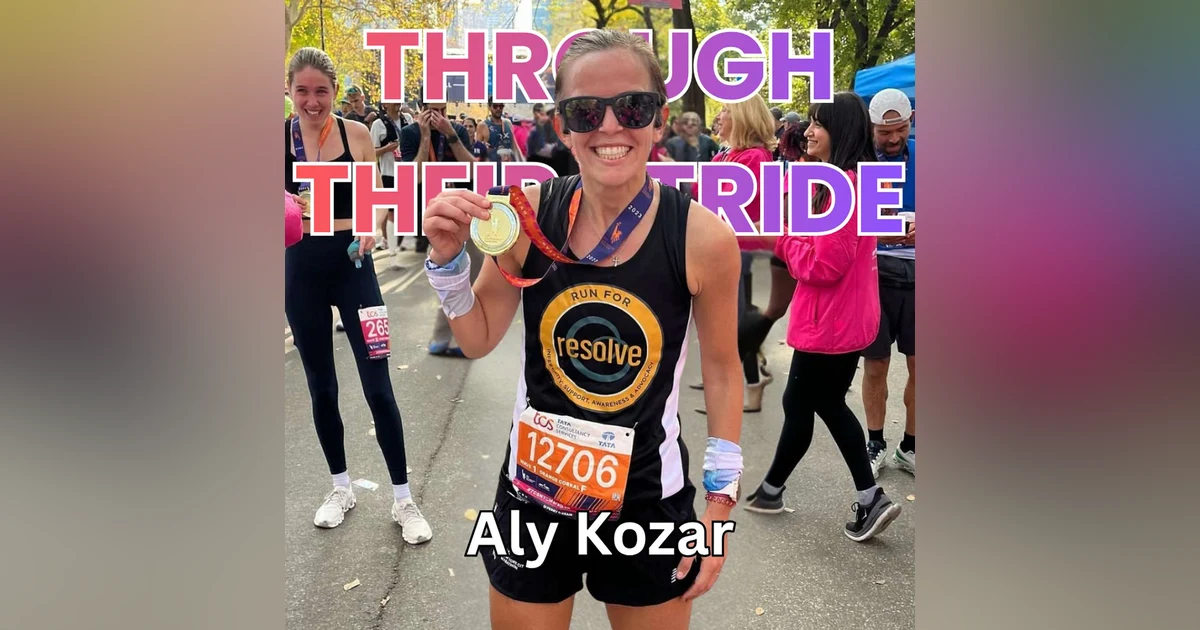


In this episode of Through Their Stride, I sit down with Arizona-based runner Aly Kozar (@runswithheart on Instagram) to talk about what it means to keep showing up when life doesn't go according to plan.
Aly shares the ups and downs of her marathon journey, how she's learned to get back up after hard seasons in running and in life, and the deeper personal road of walking through infertility and PCOS. Our conversation centers on resilience, perspective, and the growth mindset that has helped her keep moving forward with hope, honesty, and positivity.
This is an episode about endurance in every sense of the word, whether it's chasing finish lines or learning how to keep going when the path is unclear.
#running #motivation #PCOS #infertility #runningmotivation #runningpodcast
I mean, I talk about it with my students all the time, having, you know, a growth mindset versus a fixed mindset and like how important that is. Um, and that can be applied to everything. Only you matter, like your actions matter, like your thoughts about yourself matter and as much as you can, like avoid the noise. And I just had this conversation yesterday with a kid, and I was just like, you know, that their how they view of you is not gonna matter in two years or five years, it's like only what you view of yourself. So it's like trying to avoid like the outside noise as much as you can and just like you know focus on what you can control.
SPEAKER_02Welcome back to Through Their Stride. I'm your host, Sam Sutton, and today I'm joined by Allie Kozar. Allie is an Arizona-based runner and former collegiate soccer player who turned to running back in 2012 when she graduated as a way to stay in shape. Little did she know she was going to become very good at the sport, getting a Boston qualifying time of three hours and 19 minutes a few years ago. Alongside her running, she also has dealt with some infertility issues with PCOS and struggled with having kids, inevitably ended up having one, um, but was definitely a struggle there. Had a lot of struggles with injuries immediately after that. And her story is one of perseverance, of getting back, showing up back on the start line, back for yourself when things get hard. She shares her story quite a bit on her Instagram, which is Runs with Heart, and she raises money there for uh for others dealing with PCOS through a company called Resolve. Um, so if you would like to uh help her, go over to her Instagram and click on the link in bio to help her raise money to get to Tokyo Marathon in 2027. And yes, I'm so happy to have her on to this podcast and this episode. So without further ado, let's get to Ali. Perfect. Well, welcome back to Through Their Stride. I'm your host, Sam Sutton, and today I'm joined by Allie. And Ali, I didn't catch your full last name. What is your last name? It's Kozar. Kozar. Okay, awesome. Because I saw I saw Ali K and I was like, I wasn't sure. So well, Ali Kozar, welcome to uh Through Their Stride. Thank you so much for being here.
SPEAKER_00Yeah, thank you for having me.
SPEAKER_02Yeah, so um I looked, I've been looking at your profile and looking at your story for a while, but uh before I start asking you questions, do you kind of want to give a little bit of a rundown to my audience about who you are and how you got into running?
SPEAKER_00Sure. Yeah, I have been running since I think like 2012. Um I hated running. It was always like a punishment for soccer. And then as I was kind of like graduating college, I played soccer in college. Um and then it was like it was done, and then I was like, okay, like what do I do now? And like I still have that like competitive like fire in me that's just like been built in my brain. So then I did my first like half and I was like, oh, I like this. And so then it kind of stemmed from there, and that whole mind change of like, oh, like the benefits of running versus like seeing it as a bad thing, like really started to evolve. And now I still coach soccer now, and like even like the thing is like like I hate like you'll still see the coaches that are used like running for punishment, and I'm like, oh, that's like not it. Like it doesn't have to be like seen as like a punishment. So right.
SPEAKER_02That's interesting. I've had a lot of guests on this podcast who used to be soccer players, and they all say that like soccer is a great transition into the marathon. Would would you agree with that?
SPEAKER_00Probably just from I feel like it like uh like the leg strength. I feel like I mean we're not necessarily just lifting, but I feel like we had that built-in like quad strength, I think that really kind of contributed to like helping into my running career when I first started.
SPEAKER_02So yeah, it's kind of whole of a whole body leg strength. It's not just like one motion, you're like going back and forth all the time. So um, yeah, I my first guest uh uh was a former college soccer player, and he said um he was like, but you know, it's not only the leg strength, but it's also like your aerobic engine because you're just like moving around the entire time in a game.
SPEAKER_01For sure.
SPEAKER_02So I was like, man, I wish I'd had played played soccer in high school. Maybe I'd be better at this.
SPEAKER_00But a lot of injuries though. So now that I'm creeping up, I'm like, oh, some of these soccer injuries are now starting to come and bite me as I get older. So it has its downsides.
SPEAKER_02So uh when did you kind of start you know thinking about oh, like I could do a marathon and start kind of pursuing that route? I saw your personal best as a 319 uh in a Boston qualifier. So you've had quite a bit of success in that route.
SPEAKER_00I think I did my first marathon and I was like, oh, this was awful. I did it like a year after college, and I was like, this is the worst. And then and then I went back down to a half, and then I had a really good half, and then someone's like, You should try to qualify for Boston. And I was like, I've read one marathon, it was terrible. But I kind of just like this was back in Illinois, I just had some people that I would just casually run with, and they're like, You should, and I had no idea what the Boston marathon was. I was like, Meh, like what? I it was so new to it, and I was like, okay, and so then I started reading into it, and I was like, Oh, this is really cool. So then I was able to um qualify back then.
SPEAKER_02So yeah, and then um what was what were some things that you kind of did from your first marathon to your like what were some lessons that you learned that you were able to change in your training?
SPEAKER_00Um, I think like I didn't not I don't think like looking back to it, I don't think my first two marathons, I even took a gel. Like the fact like I look back at it, like, man, if I would have used things and like fueled the right way, I was like, man, if I could take those like 12 years back, you know, when you know I was like fresh out of college and stuff and before life happened, and you know, you get busy and it's easier to train. I was like, man, because I don't remember, I don't think I took a gel until I was probably like 30, 30 years old.
SPEAKER_02So no, I I my first marathon, I I didn't take a single gel through training, through any of it, and um I ran it and was like, okay, you know, I I I know of gels, but like I don't need that. Like, yeah, I was like, Gary's fine, that's all I'm gonna do. Yeah, water electrolytes, I'll I'll I'll I'll be fine. And halfway through that first marathon, I was dying, and I was like, there's some there might be something to this carb thing. So I tried my next year, and I I got my time down all the way from a 650 to a 425, and I was like, wow, it's amazing what fueling does for you.
SPEAKER_00Yeah, exactly. So I think like that's like the biggest thing. I didn't you don't realize like how important that is.
SPEAKER_02Yeah. Cool. And then you are also a teacher, which you've been telling me offline, and teaching um is quite the the job when you're also training for running. So how do you balance that out? What are uh what's your kind of day look like as a teacher and a runner?
SPEAKER_00Um early morning. So I pretty much if like I don't get my run-in in the morning, it's not gonna happen. So um usually like five. Plus, I have a three-year-old, so um it definitely happens in the morning. Um, so I usually run. I was now that since I've torn my labrum, I only run three days a week now. Um so I'll usually run three days a week and then bike two of the weeks in the morning, and then I usually drag in between soccer practice and school, I'll drag my toddler to the gym and she'll hang out for a little bit twice a week to do some strike training, three times a week usually. So kind of it's really just a lot of time management skills and forcing myself to get up early.
SPEAKER_02But yeah. Well, cool. Well, um the uh one of the reasons I wanted to bring you on, you mentioned you have a a child, so I've been kind of following a little bit of your journey, and um you're you've had talked a little bit about infertility and about what the uh the struggles with that is. And so can you tell me a little bit about your story uh uh around that and and what how you had your first child and what that story is?
SPEAKER_00Um yeah, so I mean, like I said, like I was an athlete growing up, so I didn't really like ever think of, you know, like when I was in high school, like why, you know, like my friends were, you know, like getting their period. Like I just kind of was like, uh, like they always just said, like, you're an athlete, like that's kind of why. Um so then when I was going into college, they just like put me on birth control because they're like, well, you should probably start having it. Um, so then I started having it, and then um as I got married, and then I was like, I'm gonna go off of it so we can, you know, start trying to have a kid. And that's when, you know, they're like, oh, like, well, the reason why you're getting it isn't just because you're an athlete. And so then I was diagnosed with PCOS and then started meds for that, um, which helped a little bit, but it wasn't enough to um where we can conceive naturally. So then they referred us to a fertility clinic and we tried like the IUI routes, and um I just like wasn't responding to like the medicine. Um I was just making it was just too many embryos, and you know, it was just right. So they're like you pretty much um have to do um IVF in order to um conceive. So then we went through that route. So um it took a couple trials through IVF, but um, we did have um our daughter in 2023.
SPEAKER_02So yeah, she just took it. Congratulations. Thank you. Yeah, y'all y'all see that.
SPEAKER_00Running definitely helped me. I think I had two of my 10K, my 5k PR was actually like in the midst of my fertility treatments, which is crazy. I remember I had my eggs. I was supposed I signed up to do a half, but then that I had my egg retrieval um like a week prior to the half, and they're like, you shouldn't be running like two, like you should at least wait 10 days until you have your after your egg retrieval, so you know all the inflammation and stuff is down, and so I was like bummed. I was like, I'll just I think it was like seven days later, and I was like, I could just drop down to the 5K and do a 5K. And so I ran like a sub-20, and that's the only time I've ever run sub-20 in my life, and it was like eight days after my egg retrieval. So I feel like it was like, I don't know, I feel like just being on so many hormones it gave me like power sometimes.
SPEAKER_02Yeah.
SPEAKER_00And I was like, I don't think I'll that might ever happen again, but yeah, you never like I think it was just a lot of like rage. Like, I don't know, the hormones were just like, so I took it out on running and uh just read some best types.
SPEAKER_02There you go. Well, cool. And then yeah, and you mentioned running definitely helps. So um outside of the the sub-20 time, uh how did it help during the process? What did it give you and what kind of how did it did it provide you a little bit of an out of an outlet?
SPEAKER_00Yeah, I think both like physically and just like emotional, mentally, it was like, I mean, it was really draining, like just like my moods were so I feel like it helped regulate my moods, definitely. Um, but just I think for like um further down along when I started doing the transfers, just from the cortisone, or not the cortisone shots, the progesterone shots that had to go into like your hips and that like running. I really felt like helped like move the medicine a little bit. And the doctor said that that was like super common to not get like really bad, like with a mm, like the meds like kind of stays like locked in that like glute area. So like even that to help um like not have that be in so much pain. Um, they said actually running was actually really helpful to kind of keep the blood moving in that area to help like spread the injections.
SPEAKER_02Interesting. Yeah, I think you know, uh, you know, and you mentioned your injury earlier, but I think you know, yours what I've seen about your story is that like it's a story of perseverance, you know, not not only of running, but in in life. And um what kind of uh outside of running, what is it that kind of keeps you going and keeps you moving forward and uh and keeps your uh keeps you strong?
SPEAKER_00Um I don't know. I think it's just like that mindset of just how I was raised, you know. Like I don't know, my parents came from like very like middle class, you know. My both my parents are working, so like I just I just knew that they were like doing everything to like put me in sports and like kind of just did a really good job of like setting a good bar of like you can achieve this if you do it, but like you're gonna have to work for it. Like even soccer, I was like never the best. I was always like middle line, like so I had to put the work in, but I just think it's like just that like internal drive, just kind of like how you're brought up, um, just to kind of you know really push along and um just like a good support system, and like my parents were really helpful along the ways too. Um, so I just think that really kind of like helps that install that mindset.
SPEAKER_02Yeah. And it it like you mentioned earlier, it does help to have something that you're like always chasing, something that you're passionate about that you're can continuing to chase when when life gets hard. Uh, is that what running has continued to be for you uh throughout the hard moments?
SPEAKER_00Totally, because I'm like, oh, like, especially now like with like like injuries that pop up, and I after giving birth, I tore my labrum. I'm like, man, like, you know, because it's like I paused like probably my really good running career when I was running really well, obviously, to have a kid and which a lot of people have to do. And then like ever since then, like that motivation's there, and I was like, oh, my body could just like catch up, you know. So it's finding that balance. But honestly, like I think it's just like the everyday. Sometimes it's like working with kids, like you just like get so motivated sometimes about what they do that you're like, I can do that, you know.
SPEAKER_02So yeah, yeah, working with kids is a big is a big help. I uh I'm a coach, a track and field coach here in uh uh Fredericksburg, Texas, and uh seeing them every day and seeing them do amazing things, I'm like it really motivates me to chase my own times. And I'm like, if they can do it, I I can get my butt out the door and start moving.
SPEAKER_00So exactly, exactly.
SPEAKER_02So awesome. And um, so you mentioned you tore your labrum. So how did uh how did that happen and when did you find that out?
SPEAKER_00Um, so I think it was just all um like the hormones, um, honestly, from having a baby and training. So I got in a bib to run um the New York Marathon. Um and I was like, I deferred it the year I was pregnant, and I was like, well, this is my last year because I got in during COVID. So you had a three-year window to run the New York Marathon, and I pulled it off because I was like, I don't want to, I pushed it off to the last possible year. Um, because I would have been too pregnant to run it the year prior. And so then I started running, and I was just working with a different coach, and I that was the first time I ever hired like a coach. Um, I was always just running for on my own, like I never had a coach, I just kind of ran out and ran. And I think it was like too high of a volume. I was running like five days a week, and I wasn't comfortable telling the coach that I was starting to hurt, and so I was just like, I was hitting my workouts, but then I was not feeling well, and I was like, Well, I'm hitting my workouts, and I like didn't I felt that like guilt of to say something, and so then just like one run, I like stopped mid-run and I was like, I cannot run anymore. And I like hobbled home and I was like, something is not right. So then I went in and um found out I had torn my labrum. Yeah, so now it's you know, pending, you know. I'm I feel like I've done and I I've worked with my same PT now, running coach since 2023, and she's amazing. And I feel like people are always like, Aren't you gonna get surgery? And I remember the doctor being like, Well, he I had my daughter at the appointment, and he was like, Well, that will never happen until you are not curing her. And I was like, Well, see you in six years. So um, so it's I mean, I could tell, like it still bothers me, but I mean it's like I just have to be really regiment on my staying up with my strength training, and now I'm like have to be so open because I feel like it just really makes you in tune with your body.
SPEAKER_02Yeah. Yeah, I was gonna ask about that. So, um, how did that kind of relationship um change after the injury? What uh what kind of got you more comfortable with talking with your coach and and and and how did that process go?
SPEAKER_00Um, I think it was more like personality, like knowing it started as like a PT versus just like a running coach. Um like I saw her more as a PT. Um, and so then I think it just uh just like that whole relationship versus performance-based, you know, and versus not necessarily like how you feel, like not just so like hitting your numbers and stuff. So I think that's like that focus really helps. Um and I think from there, but I think it was kind of forced to because I was like, oh so it's still an ever going, it's still an ever going, you know. I still go to PT once a month and you know, probably for as long as I either keep running or decide to get surgery if that's eventually in my future down the road. But yeah, I think it's super important to like be open if you're gonna work with a coach.
SPEAKER_02So I've I've definitely had times I started working with my coach back in uh actually like this time last year, and uh there were times where like she was coaching me for my first marathon, and I'd be just dog tired, and I'd just be like, I'm good, I'm good. And fortunately I never got injured, but there were some times I'd go into a workout and just like epic fail the workout, and she would be like, Are you okay? And I was like, I'm really tired. And she was like, You need to tell me these things, like we'll we'll help you out.
SPEAKER_00So, like it's so it's so easy to try to like show your coach, like exactly and I think that was like the bad part of like coming in from a sports environment my whole life, is that like I don't know, it's like gun-ho all the time. So, you know, I just still have that mentality, and I was like, I can't do that anymore. So you learn the hard way, I guess.
SPEAKER_02Yeah, for sure. Okay, well, talk to me a little bit about um, you know, like your life and in you know, perseverance, like getting injured. At first, you were you know having to deal with the PCOS and the uh you know possible infertility and things of that nature, and you got through that and you were able to kind of push through that, and then after that, of course, your your time slowed down a little bit and running, and then you got injured. And what I appreciate about you is like in your Instagram, like even though it's hard, you continue to share your story and you continue to like have a smile on your face and educate others about what you've gone through and give tips and give advice. So uh, why do you think that's so important to continue showing up for yourself and showing up for the community that you've built and uh and and and relay that message?
SPEAKER_00I think part of it is is like I I always grow up as I like uh I was kind of shy, like I don't know, I was like kind of like that little like introverted, like in high school, like really awkward, and then and I and I just like I've like after people are like, oh, like I didn't like when I was going through, you know, I got the questions all the time, like why are you having kids? Like da-da-da-da-da. And it kind of just like I don't know, like takes like a like a mental beating on you a little bit when you're like, oh my god, like all the time. And so it started as a way of like, I don't know, it was easier to tell people, um, like this is what I'm going through, like behind a screen versus like face-to-face, because it's a really s hard conversation, I feel like, to have to people. So I almost kind of used it at first as like a like this is me, like having a hard time admitting to people, um, especially like family, like outside of necessarily like even my parents, like sometimes like I don't know, it was a really hard conversation to have that I was having like all the issues with that. And then like, and then I was like surprised like how many people like were reaching out and being like, I had no idea, like I'm going through this, and then it kind of like stemmed from there, and now it's like even now, like it's so much easier now to talk about it in front of like and face-to-face to people just um because of that. But it kind of started as a way of like you know, like too hard, and it was like taking a toll on me, and it was easier to like that be my way to tell people, yeah.
SPEAKER_02No, it's it's it's definitely interesting. I think um there are so many people who like go through the PCOS, like athletes, definitely, and just like women in general. And like my wife, she has P I was diagnosed with PCOS back in 2020, and um, you know, she thought, like, oh, you know, I don't know who to talk to about this. Like, I don't know any, you know, anything. And then she went online and saw there was a lot of women who who go through this and got a lot of tips to man and how to manage it, um, just through like people on social media sharing their story. And um, you know, for you, you were like, I just I'll put it here because it's a way for me to tell people without telling people. Yes. And then like the world kind of worked in a way that like actually we're you know, you're gonna use this to help people. And yeah. It sounds like you've gotten a lot of like messages and and things and things like that.
SPEAKER_00Yeah, it's cool. And I got to run I didn't need to, but then I got to run um the New York City Marathon um for resolve. I didn't fundraise for them because I already had a bid, but then um it was really cool like getting involved and I'm so involved with that organization and they do really great things for advocacy. So um they're a really great organization for um people going through infertility.
SPEAKER_02Yeah, that's awesome. And so when you get a message from someone who is going through it, and it's like, hey, like I just want to say that I'm very inspired by your story. When you get things like that, what does that give you as a runner, as a person who's sharing this, as someone who's going through it?
SPEAKER_00Yeah, I think it just like, you know, one, it like makes you feel like how grateful it is, because it's like, God, I just took it was such a hard few years, and then it really like puts you back like any day that's like hard, or you know, my daughter's driving me up a wall. Like, you know, like regrounds you, and then even like with my injury, like um, like you know, it's yeah, it's awful, and it's like I have to deal with it every day, but you know, like I'm still so much farther than you know, the person who's not running or that kind of stuff. So I feel like it just really like it keeps you grounded, and you know, it's yeah, it's you really still feel like it's every time it's like a little bit of a band-aid ripped off, and you're like, oh, I know, like it still feels so fresh, you know. So um I totally relate. And I think that's one thing that's cool. I mean, social media can be a lot, and you know, but it is a cool way for to connect with people like that. So yeah.
SPEAKER_02And then your daughter too. So, like, you know, she's it's been cool to see, you know, you and her together and and raising her and and seeing her take up running, even though it's like she loves it, which is so funny.
SPEAKER_00Um, because I was like, I don't know if she will, but she really likes to run, which is really funny. Yeah, I saw the we'll see how long it lasts, but yeah.
SPEAKER_02I saw the one picture I think she got on the podium, and uh you had said like she was actually more excited about the crowds than than about the metals.
SPEAKER_00Yeah, she yeah, she could care less. Yeah, she was in like a little healthy kids running series, and you know, she like plays and she, you know, it doesn't even matter. She's like, whatever. Yeah, she's like, I just want the applesauce. Like, can I have the applesauce? I'm like, sure. So that like puts it protective. Like, running's supposed to be fun, like it doesn't have to be like this high pressure, pressure thing. So I don't know, it's kind of changed. Like, my goal is still is hopefully, you know, but back in the day, I'm like, I want to do Boston, and you know, I had a B I BQ'd last February, but then I missed the cutoff by like, I don't know, 45 seconds or something a minute or whatever. And so part of me is like, oh, but then part of me is like, I'm ready to retire. So I just found out I'm gonna I got a charity spot for Tokyo, so yeah, I just yeah, so and I'm like, so then part of me is like, I'm gonna do Tokyo in London and I'm never gonna run a marathon again. So but every day that changes, you know. So we'll see. Right now it's I have two more marathons and I'm retiring. Yeah, so we'll see how long that lasts.
SPEAKER_02Yeah. So I was gonna ask you. So um, I think I saw that you're uh four out of six stars at this point. So is that is that kind of what you're chasing?
SPEAKER_00Yeah, I've I've I've wanted this. I I was like probably since I don't know, it's probably been about eight years, that I was like, oh, like the six stars seem like that's like a really big goal that I have. And then I was like, oh, and then now that I'm like, oh, two to go, like I have two to go. So it's been kind of exciting. So that's why I keep saying I'm gonna get my six stars and I'm never running a marathon again.
SPEAKER_02Are your last two?
SPEAKER_00And I'm gonna get a hip replacement and I'm gonna give a hip fix. Yeah, kind of where I'm at right now.
SPEAKER_02Yeah. That's funny. Well, it so your last two, is it Tokyo and Boston then?
SPEAKER_00Um, Tokyo. I ran Boston and Boston was actually my first world major. I ran it in 2016. So I have Tokyo and London.
SPEAKER_02Tokyo and London, honestly.
SPEAKER_00Yeah, so I'm gonna run Tokyo this March. And it's like a dream because it lines up with spring break, which never happens. So spring break because of the holiday schedule next year is really early. So in Arizona, it's our spring break. So I'm like, this is a sign I gotta do Tokyo. So yeah, I was like getting in and applying to different charities and stuff. So I just found out like two weeks ago that I'm gonna I got a spot for Tokyo. So nice.
SPEAKER_02Yeah, Tokyo. I hear I took I hear Tokyo is a beautiful race too. I feel I hear that like the city is beautiful. My dad used to have to go out there for work like once once every few years, and he was like, Yeah, Japan is Japan is gorgeous. So like I'm definitely jealous of that.
SPEAKER_00Yeah, so that's why I was like, I'm gonna get my I was like, I'm not even gonna try the lottery, I'm not gonna get in. It's like 1%. So that's when I started applying for charities. So I was really happy that I got selected for one of them.
SPEAKER_02Yeah. And going into the block to train for this, um, you know, emotionally, you know, you've you've been through a lot with with the injury, the ups and downs of running and you know, in life. What was the emotions jumping into the block? Were you thinking of like, oh, like I don't know if I want to do this? Was it was there some kind of doubts? Were there were there some like nerves about it?
SPEAKER_00Oh, I still have it. I'm like, oh, it's 10 months away, but I'm like, okay. Because I'm coming off an embarrassing injury uh outside of my hip. Um, I was carrying my daughter like back in um, like it was the first weekend of November, and I fell into a hole and just like destroyed my ankle. So I just started running again in March. It's a very embarrassing story. I don't know. I got x-rays probably too late. I got x-rays in like December, and so my PT has really been doing my ankle now too, so it's finally feeling better. So I was like, Oh, I haven't been running for so months, so many months, and I was like, Well, I'm gonna go off a marathon from zero running, but you know, it's still so far away. So, and it gets so hot in Arizona, so I'm just gonna the summer is just like building a consistent base of probably like I don't know, 10 max, you know, hopefully just coasting through the summer, so since it's so hot here.
SPEAKER_02So yeah, I live in Texas, and of course it gets hot in Texas, but like I don't know how y'all do it in Arizona. Like I uh I follow a few runners out there and I'm like, see y'all running in the July, August, and I'm like, good Lord.
SPEAKER_00So that's good, because I mean, at least like I did Berlin in September, and that was a rough, rough summer running schedule. So this won't be so bad. This will be you know, spr like winter running for us.
SPEAKER_01So definitely good.
SPEAKER_00But yeah, it's definitely a lot of you know, cautious. I'm like cautiously going in the training box, but I know you know I'm not I won't technically start it for a while. So my goal is to just keep strength training and um bike my ankle and you know hip monitoring as like we move forward through the cycle.
SPEAKER_01So yeah.
SPEAKER_02Well, cool. And then uh so out you're a teacher, so you're about to get out of school. So what's uh what's the summer look like for you as far as running? It sounds like training won't really start until end of summer, but as far as running in life, what is what is upcoming look like for you?
SPEAKER_00Just kind of hanging out with my daughter. Um our summers are really short here, so we go back, I think July 8th. Um, we have an abbreviated summer in Arizona because we get the long, we get long fall break, long spring break because it's so hot here. So we actually have a modified summer. So I'm just hanging out here. We're gonna go back and see some family in Illinois for a week, but just sweating. It's supposed to be 107 on Monday, so we're buckling now.
SPEAKER_02No.
SPEAKER_00Yeah, 107 on Monday. We're starting early, so we'll see how it goes.
SPEAKER_02We had a fortunate um cold front come in here in Texas the last few days, and it was like um the first like two days ago it was like 60 degrees, and then yesterday it was like 65, and I'm like, man, I could get used to this. Hopefully, that Texas summer light staves off a little bit. I don't know.
SPEAKER_00107 seems really early for May, so yeah, we'll see how it goes. I'm like, thank god I don't have to run a lot this summer. Yeah, like a strong base sounds great. Because fall marathons, I mean, you have a lot of perks once you get to the marathon, but yeah. Summer training is advice to have to not to have to do it.
SPEAKER_02Yeah, for sure. Well, awesome. Um, and then uh as a coach and as someone who you know has had to go through perseverance and go through things in life, that is sounds like something that you can also kind of relay to your students. So when you see you know kids getting down in soccer and and having you know tough times, what is your message to them and how are you able to kind of draw on your own experience in running and in life to help them?
SPEAKER_00Um, I think just like really installing this, that like that growth mindset. I mean, I talk about it with my students all the time, having you know, a growth mindset versus a fixed mindset and like how important that is, um, and that can be applied to everything, even like I don't know, now that's the end of the year. I feel like everyone is spiraling behaviorally. I mean, oh my god, just like the about thoughts, and it's just like I don't know, someone like she said this or he said this, and then like I tell them, you know, like only you matter, like your actions matter, you like your thoughts about yourself matter, and like like as much as you can, like avoid the noise. And I just had this conversation yesterday with a kid, and I was just like, you know, like that their how they view of you is not gonna matter in two years or five years, it's like only what you view of yourself, and you know, they'll learn that's not how they make friends the right way or find success the right way. So it's like trying to avoid like the outside noise as much as you can and just like you know, focus on what you can control.
SPEAKER_02Yeah. So definitely. I um I know I don't know if you know uh who Nick Bear is, but he's uh his one of his main quotes is doubt only doubt is only dangerous when you start to doubt yourself. So like you know, some people may say like you're not good enough, you know, you know, you can't do this. But if you can tell yourself, no, I can't, and like you just live that out and continue to chase that I can do this, you might surprise yourself about what what can come through. Even you'll have setbacks, of course, but like you know, you'll you'll get there if you keep saying and keep showing up.
SPEAKER_00Exactly. And and then I said and I was like, and you know, eventually people are gonna you know notice that in you, and you know, it's gonna be a lot different. So yeah.
SPEAKER_01Awesome.
SPEAKER_02Well, cool. So uh well before I let you go, I just what A wanted to say thank you so much for coming on, but B, uh uh are you did you run today?
SPEAKER_00Uh no, Fridays are my rest day. Um that's my like main complete rest day, and it's funny because it's always the most day and the most tired. And I was sometimes I'm like, is it just because it's Friday? Or is it because I don't run in the morning to get those like attributes going or ride the bike? Um, yeah, so I don't know. I always battle. I'm like, man, Fridays are rough.
SPEAKER_02Yes. No, I Friday's always my rest day as well. I uh uh because usually I'll do two runs over the weekend, like a little like easy run with strides on Saturday, and then of course the long run Sunday.
SPEAKER_00Yeah, and I enjoy going on Sunday.
SPEAKER_02So yeah, Friday's always the day that I'm like, all right, full stop, like not going to the gym.
SPEAKER_00It makes me so much more tired. Like it's wild.
SPEAKER_02Yeah. Cool. And then uh so in Arizona, where is your favorite trail to run?
SPEAKER_00Ooh, um, I'm really close to Santan, the Santan Mountains. So probably just because I am like love in Arizona, I always say, like, oh, every year I buy the trail pass, and I think I go run the trails like two times a year. Just because I'm probably, I don't know, like 30 minutes from a trail, which is fine, but like not possible unless it's like a long run to make that work during the week. So I feel like some people are really good about it, but I'm like, oh I run a lot of the blocks like around our neighborhoods. And we have like we have some great running groups um here as well that we meet up with, but I do a really bad job of going to the mountains, so like not probably one to ask. Yeah. I was gonna ask you. Maybe, maybe eventually, you know, yeah, no, it'll get easier to get out there. But and then, of course, when it's my break and I have time to go, it's way too hot to go to the trails.
SPEAKER_02Yeah, for sure. I was gonna ask, what is the uh the running scene like in in Arizona?
SPEAKER_00Um, we have um a couple running stores that'll do weekly runs. Um, Cadence is like a big local awesome running store. Um, and then we have a really big group that runs out of Sundays, and then there's just like a lot of little go pockets. But um, I would say there's a lot of running groups um that are open out here, which is great, and that a lot of pop partnerships with some local running stores that are still here. So Soul Sports is getting kind of big too, so they do a lot of them. But I'm a really local person, so my loyalty goes to Cadence and Gilbert.
SPEAKER_02So yeah. Cool. And and then what um what is your I I would ask your top three favorite races that you've ever done?
SPEAKER_00Ooh, um New York for sure. New York Marathon's like top of the list. Um what else? I really love I have a hard time getting to it, um, but I really like Pat Tilburn's run at ASU. It really conflicts with always my soccer schedule, but it's one of my favorite races. So I've only done it one time, and every year I'm kind of like, I'm gonna do it. But then we always end up with soccer games on a Saturday morning. So it's really hard to run, like logistically wise, but one of my top favorite races. Um, and then my third one. Ooh, trying not to say Boston, it's probably Boston. Um but I'm trying to think what other race was really cool. Um I did like um when rock and roll did the rock and roll Chicago half when I lived there, that was also like a really cool race.
SPEAKER_02Nice. Yeah. I have a friend who wants to do the uh the Pat Tillman run. Um and uh that's kind of like his main goal. He's kind of a heavier set person and doesn't really run, but he was like, I want to train for like next year and do the Pat Tillman race because he was a big he's a big Arizona Cardinals fan and you know Pat knows Pat Silver.
SPEAKER_00Yeah, that race, yeah, that race is really cool. I love that race. It's very big. Like, oh my god, like I've never seen probably a race that short of distance that gets as much appeal, you know, for people who don't run, run, run. It's like one of my favorite races, yeah.
SPEAKER_02Yeah, and so he's he's like, I want to do something hard, like in his honor, you know, like of you know, and just like do that for myself. So I think he's gonna do it for next year. So I'll be coaching him up and helping him with that. So that'll be fun.
SPEAKER_00I do love the Mesa Marathon out here, but it's a love-hate relationship because it's running a marathon that you train on. It's like you love it but hate it because it's the local marathon, too. So it's a love-hate relationship.
SPEAKER_02Yeah, I saw uh maybe it was I saw a video of the Mesa Marathon, somebody running it and got a lot of like bird's eye view looks of it, and I was like, man, that is a beautiful race.
SPEAKER_00Yeah, it starts that way, and then you get down the bottom of the hill and you're like, oh, buckling down through just like streets that you drive on every day. So it's a love hate, it's a love hate. And by the then, your quads are destroyed from the downhill. So I mean it's a love-hate relationship.
SPEAKER_02It's a love hate. Yeah. Well, cool. And then uh my last question is so for somebody who is, you know, maybe just diagnosed with PCOS or some for form of you know uh diagnosis that's going to struggle with infertility, and they're they're looking for answers and they're looking for hope, what would you tell them?
SPEAKER_00Um I would first um I would obviously look at Resolve. They have some great organizations and like community support and stuff. So I would look at um them. Um and then honestly, like just it's so much like just finding a good doctor. Like um, it was interesting. Like I loved my fertility doctor. Um it was funny because he was he was so abrupt, like so upfront that his people skills were so bad. Like he came out and he was like, I am not a people person, like, but I hire a good staff because I'm all about the science of it. And he's like, So I will have all the conversations with you, and then I'll bring in a nice like nurse, and she will, you know, present it in a better better table side manner. And I just feel like it's that like up front, like he knows his strengths and weaknesses. So I feel like it's just kind of finding like almost like a doctor that like that you can be open with, um and honestly just trying to um, you know, like get the urge to like be comfortable to talk with people in your close circle about. Um, because I do think, you know, that really helped too. Just having a couple few friends that like you could talk to about, like, really makes a difference, especially because on certain stuff like that, like I love a husband, but you know, he also was not helpful. So, you know, like so it's kind of like a you know, just finding that a little bit of you know, support system is really important.
SPEAKER_02Yeah, yeah, no, it's that's something that my wife has gone through, like, you know, she comes and talks with me, and I'm like, I can try to help, but I don't fully understand because I'm you know, obviously not a woman, can't go through that stuff. So, like uh when she found some people who had been through some infertility things and and was able to talk with them, like it's been like an insurmountable difference in her confidence and her uh in her help, um, and yeah, just like the ability to have knowledge, knowledge is power. So exactly, yeah. The community aspect is so important. Yeah, exactly. Well cool. Well, yeah. Well, thank you so much uh for for coming on. Um, thank you so much for sharing your story. And my last question is so where can people go to support you, to support your mission, and where can people uh follow you if they want to kind of follow your story?
SPEAKER_00Yeah, my um Instagram name is Runs With Heart. Um, and it's funny because I chose that like when Instagram first created, and you know, it's kind of like I don't know, still like such like a part of my personality, like it's weird, you know, and I chose that like when Instagram, like OG Instagram, like I don't know, 2013 or whatever. So maybe even earlier than that. Um, so that's kind of cool. And yeah, my fundraiser's up for Tokyo too, so that's my biggest thing. So get me to Tokyo, two more stars.
SPEAKER_02So there we go. Cool. Well, uh Ali, thank you so much. Um, and then I I hope you have a great rest of your uh your day, and then I hope you have a great rest of your w your school year.
SPEAKER_00Yeah, thank you so much for having me.
SPEAKER_02Yeah.


