Ep. 43: From 4:34 to 2:39: How Justin Cannon Learned to "Get Greedy"
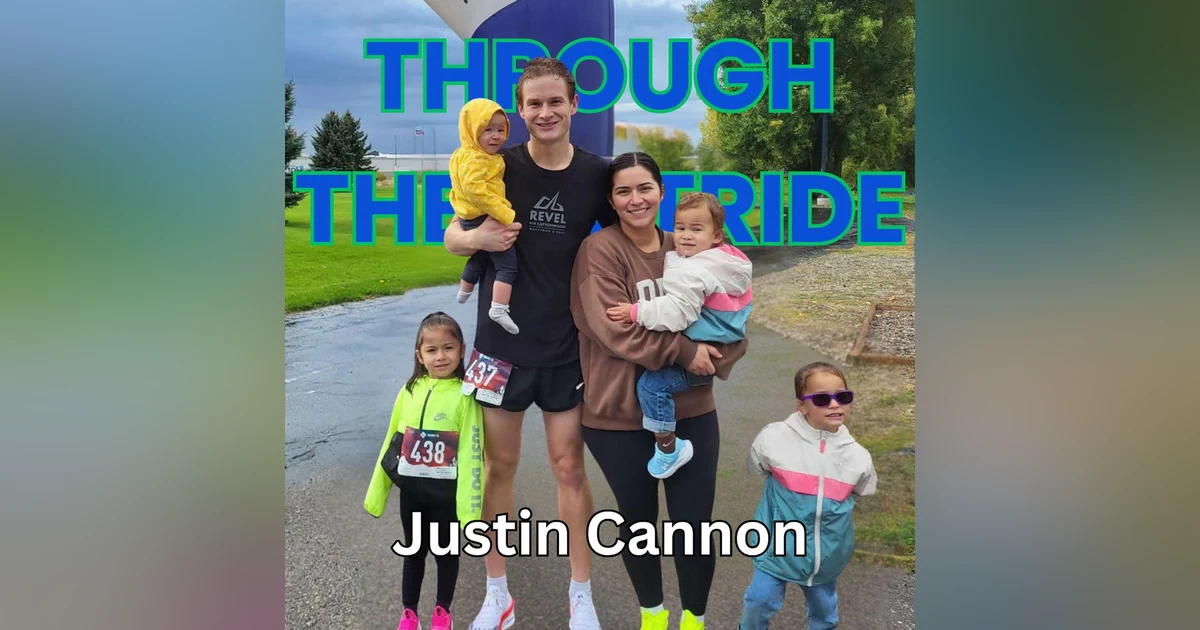
In this episode, I sit down with marathon coach and "Busy Runner" Justin Cannon to unpack how he went from a 4:34 debut marathon to a 3:06 in his very next race and then to a PR of 2:39. That kind of leap didn't just change his PR; it changed his entire mindset, making him want to "get greedy" with his goals and see how far he could really go. We dig into what shifted his entire mindset between each marathon, how he balances big dreams with real-life responsibilities, and why that transforma...


In this episode, I sit down with marathon coach and "Busy Runner" Justin Cannon to unpack how he went from a 4:34 debut marathon to a 3:06 in his very next race and then to a PR of 2:39. That kind of leap didn't just change his PR; it changed his entire mindset, making him want to "get greedy" with his goals and see how far he could really go.
We dig into what shifted his entire mindset between each marathon, how he balances big dreams with real-life responsibilities, and why that transformation pushed him to start coaching and helping other runners chase their own breakthroughs. If you've ever wondered what's possible when you stop playing it safe and start getting a little greedy with your potential, this conversation is for you.
#marathons #marathontraining #running #chaseyourdream #runningpodcast
And then the the older we get, we kinda put ourselves in a box sometimes and and give ourselves these ceilings that, you know, X, Y, and Z is just how life is, and you know, I'm gonna get my running in, but I can't get faster. I I'm too old now. Yeah. You know, I c I can't run 50 miles a week. I I have other responsibilities and and let's get greedy is just my way of inspiring myself and you know hopefully somebody else, but to find creative ways to challenge those ceilings and those limits. And and we're not all going to be Olympians, but we can all put in you know, we can all put in that level of effort within our own sphere of day-to-day life and try to do great things within within the range of what's possible to each one of us.
SPEAKER_00Welcome back to Through Their Stride. I'm your host, Sam Sutton, and today I'm joined by Idaho-based runner and coach Justin Cannon. Justin is a guy who went from just finish in the marathon to let's get greedy in record time. In his first marathon, he ran four hours and 34 minutes, and then in his second race, he dropped that all the way down to 306. And that kind of leap lit a fire into him just to see how far he could really go. That journey didn't just stop with his own PRs though. It inspired him to start pouring into other runners, sharing what he's learned and helping busy athletes chase down their own breakthroughs through coaching. So today we're diving into the story behind that transformation, the mindset of getting a little greedy with your goals, and how he's now using his platform to help thousands of runners get faster and dream bigger. So without further ado, let's get into it. All right, welcome back to Through Their Stride. I'm your host, Sam Sutton, and today I'm joined by Justin Cannon. And Justin, you just got through uh running Boston like a month ago. I think it was uh three hours and some change. How how'd that how'd that go?
SPEAKER_02Yep, three hours and five minutes. It was good, great experience, super fun. Um my time fell apart a little bit in the second half of the race, but uh really just uh a unique experience as a longtime fan of the race to be able to go there and and uh soak it all in.
SPEAKER_00Yeah.
SPEAKER_02I um was it was that your first Boston, or have you done it before? That was my first one. I I watched my dad run it when I was a teenager. Oh, cool. Maybe a young adult, but uh uh yeah, it was uh really fun to go watch him and and so it felt full circle going and running it myself.
SPEAKER_00Awesome. Yeah, I um I my mom qualified and ran Boston twice when she was uh when she was in her you know heyday. And uh I watched her, I mean I don't remember this because I think I was like two years old, but I know that I watched her qualify for her first Boston in 1997 in Dallas, and then you know, growing up, she would always talk about the race, and you know, she's like it's my favorite race, but dang, it's the hardest race that I've ever run.
SPEAKER_02So it's it's tough. Once again, on Heartbreak Hill, you uh it uh you feel it in your legs a lot for sure.
SPEAKER_00Yeah, I I think it's funny when I see like people's Strava, like, and they're like you can see their mile by mile splits, and every time they hit Heartbreak Hill, it's like they'll be hitting like a six-something pace, and then they'll hit like a 740 or something up on Heartbreak Hill, and I'm like, there it is.
SPEAKER_02Yeah, yeah. No, it's uh it one thing that uh that was cool about the race is it's so loud. There's spectators literally lining the streets from mile one to mile 26, and they're all cheering for you. And anyway, it's uh it's really special.
SPEAKER_01Yeah.
SPEAKER_00Well, cool. So, well, Justin, I've I've been wanting to have you on for a while now. I've been following your story for a minute, but for the listeners uh of my show who may be unfamiliar with you, can you kind of introduce yourself and and talk a little bit about your journey?
SPEAKER_02Yeah, absolutely. So my name is Justin Cannon. Um, I've kind of branded myself as the the Busy Runner Project. Um, I think a lot of us are busy and have commitments throughout the day, whether that be parenting or work or uh anything else, and and we're all trying to uh stay healthy, stay fit, get our runs in. And and so, anyways, I grew up in athletics and grew up playing tennis and basketball, and and I still enjoy doing those things, but I I've learned over the years that they're a little bit hard on my body as I get older, and and so I kind of turned to running. My sister is a runner, and it was fun to run with her, and really developed a passion for it uh when I started running and have been running ever since.
SPEAKER_00Yeah, and so uh what year was that when you decided to take on running? What uh what and what was the kind of moment that piqued your interest?
SPEAKER_02Yeah, so I decided to train for a half marathon with my sister in I want to say it was 2023 in September. Um, and so we trained for it together. My training was pretty casual. I I didn't sweat it when I missed a day, but I I tried to put some miles in and get ready for the race. And anyway, the that the race was just really fun, and it kind of gave me the bug moving forward and uh decided to run a marathon after that and failed pretty miserably in my first marathon and and uh determined to do a little bit better and really have been on kind of a journey ever since, just obsessively trying to uh get a little better each each day. Yeah.
SPEAKER_00In that answer, you said a few things that I kind of want to touch on going forward. But uh the first thing I wanted to touch on is, you know, when I when I look at your your Instagram, I think I saw that your first marathon time was four hours and and four hours thirty-four, was that correct? Correct, yes. And then you were hoping for uh for three hours around that time. So what was that first half marathon time? What and what kind of gave you the confidence to chase said three or chase three hours?
SPEAKER_02Yeah, so my half marathon was uh 124. Um and so I knew uh, you know, in fairness, I think the 434 wasn't quite representative of my fitness on that day. I think you don't know what you don't know, and that first time is really hard, and the gun goes off, and you start just pounding it, and and I hit just a brutal wall, uh, probably mile 16 or 17. I also wasn't feeling very well physically going into the race. But no, all those things are you know excuses in the end, and and you don't want it to detract away from you know how difficult the marathon is and and how hard it is to have a good performance there. But um I did feel like three was maybe a stretch goal, but achievable, and it just it just got away from me on that day.
SPEAKER_00Yeah, so a little bit about my first marathon story. I did uh Austin Marathon back in February of 2023. Okay. And uh it's kind of the same as you. Like I trained with a good friend of mine, and um he and I were kind of like nonchalant about the training, like we would miss a couple runs here and there, and you know, miss a couple long runs. And yeah, I don't think we didn't do any speed workouts throughout the entire build, and we didn't have gels, we just kind of like came in, said, like, let's just see what happens. Use course course hydration. Yeah, and uh I ended up running it in like six hours and 47 minutes, and I like walked the last 10k in. So, of course, like not at all representative of my actual fitness of a marathon, but I had no idea what I was doing. So uh I'm curious about what what kind of what was your first experience? Did you kind of have that kind of same thing?
SPEAKER_02Yeah, it was exactly like you described it. It was just a lot harder than I realized it was going to be. And I mean, any distance you run is hard, but you feel like you can kind of gut it out and finish. I remember doing 5K's and 10Ks, and you start sucking wind and you're redlining, but you you only have a mile left, and you're not fully acquainted with that wall that that you run into in the marathon. And so um just a really hard first experience with it, similar to yours. And I knew I couldn't go out like that because honestly, my plan was to run that marathon and hopefully see 259 on the clock and just be done with. I mean, I was still a tennis player, a basketball player. It was really just a side quest at that time, and and going out the way that I did, I knew that I had to try it again because I just wouldn't be able to uh uh let it go peacefully uh otherwise. So I yeah, same here.
SPEAKER_00Uh when I got done with my first race, what well the moment I got done, I was like, never again. I was like, I don't need to do that again. Like I've done a marathon now, I'm I'm good to go. You know what I mean? Like I'll stick to halves, it's cool. And then like the next day, I'm like, well, you know, like I do, I have been like just doing some Googling and like reading on some things about like how to actually do this. And I was like, I feel like if I actually do it right, maybe I can do sub four, which was my next goal, and uh my next race is 425, so it took me a little long, but you know, way better.
SPEAKER_02So yeah, no, and and and you have run sub four now, right? You I yeah, you crushed that that one if I I've been following your journey as well, and and uh super cool uh progress, inspiring uh journey that you're on.
SPEAKER_00Thank you. Yeah, I did 350 12 back in uh Utah last July. Nice, nice. Uh and then I kind of blew up at because I did Austin again this past February, um, just to see uh like what I could do. And I was like, I was thinking like 340 feels realistic, but it's also Austin and the hills are the hills and the beat. Yeah, so I hit a pretty big wall at mile 17, okay, and uh just had to fight through. So yeah, I did 353 at that one. So okay, nice. Yeah, so so going back to you. So after your first marathon, you like really got better. So I like can you talk a little bit about what happened between 434 and in that time? I forgot. It was three, was it can you remind me of the time?
SPEAKER_02Yeah, so my second one was 306. Um, and then the next one after that was 239. And so that that all happened in the span of one year. Um first and foremost, I will recognize that I was very fortunate with just a really good bill of health over that time frame. And I think that's you know, such an underrated factor of you just can't be consistent enough to excel at the marathon if you're always getting hurt. And I've had other builds where you know I've I've navigated the the injury bug, and and it's not always your fault, but it does take you away from your goals. And so, you know, those two blocks where you know I went from 434, and maybe I was in 310 or 315 shape, and I just ran a 434. And so the improvement sounds a little more stark than it maybe it was, but I did get faster. Um and I, you know, it was just a good bill of health. I I became really consistent with it. I was still a beginner and still really new, and so you're in that phase where you're improving pretty much every run that you do, and you don't have to work very hard for those gains just because you don't have you know years of running that have kind of plateaued you over time. And so it was really fun. Yeah, I was just seeing time melting off my 5k and my 10k and my half and my you know ultimate marathons, and uh really made me fall in fall in love with the sport. I haven't really been able to take a step beyond that since, but I'm still working towards it and and hopefully one day.
SPEAKER_00Yeah, that's awesome. And uh your yes, your your PR right now is 239, is that correct? Correct. Yeah, yeah. That's I mean, that's pretty fantastic if you ask me. Well, thank you. Thank you. So how did um how did you get to 239 and and like um like what was the journey to get? I mean, and what was first off, what was the feeling like to see go from 434 all the way down to 305 and just have feel that validation that you're like, okay, like I actually am good at this. Yeah, you know, that was a fluke, and now let's just see how far we can take this thing.
SPEAKER_02Yeah, I was probably almost as happy running that 36, 306 as I was the 239 because, like you said, it was just the validation, almost relief. Like, you know, the marathon is hard, I'll I'll give it that, but it's not impossible. And you know, it's something that I can work on, and it's something that I can uh compete at and try to get better in. And and so I guess the journey was uh really just kind of acquainting myself with with more and more mileage uh from the 434 to the 306. It was probably 50 to 70 mile weeks, and my body handled that reasonably well, and so I kind of took the ceiling off going from 306 to 239, and I was trying you know 80, 90 mile weeks, and and the body started to kind of protest that a little bit, but but uh largely had a good injury-free block going going on that one as well, and and ultimately was able to run the 239. But um it was a lot of uh you know doubles in the morning and the evening to try to get the mileage up without doing a bunch of long runs in the same week and just kind of structuring my day around okay, when I'm when am I going to be able to run and and making sure I follow through with that to try to hit the I mean I knew I needed a lot of mileage to to get to where I wanted to go.
unknownYeah.
SPEAKER_00Yeah, and it's interesting. So you said you peaked out at like uh 50 to 70, going was that going to 305, and then uh was uh what was your mileage getting down to 239?
SPEAKER_02Yeah, it was it was uh my my biggest week was 100. Okay I only did that once. It was mostly in the 80 to to 92 range was my mileage in in that build.
SPEAKER_00Nice. Yeah, I mean, that's pretty that's that's pretty good work. I mean, like in a significant increase. So what what kind of helped you get to that number and get to those and keep you know making that a consistent thing?
SPEAKER_02Yeah, I think it was just finally embracing a lot of the science that I had kind of read about and heard about and really trying to learn about what what made that kind of mileage sustainable. And so, you know, beforehand I would run the brakes off my shoes, you know, I'd get up a thousand miles out of a pair of shoes, and I I just didn't really I just didn't really know that it was uh that I that I that it was important that I buy buy a new pair of shoes. And anyways, I was I was kind of leaning into making sure I had good shoes and making sure I was actually recovering the right way and trying to get sleep and trying to eat the right way and enough and I just kind of leaned into uh the science that I had learned about and and uh and my body did hold up. I think it's amazing you see some of the elites doing 130, 140 miles a week, and I it's hard for me to comprehend how they're managing that and and how their body is holding up because I I haven't been able to get above a hundred, but but uh I was able to kind of hold in that 80 to 90 range and be okay.
unknownYeah.
SPEAKER_00Awesome. And then what I really like about uh you and your journey and everything is like you don't gatekeep. So like you know, you you share a lot of the tools and the tips and tricks on your Instagram. So what was the kind of what when did it kind of click in your mind? Like, I kind of want to share this with people. I kind of want to like coach people, I want to share stuff online that helps people. When did you start doing that?
SPEAKER_02Yeah, I think I think it was somewhere somewhere in that build between 306 and 239 that the light bulb kind of clicked on that you know, for me it was just just an exhilarating training block. And I was like, man, more people don't know what this, you know, more people should know what this feels like because it's so fun. I mean, I had I had often thought running was just something you do to stay in shape for the things that you liked to do. Yeah. And then it it started to hit me that no running is actually fun in of itself, and I feel better when I run, and I feel you know, more able to do the other things in my life, and I I felt like I was a better dad when I was running and a better husband when I was running, and and I had a clearer mind and and I was in better shape and uh more energetic. And so it really just kind of started to be I wanted others to feel that same discovery. And you know, there are a lot of people that are a lot faster than I am, but I started to feel like I was I I started to feel confident in the runner that I was to where you know I felt confident putting putting out there what I was doing, and and uh it it just kind of turned into coaching and and creating content on the side and just seeing where that journey takes me. Awesome.
SPEAKER_00Yeah, I uh I I think it's like super cool. Like what like a lot of the stuff you talk about is not only you know tips that it's like fueling and things of that nature, but it's like you know stop you gotta you gotta stop playing other sports. I saw that one that you the other day was like you can't keep playing like tennis and and and things of that nature. So did you kind of miss having to drop those sports whenever you did it? And what was that? What what did that kind of look like?
SPEAKER_02Yeah, yeah, I did and I still do sometimes. I you know, I I love tennis and I love basketball and and you just can't there's only so many hours in the day and and you can't optimize for everything and maximize everything in your life. And and it got to the point to where I knew that if I wanted to see what kind of runner I could become, I just had to cut back on some of those other activities and and not only from a time perspective, but on a you know, from a mechanical load perspective. I mean, it's they're hard on your body, and you know, I'll go play a tennis match and not really want to run that day or the next day because I'm recovering and I've got you know a little bit of damage to my body. And anyway, it just kinda it it it became a fork in the road of sorts of you know how how how much do I want to explore the running thing? And and I decided that I that I did want to explore it and and uh cut back a little bit on some of those other sports that you know had their day in the sun and and were really fun for me, but are are less a present thing and more a hobby thing, and and running you you feel like you can compete at any age and and you know try to become a better self through running instead of just you know something you do for exercise one day.
SPEAKER_00No, for sure. I um so a couple weeks ago, it was before we had our district track meet, and it was the same. District track was on Friday, and then my Saturday was my first attempt at sub-25K, and I was I was like, but the Wednesday before district, we had our last practice of the season. And I told the kids, I was like, all right, like there's really nothing that I can prescribe you guys from now to you know Friday that's gonna make you any faster than you are now. So I was like, let's have some fun and let's play some football. And you know, they're they're like 16 years old, so they bounce back just fine, but like I played football with them and I was playing quarterback, and it was it was three on three, so I got to like you know run with the ball and everything. And one time I like made this move and bit one of our one of my uh juniors like body checked me by accident, like total, and he was like, you know, he's like a pretty strong kid, and I like hit the ground and like was hitting the ground multiple times, and the next morning I was like, Oh, I'm like, I'm sore. So yeah, as a 30 year 31-year-old individual, like if you're gonna start playing other sports like basketball, football, tennis, I mean, like, you'll pay if pay for it if you want to actually run solid marathons. Yeah, I agree 100%.
SPEAKER_02Yeah.
SPEAKER_00Awesome. And then another thing I like about you is um your focus on family. So one of the things that you focus on a lot on your uh in your Instagram, in your storytelling is how much your family means to you. Um, and you post a lot, like one post you posted about like, you know, the marathons are great days. Like they're really good days, but it's like 10 out of 10 days, like when you have it when you had one your kids, when you married your wife. So can you talk about like the importance of family in your life and what that what that looks like?
SPEAKER_02Yeah, I mean, I think it's I think for me it's everything, you know. It's uh and and it's something that I uh fully felt for the first time when I became when I became a dad. You know, it's it's it's hard to hard to describe that feeling and and uh you kind of you know without getting too corny, but you go through life with your spouse, and then you know, over time you kind of grow out your family. And when you zoom out and kind of look at that, you realize that there's there's not much else that that matters than than your family in life. And and you know, I've I've seen running as a vehicle to help me be my best self, and and I think that trickles down into you know my family life and other areas of of my life, but it's really fun. My daughters are uh my oldest is is five and and she's starting to uh you know really have hobbies that she's trying to develop and things that she really likes to do and practice, and she'll often come up and ask me if if we can go on a run together and you know bust out 800 meters or or sometimes a mile. And it's just really uh gratifying to see that those seeds that you're planting, yes, they're they're fulfilling to you, and and you like to get faster and you like to do the workouts and you like to chase these goals for yourself. But in reality, the big win is that it's trickling down into the mindset and the lifestyle of your kids and and the ones that you love. And and they're kind of seeing the example of exercise and of health and fitness. And I mean, you talk about your your your mom's influence a lot and how that that has shaped you. And I think that it's important for us as kind of the next generation to recognize those things and remember those lessons and pass them down to our kids as well.
SPEAKER_01Yeah.
SPEAKER_00No, I it's so important, you know. Like I talk about my mom a lot too, but my dad also deserves credit as well. Like he was a he was a big athlete himself. He wasn't much of a runner. Um, I he I think he did one marathon and uh was like, yeah, that's it. Like I'm not doing that again. But um he was a competitive weightlifter and then a basketball player. So um, you know, that it's so important though to like, you know, they instilled a lot in me in athleticism, being part of a team, you know, helping helping others grow. So like um, it's so important to trickle that down and then pass it forward when you become a parent. Yeah, yeah, agreed. Awesome. And uh yeah, so and then talk so talk a little bit about Boston. So you uh had jumped in and had a pretty big goal, and so and then you had some injuries in that build. So what it what did that look like?
SPEAKER_02Yeah, it was it was uh I'm still somewhat wrapping my my mind around the build, but it was uh it was. I I got a stress reaction in my uh tibial bone, uh so kind of the shin area um about January. And so the race was April, and that took about nine months, or not nine months, sorry, nine weeks out of the training block, um, where I would do some runs here and there. It wasn't so debilitating that I like couldn't run, but it was painful to run, and I knew that something wasn't right in my body, and um, you know, I knew there was potential for it to develop into a stress fracture, which would set me back even further. And so nine weeks of really just some frustrating kind of start-stop, start, stop, run two miles to test it out, and nope, still not feeling well. Um, and you know, I tried to do what I could with cross-training and with bike, and and uh I think that did help preserve some fitness to show up at Boston with a reasonable effort, but um there's no question that that uh you know it's hard to to peak for a race when you lose that much time in your training block. So um, but you accept it and you you try to learn from from it and you keep moving forward.
SPEAKER_00And that's that you know, like that's the thing, right? Like every every day, every build, especially for the sport of a marathon, is not always going to be perfect. I mean, like you could have and even like you could have a perfect build and then get to the day and it's like 84 degrees with 90% humidity, and then you just it's a suffer fest for 26 miles, or it's perfect weather, but you're like you're sick or something, or like you've got a niggle in your foot, or you're you know, and something just hinders the performance, but like there's something about it that keeps us in it and it and gives us that resilience to keep chasing it.
SPEAKER_02Yeah, it's I mean that's what makes the marathon so unique, I think, is is that even in a best case scenario, you get two or three cracks out of the year. I mean, it's not like if you're chasing a mile or a 5k or a 10k, and I mean they are they're equally rewarding and they're equally difficult in their own ways, but you know, you show up and you you you have a bad day, you just sign up for one next week or a couple weeks from now, and a marathon is not really like that. And and so that's I think that's what makes it so tantalizing for all of us to keep chasing it because you just know if everything goes perfect, you can you can smash your goals, but everything has to go perfect, and there's only a couple cracks at it every year, so it's uh it's fun.
SPEAKER_00No, it it's funny. You know, I ran that 5k a couple of weeks ago, and I I the the the first attempt at it, it was like there was a wrong turn situation, and like you know, the course wasn't well marked, and and then my shoe came untied in the last like 400 meters, and I was like, this is a vapor fly, it's a 300 shoe. I'm not running, I'm not losing this shoe. So I ran 2011, and then the next weekend I was because I was like, I gotta get, I'm so there, like I gotta get sub-20s. So I got a new uh next one on the calendar the very next weekend and ran it. Yeah, but like similarly, if I you know I ran 353 at Austin when I wanted 340, there's no way I can jump and do another marathon the week later and be like, let's go try. I'd be like, probably running like a four something.
SPEAKER_02Yeah, yeah. Your body's so broken down, and I mean it just takes time to heal, and then by the time you're healed, you're detrained a little bit, and so you have to train again, and so it's a uh process.
SPEAKER_00Yep, it's uh I I heard something on a podcast the other day. It's like the marathon is a uh is a terrible mistress, like you know, it really always leaves you wanting more and doesn't always treat you right. Yes, yes, a hundred percent. Yeah, well, cool. And then um, so you obviously you're uh you post a lot on Instagram, but it seems like you also take on clients for coaching. So um when did you like start coaching and and what does that uh look like for you?
SPEAKER_02Yeah, so I I uh started uh kind of indirectly, I mean uh informally coaching when um my wife actually kind of got into running, and so she and I started working together, and and she she's athletic, but not really a runner, and and so she was a competitive competitive weight lifter and and a soccer player. And uh she kind of caught the running bug a little bit, and so she and I would work together and and uh uh kind of look at her programming and her running schedule. And anyway, it was a fun process, and and so it kind of got me thinking, you know, why not? Why not put myself out there and and see if there are other people who uh feel interested in in running and building their fitness and and getting faster, but maybe don't know where to start. And uh and and it uh has has gone well from there. Awesome.
SPEAKER_00Yeah, and uh and it's probably kind of a rewarding thing. I mean, I for me, I I informally coach uh like one-on-one for a couple of friends of mine and and get to give them, you know, I don't like you don't charge or anything, but then I also get to do uh track coaching, which you know is something that I get to take my experiences and give to them. And it's very rewarding because I'm like, I actually get to use this for something bigger than myself now. Yes, yes. And what does that give you as a as a runner?
SPEAKER_02Yeah, I mean, it makes you feel like you're part of something bigger. Um, yeah, I mean, you you uh you get so focused on your own goals, and and there's nothing wrong with that. There though it's good to chase those things, but you start feeling like, you know, am I the only one that cares about it this much? And and then you realize, no, there's tons of people that that love this sport and love chasing progress and their best self. And and when you're able to play a small part in that journey, it's just it feels so good to to see them hit their goals and and be happy with with the journey that they're on. Yeah. And so it's uh one of my favorite parts about the sport.
SPEAKER_00Yeah, and it's it's also like you know, that's how we grow the sport. Like there are a lot of people who feel like maybe they can reach those goals and then they try for it and they're and then they don't do it, they feel bad, they're not getting the right training, and then eventually they're like, Well, I'm just not cut out to be a runner, you know, and it's like but that's not true. Like you you just need better coaching, and that's that's kind of where we come in. We're like, we can I can help you, you know what I mean? And then seeing that, and then having them be like, Oh, I can do this, and then maybe they help somebody else, and that's just how it yeah kind of spiders out.
SPEAKER_02Yeah, it's uh I mean it's because you just don't know what you don't know. And so, like my first build uh leading up to my 434 marathon, my my one slogan or my one philosophy was no mile slower than seven minutes. That was my whole training. And so, like, some some weeks that would be 40 miles, and I mean I was reasonably fast, I could run decently fast miles, but then the next week my body would be broken down and I'd run. I just wouldn't run anything slower than seven minutes. So sometimes that would be like six miles in a week just because my body was too broken down, and and then I joined a running group and learned about okay, 80% of your miles are easy miles, and you should be able to hold a conversation. And yeah, it shouldn't feel like every single run you go on, you're lacing up your sneakers, just going to war. I mean, it's I mean, most of the time it's really fun and really laid back and really enjoyable, and then there's that those two or three key sessions each week where you're really going for it. But I mean, obviously that that training approach didn't work because it's it's not a good training approach, but I didn't know any better on my first one. And and so there's just a lot of pitfalls along the way that somebody could fall into unknowingly, and it's not even their fault. They just you know haven't been around the sport enough to know the science of of getting the right adaptation in your body to to chase that progress.
SPEAKER_00Yeah, man, that easy run thing like was so for me was the hardest thing for me to like understand, you know, like it was like it wouldn't click in my brain, and I kept running like all of my easy runs at like an 80 something pace, uh 740, and like you know, now I'm kind of getting to where that is becoming my easy run, 840, 850. But uh at the time it sure wasn't, and like, but I was like, I can't run in the nines, like good lord. Like, if I run in the nines, I'm gonna, you know, I'm losing fitness, I'm not doing anything. And and finally, I I hired a coach last uh last year, and I was like, you know what? I'm just gonna listen to you. Like, I'm not gonna doubt you, I'm not going to like fight back. You put training on my calendar, I'm just gonna do it. If you say uh my thing on there says a 940 or a 1010 pace, dang it, I'm gonna run up a 940 or a 1010 pace and you know, and just listen to you. And sure enough, like I ran the best marathon of my life. And like it it and then it kind of once once you do it, once you've like done the whole thing the way you're supposed to, and then you do it and it hit your time, you're like, okay, now I see what it feels like. Yeah, yeah. You have to see it first.
SPEAKER_02Yeah, I think there's I think there for at least for me, there's there's a little bit of ego in there that I had to set aside of like, you know, I I know I can run faster than 8 30 per mile, so I don't want to I don't want to post, you know, five easy miles at 8 30, and and so you just turn it into you're just redlining every single run, and it just doesn't uh isn't conducive to progress.
SPEAKER_00No, I so I've been listening, you you've probably heard around the the running sphere with uh Vincent Mari running his 205. Yeah incredible. Yeah, and he ran like his his easy run or all of his easy runs are like in the 550s. Yeah, I'm like, you know, I'm really just curious as to how long he's gonna be able to like keep that trajectory. And I I I hope he does just for his own sake, but I I wonder like as he gets more sponsors and gets more like eyes, you know, working with him, maybe it maybe he'll slow him, they'll slow him down or he'll start slowing himself down.
SPEAKER_02So yeah, it's interesting. I mean that because that's the tricky thing about it is that uh we all have different physi physiology and different bodies, and sometimes there is someone who can take on harder efforts more frequently, and but you know, a lot of times it is smart to work in some super slow runs too, and yeah, it's just fascinating to see all these different journeys play out and really inspiring to see those that that uh find something that works and just ride it to the top.
SPEAKER_00Yeah, yeah, it's it's so cool. I'm uh it's fascinating to see how other people train, because like you know, some people like do a lot more cross-training than they do running, and that's always interesting. So, and and it seems to adapt well for them. So it just just super interesting. And you do some cross-training yourself, right? I've seen you on the bike a little bit.
SPEAKER_02Yeah, I I mean I mostly stick to running when I'm healthy, but I do like the the bike and and I I tend to go to it when especially when I'm when I'm feeling injured. Yeah.
SPEAKER_00This is kind of a random question. What do you think about swimming as a uh uh as a way to help cross-train? Because I I interviewed someone and he'll be on next week. His episode will air, but he's like, I use swimming a lot because like it doesn't, it it's not as like you know impacting on your joints, and it really does kind of lower your your heart rate and and increase your VO2 max.
SPEAKER_02Yeah, I like I like, I mean, I like swimming. That's that's kind of the reason I like cycling too, is just the low impact and swimming is even more that way. If I enjoyed swimming more, I'd probably do it more. It's not my personal preference, but uh I think it's super effective as a as a cross-training medium.
SPEAKER_00Yeah. I'm uh I'm thinking about trying to do a little bit more swimming for myself just to see what that's like. But especially in the Texas heat this summer, that's probably probably a good way to go. Yeah, I need to get I need to get uh access to some outdoor swimming pool to be able to do it, but we'll see how that goes. But uh, but I also wanted to ask a little bit, okay. So your slogan on your uh Instagram is get greedy. I've seen some videos about that. How did that kind of come about and what's the meaning behind that?
SPEAKER_02Yeah, so it's uh yeah, is it I think the meaning behind it is is like you know, all these limits that we think that we have, you know, for ourselves and for other people. Let's just get rid of those. Yeah, let's let's get let's get greedy about our goals and the potential that we have. And I I you know, I I think it's super liberating to think about your goals and and to kind of free yourself a little bit of like if I don't reach this goal that that's okay. Yeah, it's gonna be any sleep. Yeah, it's not I'm not going to wake up in 20 years and and regret having chased this goal. But what if I do reach it? You know, what if I do make it? I mean that's that's that'll be super fun and gratifying and satisfying. And and I think often as we you know, as as we're young, we're dreamers, and we have these massive goals, and then the the older we get, we kind of put ourselves in a box sometimes and give ourselves these these ceilings that you know X, Y, and Z is just how life is, and you know, I'm gonna get my running in, but I can't get faster. I I'm too old now. Or you know, I can't I can't run 50 miles a week. I I have other responsibilities and and let's get greedy is just my way of inspiring myself and you know hopefully somebody else, but you know, to find creative ways to to challenge those ceilings and and those limits. And and you know, we're not all going to be Olympians, but we can all you know put in you know, we can all put in that level of effort within our own sphere of of day-to-day life and and and try to do great things within you know within the range of what's possible to to each one of us. Yeah.
SPEAKER_00No, I think it's super interesting because like back in 2018, I dislocated my knee. So I uh I had jumped off of something that I should not have jumped off of. It was like this pretty like large ledge, and I'd run and jumped off it, and I was in the air like longer than I, you know, than I was anticipating, and I fell and I landed like that. Like my leg just went backwards and it was like, you know, pretty bad. And they originally said I was gonna have to have reconstructive knee surgery. Oh man, which I ended up not having to have, think thankfully. I uh only the only uh ligament that I tore was my PCL, and then the rest of it was intact, and so they were like, you know, they're like you don't really need your PCL if you're not gonna be playing stop and go sports. Like, and I was like, Well, I just run, and they're like, You don't really need your PCL like to to run, you know what I mean? Like you can you can run without a you know a perfectly good PCL, yeah. So I was like, okay, but they were like, you're probably not gonna ever like run fast anymore because it's just gonna hurt too much because of the impact, the damage that you've done. And so I really believed that for a long time. I was like, I'm I'm never gonna be able to run fast again. And so I like get up to like eight, eight minute something speed, and I'm like, this is a little too fast, so I probably should slow down or I'm gonna hurt my knee. You know what I mean? And I I kept thinking, like, I'm gonna hurt my knee, and like, but you know, I started seeing like other physical therapists, and they're like, Well, your knee is really not that bad. Like, yeah, you know, it's sure there's got some trauma to the joints and everything, but like, you're not, I mean, you can try, you know what I mean? And it's just like, well, dang it, why not try? You know what I mean? Like, and and that's kind of when I like in 2023, um, I decided to to take on really getting better at the marathon. And there was some some thoughts in my head of like, maybe I shouldn't because of my knee. And I was like, Yeah, but what why not? Like, what happens if I just go for it and see? You know what I mean? And here we are. Like, my knee doesn't really hurt that half the time.
SPEAKER_02Yeah, you broke through some of those limits and and you know, and it and it can it can just mean too, you know, let's get greedy with consistency. I mean, not everyone has to chase breakneck speed, or but but let's just do let's do hard things and let's get in the habit of pushing ourselves and and seeing where the chips fall, because I don't think there's anyone that that's life wouldn't improve by by just doing something hard every day.
SPEAKER_00Yeah, it and like you said earlier, like running and chasing these goals makes you a better father, like a better person, a more energized person, because you're what you're doing is giving you life. Like it's like it's giving you a purpose almost like outside of your everyday life. And I think that's so important for like just for everybody.
SPEAKER_02Yeah, no, I I agree. It's it's uh it's been it's been a game changer for me and and for you, it seems like, and and it's it's a fun, fun journey to be on. Yeah.
SPEAKER_00Awesome. Well, okay, so I saw you started trading again already. So I've seen you've been logging some miles on Strava and and starting building back. So what's the uh what's the next thing look like for you?
SPEAKER_02Yeah, that's a good question. I I think I would like to run a fall marathon. Um I haven't fully locked anything in yet, but I'm kind of training as though I'm going to be. Um so I'm looking at a couple races that are potentials um here in Idaho and Utah mostly. Um I'd like to run the Houston marathon, maybe, and in January. I'm in Texas fairly often for for my work, and so I always am interested in in those Texas races. I did the Austin half marathon. You were probably there as at the full. That was that was Oh, really? This year? Yeah. Oh, I can't believe we missed each other. Yeah, yeah. Yeah, we that's too bad that we missed each other. But anyway, so though those are kind of some ideas swirling around my head. I'm trying to just kind of keep myself ready. I I've been a little hesitant to put a stamp on a specific race, uh, just as I'm kind of working fully back from some of these injuries. But I want to stay just right ready to go so that when I feel confident that my fitness is there, I can hurry and run and sign up for the race and and uh you know start to taper down and and run it. I I really don't want another race. I mean, someday maybe, but I don't want to have two races in a row where I don't have the training block that I want to have and I underperform and I don't want to start stringing those results together. And so I think I'm gonna sign up for a race kind of late in the block when I know I'm healthy and I know I'm fit and I'm ready to have a good race. Okay.
SPEAKER_00Yeah, that makes total sense. I was going to recommend uh a race in October in Texas um called the Marathon to Marathon. And I totally not sponsored by this podcast by this uh marathon, but I recommend it to like a lot of my guests because like I think it's one of the best Texas marathons that you can do. So it's um it's out in uh West Texas area, kind of like close to Big Bend, um between like Marfa and Alpine. Okay. And um, it's literally like they bus you out early in the morning to a highway sign that says Marathon 26, because the city that you're going to is marathon. Uh-huh. And uh um, you run from that highway sign to downtown, but you know, back, and it's mostly downhill. There isn't uphill in the middle. No, but um, and it's since it's October in the desert, it kind of starts like in the 50s in the morning. Okay. Um, but the trick is, I mean, if you're a fast runner, you'll be okay because you'll get be able to get down before the sun really gets up. But if that sun comes up on you on that on that horizon, like there's no hiding, there's no trees out there, like you're just getting cooked by that sun. But you see some really interesting characters. Like I saw uh one guy, he um he didn't register for the race, he just wanted to run it, and so he like showed up to the race and he was wearing like a wooden like block on his chest to show like a fake number. And then I saw one girl running it in flip-flops. Um and there's just some like some some interesting people out there that you'll see, and it's uh one of the coolest marathons that you could do. But don't do it if you're gonna sign up late because you may not get any lodging because it's pretty uh it's pretty sparse. But at some point, if you want to do a fall Texas race and you think, well, that'd be interesting. Put a little bug in the page.
SPEAKER_02I'll look into that one. That one sounds super fun. Are you doing that one or what what's next for you?
SPEAKER_00Yeah, so I'm doing um so back in 2024 in November of 2024, I paced my brother to his uh half marathon PR. Okay. And I think it was 219 maybe. I can't remember now, but um uh I was just kind of running with him, trying to keep him on pace, keep him, you know, hydrated and and fueling, and to help him kind of understand it, because he's not really a runner, he's more of like a he's a golfer. Okay, but he wanted it to see what he could do, and so you know, he was a 230 guy for the half, and he got all the way down to a 219, and he was like, Oh, I could do this again. Like, I don't actually feel that bad, you know. But when I was running with him, I was like, Man, this course is pretty flat. I was like, it's like and it's beautiful, like it's in old, like like old money uh Fort Worth, and so you see all these like classic homes and everything, and you get to run on the river, and like I was like, you know what? I was like, maybe like maybe I'll do this at some point, and um, so I'm thinking I'm gonna do that on November 8th, uh, this this November. And I'm it's like a six-month build, but like okay, I'm trying to I want to hit 330. I feel like that's like not unreasonable considering I just ran 1949 in a 5k. Yeah. And so I'm like, that's like an eight minute per mile pace. Like, if I if I dial in the fueling, which is still my like biggest like blind spot. I fuel, but I I I feel like I need to fuel better. So if I can dial it in.
SPEAKER_02It's so hard to take in enough carbs. Yeah. The gut just my gut protest protests it when I eat too when I take too much. But yeah.
SPEAKER_00What's your what is your typical limit when you run?
SPEAKER_02Yeah, I mean, uh sometimes in training runs when I'm not going as fast, it it works well, and I get, you know, that 75 grams an hour or whatever, and but all my races has really been hard to fuel, especially in the back half of the race. And so I think I think at Boston I averaged like 40 grams an hour or something like that.
SPEAKER_00So I do I did so trying to think. What's the I don't know what the uh uh the grams, the number is on the highest Morton um oh uh carb, but I was taking one of those every 30 minutes for my sub four. And it it worked really well. I didn't have any any stomach issues, I didn't like the taste of it very much, and so I was like, I don't know if I can keep doing this, but I trained with Morton that entire build. Nice. Um so I think that was probably 70 something per hour. Oh, that's good. And then I changed over to uh the BPN go gels for Austin, and I liked the way those taste, but little TMI here, I threw up so much at the end of that race, and I think maybe it might might have been like the sweetness of the Okay.
SPEAKER_02They are very sweet, aren't they?
SPEAKER_00Yeah, and so and I think that was 60 per hour, because I think there's only 30 grams in in one of those. Um, and now I'm gonna try. Do you know blank sports nutrition?
SPEAKER_02Uh yeah, I've heard of I've heard of it, yeah.
SPEAKER_00Yeah, so I'm gonna try that, and that's 50 grams of carbs per gel, which is a hundred per hour, which is pretty uh intense. So I think if I can train with it for six months, I might be able to kind of teach my gut. Yeah, you know, but we'll see how it goes.
SPEAKER_02Yeah, I've been using the you ever heard of the the uh carbs gel? Yeah, that's what I've been doing. And those are 50 as well. And uh anyway, I've been trying to do one of those and then one of like the cis, like 22 grams or whatever, um, each hour, but I don't know. It's a it's a shot to the gut when when I put 50 50 grams in there. I I've got to train my gut more to be able to do it.
SPEAKER_00But yeah, yeah, I I've I've definitely hit my limit sometimes. I think I think I've hit like the 70s at some point in summer runs and like stomach just wasn't having it, and then like I either have to call it quits or I just push it and then feel awful. So yeah, you know, just it's a puzzle. It's a it's a puzzle. It's a puzzle that we love to solve though. Awesome. Well, Justin, thank you so much for for coming on and talking with me. Um, I think this was super exciting. I've been wanting to have you on and tell your story, so I appreciate you coming on.
SPEAKER_02Yeah, thanks for the invite. Yeah, I I take a lot of inspiration from your journey, and so I've been excited to come on here and and talk to you and get to know you better and keep doing what you're doing. You're inspiring a lot of people.
SPEAKER_00Yeah, likewise, and same to you. Um, and stay on uh for a minute so that way I can get the files uploaded and then we'll uh we'll be good. So


