Ep. 46: Chasing Sub-3 While Inspiring Other Runners | Laura Pett
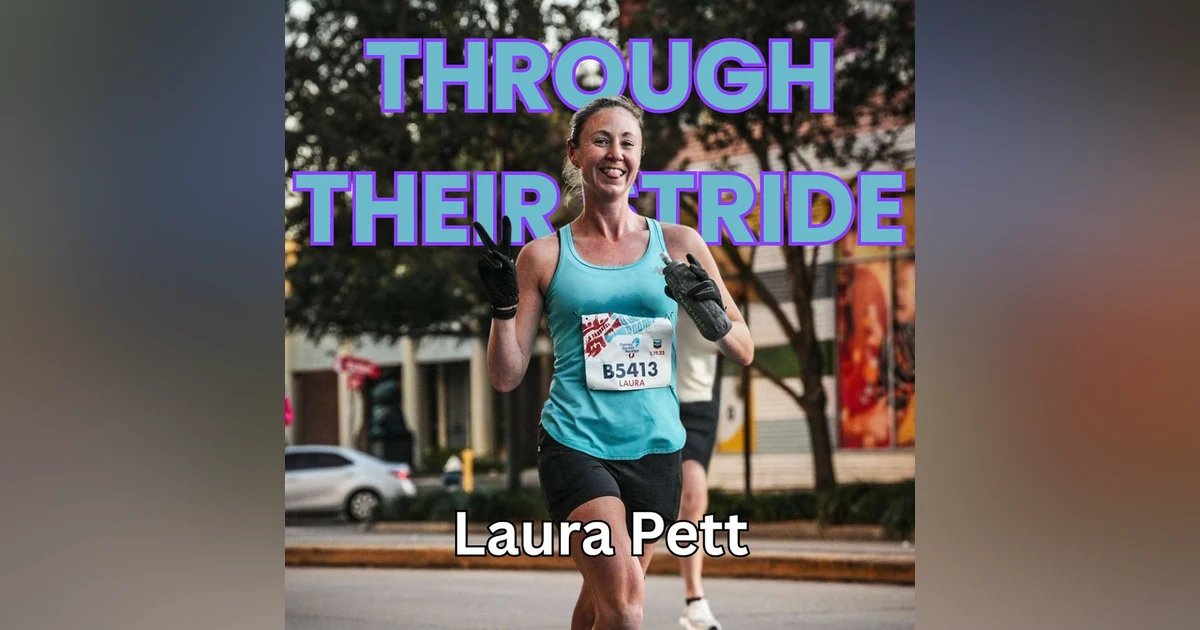


In this episode of Through Their Stride, I sit down with Tennessee-based marathoner Laura Pett to talk about her journey from collegiate cross country to chasing a sub-3-hour marathon.
Laura made her marathon debut in 2017 at the Atlanta Marathon, tackling a tough course and running 3:40. Since then, she's steadily improved — qualifying for the Boston Marathon multiple times and lowering her PR to a 3:04.
We dive into what's helped her make those gains, what it takes to close the gap to sub-3, and how she balances training with family life and a career.
Laura also shares how she uses her Instagram platform, @lpett.running, to connect with other runners, offer practical advice, and build a supportive community.
If you're chasing a big goal while juggling real life, this one will resonate.
#running #marathontraining #sub3marathon #runningpodcast
That's kind of the biggest thing that is all the little things. Like everything coming together. I I don't think there's one secret piece of the puzzle. It's just being consistent with all the little things. Like lifting regularly, stretching regularly, taking your easy days easy, like everybody says. Like making sure that you're absorbing the work the right way. Like it's just everything comes together for a marathon.
SPEAKER_00Welcome back to Through Their Strive. I'm your host, Sam Sutton, and today I'm joined by Tennessee-based marathoner Laura Pett. After competing in collegiate cross-country, Laura stepped up to the marathon just one year after finishing her master's degree in 2017. She made her debut on the challenging hills of the Atlanta Marathon, where she not only learned the demands of the distance, but how it proved she belonged, running 340 in her first attempt. Since then, she's steadily climbed the ranks, qualifying for the Boston Marathon multiple times and lowering her personal best to an impressive 304. Now she's chasing the next big milestone, breaking the three-hour barrier. But beyond the times and performances, Laura shares what it really looks like to pursue big goals while balancing family, career, and training. Through her Instagram at lpet.running, she offers insight into staying healthy, consistent, and grounded while building a strong, engaged community along the way. Her story is one of progression, perspective, and enjoying the process as much as the outcome. I'm excited for you to hear this conversation. So without further ado, let's get into it. All right, welcome back to Through Their Stride. I'm your host, Sam Sutton, and today I'm joined by Laura Pett. And Laura, thank you so much for coming on.
SPEAKER_01Thanks for having me.
SPEAKER_00Yeah, I think we've uh been following each other on social media for maybe a year now. And uh I remember when you had followed me and I followed you back. I uh I thought it was cool uh how you like on your social media, you're always asking questions and taking polls on your uh on your stories. And I love like all of the feedback you get and like how you share it because I think it's just like a great community tool.
SPEAKER_01Yeah, for sure. I think that's one of my favorite parts of using Instagram is like communicating with other people and getting their thoughts on things. And even if it's just like silly little questions that have nothing to do with running, um, I think it's just a way that people are like, Oh yeah, that I have a favorite vegetable. Like, I'll totally uh reply to that. And so it's been fun doing this.
SPEAKER_00Yeah, I think I saw it was like I think the first one I saw was like favorite ice cream flavor, and I was like, Oh, interesting. And then I commented, I don't even remember what I commented, but I was like, and then they kept coming up. I was like, oh, this is such a fun little thing. So but um, but yeah, so following you, so um, how did you um get it started into running? I uh I saw that you've been running some marathons for a while now, but what does your running journey kind of look like?
SPEAKER_01Yes, okay, so my running journey has been a long one. I've actually been running um since middle school. Um, so my mom was a runner, is a runner, I guess. Um she was running marathons around the time that like middle school cross country started up. Um, and so like her and my dad actually ran track together in college, and that's how they met. So it was just kind of a like they did it. And so I wanted to try it. Um and so I ran um cross-country and track competitively through middle school, high school, and college um before moving up to more of the distances. Um, and then in grad school, I decided to tackle the half marathon. I was like, that's that's enough, that's still a lot of time and a different race. Um, but I wasn't quite ready for the full. Um, and so then about a year after I graduated with my master's, I took on the first full. And then I have not looked back since, to be honest.
SPEAKER_00Yeah. Well, uh, so where did you write uh run in college?
SPEAKER_01Um, I ran at the University of Tennessee at Martin. Um, and it was so at the time it was a strictly cross-country school. They have since added a track program, um, but it was cross-country, and then we ran like non-attached for track meets. Um, and so it is it is a small school in like the middle of nowhere, West Tennessee. Like everybody recognizes it, sister school of UT. Um that's kind of like what any connection would have, but it was like in the middle of nowhere.
SPEAKER_00Yeah. Awesome. And uh what was your your college experience like? And um uh what was the uh yeah, how was the college atmosphere?
SPEAKER_01College was fun. Um, I loved I loved being on a team in college. I actually ended up meeting my husband in college um running. He was on the same team. We we had grown up like 30 minutes apart, but we didn't go to the same school. Um, and so we ended up running together. Long story short, we got married. But yeah, the college experience running was a really fun one. Um, I started off on just a book scholarship, um, which means I basically got like a $500 scholarship and kind of worked my way up each year to a little bit more. So that part was obviously really fun and exciting. Um, but just the just being on a college team and being a college athlete was such a fun experience. Um because there's there's just so many things that you do with other athletes. So like we always like connected with our other athletes in class and they're like, oh yeah, they're an athlete. Like that's cool. We kind of knew. And it was a small enough school to where like you do, like all the other athletes on campus knew, hey, that's an athlete on campus. And so that was kind of a fun, fun way to be a college student, I guess. Um, especially in like a small town kind of in the middle of nowhere.
unknownYeah.
SPEAKER_00Awesome. Well, cool. And then uh, so you stepped in going into uh your master's, uh, you decided to step into the half marathon. So what was that experience like? And how did you you find the half? What made you kind of want to sign up? And what was your first half?
SPEAKER_01My first half, so I actually took like 10 months off just because of when the program started and when I graduated. Um, so I guess my first half was technically before I started grad school. Um, but my first half was a really small half at this park near my parents' house that and I want to say it was one of the first years that they had ever done it. Um, it was a really tiny, like little out and back, and it was a park that I'd run at all the time. Like I ran growing up. I ran every summer when I was coming back from college. Um, it was just a very familiar course, and so I was like, oh, I'll try it. Like I think, and I was trying, I'm trying to remember what long runs looked like. Like, I don't know if I had run 13 miles. Like we did 10-mile long runs, we did long runs, but for cross country, like the distance is a 5k, so you don't need to like we weren't doing you know that much mileage. Um, but I was like, I think I can do this, and it's something different, and I just kind of wanted to pick something different than the 5k that I had been racing years, you know, through high school, through college. That was the race distance. Um, so I just want to try something new.
unknownYeah.
SPEAKER_00Awesome. And uh uh what did that kind of like spark your your curiosity about continuing longer distances, or how did that kind of happen?
SPEAKER_01Yes, um, so I for grad school I kind of said like I am gonna wait on the marathon. It was one of those like with my mom running marathons, and actually, so our our high school did like a senior superlative for everybody at the school because it was a small school, and so they put it out in like the class paper, and my senior superlative was most likely to win a marathon. And so, right there, like it's like, oh man, like now I'm destined. I have to do it at some point, you know, you can't not when that's your senior senior superlative. Um, but I had said, like, I want to be done with homework, I want to actually do it right, I want to train the long distances, I don't want to just like jump in and finish. I want to actually put the mileage in and do it. And so that's kind of why I waited until after I graduated because I was like, I don't want to stack that on top of homework and feel like it's more of a chore. Um because that jump is big. Like the jump from a half marathon to a full marathon is uh is a big deal.
SPEAKER_00Yeah. Some people try to say that in like on paper mathematically, you know, that full marathon is two halves, but it's like really no, it's like it's definitely the second half of a half marathon is not the same as the first half.
SPEAKER_01No, absolutely not.
SPEAKER_00Yeah. So um, yeah, that was smart, obviously, to to stop and and to take put your master's degree out in front and like get that done. Cause I mean, training for a marathon is almost like a part-time job in and of itself.
unknownYeah. Yeah.
SPEAKER_00Every time I jump ever oh go ahead.
SPEAKER_01Like, I was still running, obviously, but it just would have been so much more trying to do my first one then.
SPEAKER_00Yeah. Yeah. Well, cool. So um, and then getting into the fool. So what what fool did you choose and and and why? Oh, wait, before I ask that though, is your mom still running marathons?
SPEAKER_01She's not still running marathons. Um, I don't remember when her last one was. Um, and I honestly I need to go back and like figure out what her total count was. Um, she actually recently like last, I guess October, she had her second hip replaced. So she's had both hip hips replaced. Um, so she's just kind of like walk jogging, biking, just doing things to stay active, active. That's just more kind of her personality. Um, but she hasn't done, she hasn't done a full for a while, but she like she did she did a lot. Like when I was in middle school and high school and even in college, like we went, so she did Boston two or three times, you know, she did New York, she she's done a lot. So it's yeah, she definitely she wasn't just like a one and done kind of like she had her own marathon journey too. So that was kind of where I was like, well, I know where to ask about some marathon advice when I'm ready.
SPEAKER_00Yeah, that's awesome. My uh my mom was also a big marathoner and she did uh Boston uh back in 1998 and then 2000, 2003 or 2004, I can't remember. But um, and then she did Chicago. She never did New York, she wanted to, but um, I that's who I caught my running bug from as well.
SPEAKER_01Yeah, when you see it, like when you grow up with it and you see that like we, I mean, my dad and my um he would like chase what we would chase my mom around on the course with me and my sister, like it was just we knew like that life. And so um it was just it was just kind of part of part of the family. Like um, my cousin that's a runner, you know, we just it just is part of it.
SPEAKER_00Yeah, definitely. Well, cool. So and then yeah, so going into your first marathon, which race was your first and how did you choose it? Um, and what was that story?
SPEAKER_01Um, so my first one I did Atlanta in 2017. Um, and I honestly I just chose it for proximity. Like anybody that has done Atlanta or seen the Atlanta course, like it is not a fat, like fast, flat course. No. Um, it's in like the middle, like it's in, I want to say early April, maybe April or March. Um but it was a warm day. It it was a hilly course. Like looking back on it, I'm like, man, my first two honestly were not like set up for success fast marathons. Um, but like I said, mainly like chose Atlanta for the proximity. It's about three and a half hours from here. Um, we like are very familiar, like Braves fans, so like go to the city. It was it was just one of those, like a familiar place, but like enough of a trip to get away, but also close enough to drive kind of situation.
SPEAKER_00Yeah. Yeah, definitely. I uh I actually looked into that one. Um, I didn't do it, but I looked into it uh earlier for this year, and uh I ended up not doing it just because uh some things had gotten hectic with my personal life and with my mom, but um but I I do want to do it just because I kind of like hilly marathons. Like I like the challenge of them. So like and I think it's I think it's around March because it's it was around my wife's spring break whenever I was looking into it.
SPEAKER_01Yeah, I can't remember if it was April or March because April, like March is big, like March is easier for my work schedule, but a lot of them are in April, and so I kind of remember if it was a March or April. Um, but yeah, it was a fun race. I mean, and like it was a bit like a big enough race to where there was enough crowdsport, and so that part of it was exciting. Um yeah, I just remember it being like slightly hilly for the first one and being like, oh cool, why did I do this?
SPEAKER_00Yeah, for sure. Um cool. So what did make you like think I want to do this again? Like, did the race go really well? And you were like, let's go, or was it one of those comeback stories?
SPEAKER_01Um, I wouldn't say either. So I I like I went out. The goal for my first marathon was to finish, and I like I really was like, I don't want to set a goal because I've never done this before, so I don't I have no idea. Um so my first I ran like a 340. Um so I was like, oh cool, sub four, like great. Um and so then you start looking at Boston. Um that was because I think at the time for me, Boston was like 330. And so I'm like, okay, well, 10 minutes is not super bad, you know. Like when you first do it, you're like, okay, you start to make those landmarks like after every race. Um, and honestly, that's kind of what it's been for me. It's just like the chase of something every time I'm like, oh, but I still feel like I can learn more. Um, and I between now and my first one, I have learned and changed so much about training um just from running them. Um, and so I think that's kind of what brought me back was like, I think I can do more. And I think that there's more that I can ask of myself and change and try um to to get better.
SPEAKER_00Yeah. Yeah. And since then you have uh qualified for Boston, right? Have you done it a couple times? Yeah, yeah.
SPEAKER_01So I technically so I qualified for the first time on my third one, and I think ever since I have, I think every race ever since I have.
SPEAKER_00Cool. Yeah, so uh um, you know, it's kind of funny to hear like everyone's first marathon stories because like my my first one was like I think six hours and 40 something, maybe six hours fifty. I can't remember. And that was I similar to you, I chose a very hilly course for the Austin marathon, and uh I didn't know what the heck I was doing, and you know, ate it, uh hit the wall probably around mile 17, and I was like, I'm gonna have to walk this in.
SPEAKER_01Yeah, I was probably around honestly, and for my first honestly, for my first two, it was probably around mile 16 or 17, and like a lot of that for me was nutrition. Like, I did not looking back, I did not eat enough or drink enough to do to do a marathon like well in my first couple. And so I was I'm trying to like I definitely the second like after I hit the wall was like a walk-run method because I was like, I can't, I gotta uh I can't do it. Um so yeah, those graphs are probably really crazy because that was very much hitting a wall for me on my first couple.
SPEAKER_00Yeah, I think like I think nutrition, I gotta say, nutrition is like the one thing I think for every runner that's the hardest thing to even uh harder than pacing, I would say, because you like you just don't know like like carbs to time ratio and everything. Like I was doing like one gel every five miles after the first uh race because I was like, I feel like that's enough, and man, it still wasn't. I had to do I'm doing like a gel every half hour now.
SPEAKER_01Yeah, it is different, and I like I I think it was one of like my first couple, it was more of that like mid-20s. Like, I'm fit, I don't need to take all that. Yeah, you still do. It doesn't matter how fit you are, your body is still exerting effort for so much time that like it doesn't matter. Your fitness can't keep up with that. Like, that's not the way the body is made. And so I think that was the biggest thing for me was trying to like be like, Well, yeah, you still do, you still do need to eat that though, even though you're fit, it doesn't matter.
SPEAKER_00No, yeah. Uh, I think it's I heard uh Roy Linkletter on a podcast earlier this week, uh, and he was talking about like him coaching Truett Haynes now, and was like, you know, like uh he was describing fueling as a fundamental of the sport. And it's one of those like things where it's like to pro to pro marathoners, that's just how they think of it. It's like, oh, it's a fundamental of the sport.
SPEAKER_01But for most runners, we're like uh we just it just doesn't click in our mind in that way, but it totally is wild because you're like, yes, all of these pros are doing that, so why does it feel like uh something that everybody shouldn't be doing? It doesn't make any sense, but you're right.
SPEAKER_00Yeah. Well, cool. So and since then, I mean, since you've done your first race, you've obviously progressed like pretty pretty well, and you're you're hitting some pretty, some pretty great times. And um uh what was like the story of your progression? What are some other things that you learned along the way that helped you and what are the some things that you would credit most in your progression?
SPEAKER_01Oh, I go. I don't know if there's any one thing. Um, so what I honestly what I like to do after every marathon is kind of sit with that race and sit with what the cycle looked like. Um and so like with the race, like I'll I guess I'll go like based on my one of my like one or two of my most recent. Um so based on like I did Chicago last fall, and then the goal, I didn't hit the goal. The goal was set three. Um, so I kind of took inventory of what I felt like was good in the race and what I felt like was bad in the race. Um and in that case, it was like I felt super fit. I felt like I could run for days. I didn't feel like the cardiovascular was the issue um in that race, but in mile 22, my quads started to hurt. So for the next cycle, I was like, okay, let's really be deliberate about your strength training there. Um so I kind of like do some form of that after every marathon cycle. Um, and so couple, I mean, honestly, every little thing it feels like goes into marathoning, I have changed over the course of the years. Like I think my first marathon, I capped out at probably 50 miles a week or something. And honestly, for for me, I was a little bit nervous to go above 50 for a long time because in college I um had a little bout of anemia. And I once I hit like so many weeks above 50 was when I started struggling with that. And so it was just kind of a little bit of a mental block for me. Um but then like mileage started to grow, more strength training, better about nutrition, um, just being being intentional about all the little things. Um, and because like at this point, like I feel like my time's pretty fast, and so it's hard to like it feels hard to make big drops without doing all of the little things. Um, and so I think that's kind of the biggest thing that is all the little things, like everything coming together. I I don't think there's one secret piece of the puzzle. It's just being consistent with all the little things, like lifting regularly, stretching regularly, taking your easy days easy, like everybody says, like making sure that you're absorbing the work the right way. Like it's just everything comes together for a marathon.
SPEAKER_00Yeah. Well, you said something really interesting there, and I think that's something that like a lot of runners should mimic and and try is taking that inventory after every marathon. Like the marathon is not a 5K, like it is not a mile race, it is not even a half marathon. Like it takes four months or more of consistent, solid work, and things change, but you adapt to certain, you know, things, and it just it's a lot that happens in those four months to culminate to either a really good race or you know, maybe something that was a a lesson that you need to learn like to be able to take that inventory, write it down, say what went well in this build, what went poorly, what went well in the race, what went poorly, did it correlate? Like that is something that like you took on a big project in the marathon. You should you should do a little bit of a breakdown before before jumping into the next thing.
SPEAKER_01Yeah, yeah. I like I think it's honestly, I think it's really helped. I mean, I feel really, really proud of the way that my marathon progression has gone. And I do think that a lot of that is because of just sitting with each block as its own entity and saying, I was really good at this this cycle. Like I really I added yoga this cycle and I felt really good about that, and it made me feel good about these runs, or I did more distance workouts on this cycle, and they're not all gonna be the same necessarily. Like I know for me, in in the fall like cycles that lead up to a fall marathon, I do not do as many distance workouts just because it's so hot here in the summer. And I just I just don't have the like mental capacity to do one every other week like I do in a winter cycle. Um and that's okay. Like it's been fine. Kind of the heat training take seems to take the place of that. Um, but it's just kind of knowing like where certain things need to fit based on your race, based on you know what your goal is, um, just different ways of looking at your past race and using it to move forward.
SPEAKER_00Yeah. Yeah. Well, you said something else there about heat training right now. So you live in the south as well. I think um you're in Tennessee. Yeah, but it's it's still hot in Tennessee, like it gets into the 90s pretty frequently. And uh I had uh uh uh gosh, man, I'm drawing uh Adri Ducharm on my podcast uh two weeks ago, and she, you know, she's in Florida with the humidity, and I'm like, us southern runners, I think, are just built different.
SPEAKER_01You have to be like you guys, especially like like you mentioned her from Florida and you from Texas. Like, we have miserable summers, but like I see y'all on it, and it's like the 75 that I dread in November there. And I'm like, well, at least I get a little bit of like down here. Like, oh, next week it looks like it's gonna be in the 90s here all week. So summer is definitely pretty brutal, but we do get at least some down seasons.
SPEAKER_00Yeah, yeah. It's uh it's Texas is one of those places where even like all the way up, sometimes even to December, you can still get caught on an 80-degree day, and you're like, what in the world's going on?
SPEAKER_01No, thank you.
SPEAKER_00Yeah, well, cool. So um uh one other question. So have you have you broken sub three at this point? I think I saw that you had it, but not yet.
SPEAKER_01Not yet. It is still it is still scratching the surface, and I honestly like I feel like I'm super close. Um, I have had officially two attempts, both of them were 304s. Um, the Virginia beach cycle was my last marathon, and that was in March, and everything went really well, and everything was shaping up to go. And then we had a hot day to race, and so with a winter cycle, um, I was really happy with the performance, but sub three was not there that day. Um, so I was like, okay, we're just gonna reboot and go with something different. Um, so still scratching to get there, but hopefully soon.
SPEAKER_00And I think I I you had posted uh taken a poll actually um a a while back looking for fall marathons. And I know I had mentioned one to you, but did uh what did you end up choosing? What what are you doing for this fall?
SPEAKER_01I am not doing a fall full, actually.
SPEAKER_00Oh really?
SPEAKER_01Yeah, so instead I'm doing an early one next or next next year. Haven't haven't officially announced it yet, but I can say it here if you really want me to. Um, but yeah, so actually I'm gonna do a couple of halves and really try to hammer out a good PR there. Um honestly, since I started doing the full distance, I haven't trained strictly for a half, and all of my PRs have come like training through in a marathon cycle. Um so I'm really excited to just actually focus on the half. I have like three lined up, but really two that are to race. The other one's a hilly course and just kind of a fun local one that I want to do. Um, but the other two I really hope to ham rail a solid half. So that's kind of my plan for the fall is just to focus on the half distance, kind of build that base for the early next year sub-3 attempt.
SPEAKER_00Nice. Yeah, that's uh periodization is very important in training. I um I haven't done a half build since probably last winter winter of 2025. Uh, and I ended up breaking uh uh 140 for the first time and I did 138. And uh, but I do I love periodization. Like I was working on breaking 20 minutes in the 5k for the past uh several months, and I ended up doing it in May, so I was pretty stoked about that.
SPEAKER_01Yeah, getting to those big goals is so so satisfying.
SPEAKER_00Yes, and I love the the side quests outside of the marathon, you know, like half 10k, 5k, because like that's what's gonna raise that ceiling, you know.
SPEAKER_01I like said, I have not actually had a half marathon since I started Fools. Like, I just kind of will be like, oh, I'll do it as a distance workout. But in that, I have done I've probably broken my half PR like three or four times doing that method. And so I'm like, man, what could I really, really do if I trained for half, if I tapered for the half, if I actually like didn't hammer like a 70-mile week during the week of the half? Like, what would that look like? Uh so I am excited to see what that's gonna look like in the fall.
SPEAKER_00Awesome. Well, fun. So yeah, that'll be I'll definitely be uh be following that because um it's always interesting to me when I when a marathoner takes on a shorter distance because I'm like, man, I don't think you have any idea like what you're gonna be capable of at those smaller distances.
SPEAKER_01So yeah, it's like I said, it's it's very exciting because I haven't done it this way in a while. Like obviously I've run halves, like I've done tons of halves mixed in, but I haven't like truly trained for one in so long.
SPEAKER_00Yeah. Awesome. Well, one of the reasons I wanted to have you on as well is uh one of the things I like about your channel is um you're very like you show a lot of like how you show up for your kids, you know, and for your family outside of just your daily work and your daily marathoning. And I think it's a really respectable thing because I think a lot of people can get caught in the up in the weeds of their own goals and kind of start neglecting their own like the things that matter in their lives. And uh I made a post about that earlier this week of like you you should push and you should reach for goals that are meaningful to you, but don't lose sight of what you have around you. And I think you do a great job of that. So um, what is it like, you know, getting into the car, taking your kids to practice, taking your kids to school, you know, working for them while still chasing these big goals?
SPEAKER_01Um, so I am very fortunate to have a job that makes me be able to fit the running in at a time where like my son is at daycare, like at pre-K. Um, so I don't like I don't work until the afternoon. I work at a high school and I work with all the sports teams at the high school. And so I don't go in until later, and my work during the day is just kind of a little like work from home, do notes when you have a chance. Um and so, like I said, I'm very fortunate to have a schedule to where I can make it work for me. Um and then my so my husband is actually a track coach and cross-country coach as well. Um, and so he is very helpful of making it happen. Um, he is also really, really active, you know, runner. Um, and so like honestly, as soon as my son was born, we basically were like, okay, who gets what day for long run? Um, and so I think having somebody that understands and like, I mean, more than understands, like he he is one, you know, he has his group of friends that he runs with, he has his goals that he wants to chase. Um, and so I think having somebody that understands and that is supportive of that is is really is the big, the big thing, you know, having somebody that can support because you can't I I couldn't do these things, like I couldn't go out for my Sunday 20 milers if I, you know, if he wasn't here to help, and then vice versa, like he goes out, he runs on Saturday mornings while while I'm taking care of breakfast, you know, and so it just kind of um it's it's the way that we get to work together as a unit and help with our own goals. And honestly, like when it comes to like a weekend or whatever, like a day off, we're like, okay, what's your workout plan for the day? And we kind of work around, work around each other because we both know it's important to us. Um, but I also think doing it that way and just being open about it is helpful for our son to see, like, oh, mommy and daddy are gonna go run. That's cool, okay. And it's so cute because like my husband will do like core while we're watching a baseball game or whatever. And so my my son will get down and and like do it with him. Um, and so I think like bringing it as a part, because it's a part of us, you know. We met running, so it is definitely a part of both of us, and so we just kind of embrace it as a family and and keep it open and keep it like part of us, which is.
SPEAKER_00Yeah, definitely. And uh no, I think that's great what you said about like uh having uh goals and both both mutually having goals, and I think it like it's respecting each other too, of like, hey, like I know you have your goal, and maybe it's not running, but like maybe your spouse has something like um I want to write a book or I wanna, you know, paint this painting, or do you know, do something so that that's their own thing that means a lot to them, and I think like supporting them in that is uh what's going to make them be like, oh, I see that they respect me chasing my goals, I'm gonna respect them, and that kind of creates that team, that teamwork boundary in that respect. So I think that's that's super interesting and cool. That it's cool that you guys are both uh also runners as well, because that's a fun little uh a little bond for you guys. So yeah, she's uh my wife is she's kind of like a 5 to 10k type runner.
SPEAKER_01After that, she's like, I'm good, like that's all you plenty of fun five and ten K's out there, like that's great. And honestly, like people people find out you're on a marathon and they like they're like, Oh, I did a 5k once. And I'm like, that's amazing. Like, I've never like I I don't remember what somebody said, but somebody said something recently and like was like, Well, I'm no you, and I'm like, but no, like anybody that I love, like there'll be like students will come up and be like, Miss Laura, I like I or like that graduated, they'll be like, I'm gonna try doing a 5k this weekend. I'm like, that's great, I love it. Like, ask anything. I'm an open book, I will talk about running for hours. Like, it is it's a very exciting hobby that you can carry with you, and anybody that's excited about like being able to run a mile, like that's great. I'm so happy for you because a lot of people can't do that. So being excited for it at any level is important, I think.
SPEAKER_00Yeah, I have a coworker who told me uh about a month ago, she was like, Oh, you know, like um my my daughter wants to try running and track, you know, and track. And she was like, uh, I think it's really cool. Like, you know, I I run like 20 minutes every you know every few days or something. I'm not a runner like you, but I get out, and I was like, I stopped her in that moment. I'm like, uh-uh. I was like, you go out and run 20 minutes every few days, you are a runner. Like runner. Let's say you're not a runner, you know. So um I think it's reframing that idea of like just because you're not like a multi-time marathoner doesn't mean you pushing yourself in some sort of way isn't incredible.
SPEAKER_01Uh yeah, for sure.
SPEAKER_00Yeah. Well, cool. And then I also wanted to talk a little bit more about your Instagram. So I what I love seeing on your Instagram is like you you post a lot of like helpful tips, um, and you post a lot of like things about like what you're feeling, what you're kind of going through. Um, like I think you posted one uh back when the school year was ending where you were like, you know, I don't really like you know going into the summer training because like schedules get mixed up, and then also I hate running in the heat. And you know, but you were like, I know other people feel this way, and kind of gave a few bits of advice. So I I love I appreciate that honesty and that those helpful tips because I think that's what runners are genuinely looking for.
SPEAKER_01Yeah, I think honestly, it's what people are genuinely looking for, and it's so hard with any social media because like everybody knows it's a highlight rule, and mine is still a highlight reel. Like I don't sit there and post myself crying, like I'm just not gonna do that. Um, but I do try to keep it honest when like when a run is bad. Like I today my run was bad, and I just but like I straight up put this run was bad. Yeah. Um it's not it's it's a sport that is not all sunshine is roses, but that's life. Um and so like I keep the even I keep the bad days light, like I'll still make a joke about how it was, but it is important for people to see like, oh, this girl, like I run six days a week, like I run every day, and every day is definitely not a good one. Um, and so it's kind of keeping a balance of keeping it positive, but also keeping it genuine to what I feel about it. Um and that's kind of what I guess the goal of my pages is to just be me and so and keep it like real but not too like heavy.
SPEAKER_00Yeah. Yeah. I think it's great. And I think uh outside of the honesty, I think it's cool that you also post tips of like in around hydration and tips around like you know, some things that you can do for stretching and like, you know, and and things like that, because like you're not only telling your story, but you're like saying, like, hey, this is helping me. Here's something that you can do. So I think that's pretty neat as well.
SPEAKER_01Yeah, yeah. I mean, and a lot of like a lot of the stretches kind of come down to what like A, what I've learned that I like the best, but also like it's my job, you know, it's my job to help kids with their sports. And so it is, I like I don't try to overpush that because I want it to be more of a fun page, but also like you said, it's my job. I have a master's degree in this, and so I feel like some of it I want to share with people that really just are new to running and they're like, I don't know what to do if my foot hurts. Like it doesn't feel like it's anything serious, but what are some things I can try before I jump into the doctor? Um, and those are like those are the kind of things that I want to post. It's just like, here's some things to try to help yourself feel better. Like it's not gonna override an injury, like go to the doctor if you need to go to the doctor. But there's some things where it's just like, oh, I'm tight and I'm tired. And there's some things that like we can all learn from each other, and that's that's what I I like about the space and try to put forward in my page too.
SPEAKER_00Yeah. I also wanted to ask you a little bit about your coaching, and you know, uh, I I've been coaching for the last two years, uh, the track and field team from my wife's uh uh the high school that my wife works at. And um uh it's been kind of interesting because like as someone who's been taking running uh fairly seriously over the past three years, you know, you you're learning so much in your builds and in in your training. And it kind of is fun for me to like be like, oh, I can pass this knowledge along now. I have someone to pass this knowledge along to. And like to be able to like say it to a kid, like about talk to them about pacing, fueling, you know, nutrition, and then they kind of hear it and get it, and then they they implement it and you see their times drop. It's kind of like I don't know, for me, that kind of gives so gives more for me than just hitting a PR. Do you feel kind of the same way?
SPEAKER_01Yes. So I'm actually like I'm not a coach, um, I'm the athletic trainer, which means I'm healthcare for all the sports. Um, but yes, like I like I think using your own experience is so much more like obviously the the books and the knowledge that you learn from schooling is great, but having that personal experience to be like, oh, like I like I actually so one of the products that I use on my runs, I use for my kids for cramping. Like, like I take that to work and I'm like, hey, this is what we're gonna use because it works well for me for running. Um and then just talking to the athletes about like just about experiences, and a lot of times it's just it's kind of the for my side, it's more the mental because I'm not gonna step on the coach's toes and be like, oh, this workout is great, but but when like when it comes to talking to my cross-country kids, I I'm one of those like I I have a soft spot for the cross-country kids and the track kids because obviously like they're my people. Um but any kids with any sports, I'm like, oh, like I I understand how this feels because this is what it feels like when I had a bad race or whatever. Um and so true, like translating your own experience, I think is so so important for the kids because it's like, oh yeah, they're human, they've they've done these things too. Um yeah, I agree. I think it's it's very it's very fun to be able to see them relate to your story and your experiences in that way.
SPEAKER_00Yeah. And I think they're kind of honestly more inclined in in the world of sport to listen to you, like if they know, like, oh, she's you know, she's chasing big goals, she's still actively an athlete, like we are. So like if something is hurting on us, you know, or something something isn't going well, we can go to Laura and be like, hey, you know, I'm struggling with this, I don't know how to get past it. What do you think? And then you can kind of help them out. And so it's that it's that credibility as athletes where we can kind of be a be a resource for them. So yeah. Yeah, that's awesome. Well, cool. So well, I guess we've already been talking for 38 minutes now, and I actually unfortunately have to uh get back to work here soon, but I did want to hit hit you with a few rapid fire questions before I let you go, if you if you don't mind.
SPEAKER_01Let's do it.
SPEAKER_00All right. So, first off, as a runner in Tennessee, where are some of your favorite places to run? What are some of your favorite trails and routes?
SPEAKER_01Um, so a couple of my favorite places to run. Um, I mentioned the first rate, the first half marathon that I ever did. That was at Crockett Park um in Brentwood. So that is a top spot. A lot of water fountains, great trail through there. Um, Edwin Warner Park, which is where I ran this morning, flat route, really easy for me to get to. Probably closest like trail route or like pet paved like pathway to my house. Um Shelby Park for down. Like if anybody's just visiting downtown um and wants a place to run in Nashville, look up Shelby Park, go park at the nature center. It's like it is in Nashville, so it's not this like always the safest. So go park by the nature center, um, and then go out, and it's a great greenway out there. Um, and those are probably like three like that are parks, like pathways that I would recommend around here.
SPEAKER_00Awesome. And then what are some things that you usually listen to um on your runs? What is what do you love to listen to?
SPEAKER_01Um, I go music. I I don't do I don't do the podcasts. I'll do those occasionally, but mostly I do music. Um, and it depends on the day. Um, most of the time it's like throwback stuff. My track day playlist is the pit bull radio on Spotify. Every track day it's pit bull. I love that like that genre for track. It really gets me hyped up for track day. Um, and then currently it has like formulated for me an upbeat radio, and so that's what I listen to today for my long run. Um, so I pretty much like anything upbeat when I'm running. Um, so those are probably the two playlists that I go to the most.
SPEAKER_00Okay. And what is your um uh gel and electrolyte of choice when going out on a long run?
SPEAKER_01Oh, okay. So my gel is always Huma. Um my favorite flavor is the raspberry, but then I'll I've been doing the double electrolyte because it's hot and it's summer, and so the berry of that is my favorite. So, like today I took two, so it would be one of each. Um, and then during the run, I do scratch. Um, I like a lot of different flavors of those, and it just goes down like it tastes really good when during the run, like it doesn't feel super sticky. Um, and then after every single run, no matter what time of year, no matter how long the run, I will do noon. Um, so those are like my three like tried and true. Those are kind of what I do in run. Um, and then if it's warm enough, then I'll also do a salt stick capsule, like just every so often, um, like today, because it was really steamy hot here. Um, and so in the summer I'll do those most days.
SPEAKER_00I have not tried the salt sticks yet. I that's something that I haven't v ventured into. Um like I hear so many good things about it, but well, and it was one of those.
SPEAKER_01I actually I did what you're not supposed to do, and one marathon was uh hotter than it was supposed to be. And I so I tried something new on race day. Um, but I did the capsules um to swallow instead of because I figured that would probably be a little easier on the stomach. And they're actually they're a higher absorption, so they are better um as far as like like the electrolyte and the salt balance. Um, and since that race, I have not stopped. Like since that race, I was like, okay, I I think I had like a 10-minute PR at that race. And so I was like, okay, something must have been good. Um so I kind of kept those in the mix. And I'm a super sweaty runner. Um, and so having that extra little bit of salt has been has been great. And so, and that's the one that I was telling you that I use, but I also bring to the school um for my kids.
SPEAKER_00So yeah, awesome. Talking about nothing new on race day, the uh one time that I did that was uh back in this past July at the uh marathon that I ran in Utah. Oh my gosh, um, and uh I was like uh I was I was at an expo the night before or the morning before evening before, and I was like, I got a ketone IQ bottle. Um because I had heard so many things about it, and I was like, yeah, why not? Like I'll try it, but you know, what could it hurt? But I will say, like at the halfway point, I threw it back, and like the amount of energy I got right then and there, I was like, man, so huh. Now I take it routinely.
SPEAKER_01So I haven't done those before, so interesting. Maybe something to try.
SPEAKER_00Maybe something to try. And my last question is um, so if you could give anyone a reason to go out for a run today, what would it be?
SPEAKER_01Um, to get outside and free your mind. I I love my outside time running. I do not use the treadmill. Um, it just is kind of a way to be outside. I think it's important to get fresh air. So there it is.
SPEAKER_00Yeah, definitely. Well, Laura, thank you so much for uh for your time and for uh for joining me today. Um this podcast will release uh on tomorrow, Saturday. So um it'll go up probably first thing Saturday morning in your central time. I didn't I thought Tennessee was Eastern time, but it's central.
SPEAKER_01So part of Tennessee, if you get to East Tennessee, then you are. We're a very long stay, and so it's like when you get all the way out to like Chattanooga, then it's Eastern. Um, but yeah, the rest of the state's central.
SPEAKER_00Okay. So it'll come out probably 8 a.m. Central time. So there you go. All right, well, thank you. Yeah, thank you. I really appreciate this, and um stay on for a second so that way I can end the call and have uh the uh the files upload correctly. So hold on one second.


