Ep. 48: "I'm Not Broken" | Chiara Bondi On Running, Autism Diagnosis, & Injury
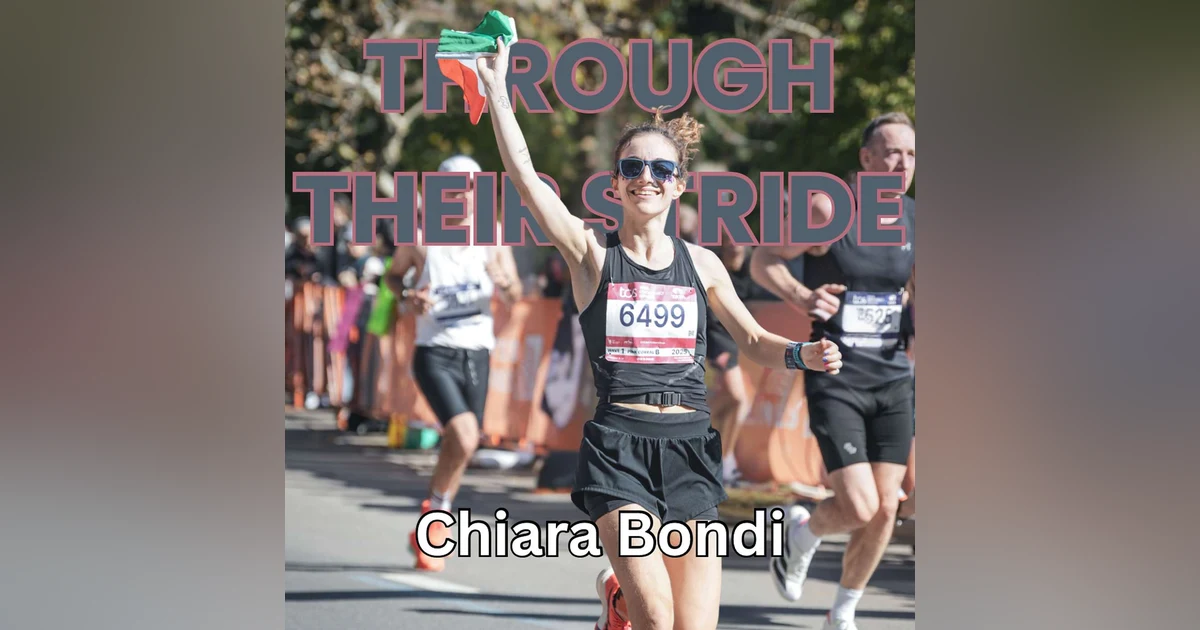
Chiara Bondi is a sub-3 marathoner, but this conversation is about more than a finish time. In 2025, Chiara ran under three hours at the Eugene Marathon and continues to chase big goals in distance running. Later that year, she received an autism diagnosis — an experience that helped her better understand herself and recognize that she was never broken. For Chiara, running and training have provided an important routine: a way to feel structured, grounded, and regulated throughout daily lif...


Chiara Bondi is a sub-3 marathoner, but this conversation is about more than a finish time.
In 2025, Chiara ran under three hours at the Eugene Marathon and continues to chase big goals in distance running. Later that year, she received an autism diagnosis — an experience that helped her better understand herself and recognize that she was never broken.
For Chiara, running and training have provided an important routine: a way to feel structured, grounded, and regulated throughout daily life. But in early 2026, a stress reaction forced her to step away from running. In this episode, she shares what recovery taught her, how she navigated a difficult season, and what it has meant to return to the sport with a renewed perspective.
Chiara's next race will be the London Marathon, where she'll be running to raise money for Ambitious About Autism. If her story resonates with you, please consider supporting her fundraiser here:
https://2027tcslondonmarathon.enthuse.com/pf/chiara-bondi?utm_source=ig&utm_medium=social&utm_content=link_in_bio&utm_id=97760_v0_s00_e0_tv3
Follow Chiara Bondi on Instagram: https://www.instagram.com/nuttyfitbondi/
That diagnosis, and from that point on, getting the support I needed from a psychologist, from a psychiatrist, with medication, and then with my family, I didn't know that I could live in such a state of calm and happiness, you know, to finally feel like I'm not broken and I do belong. And understanding how I can be in situations without automatically defaulting to I'm the problem and I have to figure out how to solve it. And instead thinking, this is an environment that's not made for me. Do I want to be here at all? And if so, what can I do and how can I communicate this to others so that they all understand and I can feel good.
SPEAKER_00But her story goes much further than fast times. Later in 2025, she received an autism diagnosis. To some, that can be scary. To her, it made her realize why she is the way she is, and that most importantly, she isn't broken. And training became a way for her to keep a much needed routine to help her stay regimented and regulated throughout the day. But that came to a sudden halt in 2026 when she found out that she had a stress reaction and couldn't run for a little while. While tough, she was able to learn so much in her recovery and through hard times in life over the past summer, she's now back on the run and looking forward to her best marathon race possible. And no, that doesn't necessarily mean a time on the clock. I'm so excited for you to get to hear Kiara's story, and without further ado, let's get to it. Okay, welcome back to Through Their Stride. I'm your host, Sam Sutton, and today I am joined by Shiara Bondi. And she sh did I say that first name right, Shiara?
SPEAKER_03No, it's actually Kiara.
SPEAKER_00Kiara. I'm so sorry. I think I remember that and then I said it wrong.
SPEAKER_03So you're all good. It happens. The CH confuses people, so it's all good.
SPEAKER_00Kiara. Well, uh, and Kiara is a sub-three hour marathoner, and she got that time back in uh uh New York City in 2025. No, no, Eugene back in 2025. Um and uh but your story kind of goes beyond just fast marathoning. So um I'm not gonna do your story justice if I explain it to you. So can you kind of introduce yourself to my listeners a bit?
SPEAKER_03Oh well, first of all, thank you so much for having me. I'm very, very excited to be here and kind of share my journey with all of your listeners. Uh so I'm Chiara. Um I am Italian, and that is kind of the short answer, but the long answer is a little bit trickier. Uh I was born in France, but both of my parents are Italian. Part of my family is American because of my mom's uh brother. I moved to Spain when I was seven, and then when I was 17 after high school, I went to the United States and I was there for seven years, where I studied uh in New York, in a university up in upstate New York. And then I went to Pittsburgh where I found a job and I worked there for three years, and it was actually in Pittsburgh where I started running. And so it was in the summer of 2022, which is right after I graduated, where being in a new city, not knowing anyone, I had already run casually, you know, maybe six miles here, three miles there, very sporadic. And to make friends or meet new people, I thought, why not join a rent club? And for my wallet, it was the worst decision ever, but for everything else, it was the best decision I could have made. And I moved back to Madrid, which is where I currently am, uh, a year ago.
SPEAKER_00Awesome. Yeah, it's so funny. A lot of people try to say, like, oh, running is like the cheapest sport, all you need is a pair of shoes, and you're good to go. And I was like, nah, if you're really gonna get into it, it costs a lot of money.
SPEAKER_03It's it's cheap as long as you don't get into it. And then as soon as you do, you're like, oh, the fancy shoes and the watch and the race entries and the traveling and the outfit. Yes, exactly. But I it's I'm willing to sacrifice that for the sport.
SPEAKER_00Yeah. And so I want to talk a little bit about uh your origin, and so you got um uh multi-citizenship, right? And multi and you're multilingual.
SPEAKER_03So I'm multilingual. I'm fluent in Italian, Spanish, and English, but I don't have multiple citizenships.
SPEAKER_02Oh, okay.
SPEAKER_03Um so I only have the Italian citizenship. So while I was in the US, I was actually on a student visa uh for the entirety of the seven years, basically. It's the visa system in the United States is very tricky uh and quite complex. So I will not get into that. Uh, but I was there as a student, where as a student I was allowed to work for three years. Um, and then on my student visa uh expired, my work period expired, and so I came back.
SPEAKER_00Yeah. Okay, awesome. Well, I always think it's I thought that was a cool part of your story that you're multilingual, because like you know, I've learned a little Spanish, but I've don't anything. And then of course English is my main language, but um my wife used to speak Spanish pretty fluently, and uh Oh nice but Italian and Spanish. So what's the the difference and similarities through that? Because I know Yeah.
SPEAKER_03Yeah. So they're very similar. Um structurally, they're very similar, they're both very phonetic, uh, and some words are very similar. However, uh they from a grammar standpoint, there are rules in Spanish that are very easy to follow, and then rules in Italian that are not as easy to follow. For example, accents. In Spanish, there's a very specific set of rules that you just follow to know uh what have what word or what letter has an accent, and it's in a single direction if you know how to draw it, like the little um tilde. Uh whereas in Italian, you can have it in two directions. Uh, which direction it is sometimes changes the meaning of the word. It changes the pronunciation of the word, and there's no rules. You just have to remember which ones do and which ones don't. Um, and then there's all of these words that sound the same but mean very different things. So you have to be worried um that you're not saying something wrong because you might accidentally tell someone that you're you want to say that your legs hurt, but you accidentally use gamba, which in Spanish means shrimp.
SPEAKER_00Yeah.
SPEAKER_03So you can make quite a fool of yourself if you're not careful with these uh fake friends.
SPEAKER_00Yeah, I remember you had said um on his podcast, uh Christian's podcast, that you had uh we're trying to say you were embarrassed, but it in Spanish it meant you were pregnant.
SPEAKER_03And I was like embarrassada. Yeah, embarrassado is embarrassed, but embarrassado is pregnant. So to all of you people out there who might have accidentally said that and got laughed at, just know that that's why.
SPEAKER_00That's funny. Well, cool. So uh going back to your running, so um you got into run clubs and then and and into running and ended up loving it. How did you kind of get into racing and when did you kind of fit found out find out like I'm pretty good at this marathoning stuff?
SPEAKER_03Yeah, so it really was peer pressure, to be honest. And uh, you know, normally I don't support peer pressure, but this was the best one.
SPEAKER_01It's positive peer pressure.
SPEAKER_03It's absolutely positive peer pressure. So uh in college, I went actually to the United States to get my undergrad, and I went as a division three golfer. So I played golf my whole life, and uh I loved it. I really enjoyed it, and I thought that going to play division three golf would be the best experience of my life. It actually ended up ruining the sport for me. I did not enjoy it at all. I had a really hard time in college, and so after a year and a half, I decided that this was not for me, and I stopped playing um collegially, which sort of worked out because that was at the end of 2019, and so with 2020 and everything that happened, no one was playing any sport. Yeah, um, but it did taint my passion for the sport for years to come. It took me a long time to then decide to get back into it. So when I went to Pittsburgh, I wasn't playing golf and when I and I already ran a little bit, so I started running with this run club, and I found myself really welcome there. I was able to talk to everyone around me in a much more comfortable manner than I expected. I found myself really integrated into the group, and so I just started going more and more to the run club. I started with once a week, then it became twice, and then I decided, oh, I really enjoy this feeling of running. Let me just run a little bit more by myself. Um, I started joining them for long runs on the weekends, and so Mia who had never raced anything more than five kilometers, I started finding myself or three miles, I started finding myself running eight and then 10 and then 14 miles. Um, I was like, oh, this is really fun. And everyone was training for the same race, which is the EQT 10 miler. Um, first of all, shout out to City of Bridges. I miss you all so much. Um but everyone was training for the EQT 10 miler, and I was like, oh, I've never raced such a long distance. Why not? And so I signed up and I thought to myself, I think I can run it in an hour and 15. I think I can do 10 miles in an hour and 15 minutes. Um which I thought was, you know what, let's let's take a crack at it. And I struggled so much to the finish, um, but I ran it in an hour and 14. And the feeling of wow, that was amazing, and I accomplished this goal and I feel so good was really something so special and so different. I was like, wow, this was really cool.
SPEAKER_01Yeah.
SPEAKER_03And this is at the beginning of November, and so towards the end of November, everyone's already talking about next year's races. So people are like, uh, they're sending their uh Chicago Marathon Lottery and talking about everything else. And so I on a whim decided, you know what? Why not? I'll sign up for the Chicago Marathon Lottery, not like I'm ever gonna get in. And then all of my friends say, Oh, we're actually training for Pittsburgh, which is in the spring. You should join. And I just went, sure. So I signed up for Pittsburgh, the full marathon of Pittsburgh. And then a few weeks later, uh, I got accepted in Chicago. So in one year, I found myself running two marathons, one in April and then one in October. So I was like, wow, I really hope I enjoy this because otherwise, this is gonna be a really interesting.
SPEAKER_01This is gonna be terrible. Yeah.
SPEAKER_03This is gonna be really funny. But I loved training, I loved the process, I loved the peace of mind, and I loved the challenge. And so I went into Pittsburgh with no expectations. I had never run anything, like obviously I trained for it and I did race a half marathon in the middle of the training, but I signed up for the marathon with the longest race I've ever run being 10 miles. So I had no clue what to expect. And I went into it just happy to be there. I was like, I am so ready to be here. And if you or any of your review listeners uh don't know, Pittsburgh is not flat. It's especially at the beginning of May, which the race is actually the beginning of May, it's quite humid, it can be hot, and it's very hilly. It's called the uh it's has it's called the City of Bridges because it's got all of these different bridges and they are not small. They you have some really tough climbs. So I knew that it was gonna be a hard course, and I kind of went into it being like, oh, I would love to get anywhere, you know, between 330 and 335, you know, just see how close I can get.
SPEAKER_01Yeah.
SPEAKER_03I ended up running a 322.
SPEAKER_01Yeah. That's incredible.
SPEAKER_03Which was so exciting because that meant that at the time the Boston qualifier was a three-hour and thirty-minute marathon.
SPEAKER_00So you you got easily.
SPEAKER_03So I got in um because I had uh seven minute, like seven minute and fifty second uh buffer, which was just so exciting. And so after that, that's really when I it clicked, and I thought to myself, I wonder how good I can get. And that's when I got a coach and when I really wanted to invest into the sport, and from there I've run uh five other marathons, with my fastest being uh three, uh two-hour and fifty-eight uh marathon in uh Eugene, Oregon.
SPEAKER_00That's awesome. And talk a little bit about that first marathon, the Pittsburgh marathon. You got 322, which is an incredible first marathon time. Yeah, a time a lot of people would dream of. And but what was the race like? Was it was it was it really hard, painful? Was it some what what what was it what you expected?
SPEAKER_03Honestly, I I got really lucky, I guess, because it was amazing. It was I had a smile the whole time. I enjoyed every second, even the worst hills. And it was very special because for obviously my first marathon, it was, you know, that was very exciting. Um, but my dad, he actually flew all the way from Madrid just to see me race. Wow. And my first race I'd ever run was actually a 5k with him, um, like 10 years prior. So to be able to have him there and know that I had someone to look out for and to see at the finish line just made it that much more special.
SPEAKER_01Yeah.
SPEAKER_03But I remember everything so vividly. I remember having chewy bars because I didn't like gels at the time. I used honeysinger and they did not sit well. So I thought to myself, uh, I'll just get a chewy bar because those are carbs and sugar. Um, so I had I don't know how many chewy bars, and I would try everything. I was like, oh, an orange, excellent, I'll have that. Which I don't recommend, and at this point I don't do. But at that time I didn't know any better, so I was just happy to be there.
SPEAKER_01Yeah.
SPEAKER_03And it was muggy and it was hot, but I remember getting to mile 20, and how the course works is you have all these hills, but then mile 20 is when you're going up high uh highland uh towards a park called Highland Park, which is a pretty steep long uphill, and then mile 20 is when you turn around and you actually start going downhill. And I remember hitting that turnaround and thinking to myself, I feel good, and there's six miles left. I'm cranking it up. So I just started running fast, and I got to mile 25 and I looked down at my watch and I was below three hours, like well below three hours and twenty. And I just started crying, and I started like bawling my eyes out, and I started screaming to people, I'm running through so fast, like I'm qualifying for Boston. Yeah, and how it's it's really nice because then you take a right hand turn at mile 26 to then go downhill to the finish line. And I wasn't expecting to see all of my friends there to cheer me for my first marathon because they all knew that it was my first. Yeah, and I just remember seeing them in the stands, and it brought so much joy, and I saw the clock and all that hard work paid off, and then I went to see my dad who made went came all the way from Spain just to see that it was uh probably one of my favorite memories um in running.
SPEAKER_00Yeah, that's a great marathon story. I mean, like a lot of people, you know, sometimes they'll they have to go alone and you know have no support. And uh some people have time to support like me, and then it still end up running six hours and fifty minutes for their first race.
SPEAKER_03Still, I mean, 26.2 miles is no joke, especially if you're there for so long. I recently actually um was able, I couldn't run due to my injury, because I'm sure we'll talk about it a little bit afterwards. Um, but I am very happy that I didn't because that meant that I could watch my mom, who at 57 ran her first marathon. I love it and I was able to follow her and be with her and support her and to see her do that, um, as she's the one that got me into running, and she traveled to see me race Boston. She decided to come with me to Boulder, Colorado to run a race with me there. Um, she came to New York with me to watch me race it. Like she has been through everything, and to be able to support her in her marathon was absolutely the best way I could have spent that day.
SPEAKER_00That's amazing. That's awesome. Um I my mom was a big race runner too. She got me into running. She was a multi-time marathoner when I uh uh when I was an adult. She kind of got me into that. But it's so cool when like your parents are in it too and like supportive with you. It's the best feeling.
SPEAKER_03Yeah, it really is.
SPEAKER_00Well, cool. So and obviously you've run multiple marathons since then, and um, but in 2025, before your New York City marathon and after your sub-three, you got an autism diagnosis. And so Yes. Um so what could you tell that story? What kind of led to that and and how did that come about?
SPEAKER_03Yeah, so 2025 was a life-changing year in good and bad. Because as I mentioned before, after my three-year work period ended, I came back. But that wasn't a choice. I wanted to stay in the United States, um, but unfortunately, a lot of people don't know this. But to stay and have a work visa, despite having an employer, it's a lottery. Um, so I could I was not selected in the lottery, which was quite unfortunate. And so I had a m just over a month to pack up everything, empty my apartment, return any vehicle, furniture, everything that I had, and leave and find a new job and get back um to Madrid and start over from here, which is a city that I hadn't been in for for seven years. And so that was a really big change. And with that came uh leaving all of my friends that I had made in Pittsburgh behind, um, leaving a long-term relationship, which was really hard, and then coming here and struggling to find a job because here in the summer everything kind of shuts down. Um and so my mental health decayed drastically. But as the years had gone by, especially living alone, I noticed that I struggled struggled a lot with anxiety, I struggled a lot with depression in general, um, and a lot of that led to physical symptoms. So I've been hospitalized for gastroenteritis, I've had severe acid reflex for as long as I can remember. And so often people would tell me, Oh, you're just stressed, oh, it's probably stress. And in my mind, um I just questioned what could I possibly be so stressed that is causing these reactions. And growing up, I was very different from everyone around me. I had a really hard time socializing, I had a really hard time um expla expressing my emotions, my needs. I was very independent and didn't really talk about how I felt, or I didn't like to open up to people, I didn't like cloud areas, it was it was all these different components that growing up, it just was played off as being introverted, being picky, being um a know it all, you know, all these types of all these different uh descriptors. Uh so last summer after everything happened and really struggling, my parents uh actually reached out to me because I I mean they came to me and they said, Hey We have a contact for a um like a psychology and psychiatry center that actually helps people um get diagnoses or support for various um mental health conditions and disabilities. And that includes autism. And um, because in the last few years I thought maybe, because you know, growing up I also receiv heard jokes of like, oh, that's so autistic of you, or oh, you're so autistic. Um, which I never understood.
SPEAKER_02Yeah.
SPEAKER_03And I was like, I mean, sure, whatever. I don't know what you mean by that, but maybe. Um, and so I ended up going and the I took the assessment, which is a very long assessment. It was five hours of questions and dialogue and little tests and little games, et cetera, to really get a good understanding of me and how I work and and my brain. And I'll never forget it was early September, and um, I went with my mom to the center because I told her I don't know what's gonna happen, I don't know what the result is, but either way, I need you there with me because if they give me a diagnosis, I want you there to know it. And if they don't, I need you to support me because then I don't know what to do. I had gotten to a point where I was so desperate of understanding what to do that I just I was terrified that I would once again hear, oh, you're fine. There's nothing, you know, nothing's going on. And getting the diagnosis meant that for the first time in my life, I did not feel like I was broken. And I felt like I was finally understood. And both my mom and I teared up. Like we both just started crying, me from finally understanding myself and her from finally understanding me. And it was a realization of, oh, this isn't something that's been noticeable for the last three years as like a personality thing. She could trace back to moments when I was six months old and screamed whenever we were inside of a busy restaurant, and the only way to calm me down was to be outside or struggling with clothes because of I get, you know, super stressed about how the clothes felt or things like that. And that also helped me understand why running helps me so much. And it's because running outdoors, especially, is uh a way that allows me to uh be in complete quiet and in peace, and it's a way that I get ready for the day and absolutely release tension. I always need to be outside, whether it's it's and it's usually in the morning before my day starts, and if I'm having a really stressful moment or something is really overwhelming, I have to go and I have to be go out for a walk, and I normally will put on headphones and listen to nothing because I'm so overwhelmed that any noise just becomes so overwhelming. But that diagnosis and from that point on getting the support I needed from a psychologist, from a psychiatrist, um, with medication, and then with my family, I didn't know that I could live in such a state of calm and happiness, you know, to finally feel like I'm not broken and I do belong, and understanding how I can be in situations without automatically defaulting to I'm the problem and I have to figure out how to solve it. And instead thinking, this is an environment that's not made for me. Do I want to be here at all? And if so, what can I do and how can I communicate this to others so that they all understand and I can feel good?
SPEAKER_00Yeah, I love that. And I think a lot of people, um, you know, they they do have some quirks about themselves and some things that they are things that they struggle with, and they're they may think maybe I have autism or maybe maybe something's wrong with me. And sometimes they're kind of worried about going to um to a doctor and getting a diagnosis because then it's like like now something is officially wrong with me, and like they're really nervous about that. But it sounds like for you, you got your diagnosis, like nothing's wrong with me. I just know how I respond to things, and like now that I actually know I can really work with it and be my best self.
SPEAKER_03To be honest, that was the salvation for me. Because growing up, I thought I was broken, and I thought that I was the problem, and I thought that I just wasn't like everyone else, and I just had to deal with it, and that's kind of how it was always played to me, you know, or how was expected of me to oh, just you know, adjust, adapt, oh, you'll just get used to it, oh you should just suck it up. Um, and getting that explanation just for me was so eye-opening because it finally it was like take keep getting this weight lifted off of my chest because it'll finally explain to me, oh, I can do something about it. And that something is not anything that I've tried before, because before my test strategies were guilt, forcing, um, shaming, you know, really negative mechanisms. Whereas now I've learned, oh, if I wear noise-canceling headphones, I can be inside of a restaurant. If I um decide to hang out with people one day, I just need to organize myself so that the day before and after I can be fully alone so that I can just decompress and you know, stay calm. And not only has this been super beneficial for my mental health, but it's also been extremely beneficial for my physical health and also running because um my sleep quality is has drastically improved because I'm finally resting. My brain is no longer just on survival mode, and so I'm finally getting rest, which is crucial when you're training and running such far distances. Um I'm not so stressed that then my body's exhausted, or I don't get acid reflex anymore, so I don't have the stomach pains that then I have to deal with figuring out how am I gonna fit this into my run and how am I gonna, you know, everything. And as someone who thrives on routine and very much needs routine, like training is the best. Yeah, people always question, oh, I couldn't, or tell me, oh, I could never be as diligent as you. And in my brain, I was like, you don't understand that this is how I function. Yeah, like I have a very, very specific routine that I follow every single day, and that is how I function. And getting injured was a real struggle because it threw me off of that routine, and not having that was a huge change that I had to understand and work with my therapist to figure out okay, what can I do to maintain a semblance of that routine and navigating the feelings that came with the injury itself. Because part of my diagnosis, autism is a spectrum, and so not everyone's gonna have the same experiences. Not everyone is on a spectrum, but those that are are gonna have drastically different experiences. For me, some of my um characteristics of my diagnosis are I'm very literal and I have a very hard time understanding tone, emotions, and a lot of the like context that comes both from myself but also others. So one of my biggest problems is trying to understand what I'm feeling. I can describe to you physical sensations like tension in my hands, uh weight on my chest, uh hole in my stomach, things like that. But I couldn't tell you if what I'm feeling is anger, if it's stress, if it's sadness, if it's frustration. I I'm I'm still working through that with my therapist. And same with everyone else uh around me. And so, you know, having to understand what am I feeling now that I have this injury, am I is it guilt, is it shame, is it anger, is it sadness, is very hard, but understanding what it is can then help me understand what to do about it and how to handle it.
SPEAKER_00Yeah. Yeah, it almost becomes once you actually know and once you start to practice things and start to figure out what works for you and you're kind of allowed that space to do so, because people are like, oh, she's figuring herself out, she's figuring it with this new diagnosis. Right. Then it almost works as a superpower because then you really get to learn how to kind of regulate and use things like training and like marathoning to your advantage.
SPEAKER_03Yeah, and it's it's really funny because sometimes it genuinely feels like I'm a child again, learning emotions. But that's really what it is, at least for me, you know, understanding what sadness feels like in respect, like and what it differs from anger and what that differs from uh stress, because understanding that can then help me try to narrow down what the cause of it is, and then what I can do about it. And this sounds like so trivial to people um who don't struggle with this. They're like, what do you mean? Uh you know when you're happy, you know when you're sad, and in reality, there's a lot of people that don't.
SPEAKER_01Yeah.
SPEAKER_03Um, and it can be a real struggle, but then as you just said, it can also be a superpower. Um, one of them being, I am very diligent with my schedule. I have a 10-mile run on a Tuesday morning. You bet I am going to get it done. Um, that's never been an issue, and you can tell my coach that uh or ask him about it because he will most likely agree that, like, yep, never failed unless there was a genuine reason to.
SPEAKER_00Yeah. And I want to get to um the injury, but before I do that, so uh I I think I've heard before that you're coached by Jeff Cunningham. Is that correct?
SPEAKER_03Yes, yes, I am coached by the Jeff Cunningham.
SPEAKER_00Yeah, he's awesome. I had it, I had him on uh I think back in April, I believe.
SPEAKER_03So uh he is an amazing person, like he is a wonderful, wonderful, very funny Texan band, or very thick Texan accent, um, which I absolutely adore. So and he's a great coach. Like that's just a plus of it, you know.
SPEAKER_00Um I was gonna ask about that. So, like the what I liked about him and like what I liked about what he talked about was he's a very he takes a very personalized and very individualized approach for his athletes. So he's always like checking in, he's trying to figure out exactly what works for you, exactly what you know what routines you need. And I was wondering, you know, with your autism diagnosis and with your, you know, your life the way it is, how does he work in scheduling and what what works best for you?
SPEAKER_03Yeah, so like being able to tell him that and understand that was so important because then for both of us, we understood, oh now like now you know what's happening, so you can handle a lot of life stressors probably a lot better. And noticed, in fact, a huge improvement in a lot of my training sessions, not just my my my easy runs, but my workouts. I was hitting pieces um that I didn't realize I could, you know, comfortably quote unquote uh you know run. And he is very much on top of his athletes in in a good way. He doesn't helicopter anyone, um, but he takes in the human side just as much as the athlete side, because ultimately you can't separate those two. And so, for example, when I came back and I was going through all of my life changes and all of my stressors, and I told him that, um he immediately like dialed back training sessions and focused on effort and not on anything else. And when I said, Hey, New York is gonna be fun, like I wanna, you know, get there maybe feeling like I can run fast if I want to try, but really I just need to enjoy life again, like it really got to that point. Um, and he was like, You're young, you're gonna have a lot of races, like absolutely.
SPEAKER_00So I love that, and and then New York ended up being such a successful race. You got three hours and 18 seconds, yeah.
SPEAKER_03I had three hours and eighteen seconds, which I realized n uh later that when I was actually on Christian's podcast, I accidentally said three hours and eighteen minutes, but it was actually three hours and eighteen seconds. Um, and it was I think it's still my favorite race just from the satisfaction I got from it, you know, the realization that I underwent I underwent such a difficult period in my life and still came out smiling, um, and having my mom there and one of my friends from Pittsburgh, uh, Max, uh, hi Max. Um, he came from Pittsburgh just to watch me race and spend the weekend with me and my mom. And so to have those two people there um in a race where I had actually dreaded New York for so long because after, you know, that was where I thought I would spend the rest of my life with my partner at the time. And, you know, having been forced to leave the country and then go back for this race was very difficult mentally. Um and so the realization of I can do this and I feel so relaxed about it was a sensation that I had never had before, and it was very well welcomed.
SPEAKER_00Yeah, very empowering, very empowering.
SPEAKER_03Um, because it's again that realization of I am not broken. I I I sound like a broken record, but I just want to make it very clear that this is, you know, there's nothing wrong with me, and there's nothing wrong with you. Um, and there's nothing wrong with anyone. You don't think to yourself, if you're someone who is nearsighted and needs glasses, you don't think to yourself, oh, I'm broken. You just think to yourself, I see differently and require, you know, this form of support to see like everyone else. Um, that's what I tell my brother who has um some learning difficulties is you just learn things differently, and you need your tools to learn the the way that you do.
SPEAKER_00Yeah, I think it's great. I think it's something that um, you know, for a very long time in this world, we were taught that like things are a certain way, people act a certain way, they learn a certain way, they yeah you know, and it was uh it was like anti it wasn't good if you you know you're you were looked down upon, and I think a lot very recently and we've started to learn a lot more, like there literally nobody is the same. Like from one person to the other, even though if they they may learn a little bit similar, there's still differences between every person. And you know, once we're once this the world be has begun to understand that, accept that, and try to teach people to their needs, it turns out like, oh, like we're all you know, like everyone's so much ca capable of so much more than they ever thought.
SPEAKER_03Yeah, I'll never I'll never forget. I started a new job in Madrid in October. And at first I was very nervous to disclose sort of my diagnosis. Because in my mind, I was like, I mean, unless it's relevant to the conversation or something along those lines, I don't really need to tell anyone. Um, and it got to a point where I was uh in a project with uh a couple managers on my team, and I had uh therapy during the workday because my work hours are quite long. I work from 9 a.m. until 7 p.m. Monday through Thursday, and then 8:30 to 3 uh on Fridays. And so I couldn't fit my therapist appointment outside of my working hours. And so I went to my manager and I explained to her that listen, I am have this diagnosis and I really need the support of my therapist to help me. Um, however, it's only during the working day, and so I'll move things around. And she looked at me and goes, do not stress, just block it on your calendar. You tell me when it is, and you do that, and do not skip lunch for this. Because my idea was, oh, if it's an hour, it'll just be my lunch break. Because that was a very American mentality of mine as well.
SPEAKER_02Yeah.
SPEAKER_03Um, and she very much was like, No, don't do that to yourself. Um, you know, start half an hour earlier on one day and leave half an hour later another day, and that's that one hour that you've made up and you're good. Um, and then she said, you know, it's really important for us as a team to know this because that helps us understand how you work and how you can be the most efficient team member. And it made me realize I was like, yeah, that's true. I want to thrive in this space, I want my team to thrive, and I want them to think that I'm doing a good job. And so it is important actually that they know. Um, also to for a social standpoint, like knowing that if I don't partake in every social event, it's not because I don't like people. Yeah, it's because after a full day in the office with all of the background noise and all of the talking and all of the people and all of the movement, I am not in the mind space to go out to a bar and get drinks.
SPEAKER_00Yeah. Yeah, and that makes sense. And like, you know, it like you said, like collaboration and teamwork and communication is so important because it's like, and and what in today, in today's world where we do know so much more and we are so much more accepting than we have ever been, it's like if you can just say, Hey, this is what I'm dealing with, this is what I'm going through, they're like, Cool, we can work around that and navigate it, and then we become a stronger team.
SPEAKER_03So absolutely. And I feel like for an injury, it's especially important to be able to talk about how you're feeling. Because to an outsider, you know, they think like, oh, just don't run. Easy. Um, but to anyone who loves any sport, to not be able to practice it hurts. And for me, as running was part of my routine, it was one of my anchors for consistency, and it had been like that for three years. Like I had I ran six marathons in three years and never got injured. I had aches and pains and you know, small things, but I never pulled out of a marathon. I was never I never stopped running for this long of a time frame. Um, because I didn't run for two months. Um, and then I started run walking for a month and now, or yeah, just over a month, and now I'm starting to out. Um continuous runs, which is super exciting, but also a little bit heartbreaking to think, oh, I used to, you know, in in March, I ran a half marathon in an hour 24, and now running for 30 minutes feels hard. Um, but the realization also of wow, I'm running for 30 minutes when two months ago I couldn't run at all is such so amazing. But going back to kind of what you said about teamwork and communication, being able to communicate with my mom about the frustrations that I was feeling, with my therapist about the everything that was going on in my brain, um, with my friends who uh most of my friends are runners, and you know, to be able to tell them that I can't run and I still don't want to see them because I don't want to feel excluded. I don't want to feel like I can't be part of their activities and them figuring out ways or coming, you know, telling me, get the bike and come with us on the bike. And that's what I, you know, um, that's what I did last weekend is a friend of mine and I went on the bike while other people, others of our friends went running, and then we met up and had breakfast together, and it was great. Um, but that communication and that openness is so important through an injury because injuries are hard. They are you have all of these goals, you have this in this timeline, this idea, this vision board that you don't it feels like you just have to tear it all down. When in reality, you just have to put store it away for a little bit so then you can bring it back. But in the moment, it definitely feels like everything is just falling apart and you can say goodbye to all of those visions and and dreams, you know. I had the Madrid marathon, which I couldn't do, and then I was really hoping to run Berlin. Um, and then when I got diagnosed with this stress reaction, I don't think I clarified that. I got uh I was diagnosed ultimately with a stress reaction on my right shin. Okay, and um that was hard because I genuinely thought that it was just like a a tendonitis or something. And when I read bone edema, immediately I froze. And I just had to reread that I think four times.
SPEAKER_01Yeah.
SPEAKER_03And I was like, no, this can't be right. I'll wait for the doctor. And then the doctor was like, nope, your bone, there's bone edema, you have a stress reaction. Um and I was so frustrated, and it was so important to not bottle that up because I know at this point what happens when I bottle my emotions up, which is I don't sleep well, my heart is racing, I get acid reflux, um, my anxiety skyrockets, it's just not a pretty sight. I'm not a nice person to be around. Um, and I don't mean to, it's just how it is. And so, you know, having those clear conversations with your support group and your friends, your family, and just being with them and allow yourself to be taken care of is really important.
SPEAKER_00Yeah. That's awesome. And then talking a little bit about the injury and about like because you said, you know, the running is really helpful with with and the schedule, schedule and the routine with your autism, and like that just the injury just throws an absolute wrench into that. And so what was that like, and how did you kind of cope with that? What were some things that you learned to get better?
SPEAKER_03It's really funny. When I talked to Christian um on the Marathon podcast, he actually asked about this, and I was like, I haven't gotten injured yet, so we'll find out when we get there. And I guess we are here again. We got there. Um, it was definitely hard, and so I immediately I knew that I needed to have something in the morning to take up my time and something that would feel good and give me energy. And so I started realizing, okay, what can I do? What movement can I do, and how can I spend my time? So I started going to the gym at the same time that I would run and do some mobility and do some stretches and do some cycling or elliptical, you know, low impact stuff. And that became my routine of, okay, I normally run, you know, in from the moment I wake up until 7.15 in the morning. So I'm just gonna keep that morning movement in there and adapt it to what I can do and what feels good. And so I've been doing that, and it's been honestly really great because I've been able to give more time to strength training, um, which I always do, but not to the same amount that I am right now, just because I have a lot more time. Um, practicing other sports that I've never, you know, practiced or I haven't done in such a long time. So, for example, Saturday mornings, I've always gone on a long run. Now I'm not doing that, and I don't have a bike, so I can't go. I don't have a bike in the city. Um, I started swimming.
SPEAKER_01Yeah.
SPEAKER_03And the routine of I get up and I have my pre-training snack and then I go to the pool and I swim and I come back, it fills up my morning and it makes me feel just as good. Um, maybe that's an exaggeration. It makes me feel really good. Um, close enough, let's say, uh, to running. But that's really what I focused on was what can I do to give myself that structure? And what can I do to give myself that routine and that you know comfort of knowing what I'm doing. Um, and to so many it sounds incredibly controlling. They're like, oh, just you know, rest to sleep in and you know, whatnot. But for as someone who, and you can ask this, you know, if you ask my parents, they will vouch um that I need to know everything. I need to know what time we're leaving, where we're going, how long we're gonna be there, who's gonna be there, what are we doing, etc. I don't work well with the unknown, I don't work well with changes, I don't work well with, you know, all these changing impacts, which is hard in a world where everything changes.
SPEAKER_01Yeah.
SPEAKER_03Um, and so for me, it was really important to find something that I could do that would replicate my routine.
SPEAKER_01Yeah.
SPEAKER_03And I think that that's important to everyone because I mean, for some people, you know, running can take up, you know, five, six, seven, eight, nine, however many hours a week that all of a sudden you find yourself just not having to do anything.
SPEAKER_01Yeah.
SPEAKER_03And you know it it can be very easy to use that time to just feel bad about yourself and feel bad about what's happening, and oh, I'm injured, and this is this is hard. Um, but this injury was uh allow me to put a lot of things into perspective as well, um, both in myself of what do I need to improve to avoid injury in the future, and that includes better um load management. Um I've been seeing this uh therapist here in Madrid, Rafa, and he is amazing. I he's he's a great friend, a great person, and an amazing physiotherapist. Um and so I, you know, doing that, understanding, oh, my nutrition, I have to be even more careful about it in terms of volume of oh, I need to eat a lot more. I really need to take care of my physical health as well. Because that has an entire other side story that we will not have time for. But that itself made me really wake up to say, okay, if I don't take care of my my physical health right now, my bones are gonna, you know, become brittle and weak, my muscle will fade away, um, and I won't be able to run because I'll just keep getting injured. And so that's just not. Um, but then throughout this injury, a few real tragedies occurred in my life and in those around me. Um, and I don't really want to get into it, but just things that really made you put a tiny setback into perspective. And this isn't to say that, oh, people have it so much worse, just don't be upset about it. Um, but be upset about it. But also real it's it it's it's you can be upset about it, but also understand that you're still in such uh privileged position of recovering, learning, and continuing when there's other people who are you know bad luck and just the ways of life don't.
SPEAKER_01Yeah.
SPEAKER_03And so it was really a lot to you know, in that moment I felt like wow, I was thinking to myself, oh, I'm so unlucky, why is this happening to me, etc. And then this tragedy occurred to a person that was very close to me and my family, and it made me realize like, oh, I have no idea what it is to be unlucky. Like I really don't. This is upsetting, but I have no idea what it's like to be uh unlucky in the way that I've been claiming to be.
SPEAKER_01Yeah.
SPEAKER_00And and uh yeah, I'm I I I won't ask any qualifying questions just uh just to keep your you know privacy, but you know, things like tragedies and and uh sudden sudden experiences sometimes put in your life, like man, like I do have it a lot better than I think I do. And you know, thing and it kind of makes you grateful for the things that you do have, and it that that gratefulness helps you focus on, you know, things going forward and it's absolutely yeah, no, absolutely.
SPEAKER_03It makes it makes you understand what really matters, yeah. And you know, running is amazing and it's giving me life, but running is not my life, and it is still a hobby and it's still something that I enjoy and I love to share with people, and so realizing that, you know, and especially it helps me put into perspective like my injury isn't really as bad as I think, you know. I didn't run for two months months, but it's not like I broke anything, it's not like I needed, you know, invasive procedures, like, yeah, I couldn't race the uh run the races that I wanted. Um, but there's always next year when you realize that other people don't have that option at all.
SPEAKER_01Yeah.
SPEAKER_03And so, you know, I'm very excited for what I have set, you know, set up for next year. I'm now starting to run again, and it feels really nice to be able to add that back into my routine, um, and being able to switch from the gym sessions to my running, um, and going at it with a much happier, positive light of how lucky am I to be here and how amazing that I, you know, overcame, you know, this obstacle and you know, overcame last year's obstacle. And, you know, if if we're here, we've all overcome the worst challenges ever. And so this injury is just another challenge that you will be able to look back on and think to yourself, yeah, it was hard, did not enjoy it. But I don't think a lot of people come out of an injury without telling themselves, I learned so much, and I and it helped me appreciate movement a lot more. Because it's true, you don't appreciate the things until they're gone.
SPEAKER_01Yeah. Yeah.
SPEAKER_00Yeah. I uh I've been open about this on my podcast um uh in previous episodes, but my mom passed away back in uh in January, and um, you know, that was a situation. Thank you. But that was a situation really where I was like, man, like you know, she was still out there doing the hard things up until her death. You know, she she raced a 100-mile bike race like a week a month before she was hospitalized. Yeah, and she was doing big you know hikes. She hiked the Grand Canyon rim to rim to rim, and that's amazing. Yeah, did all this while having cancer, right? And like for me, it was like, you know, I get I I hit a bad run, right? And it's like I'm so mad and I'm so like frustrated. And then it's like, but then after that, every time I have a bad run now, I'm like, it's just a bad run. Like there's nothing wrong with me.
SPEAKER_03Like, I'm gonna, you know, you'll be able to run again tomorrow. And it's the realization of, okay, maybe with an injury I won't be able to run again tomorrow. Um, but just give me some time and I'll get back to it. And it's so much easier said than done. And that's why being able to talk about it and be very open and very honest and not feel shame because at first I felt shame to be upset, because going back to oh, people have it worse than I do, like, why am I upset? Um, but you have every right to be upset. This is hard, and this is upsetting, and you had goals and you had dreams and you had things like it is upsetting. Um, and that was something that my therapist kept telling me is like, if you need to cry about it and you need to let it out, you do it and you cry it out, and you just let your frustrations out. And the important thing is that you don't let them overcome your like your life. And the best way to do that is honestly to just let them out, right? Because once you release them, you know, you've ever have you ever had such a good cry, like a really strong cry where you're like, wow, I feel like I got this weight lifted off of me.
SPEAKER_00You released like a you released energy, like it's it's it released so much energy, exactly.
SPEAKER_03And so, you know, you just release that and you're able to go about rationalizing it, thinking about it in a much more in a much more logical sort of manner. So that's really one of the key things that helped me throughout this injury was having a an amazing support system and really letting myself talk about it and be open about it and sort of express my frustrations and let myself then also kind of enjoy it in a sense, you know, enjoy swimming, which I hadn't done in so long. Enjoy a Saturday morning where I'm not waking up uh at 5 a.m. to get a 20-mile workout in before it's 100 degrees.
SPEAKER_02Yeah.
SPEAKER_03Um, enjoy, you know, trying new things uh at the gym. You know, it's like being able to enjoy that was, you know, I've now gone to the beach and I've started open water swimming. I was like, whoa, this is so cool. I would have I never did that before because I would just run. And then afterwards I was like, I don't really feel like going to swim right now.
SPEAKER_00Man, you're you're cycling a bit, you're swimming, and now you're back to running. You might be a triathlete at some point.
SPEAKER_03I am much more interested in the ultra space than the triathlon space. Um so yeah, I've had a lot of people tell me that it's like, oh, you're gonna start triathlon soon, and I was like, probably not. Um, because I just am really interested in mental pain of 100 miles running.
SPEAKER_00So yeah, that's that'll never be my joy space, but it is definitely first time being really fair.
SPEAKER_03I honestly I never thought marathons would be my joy space. I told myself I would never run a marathon, and now I have run six so far and have two next year already, and I'm already looking at which other ones I want to do.
SPEAKER_00Yeah, I love that. And I think you know, hearing all of this and hearing your story, um, it sounds to me like your next marathon is going to be uh the biggest breakthrough just because you've learned so much and you've gained a lot of like life experience through your diagnosis, but then through this injury and then the unfortunate things that had happened, and it sounds like all of that's kind of culminating into something great.
SPEAKER_03My next marathon, I'm actually it's gonna be probably the best experience of my life. Um, because not only am I racing London, which is an incredible race that you know is very hard to get into unless you are a UK resident. Um, but I'm actually collaborating with a charity uh called Ambitious About Autism. So I am raising money to actually support what gave me my life back. And I am raising money for this organization. It's UK organization, Ambitious About Autism, um, that provides resources and support to kids and young adults. So navigating the school life as a kid where it's noisy and crowded and kids are running around everywhere, um, entering the workspace as a young 21, 22 year old, what resources do you need? How do you bring that conversation up with your boss? How do you explain that you need a few accommodations such as noise canceling headphones or the ability to work from a secluded space or your own office or a private room or something like that? And so to be able to not only get back to doing what I love so much, but to give back to what gave me a life is just the best feeling possible. And so I am so, so excited about it, and I am so excited to be able to help as much as I can and raise as much as I can for uh ambitious about autism and spread awareness and knowledge about this because so many people, again, just from pure, you know, ignorance, and I don't mean ignorance in a bad way, but no one goes to school and learns here's the different types of um autism diagnoses, and here's the different symptoms with an ADHD diagnosis, and here are all the different categories for an OCD diagnosis. You know, we don't learn that, we see what we see on TV. So the amount of times where people are like, but you don't remind me of Sheldon or uh the good doctor or uh any other very uh autistic sort of character, and it's like, no, because that's just one way of experiencing that.
SPEAKER_01Yes.
SPEAKER_03I experiencing it differently, and that doesn't make my feelings or my experiences any less than those of others, it's just that I am different, and though it might be hard to see from the outside, you know, understanding that and accepting that is so important for everyone, and so I'm just so excited to be able to get to London and make sure that I get there the healthiest runner I can be. Um, and that doesn't necessarily have to mean the fastest runner I can be. Um, but that's really not the point of this. The point of this is gonna be really to push myself. Enjoy it and give back. So that's gonna be I'm I'm so looking forward to it.
SPEAKER_00Man, that's amazing. And unfortunately, we've talked for over an hour and I gotta get back to work, but um I I've very much loved this conversation. And um my last few questions, two questions are uh first off, um, where can people go to support this uh uh this and help donate to your cause and then help you out?
SPEAKER_03Absolutely. So the link is in my Instagram bio, and I can send it to you if you want to place it anywhere in show notes or anything like that. Um but on my Instagram, the Instagram is nutty fitbondy altogether, so n-t-t-y-f-i-t, b-o-n-d-i. Um and that's where I share my running content, that's where I share my random content. Um, and in the bio there, there's a link uh to the official London marathon sort of donation page uh where you can donate to the cause. And I would so appreciate people supporting it because I think it's just such an important, they do such important work to help people not feel alone and isolated and just be able to be a part of life and enjoy it. So yeah, that's that's where that's amazing.
SPEAKER_00And then my last um, my last question is for someone who had maybe just got diagnosed with autism, right? And they don't know where to go next, they might feel a little lost, they may feel a little like scared. What is your advice for them?
SPEAKER_01If you have to cry, cry.
SPEAKER_03If you have to scream, scream. If you have to let it out, however you want to let it out, you let it out. Because it can it can be so hard at 24, 25, 30, 35, 40, or you know, even younger, um to learn that you do experience life differently. But you know, because at 24, you know, I I spent so long then thinking to myself, how much could my life have changed or been different had I known this when I was younger? How much better off I could be had I known this sooner? So do what feels right in that moment. Is it screaming? Scream at a pillow. Is it crying? Go cry on your bed. If is it, you know, fidgeting something? I have two fidget rings that I constantly switch between. Um but know that this is a door that you didn't realize would open the world to you because now you know what tools you need to move forward, and you're no longer playing this guessing game of maybe it's this, maybe it's that. You actually now have an explanation to why you feel the way you do, and how you can now go and make the world your oyster and just enjoy.
SPEAKER_00Yeah. I love that. Well, Chiara, thank you so much for um for coming on today and sharing your story. And and I think this this story alone is gonna help so many people, and it's just a blessing to have to have you on. So I really appreciate it.
SPEAKER_03Thank you. I re I really hope so, and I really hope that if I can make one person smile and help one person's day, I will be very happy.
unknownYeah.


