Ep. 49: From 3:00:10 to Sub-3 | Natalie Lutz's Marathon Breakthrough
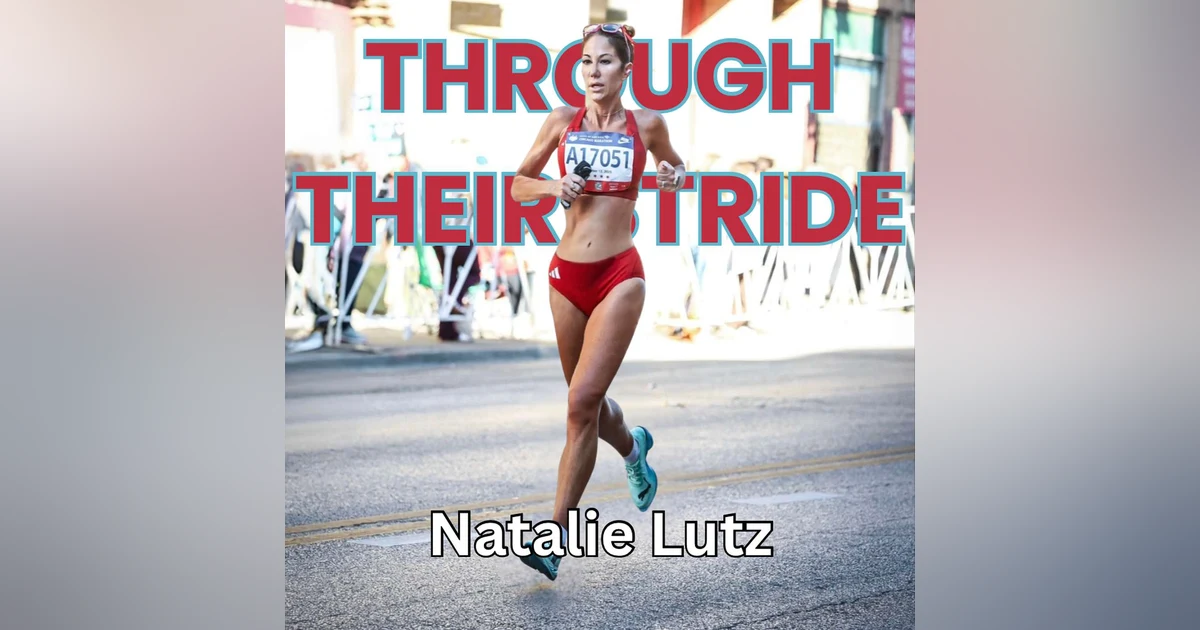
Natalie Lutz is a running coach, mom, full-time employee, and multi-time sub-three-hour marathoner. At the 2023 Chicago Marathon, Natalie ran 3:00:10 — just 10 seconds away from breaking the three-hour barrier. That near miss gave her a glimpse of what was possible, and she went all-in on the pursuit. Over the next 12 months, she raced five marathons before finally breaking through one year later. In this episode, Natalie shares: - What it felt like to miss sub-3 by 10 seconds at Chicago - ...


Natalie Lutz is a running coach, mom, full-time employee, and multi-time sub-three-hour marathoner.
At the 2023 Chicago Marathon, Natalie ran 3:00:10 — just 10 seconds away from breaking the three-hour barrier. That near miss gave her a glimpse of what was possible, and she went all-in on the pursuit. Over the next 12 months, she raced five marathons before finally breaking through one year later.
In this episode, Natalie shares:
- What it felt like to miss sub-3 by 10 seconds at Chicago
- Why she chose to run five marathons in 12 months
- The training, mindset, and persistence behind her sub-3 breakthrough
- How coaching runners fuels her own goals
- Balancing high-level training with motherhood and a full-time job
- Rebuilding her relationship with running after collegiate burnout
If you're chasing sub-3 or any goal that feels out just out of reach, this conversation is a reminder that a near miss can become the start of a breakthrough.
Subscribe for more conversations about marathon training, running culture, and the stories behind big goals.
Follow Natalie Lutz on Instagram: https://www.instagram.com/multisportmama/
#running #marathon #marathontraining #chicagomarathon #sub3marathon
I ran three hour ten seconds and that a lot of people thought that annihilated me mentally. It it did not. Actually, it invigorated me because I was like, dude, it's ten seconds. Like, and that was like the difference between me like, you know, taking a little bit of a longer stride or just like, you know, taking a drink the longer at a you know, one of the water steps. So I that once I hit the three hour 10 seconds, I was like, there's no way I'm not getting it now. Like, that's when I went from just very standard, like I was doing a spring and a fall marathon to get me their formal training. I went nuts. I went yes. So I went and did, I think, five marathons. It ended up being five marathons in a 12-month period.
SPEAKER_00Welcome back to Through Their Stride. I'm your host, Sam Sutton, and today's guest is Natalie Lutz, a running coach, mom, full-time employee, and multi-time sub-three-hour marathoner whose journey to that goal will feel very relatable to a lot of runners chasing a big breakthrough. At the 2023 Chicago Marathon, Natalie ran three hours and ten seconds. Just 10 seconds away from breaking three hours. Close enough to see the goal, she chose to chase it aggressively. And over the next 12 months, she raced five marathons and finally broke through one year later at the same race. We talk about that pursuit. How coaching other runners continues to inspire her own goals, balancing high-level training with motherhood and a full-time job, and how she worked her way back from burnout after running collegiately. Here's my conversation with Natalie Lutz. Okay, well, welcome back to Through Their Stride. I'm your host, Sam Sutton, and today I'm joined by Natalie Lutz. And Natalie, thank you so much for coming on this week. I've been kind of following you on Instagram for a little while now, and I saw you're a two-time sub-three-hour marathoner, and I was like, and a mom and a coach, no doer of all things. And so I was like, I gotta have a rod. You probably have an awesome story.
SPEAKER_01Oh, thanks so much. Um, thanks for having me on. I really appreciate it. Um, yeah, so I have like I was telling you a little bit earlier, I've been running since I was about 14. I went out for cross country and absolutely just loved it. Fell in love with it right away. That was that's the first thing that mattered most to me. Um, it's kind of funny because my sister and I were just talking to another cross-country runner when talking about our old, like the old days in high school and how fun it was. It was just like such a fun experience and such good people, um, both on the guys and girls team. So it was really nice to like grow up in that atmosphere. And then I went on and ran in college for two years. I got very, very burnt out by my going into my junior year. So I did end up um quitting. So I yeah, I did. I just was like, uh, nope, I'm just gonna take a break. It was getting very intense. There were two days, and I was still um going between different majors at the time, and I was just confused on what I wanted to do, and I felt like you know, that whole like 20 something, like you're all over the place, you don't know what you want to do with your life. So um I decided to let Ryan take a back seat. I think it was probably draining me a little bit. Um, and then also too with the social aspect, I felt like all the races and I wasn't able to go out and I wasn't able to have fun, and like a lot of my roommates and and other people in my house, uh housemates at the time were um just having different experiences. So I wanted to just experience that. So I ended up um still staying into running. I ended up coaching at the same time, a local D3 uh cross-country team, men's and women. Um so I still stayed in the that's kind of where I got my coaching background, and I stayed in the mix doing that. Uh, it was a little interesting though, coaching people my age. Oh yeah. That was that was definitely really interesting. And it was the first year they had the program. I was actually the assistant coach. They did have a head coach. So thankfully that took a lot of pressure off me. Um, so I just got to learn and uh, you know, go with the flow. And um, it was the first years of that program. So it was it was fun and interesting. Really glad I got to have that experience.
SPEAKER_00Yeah. So uh where did you run in college and then where did you end up coaching?
SPEAKER_01So I ended up running at University of Delaware, and at the time it was D1. I don't even know if it is now, or I don't even know if they have a a real legit program anymore. I think it might be club now. But um back then it was D1, and then I ended up coaching Goldie Beacum College, which was um a D3. I think it still is a D3, small business college in Wellington Delaware.
SPEAKER_00Cool. And you're obviously still a coach now, so what what did you kind of take away from there, uh from that college experience to to make you think, oh, I want to continue this? Like, what was that journey like from coaching there to continuing to coach today?
SPEAKER_01Sure. Um, I think what I really enjoyed the most was, you know, that feeling of watching people succeed. And we had a lot of newcomers on the team and some seasoned. Um, one of the guys that was on there was somebody I ran with in in high school. So that's kind of that was kind of fun too. So some seasoned people and then um some newbies to the team. And it was just really, really cool to watch the newbies like drop those times. And that is something that even I tell my athletes today, it's one of the coolest things you get to experience. And it, you know, it only kind of happens once. You can do it again a little bit later, hopefully. And if you're lucky enough, but it is like I'm always like, I'm so like jealous of you right now because you get to have all these great like big drops and these big PRs, and it's such a time that like you can't always get back, so it's really cool. That was like so fun to watch them meet certain times and things they didn't expect. Like, you know, it was just great. That's what I like the most about it, and that's what keeps me going now with it. Um, and it gives me, I think, another perspective um about running. And I honestly do learn from my athletes. Like somebody will tell me something they read, or you know, a new up-and-coming thing because there's so much stuff out there, and I'll reflect on it, I'll look into it, or just like different um new like recovery tools and just things that everyone else is picking up on. So it keeps you in the mix and learning constantly as well. So I enjoy that piece of it and just making friendships. I've had a lot of great friendships through my athletes that I've um coached that who've become great friends and celebrating like one girl just got married, and there's just like a lot of exciting life events that they're going through, and you're training them through that. So it that's another cool piece that you get to see them grow over time too.
SPEAKER_00Yeah, definitely. I think um I actually coach a high school track team uh here in uh in Fredericksburg, and uh it's a small, like you know, private school team, but uh we actually made state this year and like uh seeing like their the kids and a lot of the new kids, like you said, like drop their times and start finding confidence in themselves, like not just in running, but just like in what they as people can do and take on. It's like probably the best like experience in the world because it it makes you amped up for your own races as well, which is like one of my favorite things.
SPEAKER_01Yeah, yeah, it does. Because you get that excitement, you know, that excitement gets very contagious and you know, it bounces back and forth. Yep.
SPEAKER_00Talking a little bit about your coaching. So you're still coaching now, and you uh are you coaching for a team or just athletes full-time?
SPEAKER_01So just um one-on-one online coaching, um, not full-time. Well, you knew I think you mentioned before that you knew that I worked. So I have a separate job that I do work full-time doing during the day. And then um day coaching is uh like you know, part-time on the side. So, but I'm always like readily available for texting with my, you know, athletes, and I get back in a timely manner. I don't have like set hours. Um, so I do online coaching through a program. Um, it's a group called Team Run Run. They are absolutely awesome. I love them. Um, I started with them, I think three years ago. It's been um I kind of started with them when they were a little bit newer as well, and they've grown so much. And through the the um group, I've learned to um there's different, they have like different little lessons for some of the coaches to do as well, and in different group activities that we do. And um sometimes they have guest speakers come on. So one time we had CJ Albertson come on and um a Zoom meeting. So they do a lot of unique things. I really like their program and their coaching, um, just the whole platform that they have.
SPEAKER_00Yeah, I actually my first coach that I hired for my marathon training was partnered with Team Run Run. That's great. Yeah, I I had her on um several months ago, but she was great. And yeah, like like you said, the organization was awesome to work with. They're they're very keen on sending information and kind of giving you the know-how and just sending you kind of updated articles, which I loved.
SPEAKER_01So yeah, yeah, they have the articles for the athletes and the whole there's like that whole library of different things. It's really great. And I just like that it's owned by like a total, it's a family. It's a um husband-wife run, the father's involved. He actually lives in Lewis, Delaware, right around where um we have a beach house. So I see him at some of the 5K's, the local 5K's, and he um recently started running after having a knee surgery. It was just so great to see him and cheer him along because he was so proud of himself. It was just awesome. It's just an awesome group, awesome people.
SPEAKER_00Yeah, I love that. So it's kind of it's kind of like a local family for you.
SPEAKER_01Yeah. I was so surprised because I think Matt, the owner, I know he used to live out west, but I think he lives in Portugal now. Like I think he lives overseas. And he he and his wife live there. And so I thought it was just beyond ironic when I said I was talking to him one time, I told him where I lived, and um they were sending me a kit, and he was like, You live in Delaware. My father just moved there to Lewis, and I was like, and Delaware's so small, so it's and it's like such a random state. And I was like, Oh my gosh, that's uh I'm real. This was wild. Yeah.
SPEAKER_00Awesome. And so going back with coaching and then and running, so you said you kind of still ran on the side, you just weren't running competitively, but did the coaching kind of bring that back out of you, or how did you kind of start chasing marathons and chasing in times?
SPEAKER_01Yeah, that's actually a great question. So, what happened with me was um I ended up not doing anything running, running related at all after coaching. I was just done. I think, um, mainly because it wasn't from burnout, because obviously I had two years of coaching that was, you know, it was laid back. I wasn't really running much. But I think it was because I felt the like the magic of running wasn't as fun. I didn't have that team anymore. We didn't have the camaraderie. Um, and at the time, to be honest with you, I've just said like I feel like there wasn't all this, you know how much there's so much community running now. There's so many run clubs and groups, and it's and the social media aspect really pumped it up. There was none of that going on in like the early 2000s. So um there just wasn't that allure, I think, to get back into it. At the time though, my mom and two sisters were really into it as well, and they were racing a lot. Like I knew you said your mom did marathons, so did mine as well. So they were gumhao and they were they were um all running, and I just had no desire. I I don't even know why or um what I could, you know, point. It wasn't anything specific. Um, just that I just didn't feel it was um it just I didn't get the excitement from it that I used to get. And I wasn't doing it um it even like when I was running competitively. Um, I always enjoyed the excitement first. Like that was the main reason I ran was for the fun and um just like I just truly enjoyed it. I felt like I honestly feel like and I still feel like this today. Like I'm flying, like it's the only time you get to feel like you're just you're flying and you're moving through the air, and it's just a cool feeling. You kind of feel kid-like in a way. Um so that's like what I really truly loved about it, and I wasn't getting it from it at the time. So that was geez, okay, like that was around 2005. So I really didn't run. I did do a marathon in there without training, somewhere mixed in there. But like when I say not training, I mean I didn't run more than three or four days a week. Um and then I jumped in a couple Family 5Ks without like any training. So, but honestly, I really didn't run from then all the way till I was 30, 37, 38. Um I mean, I want to say it was like 15-ish years. That's what I always like to say about 15 years. Um, so then I had my son and you know, I so in between there I I ended up getting married and before that went to grad school. So I went through that whole process and that yeah, sorry, come go ahead. So I thought you said something asked the question. Um so then after that I ended up um just getting back into it because after I had my son, I felt really, I guess I really wanted to, you know, do something for myself. When you're when you become a mom, after a while you start to be like everything's about everybody else, and you know, you want one thing for yourself and running always was my thing. So I started to get back into that. And um, when I got pregnant with my daughter, I actually ran a half marathon with her, and that was so exciting for me because I didn't run much during my pregnancy with my son. So I got the bug right after I delivered her for some reason to go nuts with running. Like it was like, and this is something about me, I'll just share. I'm like an all and and my sister actually just said this to me the other day, and I totally admit it. I'm either an all or nothing person. It is either like I get into something and I really get in there and and drive forward, or I'm just like, no thanks. It's one or the other. And so I went full throttle with running. Um, I ended up getting a coach, and that's when I went from a 324 marathon. So that was like my first one back after I had my daughter, my first like real marathon, I would I would say. And then I went to a 308 at Boston. So yeah, and then it was, I think it was that race, and that was like 2021 because COVID happened in between this whole time. I had my daughter in 20 at the end of 2018, and then there was like 2019, 2020, things were kind of slowing down and and shut down. And then um Boston had the one marathon that was in the fall because how you know how they arranged things. It was October, and that's the one where I ran at 308. And it was then that like I literally crossed the line and I was like, Who am I? Like, I looked, I looked at my watch and I was like, what is happening? Um, halfway through, I had a friend pace me. Uh shout out to Enzo, he's awesome. He paced me, and um I did keep pushing forward, and he's like, No, no, no, pull back, pull back. And it was great because after Heartbreak Hill, I I was just like, he he had a couple issues, started to cramp. He's like, just go. And I just went. And I was like like negative splitting, and I was like, what is happening? Yeah, it was weird. It was really weird. I've only had two races like that where you're just like on cloud nine and you you feel like completely invincible. Um, so that one was really awesome. And then from there, I was like, okay, if I can do this at Boston, because it's hilly in my opinion. Some people do have PRs there. I'm not um I went back again twice. One time I didn't end up running it because I was sick, and the second time I DNF's halfway through. Um but um I'll be back though. I'll be back Boston one more time at least. And um, I just feel like there it because it's hilly for me. Um, I thought, okay, if I get a 308 there, and then maybe I could do like sub three. It's it's in the cards. I'm close enough. Um you know.
SPEAKER_00And so at Boston, what was your initial goal going into it? Um, and did you kind of blow it out of the water?
SPEAKER_01Great question. I wanted a sub 320.
SPEAKER_00Wow, so you did blow it out of the water.
SPEAKER_01Yeah, that was like my big goal. So I was at a 324 and I really wanted a sub 320 because um really at that time I was like, dad, like it's an amazing time. And it is it is, it's an amazing time. That's what like when I was cutting down and cutting down, I was just like, what is happening? It was so crazy because I just went way past my goal, and never, I mean, when I say never in a million years would I have ever expected to run a 308 there. I really it was not even on my radar at all.
SPEAKER_00So yeah, that's incredible. I mean, uh, and like you said, I mean, I personally I've not run uh Boston yet, but um when my mom ran it, she said she was like she she qualified with the 335 uh back in 1997 and uh great she was she was like, Oh, let's go. Like I, you know, I can really build on that, I think. I had more in the tank at the end, like I'm gonna bring it at Boston. And she entered Boston in 1998 and she ended up running a 440 something. And she was like she was like, those hills beat me up so bad. And she fell for the downhill too, so she was like speeding down those downhills at the beginning.
SPEAKER_01Yep. And that's like the tried and true message of Boston. Don't go out too fast. And I didn't that first time because I had my friend with me and it was just supposed to be fun. And you know, we had a goal, but I it wasn't like super intense when I went back again. That's where I made a mistake. I was like, oh, I'm gonna stuff three here, you know, and I had like, you know, a little bit of a attitude, like I was gonna crush it and oh, it humbled me, humbled me big time. Yeah, yeah.
SPEAKER_00Yeah, there's no, and there's also no, like a lot of people try to be if they go out too fast in the in the front, they're like, oh, well, like it's fine. I'll just bank the time. And if I slow down, at least I have the time banked. That's like you can't bank time in the marathon. That's not a thing. Like you'll pay for it with interest.
SPEAKER_01Yep, yep. That uh lactate threshold and all that, like you just will you build up lactic acid. It will get you and it will crush you, especially if you even if you go out one or two uh seconds too fast, even those first couple miles, it'll build up and then you really, really feel eager. So absolutely, yeah, it's hard. Yeah. It's healthy.
SPEAKER_00Yeah, well, awesome. So you obviously you kept running and you've had some incredible time since then. So uh talk to me a little bit about how you came into sub three. I know you ran uh three hours ten seconds, I believe, in 2023. Chicago. No, uh not Chicago, uh uh I forgot what it was.
SPEAKER_02Yeah, yeah, you're good. You're good. You did your homework.
SPEAKER_00Yeah. So talk me through that journey. So you you knew you you did 308 and you you you thought maybe sub three at Boston, and then it didn't happen, but you obviously kept chasing it. So talk to me about that that journey and and how what it took to get there.
SPEAKER_01So um, yeah, so that was it, it was a long journey. It felt felt like so. What was interesting about the my whole personal process was in the very beginning, I like shot forward pretty quickly. And I've seen this happen with others too. And you're like, okay, wow, you're you feel like you're gonna make these bigger leaves and bounds. Even though rationally, it it it's like unlikely to do that to keep, you know, making these big leaves and bounds. So um I thought, you know, I had the 308. Even if I go somewhere flat, it might get me to a 305, and it did. Um, I did a race in Delaware down in um Col Coastal. I ran there, and it was the only marathon I've won, which was exciting and in my home state. Yeah, that was great. And um, I ended up with a 304, 305 there, and it was a lot of crushed gravel. I believe it's about nine miles of crushed gravel. And um personally, I know by my watch, because I run down there uh quite often. Sometimes I uh and I've talked it before, I lose about 10 seconds per mile myself on on crushed gravel. Yeah, I'll go from like at the time I was running like six forties down there to do workouts and I'll be six fifties um consistently. Uh it just my body just with crushed gravel, I my mechanics or it just I don't do as well. Um, I know it slows some people down, but uh considerably me a lot. And uh, but anyway, so I was like, okay, well if I ran there, um the 305 there I on gravel, okay, I should be able to get like a 302 or something on uh road. So from there, I uh it's been a while, but I want to say it was uh I have it on you know my Instagram account, I've had my progression. Um it was a 305 there, and then I did a that was uh coastal, and then I I did a 303, I believe in Jacksonville that next winter. So it was spring at 305, then into the winter it was like a 303 or 304. And then then after that, I went um, I think I hit Indy, and I got the three hours and tens, or where I did a couple three or fours, three or five. I was hovering for a little bit, but the one year, so then I went to India in the fall, which is in November, and that was 2023, I believe. There I ran the three hour 10 seconds, and um that a lot of people thought that annihilated me mentally. It it did not actually invigorated me because I was like, dude, it's 10 seconds, like, and that was like the difference between me like you know, taking a little bit of a longer stride or just like you know, taking a drink longer at a you know, one of the water stuff. So um I that once I hit the three hour 10 seconds, I was like, there's no way I'm not getting it now. Like that's when I went from just very standard, like I was doing a spring and a fall marathon to get me there formal training. I went nuts. I went nuts. So I went and did, I think, five marathons. It ended up being five marathons in a 12-month period trying to break the yeah, I think I ended up like hitting right a year mark, my fifth one. One was an attempt, it was the attempt at Boston that I ended up dropping out of, but I did a whole block, like I trained a whole cycle. So it was like indie, and then I think I went right from indie to Houston. And Houston, I just want to mention an interesting fact about Houston. A lot of people don't know. It's concrete, yeah. And I am so susceptible. Like I said, about the gravel, the concrete really absorbed my stride.
unknownReally?
SPEAKER_01So when I was, yeah, yes, it it is bizarre. I don't know if it's just me. I did ask a couple other people, and I know some people have said that they felt a difference, but I think it just really affected me. So when I um did that race, I felt no bounce back in my legs or in my feet. It just really got absorbed. There was asphalt for some of it, but most of it is actually a concrete. And um my quads just felt like they were giving out. And I Sarah ran a 303 or 304 again. And then um, then in this, then I tried Boston that March. It was a no-go, and I said, I'm well, I'm not gonna waste this training. So then I did Long Island marathon, and I ran a 304 there, came in second place. Um, and then I went into I think it was Chicago, where I actually ended up breaking it.
SPEAKER_02Yeah.
SPEAKER_00Yeah. That's awesome.
SPEAKER_01Yeah. Long way in, I'm sorry.
SPEAKER_00No, that's fine. And in five marathons, was did it ever kind of in that time frame kind of feel like like it wasn't gonna happen? And did it did the fatigue kind of start to build up in ways, you know? I obviously physically, if you're running five marathons in a 12-month period, you're gonna feel some things. But I also know that mentally it can be kind of daunting and and like cause a little bit of like burnout or mental angst. Did you feel any of that?
SPEAKER_01Yeah, um, what I felt most was I think it was actually from Indy to Houston, which is ironic. Like you would think I would still have that momentum going and that steam from being so early on. I felt it there mentally, because I remember being at Houston and just not, I just really didn't care much by mile 20. I just kind of was like, well, it is what it is. I wasn't upset and I just kind of wrote it in. I don't remember telling myself, okay, well, now you know you're not gonna make it, so don't go crazy. Um, pull it back. So I think the last five-ish miles, um, I didn't push forward more. I just stayed where I was. And then obviously by Boston because I DNF'd, I was toast. I remember going to the line and just knowing my legs were not there and knowing I was tired. I knew I was so exhausted before I even went. And um, so I I I my my family had some like my mom and sister have some autoimmune issues, and I have some flare-ups of things, never been diagnosed, but I'll have uh little flare-ups of things like um just inflammatory issues. And I had some skin wells that were um that come out and usually come out in the winter for me when it when my body starts to get overwhelmed with training. And um, yeah, and I did, I remember I had them on my legs at Boston like two weeks before I went. That's when that's my trigger for your exhausted stop. I had them again this winter, but did I stop? Um, they came right before my winter marathon again. And I was, I think I just get really beat down in the winter in the cold. It's really cold here. Um, I don't know if you've spent a full winter up here, and it it is just so bitter cold that it does put stress on your immune system. Even just going outside to your car um and just hitting that cold. Um, I know for me, it just is is difficult. And um, as as I've gotten older, it does get a little bit harder. Um, but the mental aspect you were talking about definitely um was dwindling the entire time. So what was good was I ended up taking, I think, a break at some point before I ended up hitting the 259. So I I took a nice break. I didn't run as hard, I didn't have as much intensity, but I will say this the 259 was a complete struggle. Like I remember it, I was okay until like about halfway, but I had to fight for that for like everything I had. Just like everything. Um so when I when I crossed line, I was just toast, I was just done. When I ran my 254, I felt like I could have kept going. I felt like I could have kept so there's a there was a huge difference there between those two races. And I can't really say why. It may have been the the overall accumulative fatigue I had from trying and trying and trying. But I did have more energy, a lot more energy then to do that. Could I do that now? Absolutely not. There's no way. You couldn't even pay me to do that now. If you have to if you're like you're all giving me 50 grand to go and do I say, hell no.
SPEAKER_00Yeah.
SPEAKER_01Not signing up for that.
SPEAKER_02Yeah.
SPEAKER_00Yeah. Well, and I but I think too, it's it's one of those weird things where when you break something as monumental as a three-hour marathon, it's like it's so hard to do it. And it's almost like you're chipping away and chipping away and just kind of you know, inching away at it. And then when you finally break it, it's like, well, what else is possible? Like, and and then that's where you see the big five-minute, you know, drop when you go all the way down to a 254 and you're like, I mean, sky's the limit, right? What else, what else can I capable of?
SPEAKER_01Yeah, that's just it's just the truth. Like you, I think once you break that barrier, a lot of that pressure that you had on yourself comes off. Um, and I actually went into the 254 block, probably one of the most least prepared for a marathon that I've ever done. I got a late start and then I just quickly pumped up my mouth, which is I know again, huge no-no, but I I always say, do as I say not as I do. So I um wasn't super concerned with Chicago. I kind of was like, Well, I already got my 259. I don't, you know, so what I've got, you know, nothing to prove to myself. Um, and I always put these restrictions more so on myself. It's not for anybody else, it's more for like my goals. And I said, Well, I got it. I thought I don't care. And then I was like, Well, let me just try high mileage. So I went, I I did a quick jump up and then I did my first couple, I think I did maybe six weeks at eight eighty-ish, um, upper eighties, some somewhere in there. Um, and that was the first time I ever did that. And I did a really unorthodox thing. I ran like 20 miles almost every week at the end of the week, um, instead of like dropping down uh just mentally because I felt like I was still kind of far behind. I thought, well, let me just always hit these 20s to get my mileage, and um, it didn't fatigue me. And I did it for six weeks. I was okay. And I ended up, I guess it ended up working out well because I did I felt great during that marathon. I didn't have um, I mean, the last two miles were always tough, but um for the most part I was smiling. I never smile in a marathon, I was smiling, I was so happy. Um, I'm always like, you're like, don't take my picture. I'm still like dying right now. I'm like, you know, going through all the big photos um areas. Yeah, but I was excited. I loved it. I was so happy. I felt like I was flying, and um, yeah, I think that's the big difference there between those two marathons. I think I had some time for to like pull back, but I got the mileage up and I was able to get it in and I had a couple good, solid workouts, but nothing like I've had an attack. I've um I've had some really great walks where notoriously for me, I've had my best long runs where they were like phenomenal, where I had the long run, and I'm like, oh my god, if I could do this in my long run, what can I do? You know, when it comes show time. And every time I do that, my marathon ends up being either both times they were DNFs. They were both DNFs. Like I hadn't finished. So um there goes the saying that you know, if you push yourself too hard in the middle of your block or early on, then you're not gonna have to have it later on. And I do believe that. It just took me some time to realize that.
SPEAKER_00Yeah. Well, cool. And then I saw also on that uh on the post that you made when you hit uh 254 that you were also coached by Jeff Cunningham. Is that correct?
SPEAKER_01Yeah, yes, yep. He's a great guy, great guy. Just text him today.
SPEAKER_00Yeah, I had him on um actually right before Boston this year, and he had a lot of good words and wisdom to say. And I actually now have end up ended up having like I think three or four of his athletes on the podcast, which is kind of funny.
SPEAKER_01Yeah, yeah, he's great.
SPEAKER_00Yeah, I and I I just love to hear like what uh he thought of like your training and the 20 miles each week. Was that something that you and him worked together on, or what was that kind of like?
SPEAKER_01So I did uh it was interesting. I did most of that block like solo. I had had a friend locally uh give me a few workouts. Um he um is a coach and he gave me workouts in a plan. Um, but he was really chill with it. So I kind of just did my own thing. I used it for uh, you know, just uh a foundation. And um the whole 20 mile thing, I ended up doing all on my own. Um, it just felt intuitive um to me. Just I went off feel and you know, when I started to get tired, I took I took days off during that, during that whole block. I I took a couple like three days off one time, another stretch. One time I got sick and I took maybe four days off. So I was kind of, you know, just floating on a lot of feel during that block. And then Jeff and I connected maybe almost like right around the time I did my half marathon, which was about four weeks before Chicago, because I was to them about four weeks. And um, I think I started working with him like maybe the week after that. So it was toward towards the end of that blah. And um, so he was just getting to know me, and um I just loved his personality so well. Uh he really reminds me of my father. They have very similar personalities, um, very funny and engaging. And um I needed that because he kept things light. So um that was huge for me. I do remember I met him in person there, and then the morning of the race, I did have a crazy sense of dread. Like, I don't it I was like on like most of my nervousness. I wasn't nervous at all going into it. Normally I get like nervous. But I just woke up and had this like doom feeling. Like it just and he texted me like right around that time and said, Hey kiddo, how you doing? How you feeling? And I just said, I don't know. Like, I I think I'm starting to freak out.
SPEAKER_02Yeah.
SPEAKER_01And um, I said, I get nervous, but this is like bizarre. Just because it hit me all of a sudden, I think, like it wasn't gradual. And he just like it he just said to me, You've done because he he looked at what I'd done. He said, You've done the work. Do not even second guess yourself. Like, do not even and uh he knew I got the one tw I got a one twenty-four half, or which for me was a TR at the time. I still is acting like I did better than that. Um and uh he said, People, you know, you're only nervous if you're not prepared. So you have no right or reason to be nervous or you know, whatever. So just forget about it. Um you did the work and do not be nervous. And just the way he said it, what he said, just really just like, and that's sometimes what you need with a coach. Sometimes you don't, you know, you don't always need all the, you know, all the different workouts, and I mean, yeah, yeah, you do want that, but sometimes you just need somebody to to level with you or be there, say words of wisdom. And that's like just as important to me, if not even more important coming from a coach than um, you know, the other stuff.
SPEAKER_00Yeah, and and like, you know, as far as like the coaching side of things where it comes to running plans and training, it's like you and I are both runners. We know how to like do that, we know how to increase volume steadily and all of that. It's not really what we're looking for. Like we're you know, I just hired a new coach um a uh a month ago a month or two ago. And uh uh Gabby Hintman from uh Oklahoma City is who is who I hired on uh Oklahoma State rather, sorry. Uh and she um you know, working with her, it's like this whole summer I'm training in the hot summer days and I can't can't hit any of the paces that I was hitting you know, winter and spring. And she'll prescribe something that's like relatively fast and I I don't do very well. And I'm like, I have to text her, like, I'm sorry, like please don't give up on me. I know I'm fit. And she was like, dude, it was 95% humidity, you know, like you're gonna be fine. This is this is just the the temperature, but it's it's exactly what we need to hear. We need to hear that like like you've done the work, you've you've put in the time, you have no reason to be nervous. And it's like it's someone else validating that is exactly what we're looking for.
SPEAKER_01Yeah. And you and there's sometimes where you can hear it from different people. Like my husband's great, he'll tell me, Oh, you know, you've done all this, you've done this, but like sometimes you need to have hear it from somebody that like really understands running, that knows running, that knows what you put into it. I mean, and my husband does, but it's just like you sometimes need to hear it from somebody else, you know, like just a different source. And um for it to just like to feel like, you know, okay, I got this, you know, I know what I'm doing, and I put the work in. And um, yeah, yeah.
SPEAKER_00Yeah, because left to our own selves, we're our own worst, worst critics.
SPEAKER_01So I mean, we're never gonna be like, Wow, I didn't do that on, and I like I slacked off here, like it was hot. I remember a few workouts he gave me. Um, there's one that was like really intense. Like I looked at it and I was like, and um it was 89 that day, but the humidity was like crazy. And I remember I I never vomit in a workout. I vomited at the end of that one because I was just so hot and ever heated. And I remember putting notes in like it was this hot, but you know, again, please don't give up on me. Like, yeah, um, that kind of thing. But yeah, I get that a lot from my athletes. They will text me all the time when it's like 20 miles per hour wind, or like, you know, the heat index is 105, and um, you know, oh my gosh, I was off by two seconds, and I'm like, Yeah, it's a guideline. Like, you know, I don't ever, ever, I don't think I've ever completely hit all the exact intervals I was supposed to hit. I I don't like I think that might be inhuman. Like, I don't know anybody that can completely hit every exact one you're supposed to hit on the second on the dot.
SPEAKER_00Yeah, and also if if you're running in a high if you're running in a high heat index and you're only two seconds slow, you're actually probably running faster than you need to be running as far as effort goes.
SPEAKER_01Yep.
SPEAKER_00It's pretty incredible.
SPEAKER_01Yeah, no, totally, because um it's just it's the effort. That's exactly what you're saying. It's the effort that you're putting in, you're you're pushing your body, you're pushing those limits. That's what matters. And same with stress, like if you have work stress or life stress that's physiologically stressing you too, it's kind of stressing your body, and that's also being the factor as well. It's all just you know, testing the system to body, yeah.
SPEAKER_00And and staying on you with coaching. So, you know, throughout the years, you said it earlier where you when you see an athlete hit a personal best and and knocking those times down, it gives you so much joy and so much life. Do you st are you still able able to experience that and are still experiencing that in your own coaching today? And how is how has coaching helped you with your own marathon goals?
SPEAKER_01Um, so absolutely do I get that um high from what what my athletes do? And uh, I had a guy almost, it was by he almost PR by an hour in the marathon. It was the second one. Shane, good job, buddy. Thanks.
SPEAKER_02Yeah.
SPEAKER_01He crushed it. And um watching him when I was tracking him was unbelievable because I was like, oh my gosh, oh my gosh. I when I was coaching him, I knew because he would like completely obliterating some of my workouts in the beginning. And I was like, okay, we need to keep adjusting, we need to keep adjusting. And then we got like to a sweet spot where he was being really pushed. He previously ran like uh, I think a four thirteen, I think, and he went down to like uh three, sixteen, like right right around almost knocked off an hour at a time. I think it was like a 56-minute PR. And um, yeah, that was a huge. So he, you know, just from the get-go though, he was already stronger than what his marathon time was. And it was a recent marathon, it's not like he had um a lot of time, but that was awesome. I mean, all my athletes do amazing things. I've had a um a guy sub three a few times with me. That's exciting, and he's young, and that you know, that's a big time for you know anybody, but it's like you know, trying to make that Boston ball fire time. Um, he's right around there. They keep moving the, you know, they keep moving the goalposts. But um yeah, it's just it's super exciting, and um it just it's just fun. It's honestly so much fun. I don't look at it like any kind of side job or anything like that because I truly enjoy looking at plans and figuring out, you know, what's gonna work for this person this week. Yeah, it's great, love it. Now, what was the second part to that question? Because I already I already forgot that part. You were asking about the coaching.
SPEAKER_00Yeah. And then my my last part was how how has coaching helped you in your own marathon and uh training and chasing your own PRs?
SPEAKER_01It actually really um inspires me. There um have been times that sometimes where like I know an athlete was having a hard time getting workout done, and I have felt awful at the end of the day. And then I cut comes across my phone that they log their workout, and I'm like, oh my gosh, that's awesome. I need to get myself out the door. So it helps actually motivate me and push me. Yes. Um, so I think it works both ways. Like I motivate them, they motivate me fast. And um some of the there was one girl I coached who made a huge breakthrough. She was in the like I'm thinking three round three seventeen-ish. And she went all the way down to three oh four at um Philadelphia. That was inspiring to me. Whoa. Yeah, yeah, that was super inspiring to me. You're a good coach. Yeah, oh thanks. Thanks. Um but yeah, she had um really, I think wanted a 311 and and she blew past that. And I was I was really amazed too. I knew she was capable of being somewhere around there. It just like everything fell together for her that day. And that inspired me because um she did a lot of training, but you know, I I looked at like what we were doing and I thought, oh my gosh, she could even do, you know, beyond this, because you know, we were sitting in a certain area, and um, now that you know, like you said earlier, you get to one spot and you're like, wow, what can I really do now? So you have to like, you know, push the needle a little bit further. So we could have um, you know, figured out ways to do more. She actually took a break from running. Um, so she's she's enjoying things for now, and hopefully, hopefully she'll be back at it. But she's um she she did awesome. She did amazing. Um, she said she really said that might be my last one. And I'm like, but I would have been like, come on, let's go, you know, but each his own. Um, I hope it's not her last one, I do.
SPEAKER_00Yeah. That's awesome. And yeah, that's so fun. I think um I I had a kid on my uh track team this year, and he started off the season uh in the 800. I think he ran like a 220 something last year, a low 220. Um, and then he ran 218 at the beginning of uh track season. And uh he was like, I want 208. And I'm like, that's a long I was like, that's a big time chunk of time to cut off. It's 10 seconds. But I mean like it's not not do it doable, but it's just gonna take a lot of work. And we just worked all year and um we went to the the work the run before regionals, he had a bad 800, and uh I was talking to him, I was like, hey man, what's going on? And he was like, Well, he's like just tired, just fatigued, and I was like, Well, are you eating enough? Because sometimes high school kids don't eat enough, and it's like you gotta horse food into their bodies. And uh he's like, Yeah, I'm eating a lot. He told me what he was eating. I was like, Okay, that sounds fine. I was like, Well, what are you doing outside of practice? And he was like, Well, this weekend I did a uh CrossFit workout, and then I did like a five-mile run, and then I did like a bear crawl mile, and I'm like, bro, I was like, you're just overcooked.
SPEAKER_01Like exactly, exactly.
SPEAKER_00I told him I was like, hey man, like for a whole for these next two weeks before regionals, I don't want you to do anything but come to track. I was like, don't do anything else, just come to these practices. And he was, you know, kind of frustrated. He's like, okay, that's fine. And but he listened and uh he ran at regionals, he ran at 210. Um and he qualified for state.
SPEAKER_01That's a huge jump for the 800.
SPEAKER_00Yeah, and he qualified for state, and he was like, you know, saying I would I told him, I was like, dude, 208, like that's nothing now. Like two seconds and he he ended up running 211 at state, but it was it was like super windy. And uh it like he also got tripped up in one of the turns and it kind of threw him off. But I was like, dude, you're a senior next year. 208's gonna fall.
SPEAKER_01Maybe 205, maybe yeah, maybe 205.
SPEAKER_00And it's that it's that feeling of like you see them like knocking these times down, and you're like, Yeah, let's go.
SPEAKER_01Let's go. And then you get like supercharged four of them, like a girl at the mirror that I'm like, come on, don't you know how to do it? He's like, for a while. Can I just like maybe I'll do that?
SPEAKER_00Yeah, definitely.
SPEAKER_02Yeah, yeah.
SPEAKER_00Cool. And then so you're a full uh a part-time coach and you are also a parent, and you are also a full time you have a full-time job and a regular eight to five. So first off, what do you do about what do you do outside of running and coaching?
SPEAKER_01Um, so um, you mean for my job or or just yeah. So um I actually am a medical speech pathologist by background. So I used to do um bedside care, hospitals, um, the whole nine yards on my feet a lot. So when I was training, it's kind of funny about that guy. I have to cut another athlete that was on his feet all day and he never told me about that. He worked ship work on his legs all day. And then when I he's like, I'm getting so tired of my workouts, and I was and I found out why. And I said, Oh my gosh, we're gonna work more on strength and like speed because you're on your legs all day and you can't change a job. So we're like, so we're gonna use that for like time on feet. But um, when I was bedside trying to work and train, that was actually physically, very physically demanding on my body because I stood all day long and walked um the hospitals, so the aisles. So it was just always like standing on my lens, and I could feel like tons of aching all the time when that was when I was trying to break three. It was during that whole time period, uh, the five um blocks that I did. Um, and then so recently I moved into um not being bedside and not doing bedside work. So uh currently I am an account executive for um a large hospital system, especially nationwide. And so I um luckily get to work from home um and I review patient records and stuff like that and um you know get them set up with care. So um I do that, but like it is very demanding. I can't really, you know, do much else during that time frame. So it's like the nine to five I'm at my desk. And uh luckily do I can like do things like hydr hydrate and try to do stuff like that or have a decent meal. Like I'm I'll make my lunch, which is nice. Um and then um for the most part though, um, you know, with just the kids and and all that, it's a lots of jungle. It really is. As they've gotten older, I found it's harder. When they were really little, um, there's lots of activities, um their um needs are different, you know, you can um pass them off to, you know, if you're a significant other, go for a run, and but as they've gotten older, you know, there's more demands and there's lots of things, and there's all these things that you're navigating, and then they get into more activities and they're doing more, and you want to be, you know, you always want to be involved, but it just becomes different, you know. You wanna like right now I'm focusing on even trying to get my son faster for cross-country. Um, but I don't want to pressure him too much because you know, I'm just not my style, and that's not who I am. If it's not what he wants to do, I'll, you know, I'm not gonna do that. But I've been spending a lot of like my time and our time is kind of like taking him off the side and doing stuff with him. So it's like less time for running, you know, that kind of thing.
SPEAKER_00Yeah. Yeah. And how do you kind of like when when juggling all that, juggling being there for your for your kids and for the things that they want to do, plus the things that you want to do, what's that kind of day-to-day look like?
SPEAKER_01It's like, you know, first thing I wake up and I'm like, all right, what you know, what's all going on today? And um I try to be as prepared as possible, but I'm usually probably not to be honest. It's just um flying by the seat of wear pants. But um it's really what I used to do and and what I still do, but kind of modified it a little bit. And I pulled back a lot. I have pulled back on my volume and everything. But what I usually do is, you know, I know myself. I'm not a morning person, not when these 5 a.m. Uh, you know, get up and and shout it out to the world. Yes. Um, I'm like I tend to just run later in the night of like my thing or in the evening. Um, it just works better for my body. I'm just not like physically ready to go that early in the morning. So I take the time in the in early morning for like myself, I think mentally. And then I get myself prepared. I kind of get like what I'm gonna do for work ready. I get up, I get up decently early, like six, and I start to do all those things, get my kids ready for school. Um, I handle that. My husband goes to work early, so he's off. And then um, so I do all that, and then you know, I hop on work, and then usually what it is is he luckily he gets the kids in the afternoon, and then I do my run usually after work or kind of after they go to bed. I have been better about that. I've tried tried to stop that now that they're older, they're up later, so it's kind of uh just doesn't work out that way. It used to be like I would put them to bed and then I'd go out for my run. Um, but that's kind of how it's been working. Um, it's kind of shifted a little bit, but pretty much how I try to get it all done. And with their life and my priorities and their priorities and what they have going on, um I pulled back a lot. So um I used to get really intense around their birthdays or both in the summer. So I would always have my 20 milers because it just happened to be fall training. Always happened to fall around their birthdays. They my son's birthday, I just really didn't even feel like running that day at all. I think I either cut it short or I was just like, nah, I'm just gonna run like six and I'm gonna go hang out with him. You know, I try to get it up as early, but we have so many things going on with the birthday party and just you can't get it all done. And I was just like, it doesn't matter. This other stuff, the running doesn't matter, you know. Like I can always do that later or just take the day. So my perspective has changed a lot, I would say, yeah, over the last year. Um, and uh who knows, it might it might not behoove me that much for come to the starting line, but that's not what to me, that's not what matters. Like make sure I'm there for the important things or just to have that time with them.
SPEAKER_00Yeah. I think as runners, sometimes too, we can get into our heads of like, oh, we've gotta be running. Like we've gotta be training, we've gotta be pushing our limits and trying to figure out what's possible. And it's like, well, it's good that you can when you can, but it's like, you know, there's a world there's a life happening around you. Like you gotta you gotta stop and smell the roses sometimes, you know? Like because you're gonna miss it.
SPEAKER_01Mm-hmm. Absolutely. And that's that's the truth. And I I have to say, what I've seen personally um with others and and myself, anytime I see somebody take it to the next level and get ultra serious, it either ends up backfiring them in some way, being like they'll get burnt out or injured. I've seen people just get mentally exhausted when they go like 100% all in. Because somebody did an article on this recently. Someone I follow on Instagram, a sports scientist, does a lot of mental stuff. Um, and he was saying that um they did studies on this. And the people, the athletes, even the pro, because I think Jessica McLean does I think she doesn't really run as much as the others, and she does other things, but she also has like more of a like because she claims that she does a lot more socially and things like that. But they were studying people, and um they were saying that the people who were had other things going on in their lives or just had a lot more other things to distract them in a way from that main goal, they actually performed better.
SPEAKER_00Yeah. Yeah. So makes sense. I mean, it's a balance. Yeah, totally.
SPEAKER_01Yeah.
SPEAKER_00When you're out when you're out of balance, you're not gonna perform well in any part of your life. It's always gonna be subpar, you know?
SPEAKER_02Mm-hmm. Yeah.
SPEAKER_00Well, cool. So we're coming up on a on an hour now, and I know you probably have some family things to get to, and my wife is gonna be home from trivia night soon. But um, yeah, but before I let you go, so what is next for you as far as running and racing? Do you got anything on the calendar that you're looking forward to?
SPEAKER_01So I was going to do Chicago. It was my big I always do it every year. I'm not, all I can say is I'm not doing it this year. Um, I'm just not where I need to be. And I'm not feeling it. It's just not resonating with me. And so I decided to um pull that plug on that. And I'm probably gonna do something else in the fall, um, somewhere around that time, but a little bit later. So that's um haven't quite like you know, nailed down which one I'm gonna do, but that's what I've kind I've got, I've got my eye on one, and it's one I've done before. That's all I'm gonna do.
SPEAKER_00Okay, yeah, fair enough. I mean, it's one of those things you don't want to put it out into the ether if it doesn't matter. Yeah, I don't.
SPEAKER_01I don't. I've been putting stuff out in the universe.
SPEAKER_00Yeah.
SPEAKER_01It's definitely um come back to bite me. I feel like so. I'm just gonna stay mom about this, but um, yeah, I'm excited for it. I am I think I think I I've got my plan. So yeah.
SPEAKER_00Deal. Well, Natalie, thank you so much again for coming on today. I mean, this was a super inspiring conversation. I feel like I've learned a lot. Um, and honestly, was it been justified a lot in my own training of like, hey, sometimes you just need to slow down and like understand what the w weather is giving you. So I appreciate this conversation and I will definitely continue following you and and seeing what's next on your journey.
SPEAKER_01Thanks, and stay with you, and thanks so much for having me. It was a pleasure.
SPEAKER_00Yeah, and stay on for a little bit uh so the files can upload and then we'll we'll go from there. But one last thing, uh, if you could give anyone a reason to get out and go for a run tomorrow since it's already nighttime, what would it be?
SPEAKER_01It's just so much fun. You can feel like you're flying.
SPEAKER_00Yeah. You can feel like you're flying. I love that. Natalie, thank you so much, and uh I'll I'll let you go.
SPEAKER_01Thanks.


