Ep. 51: Finding Joy in Encouraging Others: Jason Schwarzer
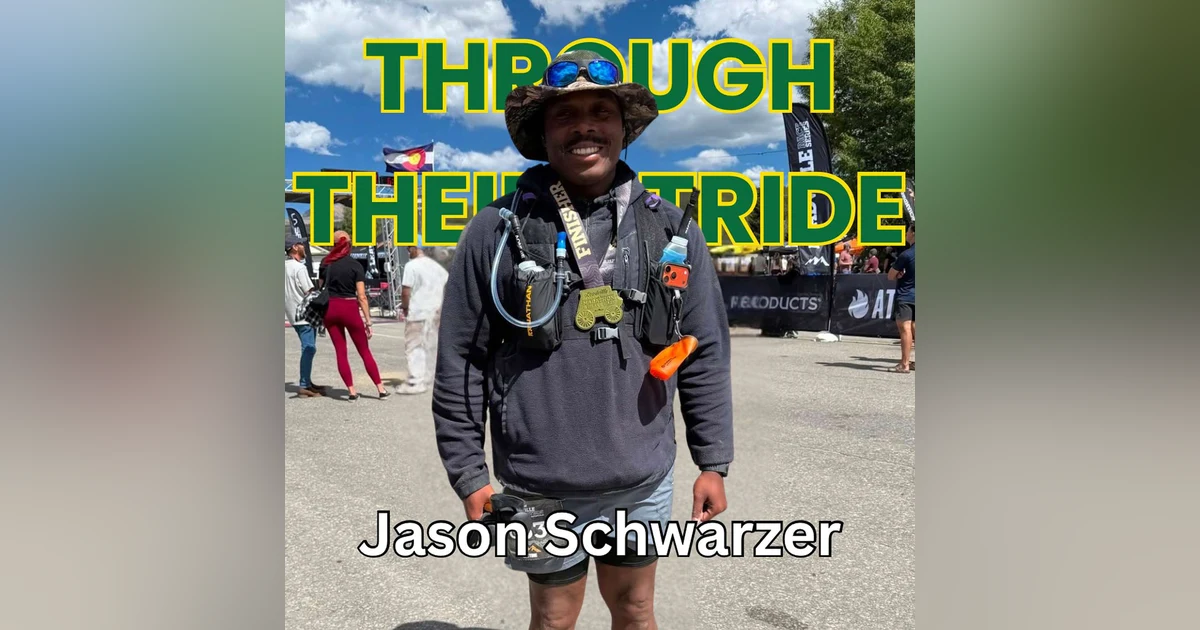


Jason Schwarzer only started running a few years ago, but has instantly become one of the biggest builders of the running community. Co-host of the Runners Like Us Podcast, Jason has found that while he loves what he gets to learn about himself during tough ultramarathons and training blocks, he finds the most joy in sharing the stories of other runners and building them up.
During tough workouts or long runs, Jason often finds himself cheering on the other runners on the trails around him. He does this because for some of them, it might be the only word of encouragement they hear today. And that could change their entire life.
Jason's story shows us that even if you're struggling, never be too selfish or prideful to lift someone else up.
- Follow Jason on Instagram: https://www.instagram.com/goforyour30/?hl=en
- Listen to the Runners Like Us Podcast: https://podcasts.apple.com/us/podcast/runners-like-us-podcast-a-safe-place-for-all-runners/id1809260322
Runner community is a beast of its own. Like again, like we have our our circle of runners that you know we talk with, and it's just like they everybody does different things or at different levels, and it's just the encouragement across the board is just it's just beautiful. And I'm naturally a person that encourages other people. So to receive encouragement and know that I'm gonna give encouragement is like it's like paying it forward. So I just want to amplify, amplify, amplify. Because again, like just one conversation or one time of encouragement to somebody can change their life, change their journey whatsoever. They just waiting for that the word because like they probably just talk to themselves down on themselves. But somebody's like, hey, you're a good place and run it. And like, why didn't you know? Because their perspective is different, you know. So I I wanna I wanna amplify that as much as I can as long as I'm in the street.
SPEAKER_02Welcome back to Through Their Stride. I'm your host, Samuel Sutton, and today I'm joined by Ultra Marathoner, member of the United States Army, and a builder of the running community himself, Jason Schwartzer. Jason got started in the running game just a few years ago and found out how much he enjoys pushing himself through trail runs and what he learns about himself during every race or training block. But where he gets the most joy out of the sport is encouraging others along the way. So much so that he began the Runners Like Us podcast to give all runners a chance to share their journey, offer them some encouragement, and make them feel like their journeys are equally as important as anyone else's, because they are. I loved having Jason on for this episode, and I think every runner can take something valuable away from our conversation. So without further ado, let's get to Jason. All right, welcome back to Through Their Stride. I'm your host, Sam Sutton, and today I'm joined by fellow Texas runner Jason Schwarzer. And Jason, welcome to the show. I appreciate you having me. Thank you. Yeah, like I said, uh offline, I was hoping to have you on for a while now. I've I've been following you, and you've you're a pretty big ultra runner, so um ultra is something that I'm always kind of curious about. So I can't wait to kind of dive into your story a little bit.
SPEAKER_00Well, I appreciate your interest. Um, definitely an open book. Anything you need to know, I'm here to provide.
SPEAKER_02Awesome. Well, uh, if you want to give a little bit of a rundown about you and your story uh to my listeners, um I you're pretty started to get pretty fam uh pretty popular in the running space, it seems. But for those who may not know you, can you kind of give a little rundown?
SPEAKER_00Yes. Uh my name is Jason Schwarzer. Um I'm a spiring ultra runner. Um got some runs under my belt for short. Um I am a co-host of uh a podcast called Runners Like Us, um, with my co-host uh Michelle Dozer. Um she she's she's amazing. And we really try to reinforce the runner community just to, you know, put out encouragement. Like you can start whenever, you can start wherever. Um the important thing is is just starting. So that really just mirrors who I am as a person. You know, just being in the military, it's more than you know, just uh the running gunning and everything. It's really about the development. I I really hold that close to my heart. Um, and really try to encourage others to really just kind of find your stride for the for the most part. So I think it correlates or translates to my running um running account also, and then even just my running journey, because like there's place there's times where you know I'm doubtful, and then you know you gotta have the grace like, hey, this is where you're at. You know what I'm saying? Keep going, or this is what you need to do. And yeah, that's that's really all it is, just reinforcing the running community just to remind themselves, like have grace where you're at, and then push forward. So that's like really the whole message, the whole purpose.
SPEAKER_02Yeah, yeah, I love that. And and it it says runners like us, and it's it's about everyday runners, but you've had some pretty uh some pretty fast people on there as well, and some pretty uh pretty strong runners. So it seems like it seems like the the runners like us is it's any runner because it's like we've we've got ever we all have similar stories, even though someone might be running like a really fast trail run or a really fast marathon, you know, hitting that PR is the same feeling for you know someone like us where we're we break sub four in a marathon or you know, we finish a 100 mile race and it's the feeling is still elation.
SPEAKER_00So yeah, yeah. And that's one thing I I like that you know we kind of uncover on the podcast because like like you said, we have some really phenomenal people that come on here, like from runners to doctors, chiropractors, whatever it may be. It's really just their approach to their goal. And we we all have you know similar doubts when we're pursuing a journey, and in this case, running, you know what I'm saying? But it's like how do we overcome the obstacles? And like little tidbits like that encourage other listeners, but oh man, even though it's a different space, let me try that type of approach. And we we get a lot of just like oh this that's amazing. That that's what uh that's what I was looking for. Honestly, you just gotta you just gotta sometimes just hear other people talking stuff, just click, you know what I'm saying? So I I I I appreciate the opportunity to talk to, you know, uh athletes, of course, as yourself too, like things you do. I I'll be peeping. I was like, man, he's a beast, and you in Austin too, right? I was like, man, and that's a that's a tough space to be in, too. I could tell you. But um, yeah, just like little things you do or like what athletes do is just motivating and it can help other runners and myself, you just overcome the obstacles we have during our journey.
SPEAKER_02Definitely. Well, and and talking a little talk a little bit about your journey. So, how did you kind of get into running? What's your kind of background story? Did you play sports growing up or and and how did you fall into the sport of running?
SPEAKER_00Well, I did play sports growing up. I was not a long distance anything. Uh we did football, so I was like uh sideline to sideline. I was really, I was really motivated by like my high motor. Um running, I kind of got into, I would say, after, well, two instances. First instance, um, I got out of um basic training in uh uh AIT or your technical training school. And then you go to your duty station, which it's it's 180 in life, because like really you're on your own now. You know what I'm saying? Like, hey, you're accountable for yourself, show up, do this, blah, blah, blah. But I was still in the mindset of like, oh, drill starting about tell me to do this, do that, or whatever. And then I just like, you know what? Once I kind of figured it out, I was like, you know, eating and doing the wrong things. And then when it's time to like do PT with your first unit, you know, you're the new guy. So within 30 days, you're gonna take a you know physical assessment. And I was nowhere near it. And then we did our first platoon run, and I never had shin splits in my life, but like it just I put on so much and I was so undisciplined. Like, I'm I I don't even think I made it a tenth of a mile. And it just the embarrassment from that, I was like, you know what? I really need to get my stuff together. I can't use the excuse, like, oh, I was I wasn't told to do this. I would never use that excuse again. So that kind of pushed running in totality for a trail running. Um, I think it was COVID. I was everybody's heavy, or everybody's at home, heavy on YouTube and you know, Instagram live and everything. And I Nick Bear, I've been at Fort Hood a couple times. This is my my second time. So Nick Bear used to be here, he used to be stationed here. Um, and I came across trainings. I was like, oh hey, I know him, you know, blah, blah, blah. And then I he was preparing for Ludville or ran Leadville at that time, but I was following his journey, and Leadville has always been my my first race. I was like, you know what? I want to do Leadville because I'm just going, I'm watching his journeys documentary, and I'm like, man, to be faced with those type of you know trials and overcome them. I want to be in that. It's like it's like a movie, but of course, you could just you could just dream. So like I'm sitting there, I started just running around the block, you know what I'm saying? Uh then I ordered a treadmill. Then I'm like, and I didn't know about RPE and mileage and recovery. I'm just running, you know, doing crazy stuff. Just putting the miles in. Yeah, just putting the miles in because the numbers are good. Um, you know, the education comes later, but I was like, I just felt so good. I'm like, I really want to do this like for the rest of my life. So that really sparked the the trail running side of it. And then, you know, end up running Ludville once I came back to Texas the second time, and that's where I met my co-host Michelle. And I I think it was just a regular conversation. I'm like, and I saw it pop up because I followed Ludville heavy, I'm like their biggest fan. And I it popped up, and I just I sent it to like my running friends and Michelle. You know, we were fairly new, our relationship at that time, and I said it to her, I was like, let's run it, you know, just as a joke. She's like, I'll sign up now. I said, uh, okay. And then I signed up, and then that's the first time I met her at the starting line, and then we ran the heavy half. I was like, Oh my god. Oh my gosh. Yeah, and that race was diabolical because I didn't know nothing about Vert. I didn't know you can go up too. I thought it was just, you know, down and back. No, up. That's where I learned about up. And that's where we really started.
SPEAKER_02Yeah, yeah. So I mean, that's awesome because you were kind of like saying, like, let's do it in in more of a kind of you're you're feeling motivated, and she was like signing up, and you're like, oh, really? Wait, I was actually, I wasn't kidding at the same time. I didn't know you were that serious. Yeah, team was serious, yeah, yeah. And so was that kind of your first official race?
SPEAKER_00Yeah, I will say yes. My first official trail race was the um the the heavy half, the Little Heavy half. Yes. Okay.
SPEAKER_02And what um, so you talk a little bit about the vert and the elevation, but overall, what was the race like? And um what after like during the was it during the run or after the run where you kind of felt like, oh, I've got the bug now. I'm really hooked on trails now.
SPEAKER_00Um well it was it was before I I don't think I'll ever lose the bug. It was I I think it was how can I put this knowing the feeling of you know accomplishment, you know, from your hard work. You know, could I have been better? Of course. But I didn't, I just didn't know. But now, well, once I finished, I knew. I said, oh, I know what to do. That that that feeling that you know like the way forward, and then you get to try again. Oh, okay, this gets me hype every time. But I knew within, I would say, the first quarter mile, because it's like slight incline. I don't know if you ran a lead or Leadville before or Colorado. Obviously, it's hard to breathe, definitely at Texas, because it's you know almost sea level. And yeah, there it's hard to breathe, breathing through a straw, and then you just go straight up from the the starting line. And I'm like, man, this is tough. But yeah, the comp once I finished it, I said, Oh, I can't wait to get back in the lab to you know just work harder, be stronger, and be smarter about it. I that's why I really I I would say invested in the education of running and then like properly trusting the coach, because I did get a coach, uh, but I didn't I wasn't like a I didn't have full buy-in. You need buy-in for something like just running from down the street to running in Colorado, which that's what I gained, I I guess when I got my second coach. Yeah.
SPEAKER_02Yeah. I want to touch on two things there. First, um, talking about elevation and running in Colorado. It is so different than running in Texas. It's a couple years ago we went to um uh what's it called? Uh uh dang, I forgot the uh name of the town, but it's a small town up in you know the mountains of Colorado. And uh we were there for a week. We were gonna do it, we did a 14,000 a 14 or hike to 14,000 foot mountain. And uh a few days before I was still training. So I was like, well, I gotta I gotta get a run in. And it was only three miles. And I got out of bed and I got outside, and it was like 30 degrees outside, and I was like, oh man, it feels so good. Because like for me, I love cold weather, so I'm like, okay, it feels great. I'm fixing to like knock out like a super fast, like three miler, like let's go. I got a mile in and I was like, I can't breathe. I was like, this is terrible. Yeah. Yeah. And the elevation headaches too, like those are those are something else.
SPEAKER_00So yeah, yeah. I learned that the first time because like I feel like once I get a headache, it's really hard to shake. So when we when we just we just finished the marathon, the lead bill marathon, and that's one thing that I prioritize is like the hydration, nutrition, and then like the effort, monitoring effort. And yeah, yeah, I finished ranch, no headaches for sure, but it was a diabolical one, I tell you. I tell you.
SPEAKER_02Yeah. And then the second thing I wanted to touch on was you talked about buying buying in for a coach and being like all in on their philosophy. And like that is such a crucial thing because it's like, especially like, I don't know if you're guys, if you're like coaches where you meet them in person or if it's all online, but like um, I work with an online coach, and um, my first coach that I worked with online, there were there was a little bit of like at the beginning, I was like, I'm not sure. You know what I mean? Like you just you just don't know. Yeah, yeah. Um, and then I saw it work for the first time. Like a few months in, I did like a long run and it I like I felt the fitness actually like coming through. And I was like, okay. I was like, she knows what she's talking about. And then the second half of that training was like beautiful, you know what I mean? So once you get that buy-in, that's exactly where it it changes and clicks, and that relationship just takes off.
SPEAKER_00Yeah, and I and to add what you're saying is the communication piece also, because like with my first coach, like I I would say this, I wanted to buy in. I really did. I I did what I could, but I didn't ask questions like with effort. Like in the army, it's like, oh, you know, we're running, run there, run back, you have this much time. You know what I'm saying? They don't talk about like tempo work, they don't talk about foundation work, none of the zones. I didn't learn that until like I really sat down with my coach to go over that. And I'm like, oh, that makes sense. Like, you want to go slower to last longer in you know this type of uh realm. And like with my my newest coach, uh Coach Milton, like I I knew him before, you know, saying he was working to get his certification. So we already had like that uh foundational uh relationship, and I was like, you know what? I'm gonna just kind of I'm gonna trust him because you know he went to college for it. So I was like, he definitely has a background for it and he's very knowledgeable, so I'm just gonna trust him. But he under he understands that you know he's being very flexible because sometimes I have to run outside of the plan because you know the army be like, do this, do this. I'm like, oh so I just have to. Um, but you know, he encourages me, like, hey, check out this for nutrition, hey, check out this for recovery. The flexibility of a coach is very important. I see it's very important. So he's probably gonna be my coach until he fires me. Because I I'll never fire him because he's he's just a good coach. And there are good coaches out there that that do that, but I think we need to provide that, you know, the basis of communication to them, like, hey, we're struggling, or I'm injured, or I just don't understand the plan. It's very important, it's very important for a good relationship. Definitely, yeah.
SPEAKER_02And the like you said, like the asking of questions and the communicating of like if something is hurting, like don't keep it to yourself. Like, don't just be like, Yeah, I'm feeling good. You know what I mean? Feeling great. It's like they don't know. You're you're but they're you're both behind the screen. So like, you know, at first it may shut not not even show up, also in the times and then you're you're running. But if you if you're if you deny it and you don't tell them about it, then like a weekend, your you know, your times and your fatigue may drop and your heart rate may increase, and you're yeah, and then your coach is like, something's up. Like you can't hide it forever. So yeah, they start to pry a little bit, but yeah, I feel so. Right for so okay, so after that first race, so what has your running looked like since then? And what's uh what are some other big runs and big uh um milestones that you've hit since then?
SPEAKER_00Well, uh since then, um from the first one, ooh, that's a while ago. But I would say I just aspire for this this mileage. Um so I but this is like kind of when I was in between coaches, kind of just like, you know, free for all in it. Uh so I try to aim between like 30 and 50 just for the steady mileage for a good base, because I do run a lot at work. Um is being in charge of like a lot of physical programs, you know, you gotta kind of bounce around and then um trying to have an established program for myself before my actual coach. So yeah, um, yeah, 30 to 50 miles a week. This is like before again, uh not including Vert, it's whatever I get, you know what I'm saying? So I think over the years, and as I got a new coach, now it's still I would say about 40, 45. Some weeks I'd be like, Coach Milton, I'm feeling good. He'd be like, go ahead, and I might hit 75. You know, it just depends on the time because I I have very limited time during the week to do anything. Um, but yeah, it's I would say a a steady 40, 40 to 50. Um, and then like a big race. This I would say I'm jumping in the races now because like this year my goal is to podium uh three races. I started out with a half marathon win, which was uh surprising. It was out of the movie, it was crazy. Um, so that was good. And then I think I did a marathon after that. I don't think I finished like eighth. It was trail marathon. That one was a tough one, I'm not gonna lie. But still aspiring to, you know, get some podiums. And when I say podium, just let's do the best I can. You know what I'm saying? And if I my medal is a medal, cool, but it's really just an experience. Um, we're we're aiming to do the Backyard Ultra in November, uh, big tech's here, which coach will be a part of, and then some some runners I know. So that's gonna be a really good one. We we're gonna do like a simulation, I think probably next month. Just to do like see everybody working on their fuel in and you know their strategy, kind of working on that. So that's like the the next biggest thing. So yeah, that's really what I'm focused on now. Like I'll do a probably like a little race here and there, but that that's probably the biggest thing. So I really I'm really inspired by the backyard ultra. I know I know you was probably catching the streams of these backyard ultras. That that's a different monster. That was like, man, I want to I want to see what they go through. Definitely like the um it was the last man standing for uh BPN. Yeah, but that went on for what three days? Yeah, that was amazing. I'm on an IGM at work, like, oh my god, this is crazy. They're just going like to that's a different level mentality that I'm just trying to just trying to taste. So that's that's what I'm trying to go out and see how I do with that.
SPEAKER_02Yeah, I love that. Yeah, the the first one, I think first one was in 2025, and uh it was when it was in April and it was the the rain came and like just these two guys just duking it out, and then like last year was pretty good too. Uh I guess this past year, yeah. Um, with the guy carrying his wheelchair through the through the mud, and I was like, I actually heard his story on Nick Bear's podcast, and I was like, that guy's a beast.
SPEAKER_00Like, bro, no excuses, just work. Oh my goodness, it was it was inspiring. Yeah, like the last slow, the last soul runner like one ultra runale. That's crazy.
SPEAKER_02I I would like to if I were to get into ultra running, um, I would like to do um one of the last man standing style races where it's like four miles and stop for a second. Cause like I feel like mentally I could like do that. You know what I mean? Yeah, yeah. It's just four miles every hour on the hour, but it's just four miles, you know what I mean?
SPEAKER_00Yeah, yeah. So I I think you'd be great at it, man. I think the and this is my outside opinion until I actually do it, it's like I feel like the stopping is the hardest thing, and then starting again, you know, saying being disciplined with your course, like that minimal time for recovery and the refueling. Cause like at first, I know it's gonna be me. At first, I'm like, I don't need to eat, I'm feeling good, blah, blah, blah. And then you start missing those cards, you start missing those windows, and it catches up to you. So you just gotta be just deliberate, like, this is what I'm gonna do. So I think that's gonna be the biggest challenge, or it might be the biggest challenge for people running those races for sure. Yeah, definitely.
SPEAKER_02Well, cool. So let's also talk a little bit about your time in the military. So um uh you're in the army, is that correct? Yes, correct. Awesome. So um when did how did that start? Did you always want to be in the military, or uh was that kind of something that came on later in life?
SPEAKER_00Uh well, it was early. Uh my my dad was in the military, so you know we we grew up with that structure. Um, and then my father took me to the recruiting station, but hey, four years, you know what I'm saying, to see what you can make of it, see if you what whatever you choose to do is transferable to like the civilian world, and then just pursue it from there. And I just really loved it. Like originally I tried to sign up for be a Cas Scout. My mom was like, No, no, nothing with guns. Obviously, we all have weapons, you know what I'm saying? So but uh yeah, so I I did uh the communications realm, so the signal. Um, so work with, you know, like uh tactical internets with radio, satellites, and all that stuff. And that's obviously transferable, and then you know, getting these certifications to transfer over to the civilian realm. And I just fell in love with it, uh the technical realm, and then really just the opportunity to develop soldiers. 'Cause like when you when you look at it in hindsight, like I I want to develop it in a certain way, or I just needed that mentor or leader to help me do something in a certain way. I was I just didn't get it 'cause it was just a little earlier in the army. Uh this is a different army and a lot of soldiers just either after four years or a couple of years of like This I don't know, this army's not doing nothing for me. But to give them a different perspective, you know, being in that round that that time in the army and this time in the army, I can tell you like if you change your perspective from this to this and see what you can get to benefit from the army, then I mean do 20 years, but you know, pull from the army because like the army's pulling from you. So a lot of soldiers don't understand that until like I guess somebody says it and shows them like oh, I can be very beneficial, I can be very successful while being in the army, and then transition to what I want to do with my life. So yeah, that's that's yeah, that's really where I'm at now. Just trying to mentor many people before I retire.
SPEAKER_02So yeah. That's interesting. So a lot of the themes that I heard come up is like loving the process, trusting the process, like you know, get understanding the process. And then that's all the same things you were talking about with running. So I feel like those kind of been merging like pretty pretty parallel. Does do you kind of like take lessons from both running and military and kind of blend them into both? I do. I do.
SPEAKER_00I I think my understanding of running or my tolerance for understanding of running comes from the military because like we we do a lot of missions, you do a lot of exercises, and it's sometimes you you can't approach a mission the same. So you have to learn to be flexible, you gotta learn to audible on the go and not get frustrated. So that's one thing I try to proud myself into, like, was when there's changes coming down, because there's always changes. You gotta be flexible and be ready to execute because like if you just like, oh, I I wouldn't expect this, or I need to go this way, you're wasting time. And you know, uh, you may be wasted resources because resources are you know per uh tag to time. I got time, time uh frame. So I'm like, you know what? Cool, this is what we gotta do. Uh, you know, rebrief soldiers, uh rebrief whoever, and then attack. That's that's it. That's it. And then and place where we need to be, or you know, get where we need to be or whatever, and then you know, start our our stuff we need to start. So I think that helps with my flexibility for sure. And then when I'm when I'm running the military, oh yeah, when military helps me with like my patients with myself, because there are times like even like with races, it'd just be so diabolical. I'm trying to tell you, I'd be like, oof, but one more step. If I get over, I'll look like hey, 50 meters this way, and I think about like the range, like, oh, it's as far as the closest meter on the range. You know what I'm saying? You can make it to that. And then I get there, and I'm like, oh, okay, 100 more meters, uh 150, 250. I try to do that way, then all of a sudden I look up, I'm on a way back, or I'm downhill. I'm like, okay, that was easy. Now I just gotta hit that when I get back, and guess what? You just went through it. So boom, you already overcame it. You just gotta overcome it one more time. So I use those mental gains to like overcome any type of like mental obstacles I have when I'm running. So yeah, I love that.
SPEAKER_02And it's kind of funny. I just the person that I interviewed yesterday for this podcast, she talked about um like just having that like kind of calm, adaptable mindset, kind of kind of like even keel mindset instead of she's like, don't be like overly positive, overly negative, like just stay balanced. Cause like when thing that when things happen, when things come, you know, arise, it's just like, okay, well, well, we're here now, so let's adapt to this. You know what I mean? Yeah, we're here now, let's adapt to this. And it's just being able to just take it for what it is, adapt to it, and move on. Because that's the best way, both running and in life, and especially in the military, it sounds like you definitely need to be adaptable. So, yeah, yeah, it's no time to complain, it's just time to train. That's what it is.
SPEAKER_01Yeah.
SPEAKER_02And loving that process, and and it sounds like you have a kind of a passion for the process because you uh you started the podcast with with your co-host, and and like it's all it's all about that. So, when did the idea for the podcast between you two kind of come out? When did that happen? And um, what have you kind of learned from it so far?
SPEAKER_00Um, I would say it was a conversation, just random talking. And then Michelle meant she's like, you know what? We should start a podcast. And I was like, you know, me, I'm I have to be flexible. I'm like, yeah. I said, sure, let's do it. And he's like, really? And I was like, yeah. And then we did our first episode. It probably was like 11 minutes, but it's like just the exchange, just me and her, uh, and we just exchanging, you know, have a little intro and trying to uh set the foundation for the podcast. And she was like, I really enjoyed that, you know what I'm saying? And then um, I'm in a Garmin running group, like every month we do the Molly's challenge. If people get competitive, you know, it was whatever. It's not me. It's not me, but people get competitive. But uh, you you see like the rise of like certain runners, they be going ham and then be hyping up in the chat and everything. And then I'm like, hey, we approached a couple runners, but hey, would you like to you know come on this podcast? Really just a conversation. We want to know about your process. And what I learned from it is like everybody has a different process, everybody has a different approach to training or their goals or whatever it may be. Like we talked, we I think one of our first guests was Jacqueline. Um, she works two jobs, she has you know kids and she has very limited time for running, but she's she books the most mileage almost out of everybody. How do we find the time to do that? And she's like, Oh, I stick to uh very deliberate schedule. I know my running is important because parents, but I know my running is important uh because it helps me with my mental. It helps me uh remain balanced to be uh the best parent I can be, helps me be balanced when it comes to being a teammate with my job. So it's two different jobs too. So I'm like, how do you switch those two completely different jobs and you know remain successful? And it shows you just you can you can be flexible, you know, so and you just gotta be deliberate and kind of uh eliminate the decision fatigue. It's like this is it's automatic. It's automatic. So that was just a good example, and we kind of just base it off that and just been open to everybody's process. And I kind of I tell them from front, I take I take tidbits from everybody because I like to be a sponge and I appreciate this every organization I go to or whatever job I have. I'm gonna be a sponge because I don't know everything. I have experience, but I don't have the type of experience you have. So your approach may be more effective, and I'm open to it. I'll never degrade anybody for their process just because something I've done worked. So that I'm all open, I'm all all ears. So I think that the podcast has brought that to myself, Michelle, and then listeners also, because you just get we get messages like, oh my god, I didn't even think of it that way. I'm gonna try it that way, or I'm so inspired by so-and-so. It's so strong that they do that. I'm gonna try this, and it's it's it's awesome.
SPEAKER_02It's awesome. So yeah, I I have to agree that's one of the selfishly one of the best things about having a podcast, is because everyone does it differently, and everyone has things that like I was like, like just don't even think about. And you're like, oh, like that's a really good way to break up mileage, or like that's a really good way to you know think about fueling and and things like that. And uh yeah, that's been one of my favorite things about having this podcast, is because it's like you hear so many new ideas and new, and like as runners, like we're all trying, we're all just trying to get better. And like if we can all help each other get better and share these these tidbits, I think it's kind of like it's such a super fun part of this community. And you know, like I was when I first started this podcast, and this may be the same with you, I was kind of nervous, like, there's like so many running podcasts, like the market is saturated, and like you know, I was kind of nervous about that. But then as I've been able to been doing it, like, yeah, there may be a lot, but every single one of those podcasts are also different, and like you can learn so much and hear so many different stories and ideas, and I think that's amazing because I think we all add value to each other's work, which is a which is fun.
SPEAKER_00Yeah, so I like how you word that. That's beautiful. Yeah, I like that. That's that's good. That's good. I like that.
SPEAKER_02Yeah. So um, well, cool. So uh so right now uh you're training for a backyard ultra. Is that correct? Backyard ultra. What's the training been like um so far, and how have you been balancing that with military life and just with life in general?
SPEAKER_00Well, the training's been good. Um, so we went from mileage-based to time-based, uh, kind of just to you know work within the schedule. Uh, some days I am able to knock it all out, uh, like probably at once, some days I'm not, you know, just kind of you really just got to focus on recovery. Um, I am a high mileage volume person, you know what I'm saying? So I'm gonna get it in. Probably not in the windows. He he wants it, but he knows that you know I I will I will remain accountable, you know, try to hit the goal as much as possible. Uh so yeah, just time-based for the last couple weeks right now. Uh adding in uh vert, my goal, personal goal is to hit at least like 2,000 a week. So I think like the last month I was able to hit 2,000 plus uh feet of vert each week just to kind of just change it up and just get a little bit more uncomfortable as this mixture between the treadmill and then outside. Um yeah. Yeah, yeah. We've we've been we've been killing it for the for the race for sure. So yeah. And what was the second question? I'm sorry.
SPEAKER_02Uh you kind of answered it, but just how how you're balancing with uh volume and training with military and life, but um yeah.
SPEAKER_00Yeah, just really just uh planning around it for for sure. Um I know I try to I preach to myself every day, setting conditions because like I get up, I get up really early every day. So I try to look it if it's like I need to get a loaner run in, I probably wake up at 1.50. And then if not, then it's 250 to just to get going. Because you know it takes a while to get something. Yeah, I go to bed early, so you know you gotta kind of even it out. But it's a lot to get done because you know, like I live a good distance from the post on purpose, so I can unwind. Um, so you know, make sure my my duffel bag is packed, my computer bag and all my notes is ready for the next day's meeting. Um, lunch is made, usually it's already prepared for me, so I'm blessed in that aspect. So it's really um going through my routine, waking up, you know, saying my prayer, hygiene, and then I got my clothes laid out, save me a couple minutes, and then you know, I got my electrolyte drink or already in the free uh fruit refrigerator, excuse me, gel is already laid out, or whatever I'm gonna have, oatmeal, whatever, and then I go right to it. You know, I'll go get right to it, knock it out, you know, get a quick shower, PTs, and I'm back. I'm on the road. And then the day is structured usually the same, it's just it's more diabolical than others, depending on the day. Um, so um incorporate an active recovery. You know, even though you can't I can't sleep that much during the day or at all, I just have moments where I just sit down and just just relax or do an AR from the morning's workout. Like, okay, how did I feel? Because sometimes I don't get to the app to do my notes. I I I internalize it, like, how did I feel? No, did I feel like I was uh productive or uh efficient getting up to the workout? And that's the time to really just have my body relax and then kind of get that recovery back. And then yeah, just and also like the refueling, the eating, and all that to make sure I do that because I am a very busy person just in this job, so it's just non-stop and it's crazy. But that's coming to an end, so we go back to a regular job now. So the miles will increase. That's exciting. Yeah, I'm excited, man. I'm excited.
SPEAKER_021 30 a.m. That sounds brutal. But I guess if you do it every day, it turns into a uh a habit.
SPEAKER_00So yeah, I don't even set alarm clocks no more. I just wake up usually in a panic, I'm like, oh god, they're oversleep. And it's like 1.56. I'm like, ah, I got time. Yeah. So yeah, but I try to be in bed by like 9, 9.30. Um, and and you know, it's good having an understandable partner too, because like during a week, like she knows like it's gonna be long days, and I get home every 6 30, 7. So it's really a couple of hours kind of balance out. So you just gotta ensure like those hours that you have with with somebody is the best, you know what I'm saying? So minimize the argument, you know what I'm saying? How can I help you? I know because you know she works too. How can I help you? How can I be beneficial to you even with my couple of hours before I pass out? Uh sometimes by choice, sometimes not by choice. So I think that that definitely helps. And then a lot in the weekends, like kind of this is dedicated to you know, whoever it may be. And that's why, like on the weekends, I get up earlier so I can get my run out of the way before she wake up, and then hey, we got the rest of the day. So I think it's just that understanding and like that sacrifice that you gotta establish. If you want to really run the malls, you really won't run. And this is what people with in the military already have high temple jobs. You gotta sacrifice your sleep and your time. That's what it is. Yeah, so something's gotta go. Yeah, yeah. You have to, yeah.
SPEAKER_02Yeah, well, talk a little bit about that. So you said you uh you have a partner and she's very supportive. And have especially in trail and ultra running, like having a support system is so crucial. Like, yeah, especially when you're running high mileage and you're doing a job like the military. So talk about how crucial that is and how helpful it is to have someone by your side and kind of working together with them through life to to kind of support each other's goals.
SPEAKER_00I'm not gonna lie, it's everything. It's literally everything. Like when she she she adjusts her schedule, which is amazing, to make sure she can make races. You know what I'm saying? You'll have sometimes I just bring it up. I don't even tell her sometimes, hey, tomorrow I gotta race. She's like, I'll be there. So she she knows how I perform because you know she sees me run every day. So she knows what works with food, you know what I'm saying? What I like to drink, when I like to drink, like like stuff like that. Because she just truly cares, you know what I'm saying? So having that type of support system makes sure that I'm at my best. And I'm not gonna lie, like I have had races, I think maybe two. Um I raced a lot, but maybe two races overall, she wasn't there, and I just never felt truly confident, you know. Even though I put the work in, I'm like, that she's like the the middle piece to everything. You know what I'm saying? She's like the reassurance, like when we do like when I do trail races and it's like a loop race, those are the worst because like when you you stop and you know you're refitting and everything, you're just like, hey, how you feeling? You know what I'm saying? Did you do this? Did you do this? I gotta ask myself those questions. But you know, when you do like long mileage, you're like, you don't want to be thinking, you're just like, oh, I just want to go. This is this is what I trade for, is you're resorting back to your training and just kind of going on autopilot. So and lack of better words, it gets lonely. So, but I try to incorporate like her and everything. So honestly, she can't make it up like and I can't make it. We'll we'll reschedule for another one because I I truly am at my best with the support system I have.
SPEAKER_02So I I feel that totally. I both so there have been two races that I've had that she hadn't my wife hadn't been able to come to. And one was like a 5k like three years ago. It was like uh it was like some jingle jaunt, like Christmas 5k. And I had an impulse to sign up because I was like, Oh, I I think I can break 20 minutes, the weather's supposed to be good, like let's go. And she was like, I signed up like the day before, and she was like, I'm not coming to that. Like she's like, I want to sleep, I'm gonna sign like you gotta give me some time to prepare for these early mornings, and so she was like, No, I'm gonna sleep in. You're gonna go by yourself. And uh I went and I uh I did not break it. I was actually in first place for the entire race, all the way up until the last mile, and I got like a little tired, and I kind of gave up on myself, and the guy passed me, and I was like, Ah, it's over. And I think I ran like 2019 or something like that. And uh still impressive. Yeah, but I was like, I would have broken 20 if like I would have coordinated this and like she could have come and support me. Um, and then there was one where it was kind of a similar situation. I it was in 2024, and I hadn't I was gonna run a marathon in October of that year. And I got really sick. I got like bronchitis and like you know, a bad, bad flu, and um, so I had to I bumped down to the half marathon and then I did horribly in the half because I still wasn't fully recovered. And um uh in late or like early November, I was like, I still want to run a marathon this year. And I was like, I'm gonna do the Dallas marathon in the middle of December. And Monica's like, I won't be able to go because I'm supposed to go, like uh my aunt is graduating from or no, my my cousin is graduating from college, and I was like, Oh, and I had already signed up and she was like, I want to go, but I can't like I have to go to my I have to go to her graduation, and I was like, shoot, and then like I went and it was me and my mom there, but like the entire time I was like, man, I was like, I should have not done this. Like I hate that I'm not hanging out with Monica, and I wanted to bring four hours there, and I ran 417 because I was like, and I because I kind of started feeling guilty in the second half of the race. I was like, yeah, man, and then like she told me after that, she was like, you know, I hate when you do that because like I love being at your races, like, and I love supporting you and watching you thrive. And I was like, all right, that's it. I was like, from now on, any race that I want to like compete and do well at, like, we're doing it together, we're planning it out. We're gonna like I'm not gonna not exclude you in it, you know what I mean? Yeah, no, that support system is huge.
SPEAKER_00Yeah, I definitely feel that. I definitely feel that's everything.
SPEAKER_02Yeah, well, cool. So um going forward with your running, so you said you love Leadville. Do you have any aspirations to do the 100 mile race?
SPEAKER_00Yes, I want to do the 50 mile, 50 mile uh next year. I think I'll be able to be a part of the training camps this time. So, because just I'm doing another job um at the end of the month, so that's really good. Free up some time. So I'm trying that's my goal to go and leave for a little bit, do the camps, do the 50 mileer, and then probably the next year, uh hopefully go through a charity or whatever it may be, even if it's the you know, with the I've got the yellow shirt charity. They run it every year, it's like the military's charity. I'll I would love to run that, run with them because they they do pretty well. Um, but yeah, just in some aspect help uh or be a part of or help uh the hundred miles to get that that atmosphere, that experience. Yeah, something I kind of dipped into this year and a little bit of last year was the crewing. Like just from the crew perspective, you learn so much. I'm like, wow. And I you can apply that to your training too. So if that's the capacity they're gonna be in for the level 100, that's fine. I'll do that too. I just want to be a part of it.
SPEAKER_02Yeah. Crewing is such a cool thing, in my opinion, with trail running, because like especially for yeah, the triple-digit races, like it because you everything that you do for that person and that those runners, like is everything to them in that moment. Yes, and it's gotta be dialed. Like, you've got to be able to get exactly what they need, if they need like Vaseline, if they need food, if they need a new pair of shoes. Like, it's it's crazy. Yeah, yeah, it's very important. I learned that for sure. Yeah, I would love to be a part of someone's crew. If if anyone ever needs like a crew member, like I'd be interested in in taking that on. What you want?
SPEAKER_00Yeah, erasers, plenty of erasers.
SPEAKER_02Let me know, man. I would that'd be so cool. Um, so um talk about a little bit more about that. So you you're in the Garmin Running Club, you have you talked about one like loving crewing athletes, and like it sounds like you're a big fan of like community in the sport. Where does that kind of stem from? Does that stem from your time in the military and in and having that community or what what what makes you love that so much?
SPEAKER_00I would say uh the military has definitely a part of it, uh part in it. Um and then the runner community is is a beast of its own. Like again, like we have our our circle of runners that you know we uh talk with, and it's just like they everybody does different things or at different levels, and it's just the encouragement across the board is just oh, it's just beautiful. And I'm naturally in uh a person that encourages other people. So to receive encouragement and know that I'm gonna give encouragement is like it's like paying it forward. So I just want to amplify, amplify, amplify. Because again, like just one conversation or one time of encouragement to somebody can change your life, that change their journey whatsoever. They're just waiting for that the word, because like they probably just talk to themselves, down on themselves. When somebody's like, hey, you're at a good place and running, they're like, Oh, I didn't know because their perspective is different, you know. So I I wanna I want to amplify that as much as I can as long as I'm in this community, and of course in the military. So yeah, it just it's one and the same, I would say. One and the same.
SPEAKER_02Yeah, I love that. I think um, yeah, like you said, just giving a little bit of support to somebody to someone's way. Like a lot of us runners are we're all just doing the same thing every day. We're getting up, we're running, we're if you're doing content creation like we are, we post like a reel or something or or a podcast, and like it kind of sometimes can feel like no one's listening or no one's caring, or no one like you're just in your own cycle. And then it can start to feel like you know, if if you if you have like maybe a streak of bad runs or a streak. Speak of bad days, it's like nobody cares about this, and I'm not very good at it in any way. And like, you know, you can get in that headspace, and then somebody out of the blue will be like, bro, you're doing so good. Like, keep it up, man. And you're like, oh, and it like it kind of makes that make it gives you a little bit of like, oh, maybe I am okay. And then like, then you see how important that community is, and then you can pass that forward to somebody else who you see like doing really well, and like send them a DM, like, hey man, like, you know, love the content, love the running, keep it up, you're doing great. And then, like, that's how we build each other up in the sport. So I think that's awesome.
SPEAKER_00I like to mention, like, that's how I try to be as transparent as possible. Like, I suck with content creation, like with the podcast, it's that's more on like the schedule, but like personally, I could really share more, but I'd be trying to get little tidbits. But being transparent, of course, um, I feel also motivates people because like you can have bad days. I've had diabolical days, yeah. And I'm like, man, a simple, I mean at one time, a simple 30-minute run when I wasn't fully recovered. I expected to go one way and went another, and I'm like, I got cooked. Listen to your body. You gotta share the message. Listen to your body. And then when you mention like people just reach out to you, like, hey, you're doing good. At a moment, which I I'll cherish this forever, I got to the top of the I forgot what mountain it was, in Lenville, like it was halfway point, and we're at like over 4,000 feet of elevation. And at that time, my uh my vert PR was like 32, 3300. And like as soon as I got to the halfway point, I sat on the ground and just watched everybody. Everybody's like happy because they're taking pictures. Like, oh, we're halfway. I'm over there cooked on the ground. And I make it back down. That's how bad it was. And then I didn't really have a signal, but like messages kind of creeping through, and then I hear ding ding, and then I get a message from uh Michelle's mom, because she's a big listener of the podcast. She's like, Your training's shining through, you're doing great, because she's tracking me. She's like, You're doing great. I can't wait to see you finish. Keep it up, keep your head up. Because I'm like, I'm trying. I think I posted one video. I'm like, bro, I'm getting cooked. It was so bad. It's my first time using polls. I never use poles, so I'm like exerting extra energy. I'm like, I'm just cooking myself. But like that really brought me back together. Like, people are really watching, like tracking, they're like, hey, they're the messages, they're there, you know what I'm saying? And I'm trying to stay off my phone, but it's like that one just creeped through out of the hundreds of messages that was sent. And I think it was a sign of keep going. People support you no matter what you do. You know what I'm saying? Just push through your train, you resort to your, you know, your training that you did. You know what I'm saying? Even though this is different, I couldn't really breathe. You know what I'm saying? The body is it's routine. Your body's gonna move the same way, which it did, you know, even though it was diabolical.
SPEAKER_02I love that. Yeah, yeah. I getting text messages too, like that is like probably the the grace in the middle of a race. Like when I ran sub four back in uh for the first time back in 2025, um, like my one of my cousin-in-laws had texted me, like, you know, you got this, like Stravas, like pain is temporary, but Stravas forever, you know, that's kind of you know, my my brother-in-law said, Hey man, like I'm tracking you, you got this, and like just everyone texted me and like flooding my phone, and I was like, chills just like came, like overcame, and I was like, I can't have chills right now. I gotta run. And uh when I finished it, I was like, man, that really did like mean a lot. And like I texted some of them back saying, like, thank you, that meant a lot. I don't think I texted at everybody, but like that's that feeling of like people lifting you up in that moment is so rewarding and so necessary in this space.
SPEAKER_00So Yeah, no, it is. I man, I think about all that support you get because like you know, people like hype you up before and then during. And I try to read it probably the last little bit, and I just I feel grateful. I I always try to feel grateful right before the finish. And I just I just want I just say thank you. It's just like chatter new names, like just thank you, you know what I'm saying? Even though they can't hear me, I thank every last person that you know pushes out uh support because I know I know it's hard and taking time out of your day to like to remember or just to like send encouragement, it's a lot. The action is a lot. So I never take it for granted and I try to thank everybody. Um, and then you get the chills, and then you know you you burn through the finish line and just always just always give things, and that's why I appreciate it. That's why the running community is so important to me.
SPEAKER_02Yeah. And you've posted on your Instagram in the past, um, just like, you know, things like I live for this. You know what I mean? I live for moments like this, and talking about like races where things, you know, were super hard and you get through it and you're coming up on the finish line and you're just feeling those emotions. What is that, what are those moments like for you and why are they so important to you when you get past a hard race, get through a long, you know, heady, like diabolical marathon trail race, and you get done and you're and you see the finish line. What's that feeling like for you?
SPEAKER_00It's a feeling of overwhelming joy and again, just gratefulness. Because like, like again, the perfect example is the Leadville Marathon. Like, I I knew what to kind of expect because I did half of it before, but it was a completely different race, but I was a completely different runner too. So, and I like to pride myself in like the first quarter mile, obviously it's just straight uphills, like a steady incline, and then you hit the first mile, you're probably right under a thousand feet. Like the first time I ran it, I I didn't even make it all the way through because I couldn't breathe, and then I just I never practiced vert. But then I told Michelle this. I said, That's probably my proudest moment of the race, even though the whole thing was diabolical. That steady incline, that minimal grade. I ran the whole thing, even though I couldn't breathe. I was like, that was my favorite part of the race because I knew I'll I'll I won't quit, you know. So I will give everything. And I and I said that at the finish or the starter line. She was like, I hope you have a great race. And it was just random. I said, I promise to give you everything I had. And it was just unprompted. And then I gave her a fist bump and we went on our way, and I didn't see her for like nine hours. It was crazy. But um, yeah, like those moments during that race, I've never been to like I know the pain cake, but I've never been this deep. You know what I'm saying? And then you have to reinforce you, like your thinking. And like, hey, you you train, even though you've never been at this high or whatever, you've been this far. You've definitely been this far, and you got to encourage yourself. And the last climb coming back, um, it's like straight up, but all sand, diabolic. Yeah, and I told you before, like, I've never used poles before, so like I'm just used to like just thugging it out. But I don't think I would have finished if I didn't have poles. And then during that race, shout out to the runner community too, is the OG runner, he's like old guy, big beard, you know, short shorts, crazy stuff. Yeah, he he just saw me like doing what random stuff with the polls like first time, huh? And he's giving me tips, like in like the the duel and then like the offset or whatever. And then it helped me out because I'm like, when I when I hit a moment where I mentally I was like, man, I've never had this much vert, and my legs kind of went numb. I thought I was done. And I was like, I resorted to the polls, like he said, and I pushed through. I'm like, okay, and then my legs came back, then my motivation came back, and I'm like, man, I don't, I don't know. I've never I've never been in this situation before, and the pain I was in just like not really the the the distance, it was really the vert. I just never been in that space before. And I was like, I never want to feel like this again, but I'm grateful for it because I know I need it, I needed to finish. And I did. I it came down, I didn't know what it was a cutoff to the race until I hit the last eight station. And then uh the eight person ran up to me. She's like, Oh, are you trying to cut off? And I was like, No, I was not, but I am now, and then I I took three shots of pickle juice and I got to work. And then I told myself, yeah, I told myself, I will not stop running until I finish. And I knew I was locked in when like I was like, you know what? Put the poles away. I put the poles away and I'm just scooting. I'm scooting all the way back to the town. Once I saw the town, I know it was over. And that's when I got like the chills, and I'm like, you know what? I can still pick it up. And I was like, I can still do it. And I picked it up, ran through the city and just blew through the finish line and just gave thanks. Yeah. But those lessons, man, I I will never forget. I I live for those lessons because that means there's more to do, it is more work to obtain, it's more potential to you know, close the gap on. That's why I live for moments like that. And as I'm I have a lot to do, but I'm I'm grateful I can do it. So yeah.
SPEAKER_02Yeah, I love that. I think this has been one of my favorite conversations that I've that I've had on this podcast. So thank thank you so much for coming on. I I know we're coming up a little bit on an hour here, but um, before I let you go, do you mind if I asked you a few a few more questions? Of course. And I'll do so my first question is so if you could tell a runner right now who is struggling in their build, you know, it's the middle of the summer in Texas, like we're training in 90, 100 degree heat, and sometimes like it can be tough. Like your your easy pace in the spring and fall, you know, you try to run it now, and sometimes it can feel like threshold. So like someone who's kind of you know struggling, what what would you tell them right now?
SPEAKER_00I would say I would say it's okay where you're at. Just build off where you're at. And then like again, like we're all we're in Texas, we know like right now uh a zone two run heart rate might be 170 one day, you know what I'm saying? Uh but guess what? Sometimes you just gotta slow down and I can say push through, but just just take your time with it. Like you can still give quality work, even if it it doesn't match the numbers that you think it should match. You can still get quality work. Long as you you get through this workout, you know, safe, you know what I'm saying, uh uninjured and everything, you you finished it. It's it's a building block regardless. It's a it's a brick regardless. So it's just it's not the brick that you're used to seeing. It's still a brick, you know what I'm saying? So um be safe. Uh if it's hotter, hydrate more, stretch more. You gotta be more deliberate with the preparation and the recovery if you want to remain effective. Um, so I would say look at those things. And uh the runs it's gonna be hot. It's gonna be hot. If you're trying to get acclimated, you gotta you gotta run in the heat. You know what I'm saying? So again, run in the heat, it could be shorter runs, just kind of get you a little more acclimated, but it's all it's gonna be okay. It's all gonna be okay. Don't don't mind the numbers, just mind your effort and get to where you need to get to. So just have grace of where you're at.
SPEAKER_02And then if you could go back to your former self who was training for that first half marathon and tell him one piece of advice, what would it be?
SPEAKER_00Yes, I think about this all the time. Do not be afraid of the climb. Because like I see people do climb, I see people run up sides of mountains and all that stuff. I'm like, I'm not doing that. I just want to be safe. And I I'm I'm a pretty reserved runner. Like, I really don't open it up unless I I really need to. I I do enjoy it. Um, but I it's okay to be competitive and do not be afraid of decline. You have to you have to remain uncomfortable if you want to do unreachable things. All right, so I will tell him that, and then maybe I would uh more prep in uh divert area. But you know, everything happens for a reason, and I'm I'm grateful for the lessons I learned along the way. But I would definitely tell him that, like brother, climb. You need to climb. So yeah.
SPEAKER_02Awesome. And then uh last but not least, for someone who's thinking about getting into running and hasn't started yet, but is thinking about going for their first run, give them a reason to go on the run.
SPEAKER_00I would say uh find your why. Like what gets you out the door? Like what what's really gonna get you out the door and keep you out the door? You know what I'm saying? And then once you start running, you know, whoever this is it may be, what's gonna keep you running? You know what I'm saying? So there's really just find your why and your motivation behind it, and then backwards plan, set conditions, execute, and do analysis. Like for me, I try to do analysis on everything. Just so there's a quick recap. Like what I was able to do, how was it? You know what I'm saying? What did I lack on? So I know like when I do it again tomorrow, because we run every day over here. So when I do it tomorrow, I want to be more efficient, I want to maximize my time, and I want to reinforce my why to make sure like I'm not wasting my time or I'm not putting myself at a disadvantage because my why is very strong. Because I'm gonna show up every time, but how can I be better with my execution? So just find your why why you you know you do what you do or you do what you want to do. Yeah.
SPEAKER_02Okay, well, actually, one more question. And I think I've already heard it m pretty much in this podcast, but what is your why?
SPEAKER_00And my why is closing the gap from where I'm at to where I know I can be, and find a ways to do it. That comes to from education, proper execution, of course, setting conditions, and uh that's stuff I used to be a little bit more uncomfortable with because it takes more work. But now that I see like when you do races like with higher mileage and you need more preparation, those are important. Like again, like I said, like every brick looks different, but it's a brick nevertheless. It's a brick regardless. So I still need to add those bricks, I still need to build that foundation uh to build the house that you know will become my run of journey. You know what I'm saying? So yes, that's that's what it is. That's what it is.
SPEAKER_02Well, Jason, again, thank you so much for coming on. Um, and um, if somebody wants to follow runners like us and listen to runners like us, where can they find it? And where can they find you if they want to follow your your Instagram?
SPEAKER_00Well, again, I appreciate you having me on. Uh, I'm still I'm a big fan of you for sure, man. You you're like a go to my page. So thank you. Um yeah, yeah. You you you wanna won for sure. Uh but for those uh looking to find me and follow uh running journey or the runners like us, uh we are on Instagram, runners like us podcast. Um, you know, we have uh episodes bi-weekly. Uh and then if you want to tell your story, hit me up. You know, we'll have we have everybody on, everybody on. And then for my personal run and journey, uh go for your 30 uh on Instagram also. And then we are on like YouTube, uh iHeartRadio, Spotify. We're a different array of these sources, but those primarily you can start there and then you it'll it'll spring you out for sure. So yeah.
SPEAKER_02And I'll put that in the show notes as well so people can find you again. Appreciate you Jason. Thank you so much. I hope you have a great rest of your weekend and uh have fun on those trails. Yes, and thank you again for the opportunity.


