Ep. 56: Ty Janik: How life and running lessons made unforgettable marathons

When you see someone post an incredible marathon time on social media, all you're seeing is a blip in their timeline. For Ty Janik, his 2:50 finish at the Chicago Marathon was exactly that. Ty entered into the sport of running with an athletic background in 2020 and debut a 3:46 marathon time that year. While impressive, it would take six years of lessons in running and reflecting on lessons in life to finally crack the Boston qualifying standard. It wasn't easy for Ty at times, but he never...


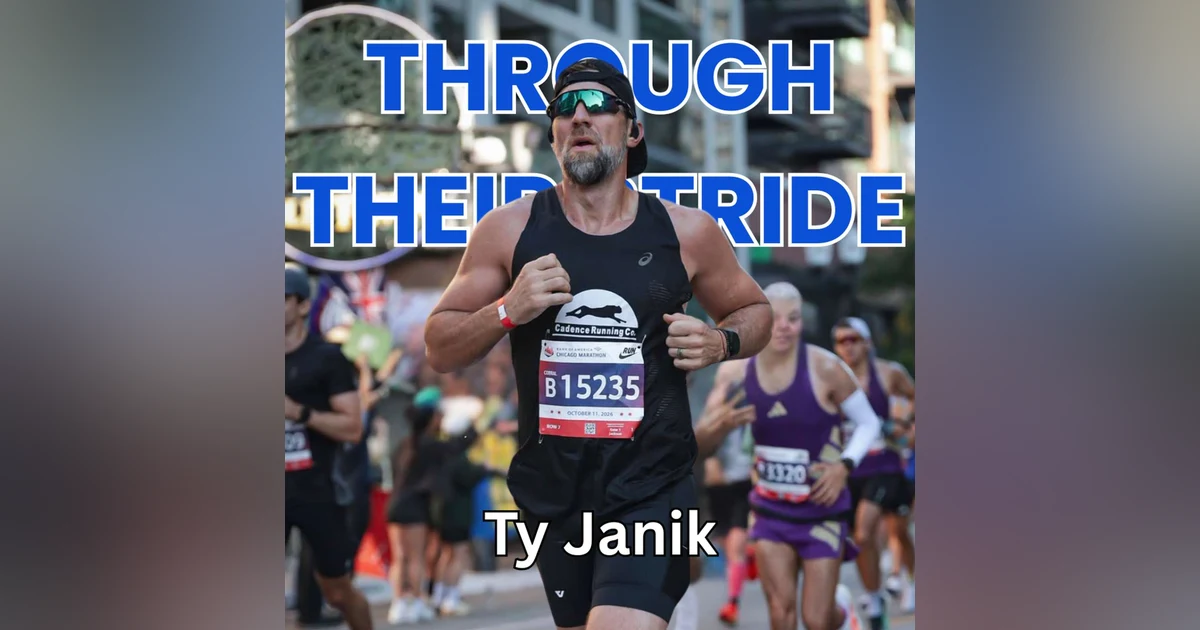
When you see someone post an incredible marathon time on social media, all you're seeing is a blip in their timeline. For Ty Janik, his 2:50 finish at the Chicago Marathon was exactly that.
Ty entered into the sport of running with an athletic background in 2020 and debut a 3:46 marathon time that year. While impressive, it would take six years of lessons in running and reflecting on lessons in life to finally crack the Boston qualifying standard. It wasn't easy for Ty at times, but he never took for granted the moments in this journey.
And that journey isn't stopping here. Ty is still training for multiple races, gearing up for his Boston Marathon debut in 2027, and even taking all of the lessons he's learned into coaching other athletes toward their big dreams.
I hope you enjoy this episode and it helps you to remember that your journey is just as important as anyone else's, no matter where you're starting from.
If you enjoyed this episode, please give it a share, comment or review, and subscribe wherever you listen! Also, be sure to join our community over at the Through Through Stride Run Club on Strava to get episode updates, request guests, join our conversation, and even catch us at future races and shakeout runs!
Join our Strava club: https://strava.app.link/GmfcXCiV37b
Follow Ty Janik: https://www.instagram.com/ty_janik/
Follow host Sam Sutton: https://www.instagram.com/samrunstx/
No, I mean there's probably a lot it changes probably day to day. But uh the one big one is probably just pride, kind of overall pride in myself, I guess. I just you know, I kinda through my twenties I just partied all the time, you know. And I was pretty athletic as a teenager and everything. And I feel like I I ended up quitting drinking when I was 30. I didn't really get into running like for another six years after that, but a lot of it is just wasted time, you know. I feel like I push myself so hard now and in running because I feel like I just wasted so much of my youth doing nothing, you know, partying. And just the feeling of pride that I have when I when you set a goal and you put all your time and energy into that goal and then you achieve it. I mean, it's just it feels incredible.
SPEAKER_00Welcome back to Through Their Stride. I'm your host, Sam Sutton, and today I'm joined by Arizona-based runner Ty Janik. Ty just finished the Chicago Marathon in a time of two hours and 50 minutes. And while that's a huge milestone, it didn't happen overnight. He took up running just a few years ago in a very unconditional way started at the marathon. His first time was 346 in 2020, which is a pretty incredible debut. But as he continued in the sport, he realized he had a lot to learn in the way of proper training and fueling. In this episode, we talk about why it's so important to have structured training in the marathon instead of just chasing high volume, how the running community has become so special over just the last six years, and how that motivates him to continue chasing his big goals and helping other runners hit theirs in the form of coaching. If you enjoyed this episode, please give this podcast a review on Spotify or wherever you listen, and don't forget to subscribe so you never miss out. Also, be sure to check us out over at the new running group on Strava, Through Their Stride Run Club, so you can stay up to date on episodes, provide feedback and story requests, and potentially get information on upcoming races and shakeout runs. So without further ado, here's my conversation with Ty Janik. All right, welcome back to Through Their Stride. I'm your host, Sam Sutton, and today I'm joined by Ty Janik. And Ty, I love the background that you chose with the with your running medals and the shoes. That's like that's perfect for a show like this.
SPEAKER_03So yeah, it wasn't the original option. The original option was downstairs, but I'd mentioned before the call that we just got a new puppy, so we got a lot of the chaos downstairs, so I had to bring it into the uh spare bedroom.
SPEAKER_00Awesome. And I totally understand the puppy thing. We got a new puppy uh back in February. Uh we originally got it for our uh my mother-in-law, and then she wasn't able to take care of it, so we inherit inherited it, and she may run and scratch at the door here in a minute, so we'll see what happens.
SPEAKER_03Yeah, if you can hear chaos and barking and growling, it's uh there's a fight downstairs between the uh the puppy and the the three-year-old dog. So awesome. Kind of trying to marry them, get them get them, you know, into each other's lives. Yeah. Well, yesterday uh was the first time where he actually wasn't like growling, he was actually playing, and it was kind of the feeling of like this is what I wanted to get the second dog for, you know, for him to have something to play with while we're gone, or just to entertain him in general, too. But uh yeah, it's working out pretty well so far.
SPEAKER_00Awesome. Well, one of the first things that reasons I wanted to have you on is because I saw your most recent post about running 250 at Chicago and kind of your big marathon progression. And I was like, that's pretty impressive. I mean, you started at a pretty good spot and got all the way down to 250. And uh yeah, that's pretty impressive. So my I guess my first question is so how did you get into running? Uh, when did you get into it? What was the the the journey in that?
SPEAKER_03Yeah, it's uh been quite the ride. It's been about seven years um to the day almost. Um yeah, it's a long story, but uh it started with uh, like I'd mentioned prior to the call, um it started with uh David Goggins. One day I was at the gym and I was listening to David Goggins on Joe Rogan. And you know, there's just something that hit me that he said it was something that had to do with basically not working up to your potential or working out to your potential. Like most people go to like 70%, they never go to 100%. And it was one of those days, it was like a Sunday, and I was in there doing buy back and buys, just kind of lollygagging through a workout, and it was just like that perfect timing where it hit me like I'm kind of being a you know what I'm kind of being a bitch in my workouts. So I was like, you know what? I this is where I I don't recall if I went back later that day or if I came back the next day, but I know it was like immediate where I set in my mind I was like, you know what, I'm gonna get on the treadmill and try to do 10 miles tomorrow. Um at that point I never ran further than five miles. I would run occasionally just for uh um some cardio, do the elliptical stuff like that, but I was definitely not a runner. But um, so yeah, the next day I got on the treadmill, did 10 miles. Um kind of funny part of that is for some reason back then I didn't wear socks with my with with my when I would go to the gym. I don't know what it was, but I like the way it felt. So I ran the 10 miles with no socks, so the back of my heels were bleeding the whole time. And I remember going to the uh locker room after getting off the treadmill and I was just in pain everywhere. Um, but I had that feeling of accomplishment like immediately. And that was kind of the it's funny to look back because there was like an initial spark. Like from that day forward, it's been all running. And uh I think soon after that, that following weekend, I ran like 13 miles. I just kept seeing like how much further can I go. Um shortly after that, I signed up for my first marathon, which would have been the rock and roll marathon in 2020 here in Phoenix. Another part of it was I would see people posting online like they finished a marathon, and I not to be judgmental, but I'd be like, man, how'd they do that? You know, like I wouldn't take them for a runner, you know. So I was like, I'm pretty sure I could I could do it if I trained hard enough. Um yeah, so it's funny to look back because pretty much right away I was doing fairly high volume, and I didn't really have anything to compare it to though. That was prior, I don't think I had Instagram at the point that point in time. So I was just going off the cuff for the most part. So that it's funny looking back because there was like four weeks into it. I think I did my first 20-mile run, and it's like, what was I doing? You know, like the the volume was kind of crazy immediately, um in a bad way. I mean, I wouldn't suggest that to anybody else now, but uh yeah, so ended up going in 2020, running my first marathon. Um, it happened to be like three days before I got married as well, so it was it was quite the week. But uh yeah, ran my first one and it was just off to the races after that. Just it's been my kind of sole focus ever since. It's just getting faster and faster.
SPEAKER_02Yeah, yeah.
SPEAKER_00And that first one you did uh you ran 346, and I think is what I saw on your on your post. And uh 346, I mean, that's a pretty respectable starting time. So what was that race like? What was kind of the training? You said it was a lot of high volume, a lot of aggressive, uh long long runs, but um what what did that kind of entail?
SPEAKER_03Um, you know what? I'd have to, I'd really have to go back and look. It was uh just all over the board. I mean, it was all just volume, uh mainly. I think I would probab if I had to look back, I think I would run probably four days a week, and I would just have the one big long run on Saturday that would be, you know, anywhere from 13 to 20 miles. I ran, I want to say I ran two full marathons prior to the marathon on my own. Oh wow. Right. Yeah. None of this I would ever ever suggest to anybody else, especially on the first go. But uh while I wanted to crack four, I knew that that was kind of like I could tell where I was running and my speed and everything and how I was finishing my long runs that it was possible. So prior to the race, I wanted to try to crack four. So I maybe I only did it once. I'd have to look look, but I know I ran like a 355. It was it would be technically now I would call it peak week, but it was like two weeks, two or three weeks before the race when I did the 20, the uh the 26.2 that I ran like a 355. So I was confident going into I in my mind I wanted to be confident going into the race that uh I'd be able to do sub-4. So the race itself is kind of a blur looking back. Um yeah, I I I know I I remember stopping multiple times. I definitely stopped to walk a couple times. Um, I know at 16. The two things that stand out at that race were at mile 16, I was feeling decent, you know. I was just cruising, having a good time, and I just got sniped, like both hamstrings. Both of them went. And it came the funny thing is looking back, it just came out of nowhere. There was no warning, it just hit. And uh I remember going over to the sideline or the side of the the street, and luckily there was just a spectator there, some lady. She uh she saw it right away, came over to me because I, you know, I'm hobbling, rolling over on the ground, and she came over, she goes, You're just cramping up. She's like, Lift your legs up. She grabbed me by the heels and just pushed my legs back towards my chest, and she's like, Get up and go, you'll be fine. So uh I just got up and went. I mean, it only took me probably two minutes. Uh so I was fine until about 25, and uh yeah, probably roughly 25. And I don't know if you know Phoenix at all or Tempe area, but the Phoenix, or I'm sorry, the rock and roll marathon would come up over this Tempe Town Lake over a bridge, then you take a turn and you can see the finish line and you're there. And I got to that point where I could see the finish line, and I cramped again and I was leaned up against the bridge, like you know, legs wide, trying not to fall over. And I could hear it was almost like these people were watching me on TV, but I could hear them in the background. It was like four girls and a guy, and they're like, Oh my god, what's happening to him? And they're like, I could hear him tell the guy, like, go help him. And the guy's like, What am I gonna do? Yeah, so they'll just go over and ask him. And I just told him, I was like, Hey, I'm gonna lay on my back. I know it sounds crazy, but I need you to put my heels towards my chest. So he did exactly what the other lady did, and uh he goes, Man, you're so close to the finish line. It's like I'm aware, I'm not doing this by choice. So I hop up and then uh darted the finish line, made it, and that was it. But uh yeah, so that was the first marathon, but luckily I never cramped again after that in the other the next eleven. So but uh yeah, so that was the first one.
SPEAKER_00Yeah. I mean, it's kind of funny because like it it's always fun to hear people's first time marathon stories because like with mine, I I didn't know anything about fueling, I didn't know anything about um about like well, I I I took the course electrolytes and water, you know, just drank off the side of the and since I had no carbs in me, like by mile 20, I was like, I had to walk the last 10k in because I was in so much pain. Um and we've come a long way since then, but you know, it's funny you were talking about the running 26 miles in um in Peak Week. And uh I think you know, Christian Warwick from the Marathon podcast, he's talked about he did that for uh during his first marathon block because he was trying to qualify for Boston and he was like, I gotta just know that I can run sub three. Like I just I gotta know that I can cover the distance and do it. And he he even says he's like, I wouldn't recommend it, but it was a big confidence boost.
SPEAKER_03So yeah, if you can do it without hurting yourself, I mean, by all means, but it's definitely not recommended. I haven't done it since. I don't think I've yeah, I don't think I've been past 24 in a training block typically that I can remember. Yeah. Usually keep it 22, 24. Yeah. That's and that was back in back in those days where every run, I feel like everybody that I'm friends with that started running has the same story. They were all out at every run. Like I was trying to PR every weekend that I went out for a long run. I was constantly trying to see if I could run, you know, half faster and faster and faster. Usually it was like if when I look back, it was I was comfortable at like a 730 pace. That was usually kind of right where I was at at that point in time. But yeah, now I run much slower than that for most of my runs. But yeah, it's funny to look back at the old training schedule and see how far I've come, at least in the intelligence of training.
SPEAKER_00Yeah, I think it's funny because you know, it it is like mentally, and you know, all the run all every runner I think says this, but mentally it's like, yeah, you're gonna run 730s, you're gonna run in the sevens to get faster, because that's you run fast to get fast. And it's like, why would you run slow? And once you actually do it and once you trust the process, you're like, oh, now I get like because I don't hurt as I hurt all the time, but I'm not shooting up all the time. Yeah.
SPEAKER_03I know I would finish those Saturday long runs and just be done. Like, no matter the distance, it was just the the intensity of it. I was fried every every time.
SPEAKER_02Yeah.
SPEAKER_03Yeah, and recover for it would take two or three days just to recover, and then I would, yeah, by Monday and Tuesday, I'd be all right to just, you know, go six or seven miles, but I would still try to push it during that time frame too. So yeah, it was balls to the wall at all points in time.
SPEAKER_00Awesome. Well, and then um, you know, you've made big strides kind of throughout your your, I guess that's almost seven years now uh of running and um, or I guess it is seven years, yeah. Um, and in that time, when did you like I guess hire a coach? When did training become a little bit more dialed? What did that process look like?
SPEAKER_03Yeah, I mean, I kind of took it as far as I felt like I could take it. I think I was kind of hitting a point where I felt like I had plateaued. Because I mean, you're gonna make strides. If you, in my opinion, uh, you know, if you just continuously are running and you're you're consistent and dedicated to it, you're gonna get better to a certain point. I mean, I think I I think I definitely kind of hit that plateau. And I don't really remember the direct thought process, but it was one of the I don't know what year it was, but it was one of the Mesa Marathons, and I know you're familiar with Coach Cunningham, so Jeff Cunningham. He was spectating the Mesa Marathon, and I remember seeing him um at like mile six, it was right before There's a Hill during this this marathon, and I remember seeing him because I had followed Nick Bayer and Cunningham, and I saw him there cheering on some people, and I think shortly after that I just reached out to him. Um, and yeah, there wasn't a whole lot of the thought process was just I needed I needed some structure. So I reached out to him, I started working with him. I worked with him for probably a couple months on and off. And great coach, I love Jeff. He's he's the man, but uh I wasn't quite in a position to really um adhere to the training program that he was putting out, or any training program at that point, just my job and everything, it was too hectic. I could not stick with a structured program. You know, it was I would try to squeeze in the workouts when I could, but they were all over the board, bouncing around day to day. So um, and uh I ended up really just dropping them because I ended up losing a job that I had at the time, and I was just cutting, you know, cutting out, you know, cutting out the things that weren't necessities at the that point in time. So that was really the only reason I stopped working with them. Then it was uh, I don't know, I might have gone six months or so, kind of got back into a different position and um then uh started to think about it again. And I ended up finding my coach just through the community. I saw him posting um at some of the run clubs in the community, really just reached out to him to uh see what he was all about and signed up within that day and started working with him the following Monday. And we've been together ever since. It's been about a little over a year and a half, and I've PR'd everything since I started with him. I think we we have nine races in a row where we've PR'd in whichever distance you know that I'm running. And we just uh he's here, he's a local as well, so he paces me through all my workouts. Um yeah, it's just been it's been great ever since I started working with him. I've been it's funny when to look back and realize how much you were not doing prior as far as the structure and workouts. Like I was basically just doing volume, you know. I never I would find some workouts online, and like I said, when I was working with Jeff, I was doing some intervals. But when you're by yourself and you don't I needed the guidance, I needed somebody there in front of me saying, This is what we're gonna do, just follow me. Yeah, and I I love having a coach, I love having the plan. Um yeah, I I like to get that plan on Sunday and I know exactly what I'm doing, and I follow it to a T. Except for today. Today, today I completely forgot was a double because I'm so focused on my puppy that yeah, I forgot that it was a double and I missed this morning, and yeah. But uh most of the time it's uh I'm on the mark every day.
SPEAKER_00Yeah, well, you know, life happens. I mean, like having a new dog is kind of like having a new kid, all like it's like the whole baby phase all wrapped up into one year.
SPEAKER_03Yeah, it takes a yeah, it takes a lot. We're trying to crate train, so it's uh yeah, the mornings look a little different because I I I run in the morning. I'm I'm like a 3 30 wake up, out the door by four, and uh I like to get it done in the morning. But uh yeah, with the puppy, it's uh it's a little different. So yeah.
SPEAKER_003 30 wake up. You're almost it's almost bedtime then for me.
SPEAKER_03I I just took a nap right before this.
SPEAKER_00So awesome. Well, um, so I saw on your uh page as well that you also started coaching at some point, and you're you're doing your own coaching now. So how did that take off? And and when did you kind of feel like you wanted to do that? And what was the starting behind that?
SPEAKER_03So the coaching started. I I'm very new to the coaching. The coaching's only a couple weeks old, or yeah, about a month old now. I have two clients. Um that was it was in the plans for for a while. I think as soon as uh man, I think I've always wanted to coach since I started running, um, or at least give some guidance, you know. But uh I didn't really get too serious about it until um it was really Cunningham again. I listened to a podcast with him on the Consistently Good podcast with him and his wife, Angelique, and there was something just between them two talking about coaching, where I was like, okay, I I'm gonna I'm gonna sign up and get a certification and start getting serious about this process because I was just dragging my feet, you know, busy with work and family and running. And uh it was just a matter of doing it. So finally I got a just ISSA certification um a couple months back. And even then I was still dragging my feet because I just didn't feel quite ready. I felt like I still wanted to, I wanted to make sure that before I before I started taking on clients, I knew exactly what I was doing. Um and sometimes that's not the best method. Sometimes you just gotta jump in. And uh my wife, she had a she teaches at a a gym here. She teaches fitness classes. And one of the girls that I'm working with now that I'm coaching, she had talked to my wife about running. My wife had mentioned that I'm trying to coach and she's looking for a coach. So my wife's like, just start working with her, you know, just do it. So that coincided with somebody else that had kind of contacted me about coaching. And uh I signed up two people the same day and just kind of jumped in um and been working with those two for the last month or so. So slowly but surely trying to get into it, but trying to take my time as well to, you know, just figure out the process. And it's funny, just even with the two people I'm working with, they're just completely different runners, styles, personalities. So I'm excited though. I I think it's you know, like I mentioned, listening to uh Cunningham, just they fired me up. Like just it's the one thing in my life I think I'm really, really passionate about is running, and I'm extremely dedicated to it. And if I can assist people in getting to a point that I'm at, or not even the point that I'm at, but I want to see people achieve and feel the way I feel when I when I accomplish a goal. Like that's that's the big thing. And especially when people are fired up about it. I had the one girl the other day, she messaged me. Initially, she didn't seem extremely interested in uh the time goals. It was more traveling for races and finding fun races. But she had messaged me, said, Hey, I wanna, I wanna do a I wanna do 330 at this next race. Do you think I'm I'm gonna be able to do that if I train properly? I'm like, let's do it, you know?
SPEAKER_02Yeah.
SPEAKER_03Like that, that fires me up. So I mean I'm excited. Um and I think she'll do it too. So that's that's that's kind of the background there.
SPEAKER_00Yeah, I think coaching is so it it adds so much to your own running. Um, I uh am a coach myself. I coach uh a high school my wife's high school track team. So she's uh she coach she teaches at a private school here, and uh they got me on at their for their track team. And uh we had one kid make state this year, which was really cool. Um, but it's been fun just to kind of see them run and kind of hear how they do, see how their personalities mix and like just watching one of your own athletes hit a PR or like get a top spot. You're just like it gives you more, I think, even as a runner, than just then hitting a goal yourself. Oh yeah.
SPEAKER_03Especially for me, part of it is I'm also a little bit old, you know, I'm 40, 41. So who knows how much longer I'm gonna be able to be uh, you know, pushing the limit of my capabilities and the marathon. So I think uh part of it too is to just be able to continue to stay in the sport, even when I can't be competitive and you know in my mind, to be able to assist people to, you know, get as far as they can get. Um even like that when you got high school runners like that, like I'm so jealous of the youth and the age and starting to run at that point. Like, you know, I I would love to be able to go back and start from that time frame and see what I, you know, see uh what I could really do. But uh it's funny, I I I go to this run club and there's a couple people there that are ex-college athletes, and they just they kind of they're burnt out, you know. They they like to run still, but they don't really want to push it in the marathon. And I'm constantly telling them, like, dude, just sign up for the race and train for it. Like you have all this fitness that you've built up throughout your entire life. You could be an animal, and uh, but I get it. Not everybody's obsessed in the way I am, but it's funny.
SPEAKER_00Yeah, I hear I hear that a lot about college runners, is that like college is such a like a brutal grind, and I think it just takes it out of it takes the the spirit out of runners sometimes. And it's sad to see because you you see they have all this fitness, and you're like, if you were just to put it together, it would be so amazing.
SPEAKER_03It's funny to see the two different worlds because I I don't have that running background. Like I said, I was 36 when I started. Um, but it's yeah, it's funny to see like high school, college athletes, even now when if they are running the marathon, um it seems like a whole different type of motivation. Like they've been doing it, they're kind of just all about, I feel like this is just my opinion. Like they're kind of all about I don't know how to explain it. It's just a process that they're used to doing. It's it's been with them since they were a kid. Then you get people like, you know, the hobby joggers, kind of like me, who get into it late and they just seem way more passionate about it. And it's kind of a whole different motivation. It's more about like, you know, what can I accomplish? It's about, you know, pushing yourself to the limit, and you know, it just seems like the goals are completely different and it's funny to see.
SPEAKER_00Yeah. Um, I also wanted to talk about your running and you in in your first time that you broke three hours in the marathon. I saw that was in 2025. I think you did it twice in 2025.
SPEAKER_02Yeah.
SPEAKER_00Yeah. When you got there, when you were going into that race, first off, what race was that? And did you know you were gonna break three, or did you kind of feel it? Was that kind of the goal?
SPEAKER_03Oh, yeah. I mean, it was definitely the goal. I mean, the goal from the get-go was to break three and BQ. I mean, that was from I'm gonna go back a little bit. Um, I remember running training for those first marathons, I think it was the first one. Did you ever have you ever listened to the Run for PRs podcast?
SPEAKER_00I've heard of it. I I I think I followed them on Instagram, but I haven't listened to the podcast.
SPEAKER_03It's just it just happens to be the podcast I was listening to at the time, and I remember them talking about people BQing, um, and how it takes some people like anywhere from like seven to ten years to BQ. And I remember thinking, and this must have been after I'd already ran 346, and I remember thinking, I'm gonna do that in the next year. Like, why would it take that long to BQ? And it took me, you know, five years. And uh I it took me because there was I BQ' twice prior to the uh sub three, and that was uh so two I had two three oh fours, then in between those three oh fours, I had a 318 where I was I was sick. So um even during those 304s and I was trying to BQ, I was chasing a sub three, but that was you know it was A plus goal of the day, which obviously it just didn't end up, it was it was too much at that time.
SPEAKER_02Yeah.
SPEAKER_03But when I did BQ, or I'm sorry, when I did um sub three, I knew that it was K I was capable of doing it. It was just gonna, I was gonna have to execute everything properly. Um, and that was the uh Quad Cities Marathon, it's in Iowa, and um, so it's between Davenport, Iowa, and Moline, Illinois. So I'm I'm from Iowa originally. So uh my brother lives in Davenport, so I I try to go back to the Midwest and run a race every year. Nice. So yeah, so I went back, ran that race. I I was able to run in front of my whole family, um, which added to it. But yeah, going into that race, I was I was confident I could do it. Um there was a there was a decent amount of hills in that race, so I knew it was gonna be a little tougher than what I was used to. But uh honestly, what what got me through that sub three, just an absolute incredible pacer. The pacer there was top-notch. I I typically don't sit in pace packs. Um just because I like to be out there doing doing my own thing for the most part. Um, I don't, it's probably smarter to do it, but I I typically don't sit in pace packs. But I found myself kind of just caught into that pack at halfway, and he just said, Hey, you know, come run with us. What's your goal? So next thing I know, I'm running next to him the whole second half, and he knew every step of that race. And it was really beneficial because there are some sections where there's a you know, there's a hill coming up, and he's preparing us for that, and just preparing us for every mile coming up and saying all the right stuff, you know. It's yeah, I remember the one thing that really hit me I still think about was uh I think it was right at 20. He's just like this isn't where you lose the race, this is where you win the race. And it's funny that like that just triggers something when you're at that point to just push. Um we were sorry, we were in a pack um all the way until like 22. Those guys dropped off. Then it was just me and him from like I want to say like 22 to 26. And it's cool because I got a my parents got a video of me coming up over this bridge, taking the turn to the to finish line, and he's waving me along, and you know, my whole family's there, and I push to the finish. I think I think I made it by like 20 seconds, but it was just everything that I envisioned my sub three to be, it was it was there and it was perfect. So that's that will probably be my most memorable race for sure. Even that might even beat Chicago.
SPEAKER_00But yeah, well, I you never I'll say this like it it's a pretty rare thing that you get like a good pacer because um uh I went back in 2025, I was trying to break four hours for the first time. That was kind of my my main goal for the for the day, and I trained really hard for like 13 weeks leading up. And uh I get in the starting corral and I'm like, you know what? I'm just gonna hang with the 350 pace group. I was like, why not? Right? Like, I'll just hang out with them. That'll get me to where I need to go. And they all went out at like an 8.30 pace, and I was like, holy smokes, and like like 8.15, 8.30. And I was like, this is way too fast for the start. And so I actually had to like tell myself, like, I'm not gonna do that, I'm gonna stop and like be slower. And I was I was really more around like the 405, 415 for most of the race, and then second half, I I sped up and caught and like caught that guy, and I beat him, I beat the pace group, except for and I would have beaten 350, but unfortunately, I took the I took a wrong turn at the end, and uh I had to like sprint back and I got 350. But that's brutal. Yeah, but I mean I was I was still hoping for sub-four, so I was 10 minutes below the buttons.
SPEAKER_03That's awesome.
SPEAKER_00But yeah, I mean, to have a pacer who like actually knows what they're doing and is staying disciplined and cares about the runners around him. That's that's awesome.
SPEAKER_03Yeah, he's an animal. His name's uh Phil Young. He uh I followed him shortly after that, and I think a couple of weeks after that, he ran like I think he set some Iowa record in like the hundred-mile flat course. I think he did, I know he ran two hundred-mile races in like 12 hours or something like that. It was insanely fast. So he's he was an animal, but yeah, it was well, it was even cool about that one. Um there was another guy that was in the race that I think he was up ahead of me. And myself and the pacer, I believe we passed him. He looked like he was he was kind of struggling a little bit. We passed him, and this is probably like a quarter mile left in the race. Um, then we go, we finish, and the pacer turned around, went and grabbed the other guy and brought that guy across right before sub three. So uh, and I I kept eyed up meeting the guy afterwards, and we we still talk to and keep in communication. And it's funny because there's a picture of the entire like the entire race like coming across the start line, like at the beginning of the race. And in the picture you can see me, that guy, and the pacer like right in line behind each other, and that's exactly how we all kind of finish at the end of the race. So it was cool. But yeah, that whole race was super memorable. It was incredible.
SPEAKER_00That's awesome. That's so fun. And yeah, it it sounds like like the stars just kind of aligned that day for you to get sub three, like it was just gonna happen.
SPEAKER_03Yeah, it was uh that was an emotional one. I I remember finishing and uh going over to my family, well, doing it from the family too. You know, I had my brothers there, my parents, you know. And the thing is, I do a lot of visualization during my training runs. Like that's all I think about is the race, you know, and I picture it, and it's funny when like it all happens kind of the way that you visualize it. And it's I I I mean, I think there's obviously a lot of power behind that, but um, yeah, it's it's uh intense. But yeah, I crossed that finish line. I remember going over and kind of leaning against the wall with my parents and started crying. I started crying a little bit, and my mom's my mom's assuming that I'm crying out of like pain. I was like, give me a give me a minute here. Like, this is intense, okay? You know, it's like, you know, when you try, you work so hard towards something, it's a that's a six-year goal at that point, you know. I thought about sub three every day and training, so yeah, it's uh feels good to hit it. Um I was kind of worried after hitting that mark too that I like lose some of my fire. Like once I hit the three, that I was gonna what's next, you know. Like sub three was gonna be the big one, but no, that fired me up even more.
SPEAKER_00So yeah. It's fun, it is funny when you train for a goal that's like monumental like that, um, because it does take a lot out of you in the training and in everything leading up to it and then the race itself. And you can get into kind of a mental like, like, do I really want anything next? Like, I just did this hard thing, and you do have to kind of I I don't know if for if it's for you, but I had to take uh a little bit of time off uh back in May. I I finally broke 20 minutes in the 5K, and I was like, um, you know, I trained really hard for that and I broke it, and then like I jumped right into a marathon block right after, and like I had to stop because I was like, what am I doing? Like, I'm my head's not in the game. I just did this whole big thing. Can I just rest and enjoy it for a second?
SPEAKER_03Yeah, it's all consuming, and I'll I'm gonna say I'm completely guilty of it. Um I don't I wouldn't say that I don't sit back and enjoy it. I mean, it's funny. My I I've got my friends in my head where I think even when I've had my best races, I still find a way to look at it like, man, if only I did this, I would have had this, you know, I would have been like Chicago. I wanted to hit 349, or I'm sorry, 249. The race was perfect, everything was amazing, like it was picturesque, but I still didn't hit the 249 that I was hoping for. And uh, so there's that little bit of like, oh I wish I had this, and almost every race has that. And I try to avoid my avoid thinking that way because you know, I had a four-minute PR in Chicago and it was just an incredible race, but there's always that next, like, oh, if I only did this during the race, maybe I would have hit that mark or whatever. But I love looking back, I like looking back at the races and kind of hashing it out and thinking, you know, what could I have done differently? Um I think that's just natural, but even the good ones, there's always I always feel like there's some juice that could have been squeezed.
SPEAKER_00And yeah, and talk a little bit about Chicago. So I think I saw you got 250 at that race, so pretty right under or that right over that 249 goal. So what was the day like? What was the training leading up to it? And uh yeah, you said you there were some things that you may have done been able to do a little better. What what did you kind of think about?
SPEAKER_03Um, man, there's so much that goes into the Chicago. Um I'll start with like the training. The training was the best build that I've had to date for sure. Um, just a mixture of I think it was the most healthy that I've been through a block. Um I think the last couple blocks I'd had a little Achilles issue that took me out for a couple days, and there was uh the block prior to Chicago, I had a kind of an anxiety issue. I don't want to get to it. Not that I don't want to get too into it, I just don't want to get off topic, but I uh I basically had almost like a nervous breakdown from uh it was kind of caffeine and nicotine induced. Um gotcha. I was just overdoing it on both, and uh it kind of came to a head and just stress. So I cut both of those out like cold turkey, and um that triggered some pretty intense uh anxiety for like a couple weeks.
SPEAKER_02Yeah.
SPEAKER_03And so that was going that was like at the very end of my last marathon build. So luckily I was able to get that whole thing out of my system and still had a had a good race. But I mention all that because this race, having that all out of my system, I just felt so healthy during my training, so much more calm and present. Um, and I never had any injuries. I had a little bit of calf flare up towards the end of the build, kind of like peak week. But I think that was, you know, just your typical overuse that we kind of we push it to the edge for the most part. You know, try to I like doing that. I kind of talked to my coach about it. We, you know, you push to the edge, you figure out where that if you can get just a little injury, in my opinion, that's not gonna take you out, then you know to kind of pull back a little bit. Yeah. So during the Chicago build, we kind of went to that point. I think I hit my peak mileage week. The highest volume I'd ever had was like 90. And uh that was the the peak week. Um, so yeah, I had to pull back, and it was probably a blessing in disguise because I had to take a couple days off that I hadn't really taken any time off, and I don't know, it was like 60 days. And uh so I took three days off or so, got back into training. Um, you know, going into Chicago, it was kind of a funny feeling because normally I'm extremely nervous going into a race, especially if there's travel involved. Um, I don't really love flying and just going to it. Well, I had a bad experience going back to Iowa for a race. I got off the flight for one of my marathons and I got sick like immediately and raced sick. And it was it was, you know, when you train a lot for a race, it's it's brutal. Um so I always had this like fear that that's gonna happen again. But um going into Chicago, I felt so good. It was almost I was almost nervous because of how good I felt um physically, mentally, everything. Um, and it was cool because I haven't talked much about this, but I have a group of guys that we I run with and kind of a bigger group of people that I run with through a run club here. But um, we had five of us that were running the marathon as well. Then there was three other people that were from the run club that were running Chicago. So we had a nice little group going and everything. So that added to the experience in general, just being able to get there and do a shake out with them and um met my parents there as well. My wife and my son came. Um, so yeah, the whole family there, the the guys there. Um, so just the in in general, the experience leading into the race was amazing. Went to the I'm assuming you know the out and back podcast. Yes. So I went to the out and back podcast and got to see that, went to the expo. The expo was incredible, ate a bunch of good food, um, got to meet uh Floberg. He was at that podcast and got to meet a couple of the guys from Life in Stride. So it was just uh the before the race was enough. You know, I had a good enough time. I could have left and had a great time just with the experience prior to the race itself. But um yeah, yeah, race day, woke up feeling great. Um, really wasn't nervous at all. One thing I would say about Chicago, it was well put together. Getting into the corral, waiting around to get into the actual corral, um was chill. It was probably the most relaxed environment that I've been into as far as a race, especially being you know that big of a race. It's just cool to see so many people, you know. It's you're it's a world major, it's my first world major. Um, and to do it with all of the friends that I train with. Um, it was just kind of like trying to soak it all in, you know.
SPEAKER_02Yeah.
SPEAKER_03But uh I was pretty confident going into that. Um I was a little worried about the heat. It was a it was a little bit of a warm day. Yeah. So going into it, my mind was um, I wanted to hit 249, but I I kind of had a feeling that it was kind of a toss-up. I felt like I could go out and be, I don't know, like 15 seconds under what I was trained, you know, my my training paces just because of the heat difference, you know. But unfortunately, it was a little warm there. So um sorry, got off track, but uh yeah, start out the race, felt good all the way through. Um, a lot looking back on the overall race, it's kind of a blur because I was so zoned into the pace. Um, I had people, I had probably like three or four sections where I was gonna be looking for people. So a lot of the race I just stayed on the sideline or next to the sideline and kind of looked for my wife and um my parents, I knew they were gonna be along the way. There's a couple other people I was looking for. Um so I was just zoned out on the sideline and my pace and trying to just stay comfortable. Um a big part of that one a big part of Chicago was to be uh conservative. I I wouldn't say that I typically go out extremely heavy, but with Chicago, I was like, I really did not want to blow up at a major. Um so uh I went out pretty conservative and just sat in the pocket pretty much until 20. Um a little bit of a backstory. Um two of the guys that I run with, uh one of them I started with, and he's beat me in a few races. Um he's really he's fat, he's typically faster than me. Uh there's another guy, he started in the crowd ahead of us, so I knew he was always gonna be out ahead of me. Um, unless I, you know, unless I he bonked and I was able to catch up to him. So I was kind of racing my two friends. And uh so in my head, and I I don't even like talking about this because you know I feel bad if I'm throwing shade on him, but it was a big part of the Chicago experience for me. Because in my mind the whole time, I'm thinking, I want to catch these two. So I kept I kept uh just kind of staying in the pocket, and I um I get to 20, I'm like, all right, once I get to 20, I'm gonna surge, I'm gonna go try to find these guys. And that doesn't work, you know. 20 hits, I'm like, all right, I need to just relax. 21 hits, 22 hits, 23 hits, and I'm just still like, I I can't make that move. I just I I don't want to blow up. So finally, like 24 hits, and I see one of them. And uh yeah, it was one of those things I'd pictured in my training runs a lot. So I ended up going up, passing him, tapping him a little bit, and uh So I got past him, and that was a big part of probably hitting the time that I hit is I know how fast he is, and I thought he was just gonna chase me down. So I took off and ran as hard as I could because that was at like 24. Um, I ran as hard as I could thinking that he was just gonna be on my heels. So then uh at 25 I saw my parents, and that was like, you know, a huge boost. Then uh make it to 26, turn the corner. I don't do you know Chicago at all? I don't. I've never been, unfortunately, but I'd I'd love to go. Oh, it's incredible. You you turn at 20, 26, and there's a little hill, and you know the turn the finish line is around the corner. So I get up on that hill and I see my other buddy, and I was able to pass him right at the turn to the finish, then just ran as hard as I possibly could. And um, yeah, that's there's no way to describe that. I mean, it just felt awesome to be able to just be at the finish the end of a race. Honestly, to be at an end of a race and feeling like you can run keep running is a just an incredible feeling. Like to know that you executed it well and you didn't do all the stupid mistakes that you've done in the past, you know, because I've never I've never not walked almost. I think that's the first race that I didn't walk at all, like not one step. Um to just finish and know that you executed it well. I felt good after the race too. I wasn't like all beat up. Yeah. Um yeah, it was just Chicago was as good as it could possibly be. It was just a beautiful day. Yeah.
SPEAKER_00I think it's that that feeling like whenever you do hit a major PR and like you know you well, you executed it well, and like you want to celebrate, and your body is not like beat beat the heck up, and you're like, I can do this, like I can go celebrate. Like, let's go get a beer or something, let's go hang out, you know.
SPEAKER_03Well, I I wish I would have. That was my only regret is that I didn't stick around because the funny thing is, all my friends, we had to have been really close, but typically my wife, like when I race back here in Arizona, our process is the same. Well, the Mesa Marathon is kind of like my go-to race every year. I've ran it five times. And our process is yeah, she she parks right at the finish. Like she'll drive and get as close to the finish in the cars as she can. I get to her straight home, straight into an Epsom salt bath, and I'm dead for the next 12 hours. Yes. So that's kind of our process, and we were trying to kind of do that at Chicago. But um, I once I stood, I was the endorphins were you know through the roof, but I ended up meeting up with her, and her and my son wanted to go run around and have a good time in Chicago, and they just wanted to get me back to the hotel so they could go hang out. So I kind of rushed along, and I wish I would have known that I was gonna feel good. Um, because sometimes it doesn't hit you for a half hour, you know. Yeah. I wish I would have stayed behind with the guys and kind of soaked it all in. They went and just laid in a park for like a half hour and got on Strava and you know, Instagram. And that was my only regret is not sticking behind and hanging out with them for a little while. But um, no, it was incredible. They had, you know, they all the thing is, they all two of the guys that I had talked about, they both PR'd by I think one of them was like two or three minutes, the other was a minute. I had another friend who had a pretty good race, but he considering he he tripped, he got tripped by somebody at mile six and ended up breaking. I want to say it was he broke something in his wrist, I believe. So he ran the rest of the race with like a broken arm. Holy smokes! Yeah, he ran like a 308, which is it's a great time, you know. I mean, he's more of like a three-hour guy, but still a 308's incredible when you're running with a broken arm.
SPEAKER_00With a broken arm, yeah.
SPEAKER_03Man, but yeah, it was uh it was a lot of fun. I had one friend that walked it. He had an injury, yeah. He he had an injury that kind of took him out, but he was there, you know. He wanted to at least be in the experience. So he I think he he ran a little bit of it. He didn't want to admit because his his time he he shouldn't be running, is the whole point to that. But yeah, he walked at least 20 miles of it.
SPEAKER_00Wow, that's incredible. Walking a marathon is pretty incredible.
SPEAKER_03I think that's harder than a 250. Yeah, it's I don't think I want to walk a marathon.
SPEAKER_00That's like hiking 26 miles. That beats your body up.
SPEAKER_03Yeah, I would highly suggest if you get a chance, Chicago is incredible. Yeah, it's it's amazing. I'll definitely go back. It probably won't be next year, but definitely we go, we'll go back.
SPEAKER_00Yeah. I had three um three friends and former guests on this podcast also run Chicago. Um, and they were all, they were like, it's it's such a vibe. Like all three of them missed their goals. Um, but they said even still, like the race itself is phenomenal.
SPEAKER_03Um yeah, it's it was like nothing else I've ever experienced. I mean, I've yeah, like the Mesa Marathon's probably the biggest one that I run. And yeah, I mean, you go like the whole second half of the race, you barely see you know, you barely see anybody. So yeah, the the energy I I was a little worried that the crowd was gonna be too much for me, like it was just gonna be too intense, but no, it was you know, I was so in it such in a in such a zone though, too, that it it was I didn't really, you know, I think the energy helps, but I was I was just so locked in that yeah, I was I don't know. It helped me along for sure, but I think uh I guess you don't know. Like there are times where I have been in some dead spots in different races where it's you do notice, like, man, you're just out here by yourself. But I treat it like I always a lot of times during races, I use the idea of just it's a just another long run too. So try not to let the crowd get to me one way or another, but yeah, that's worth experiencing.
SPEAKER_00Yeah, that's a good mindset overall, I would say. It's just like don't make the race bigger than it needs to be. Like, you know, this is a Sunday long run. Like it's not like we're not this doesn't have to be, of course, you want to do well, but it's like treat it, treat it as your biggest speed work out of the block. You know what I mean? Like, don't it doesn't have to be this big thing in your head.
SPEAKER_03So that's kind of yeah, that's how I like to treat the running in general. Like it's kind of what when I started coaching, one of my ideas is just to keep it fun. I I mean I take running as serious as anybody for sure. Um, but I also love to have fun at doing it, you know. Like it doesn't need to be awe-consuming and that serious, but I mean it's it's fun to, you know, you can have fun and hit big goals at the same time. You know, and it's it makes it even more fun, especially like these races. They, you know, if you're not having fun, what's the point? Like exactly, yeah. I mean, uh some people's idea of fun might be a little bit different, you know, but uh yeah.
SPEAKER_00We're we're we runners are weird, yeah, yeah.
SPEAKER_03I mean, yeah, we love the love the pain for some reason. Yeah, it's there's never actually I don't think the lat this race I've thought this, but man, there's always that one point during every race where it's you think, why am I doing this? Like, what am I doing to myself? This is horrible. Like, why would anybody put themselves into this position?
SPEAKER_00But yeah. Um, and and for you, what is your why? Why do you do this? Why do you kind of put yourself into these races and push yourself? Because I think you know, we I like I love to talk to runners about their why on this podcast and kind of hear the reasoning of what keeps them inspired in this. So what what's what's kind of your why?
SPEAKER_03You know, I mean there's probably a lot, it changes probably day to day, but uh the one big one is probably just pride, kind of overall pride and myself, I guess. I just you know, I I kind of through my twenties, I just partied all the time, you know, and I was pretty athletic as a teenager and everything. And I feel like I I ended up quitting drinking when I was 30. I didn't really get into running like for another six years after that, but a lot of it is just wasted time, you know. I feel like I push myself so hard now in in running because I feel like I just wasted so much of my youth doing nothing, you know, partying. Um, and just the feeling of pride that I have when I when you set a goal and you put all your time and energy into that goal, then you achieve it. I mean, it's it feels incredible. Um, I mean, obviously the health benefits too, but uh just the feeling honestly, too. Like now that I have a community of friends that I run with, um, because for the first five years or so, I didn't run with anybody until getting involved with my coach and uh this run club. And um now we have a little a group of guys that I run with. We're called the boy band. We have a we have our own little name. I don't know if you saw that, but but um so now the why is kind of just community as well. Uh I've met so many people, like all my friends now are through the run club and through the community, and it just feels great to go like I'm gonna go out for a run tonight, and more than likely I'm gonna see somebody from the run club out on the canals, you know, and just that sense of community and being out and just having fun, and everybody's positive, everybody's you know, trying to push themselves and they you kind of feed off of each other. Like now that's kind of part, like a big part of it too, and kind of setting an example as well, you know. Um, I didn't really notice. I'm trying to say this without somehow sounding arrogant, but I didn't really notice until I started doing social media, like I just thought I was, you know, super basic and everything. Um, but then I did kind of realize like I push myself pretty hard. And to me, it kind of comes easy and natural because I've been doing it so long that now all of this is second nature to me. But for a lot of people, it's not easy to get up at four in the morning and go for a run. So, like the feeling that like by doing what I'm doing, it might be motivating somebody else. That's incredible to me. Like that that keeps me pushing too. Like, cause it's a this it's kind of like a cycle, you know. Like I was motivated and inspired by a ton of other influencers, you know, like kind of mentioned a little bit Goggins earlier, Nick Bear, Flohberg, all those guys, Kafuzi, you know, all the all the people that you've probably followed as well. Yeah, yeah. And to be able to do anything like that for somebody else is helps me move forward as well or push forward. And I think about that during I like to use any little tool I can during a race, and that fires me up during a race. It's like, you know, somebody might be watching this and they're gonna get inspired by you know how hard you push. And yeah, you know, so yeah, that there's a lot of whys.
SPEAKER_00Yeah.
SPEAKER_03I guess long story short.
SPEAKER_00Yeah, and it's cool because like like you said, like getting into the run club and meeting people through the uh through running and through the sport and through Instagram, um, you start to kind of realize like what kind of a fan base you actually have. Cause like, you know, I'm uh in like a you know community that you're actually building, because you know, there there was a lot of time this year I was like, oh, I'm just doing this alone, it's all me. I don't run with anyone, so I'm thinking like no one really cares about my goals, and it's like it's whatever. Like it was it wasn't like a sad thought or anything, it's just whatever. And then I showed up to the starting line of a 5K, and that was my attempt to try to break 20 minutes, and like three runners who I had, you know, been following and they've been following me were all there and like kind of pushing me, like, you got this man, like come on, like let's do it. And I was like, Y'all, y'all too, like let's do this together, like let's go, you know? And um, I was like, Oh my god, like it's a little community that we just built, so that's in it's an incredible feeling.
SPEAKER_03Well the running community is awesome. I I love everything about it right now, as far as just the social media aspect inside of it. Everything's so positive. I mean, obviously you can find some negative in it, but for the most part, between like TikTok, Instagram, it's all been positive. Excuse me. Then the same thing with the run club. Um, yeah, everybody's just trying to better themselves, you know. I'm and running happens to be a I mean, running's huge now, too. Like, have you ever do you ever just go spectate races? Yes. Yeah. Spect like if because I'm so used to running them, but I spectated a race like two weeks ago. And because when you're running a race, you just I don't see because I'm so focused on myself, you know. I'm so focused on the goal in the day. And, you know, did I eat the right food? Did I, do I have enough jelly, you know, you're focused on all the little things. But when you go spectate a race, you can really see like, man, there's just a lot of people out there that are chasing their goals and to see to be at a finish line and see every person, you know, it could be a guy who just cracked, you know, 116 and a half, or somebody who came across at 230. You know, they both have the same, you know, they both come across feeling the same accomplishment, you know. Yeah, and that's incredible to watch.
SPEAKER_02Yeah.
SPEAKER_03That's yeah, just the sport in general, it fires me up. And I think that's part of why I like to do the social media too, is I started to notice like I'm pretty fired, I'm pretty fired up about running, you know. Um and I I I like to I like to kind of put that out there, and it social media just gives you an avenue to be able to, you know, um to uh engage in your interest in a big way. But yeah.
SPEAKER_00Well, cool. Well, Ty, I think um uh gotta wrap up here in a minute because I actually have another interview here in 10 minutes, but this has been one of my favorite conversations. Um thank you so much for joining. And before I let you go though, what's next for you? What's kind of what's kind of next on the list?
SPEAKER_03Um we have or I have a race, uh, I have a half marathon here in two weeks. It's one of my favorite races. It's uh Gilbert half marathon on November 21st. I'm gonna try, uh I'm gonna put it out there. I'm gonna try to crack 120. It's very intimidating to me. Um got it. But yeah, so then a couple other small races. I I'd like to uh before the end of the year, I would like to uh try to crack 18 in the 5k. That's a big goal too. But um then gearing up for the Mesa Marathon. I'm gonna be running my sixth Mesa Marathon in February, then in April we have Boston for the first time. So it's just uh a lot of running around the corner. So I'm super super excited for it. Just yeah, there's a lot, a lot ahead, a lot of training.
SPEAKER_00Well, I if you if you'd be willing, I'd love to have you on uh as we get closer to Boston because I know that's been a goal for you, and that's like the biggest race for all of us, you know. And um, I would love to kind of hear how training's going, how life's going, and and have you back on and kind of continue following your journey.
SPEAKER_03No problem. Whenever you want me on, I'll be here. And I appreciate putting me on. Uh it's funny when you reached out, I I had seen your stuff, but I because I I'm familiar with uh Allie, I saw that she had posted a couple months ago your podcast, and I meant to watch it, and for whatever reason, it slipped through my you know, my algorithm, never made it back to it. And when you reached out, I hopped on and watched 10, 15, 20 episodes. And now I'm a huge fan of the podcast. So I I enjoy what you're doing. It's it's exactly what I would like to do if I had a podcast. I I like that you bring kind of the everyday runner on and um get their story. So keep doing what you're doing.


