Ep. 53: How Bruno Artacho married his passions of endurance and AI science
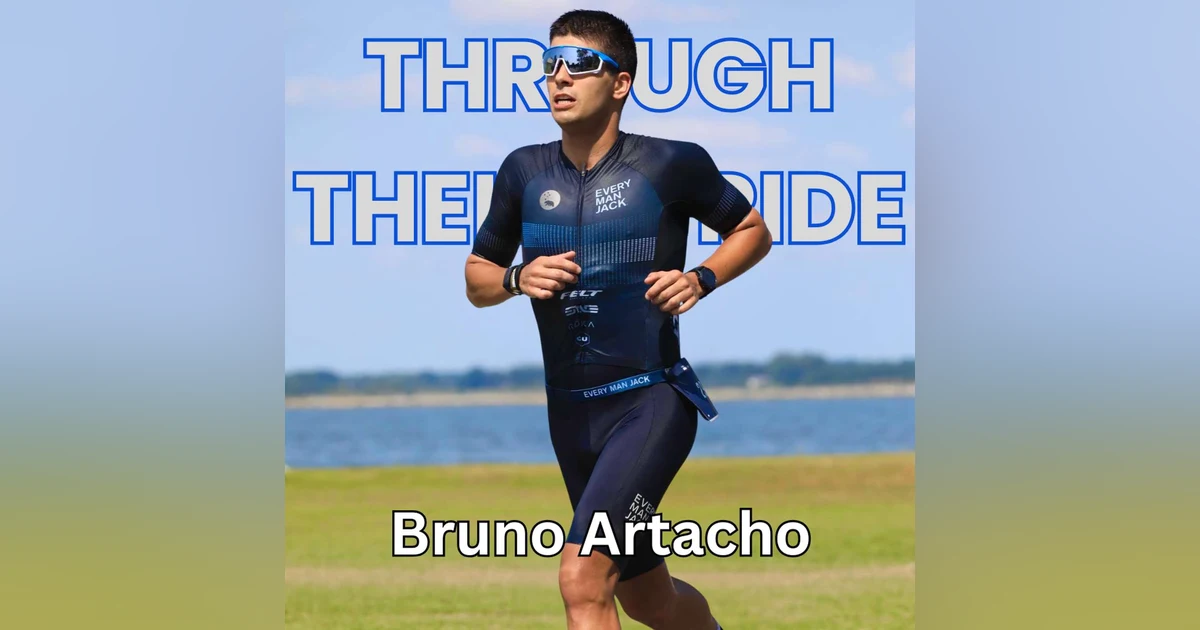


When Bruno Artacho combined his passions for endurance sports and AI science, he was able to produce one of the most in-tune AI coaching platforms out there.
Bruno started in the endurance space as a young adult, finding his way into triathlons. He chased some pretty big performances in the space, but after having kids, he found that training 20-plus hours per week just wasn't as sustainable as it used to be.
So, he switched purely to the marathon, and progressed quickly. Today, he boasts a PR of 2:29 and a top-three finish.
With the experience he gained from the space and with his knowledge of coding and AI science, he decided to create a product that would new athletes train better and become more in-tune with their bodies. That result? Athlete Space.
Athlete Space is a free online coaching app that tailors a plan specifically to your goals, experience, and time. You can find it at https://athletespace.ai.
Bruno is proof that when you decide to lock in and chase your passions, anything is possible.
Uh so I created the the website so athletespace dotai which essentially has a dedicated AI that creates the training plan and also but most importantly follows you through that training plan. So for example, if you don't want to use the training plan that we can generate from there, you can bring your own and it uses that as a data analytics on your day-to-day, see how you're reacting, if you're getting too tired, if you're how your workouts were, give you insights of it. And is that coaching that assists you through your training and give all the feedback? So it would give some insights on you can analyze the weather, it can analyze how your performance is going. For instance, I I live in Nashville or it's a very hilly area. So if I want to do some pace runs, I might maintain my average. I can use that AI to compute. Okay, I'm going uphill. So if I want to average, let's say 730 a mile, in this section, it computes for you as you should run about eight minutes mile, you're gonna compensate later. So all that analysis is being done through the website.
SPEAKER_00I'm your host, Sam Sutton, and today I'm joined by Iron Man athlete, marathoner, and AI scientist Bruno Artaccio. Bruno found endurance sports as a young adult and quickly found joy in triathlons, chasing big performances in PRs. But as life got busier and he began having kids, it became a bit unsustainable to train 20 hours a week for Ironmans. He switched purely to marathons and quickly progressed to a PR of 229 and a top three finish. After gaining all of that experience, he decided to marry it with his other passion, AI science. In turn, he created Athlete Space, an AI coaching app that is fully free and fully customizable to all users. Bruno's story is about what you can achieve when you decide to lock in and chase your passions. I'm super excited to share this story with you. So without further ado, let's get to Bruno. All right, welcome back to Through Their Stride. I'm your host, Sam Sutton, and today I'm joined by Bruno Artacho. And Bruno, thank you so much. You reached out to me, and I was immediately curious to hear about your coaching, your your AI, the AI coaching app you made, and your running and fitness journey. So thank you so much for reaching out. Yeah, thanks for having me, Sam.
SPEAKER_01Uh yeah, and yeah, as you as you hinted, yeah, I have a little bit of an unusual combination where my day job is to develop AI uh and create AIs for several companies. And my I'd say my even earlier job, 5 a.m. or so, is when I do my runs and train for marathons and I yeah, you're five to nine before you're nine to five, as they say. Pretty much, yeah. Yeah. Anything that I can do before 7 a.m. before children are awake.
SPEAKER_00Awesome. Well, so I guess we'll start uh from the bottom, uh up from your athletic perspective. So you were telling me before we jumped on, so you've been an athlete your entire life, and you grew up in Brazil, which is pretty cool, and you obviously played soccer because everybody played soccer. So can you tell us a little bit about that?
SPEAKER_01Yeah, definitely. Uh yeah, so obviously growing up in Brazil, it's if you want to make any friends, you have to play soccer. Um, so I played uh quite competitive with soccer. Um, I for people that are familiar with soccer, not many in the US, I being born the same year as Neymar, I would usually play against him. He's one of the top stars for Brazil. So I was playing uh with them. But at one point in Brazil, when you get to usually around high school, is when you choose between continuing going to school or being a soccer player. Uh, I guess I chose the path that makes a little bit less money than the soccer players, and we went to uh start continue school. Uh so that's when I I was doing it a time more at swimming. Um, in a medium level with swimming, not not the best swimmer, and I started running a little bit more in college. Uh and then naturally having both sports, I just had to add a little bit more with the bike. So I started training for some Ironmans as well, uh, once I was out of college, uh and it was going over grad school. Uh so I did a few Ironmans, uh, went to Kona, uh, did the race there, which is quite a different experience uh out of itself. And puts in perspective, once you run a marathon, just by the marathon, it doesn't feel as intimidating as after biking 112 miles in the lava foods in Kona. So it makes it significantly easier, less intimidating a marathon. And but more recently I've been focusing more on the marathon side.
SPEAKER_00Awesome. Yeah, I I was uh curious about that, how it translates an Iron Man translates to a marathon. Because yeah, like a Iron Man, even a 70.3 is so much longer than just a marathon, and it's so much more because you're swimming and you're cycling, and the swimming to me is the one that's like, I don't know about that. Like, I'm not good in the water.
SPEAKER_01I I would say that's probably true for most triathletes. Uh, I was a mediocre swimmer in high school, and once I got into triathlon, I was like, oh, I'm front-end swimmer. What happened here? Uh there were triathlons don't like to swim as well. But uh, yeah, it is there's a steep learning curve uh in a lot of the events, especially if you're Rikona. If you're not walking, you're passing people in America because everybody's pretty tired at that point. Uh but it I've seen a lot of runners and other athletes using bike cycling as a cross-training, so it helps a lot of your aerobic system without adding a lot of injury, right? Uh triathlons will get more injuries in uh stress fractures, but less impact. So you can have that aerobic engine. Uh the part of the miss is that in my case, it's kind of like a diesel engine, you can go for that speed forever. But if you run a half marathon, it's gonna be the same time as your marathon. So you that's usually what triathlons need to practice more because just you can go for nine hours, but you cannot go faster.
SPEAKER_00Yeah, yeah. I mean, it's just so much of so much more of a toll on your body in a in a Iron Man than it is a marathon, because it's just like it's all different movements, it's not just one straight movement. I've never done a Iron Man. I I've I've been thinking about doing some triathlons like the sprint and Olympic distances, but I can't imagine the the biking and the the cycling and then having to run your distance are like seems so daunting to me.
SPEAKER_01Yeah, this is it is quite a lot. Yeah, and and different in marathon where you chase a marathon where it's 50 degrees in nice morning, usually triathlons you're running it in the afternoon in the July, and that's on purpose, it's a very different kind of experience.
SPEAKER_00For sure. And it and you've got a pretty good time uh PR in in triathlon and a pretty good PR in the marathon. So can you talk a little bit about the uh I think it was Kona you said that was the your fastest race. So what what was that like?
SPEAKER_01Yeah, what qualifying for Kona was my fastest. Uh I would say it's hardly anyone, it's the fastest one in Kona because you're in Hawaii and 90 degrees and probably 9% humidity. But to qualify for Kona, I won my H group at Iron Man Up Maryland. I was four for bro, and that was nine hours and one minute. Uh I was a little bit disappointed that I got that one minute at the end, but it was definitely didn't have anything left at the at the end to to break that nine hour mark. Um and uh so but and and at mid even that race, I was about 20th at the end of the bike, and then it passed a bunch of people at the end of the marathon. So we always the running has been more natural for me than the biking. Uh and for marathon, now that I'm focusing more, uh I did last year St. Jude's in Memphis. Uh and I was third overall there with 229. Dang, dude. That's awesome. Yeah.
unknownYeah.
SPEAKER_01So it does transfer a little bit. Uh, what do you have from obviously like an Iron Man, I think was 307, my best marathon. Uh so it transfers a little bit though, at least the aerobic part.
SPEAKER_00Yeah, that's awesome. And 307 in an Iron Man is like pretty legit. So congratulations, dude. Um and did it, you said a second a second ago that training for and committing to a marathon in your head was like, you know, comparatively to a try to a triathlon and Iron Man, you're like, doesn't it's not that much. Like all I'm doing is is running.
SPEAKER_01So yeah, both in on the time of training for it and once we're in the race. Uh so guys that are going for Kona and trying to win uh their age group or trying to win the world championship, they're training 20 or 30 plus hours a week. That's just in training plus all the commitment and all the investment you have to do in the bike. It's so expensive as a sport. Uh while you're running, if you're if you're running fast and doing 100 miles, you're you're not going even like half of what you would be doing uh for the triathlon. So yeah, so the investment of financial and hours you have to put in training is yeah, it doesn't feel as daunting.
SPEAKER_00Yeah. And especially as a family man, like I, you know, being a triathlete a triathlete and like having a family, juggling that sounds like it would be terribly difficult. But marathon, marathon kind of feels like a part-time job. It's not too like taxing, but it's still a lot, but it's like not too much.
SPEAKER_01Yeah, it is it is a lot. Yeah, it's just I guess you you get used to it and you're it feels like you're detached from reality when people ask you what do you do, and they say, Are you you should I sign a lot? That feels like a lot of it. Uh like like for us, it doesn't feel that much once you're doing it.
SPEAKER_00Yeah, once we get into the thick of it, it's like we kind of manage it ourselves. And the five the 5 a.m. thing is kind of the thing to do, like super early in the morning, super late at night when everyone else is in sl is still in bed.
SPEAKER_01That's yeah, that's the time that we have to go whatever you want. Yeah, yeah.
SPEAKER_00Well, cool. And then uh you so you also are really into AI and you developed an AI running coaching app. And I was kind of digging through that a little bit uh before this and on on your website, and I thought it looked super cool. So could you talk to me a little bit about how that came to fruition?
SPEAKER_01Yeah, so uh my my normal night to five, uh I'm a uh AI scientist. Uh so my background, I have a PhD in AI. Uh so I mainly I worked for Amazon, Google for many years, so over over a decade over working for big tech. Um now I'm more in the startup side, uh starting some uh in uh companies are starting uh through Series A and B. Uh yeah, so kind of as a hobby, as a passion, I started saying I was looking on other training apps, and I was like, usually a lot of the companies say that they use AI, but being in the area that it's not actually being used. So say I can I can do something for that, uh, like easier for myself and start creating my own plan. So when I did Memphis last year, I created my own plan and I would track how I would go and get feedback from it. Uh, but obviously using it it is not the same. You can go to a like Chat GPT or Claude and essentially it was giving you a standard uh marathon plan uh and it's not gonna follow her, it's not gonna give that feedback from the coaching side. Uh so I created uh the the website, so athletespace.ai, which essentially has a dedicated AI that creates uh your training plan and also, but most importantly, follows you through that training plan. So, for example, if you don't want to use the training plan that we can generate from there, you can bring your own and it uses that as a data analytics on your day-to-day, see how you're reacting, if you were getting too tired, uh, if you're how your workouts were, give you insights of it, and um is that coaching that assists you through your training and give all the feedback. Um so it would give some insights on it, can analyze the weather, it can analyze how your performance is going. Uh can uh for instance, I I live in Nashville or it's a very hilly area. So if I want to do some pace runs uh and maintain my average, uh, I can use that AI to compute, okay. I'm going uphill. So if I want to average, let's say 730 a mile, and this section it computes for you as you should run about eight minutes a mile, you're gonna compensate later. Um, so all that analysis has been done uh through the the website.
SPEAKER_00That's pretty incredible. That's really in-depth. And so when it tracks your fatigue and everything like that, is it tracking through through your watch analytics that's coming through like your Garmin or your Koros or something?
SPEAKER_01Yeah, we do have uh we sign uh agreements with uh Garmin, Apple, um, Whoop, uh and a few others, so uh and also through Strava. Uh, you can so we can import data from all those sources and do the analysis on the data, uh, all anonymous on the uh internal way and not sending anywhere. Uh, and then we output those results and we can communicate that back to Strava or Garmin. So, for example, the all the training plan that is generated uh inside uh athlete space, we s can send it back to Garmin and you can have on your Garmin watch, for example, when you train.
SPEAKER_00That's awesome. And then so when it caters your plan uh in creating your plan to you, what what factors is it taking into account? And um so say if you're if you're showing signs of fatigue, will it like automatically change a run for you?
SPEAKER_01Yeah, so uh it uses all um all the data that you can provide. Uh so depending on how much the more data you provide, the more is gonna use that. So is gonna use your HRV, uh, how your HR is drifting to during the runs. Uh your you can give your feedback in the comments, what is your RPE, how you feel in that session. All that is taken into account to the coach AI that both talking to you, you can talk to the coach uh when you're in the app, but also uh daily and weekly revises your training and either increases or decreases, keeps the same, give you some uh cues on how to do your next sessions. Uh so those are daily updates they do depending on the feedback they got you from the previous sessions.
SPEAKER_00So and uh and it's not just marathons, right? It sounds like it can also do triathlon as well.
SPEAKER_01Yeah, so any distance uh running could be 5k, it could be a turkey trot. Um so now we're working on some partnerships, some races to uh help uh people signing up for turkey trots, for example, go all the way to ultra marathons. Also works for cycling, triathlon, uh naturally swimming. Uh we also have strength training uh combined uh with the run or by itself. So yeah, we've offered those six sports or any combinations of it. And you the idea is that you can customize to whatever routine you have, what days you like to train, how many hours a day, what style you like to train. So it you would adapt to any uh uh special circumstance that you have.
SPEAKER_00Amazing. That's cool. And um, are you using it yourself to to train and stuff? I assume so. Yeah, yeah.
SPEAKER_01I've been using for well, I guess, prototype versions uh for a while. Uh so when I did my my my last marathon was uh Memphis last year, uh I used that for training there. So uh and then I this year I did uh a half marathon on uh a few months ago. I also was using that. That was uh 111 I I ran in that one. Uh and I'm now I'm starting my build for uh Nashville next year. Uh so I'm hoping to it's a harder marathon because it's hilly, but if I can get a PR, that'll be it's like just being faster than what I did in Memphis, it'll be a good improvement. Yeah, but also easy for that one.
SPEAKER_00Yeah, I were talking uh to Laura and she said Tennessee is not the flattest state. Like you can get some hill, you can get some good elevations in places.
SPEAKER_01So I live uh just south of Nashville, and when I go and runs near my house, I get 80 to 90 feet per mile of elevation game. So it is decently hilly, yes.
unknownYeah.
SPEAKER_00That's a lot, man.
SPEAKER_01Yeah.
SPEAKER_00Um, I train out here in the hill country and it's uh in Texas, so kind of like Austin San Antonio area. And uh yeah, sometimes like I'll come home after like a 16-mile-long run, and my watch will be like, oh, you got 1,037 feet of total elevation gain. And I'm like, yeah, I can feel every bit of that. I I want to believe that's helping my marathon later when I do all those hills.
SPEAKER_01Uh that's gonna be easy when I go for a flat horse.
SPEAKER_00But yeah, especially my I'm training for the Fort Worth marathon right now, and that's very flat, like just around the Trinity River, and I'm like, oh man, I'm like, let's go. It's gonna be so ready.
SPEAKER_01Yeah, the the part that I find hard to find is where like a good flat area is that I can do some workouts because it's a little bit hard to pace sometimes when you're that hilly. Yeah, but in general, it makes it easier for later. Yeah.
SPEAKER_00Well, cool. So uh, and so talking a little bit more about AI, you know, some people kind of get a little bit like hands off, like, oh, I'm not sure about it. Like uh, you know, I don't I don't should I trust, should I have a coach over just an AI plan? And like I feel like maybe the personalization of having a coach is better than AI. What was your what would kind of be your counter conversation argument to that? What can this provide for that?
SPEAKER_01Sure, yeah. So I would say a comparison. Like uh so my day-to-day work is coding. And I think everyone heard the first thing that everybody said with AI is like we're not gonna have anyone coding anymore, AI is gonna replace that. Uh and actually my work to work, like it's quite the contrary. I I have more work to be done, and I would say my productivity probably 10x because I can code with AI assisting me, and so I can do more things at once. Uh, I think for coaching is the similar perspective. You you don't have to use one or the other, you can use both. So you can have for a coach, it's easier to analyze more data and see more inputs from coaches. It's gonna be really hard for a coach to be focused on just one athlete unless you like your elite kind of level and you have that kind of access. But for everyday people, you can have a coach and the AI and have them extract more of the uh data and have a better way of informing and improve your training. And for a lot of people, the coaching is is expensive, right? So if you're starting on the sport, you're you don't necessarily need to go to a coaching. Uh so I I had coaching in the past or training without coaching. Uh, I know it's it's a significant investment that you have to have. So you can have both options, uh, and one can complement the other. It's not exclusive on the AI side or exclusive on the coaching side.
SPEAKER_00Yeah. No, I like that. I think um, you know, how I started was it was very all self-coached. And because I was like, well, I can't afford the you know $150, $200 a month for a coach right now. And I'm just starting. So it's like, you know, I'm just trying to break 430 right now. You know what I mean? Like I I have no, I have no, I feel like I have no justification to get a coach. And um, and then after I did it for a while, I decided to, you know, get a coach. But yeah, I used uh Rana at first uh for a while, and Rana helped me break 140 in the half marathon, and I was like, well, all right, you know, like like it can do just as good as anything else AI can. So if tailored well.
SPEAKER_01Yeah, that's that's the idea. Yeah. So uh yeah, yeah, you for example, you similar to Rana, yeah, but the idea of having more personalization be less uh giving you like more in details and more specific for you, give more the feedback and that like once you get to like obviously I'm not gonna say an Olympia and it's gonna be AI only, but in the other hand, like for example, baseball, uh you have all the teams that they're using AI for their data, right? In addition to have the coach. So that's the kind of the idea to have both of them combined.
SPEAKER_00Yeah. Okay, cool. Awesome. Um, and then talking a little bit about more uh you and your progression in running. So, where did you start kind of time-wise for uh for marathons? You said you're in a 307 in in uh uh in Iron Man, but what whenever you switched to purely marathon, what was your first time and what's your current PR?
SPEAKER_01So my first my first marathon was uh 321, but it was inside an Iron Man. Uh so you like was the first time I covered the distance. Uh so I did a several half marathons before that. I think they were starting in the 145-ish, uh, the first ones that I did, like solo half marathons. And then I slowly brought that down, I think it was 129. I was really happy when I finally broke 130. Yeah, that was a long time coming. Um, and then uh about six years ago I moved to Boston, and then that's when I said, okay, I I have to run Boston. Now I live here, I have to run Boston. Uh so then I I signed up for called the cheap marathon in New Hampshire. It was just a rail trail, $25. They're saying you only pay $25. What do you expect? You don't get a shirt or a medal. It's just the right. So then I I ran to I got into a good group there, like just it was just people trying to get Boston and it did $244 in that one. That was 2022. Um, and then so I ran Boston 2023, didn't get a good race, it was cold, like I had some cramps, and so okay, I'm gonna just do it. Uh so it was just a walking marathon, like that one.
SPEAKER_00It was just I have my experience that I had to do. Um what were what how were the hills out in Boston and the course in general? I know it's kind of crazy because you start all downhill and then you hit those rollers and new for me.
SPEAKER_01It was a downhill god they got me. I was kind of was in the verge of an injury, and then um my IT band just at the end of the the the first four or so miles when you're coming in um on a Hopkinson uh up until we get to Framingham, that just destroyed my legs, and I couldn't when when I got into Wellesley, I was already okay, I'm I'm I cannot do this, it's not gonna work out today. Uh so then I Took a little pause from the marathons. Oh no, it's marathons that are injuring me. I'm gonna do Iron Man's because obviously that's not enough. Yeah, make it harder. Yeah. Well, my thought is I'm gonna have less impact because I'm not running that fast. Uh so I took a little break and then uh about like uh uh when my my daughter was born, that was uh 2024, that's when I toned down the traffic a little bit. Uh I did Kona with a three month-old baby just because I already was qualified to have to do it, but after that I'm gonna start transitioning towards the marathon. Um and then uh did a yeah, that the my following marathon was 2025, that was uh the 229.
SPEAKER_00Awesome. So you've had a pretty good, pretty good jump then from the 320s in in Iron Man all the way down to the 220s solo. Like that's a whole hour, so yeah. If I had done before, it would be significantly slower. Yeah.
SPEAKER_01Yeah, it took me a while to drive them.
SPEAKER_00And and nowadays, so you're you know, you're married, you've got a kid, and this is kind of a selfish question for me. You know, my my wife and I are looking to have kids hopefully in the near future. Uh, but what is it juggling training and your high performance goals and being a family man and going to work and and you know, doing that as well?
SPEAKER_01Yeah, I'll say, yeah. So I have this contact. I have two daughters, uh, one is two two and a half and one is four months old. Um so uh that's when us I said the juggling say Iron Man for me doesn't work anymore. I cannot commit to the 20 hours of training and have a wife and two two daughters uh and a job. Um, but uh I would say the main thing, one, like learning to live with not a lot of sleep. Yeah. And uh so a lot of times before having children, and I say, okay, I don't want to run this morning, I can run later, like five o'clock when I'm out of work, I can do my runs. Uh but now I have to be done with my run by 7 a.m. when they wake up. So you're you will appreciate and you value more the small amount of time that I have available. You have to make the best of it. So just being more efficient with that amount of time. So I have 5 to 7 a.m. That's my time. I'm gonna I want to get out of my house, start running immediately, uh, not waste any time, come back and then uh can be in dead mode and do everything that I have to do.
SPEAKER_00Yeah. Yeah, I uh I don't know if you ever listened to uh the Life in Stride podcast. Um uh Chris Striegel, he's the main host of that one, and he says, like, he's he's he's a dad of a newborn now. He's like, you have to also give all of whatever you're with your family, you have to give all of your energy to your family and make the most out of that time so that they don't feel like they're like being left out. You know what I mean? Like you gotta prioritize your family, you gotta make sure they know, hey, like this is fun, this is what I want to do, this is my goals, but y'all matter more than that.
SPEAKER_01So yeah, yeah, definitely. I would say wife was gonna be the first one that's gonna complain if you're if you're just coming back and laying on the couch, then like I'm I'm done for the day. Um normally if I'm I'm arrive a little bit like without a time and I don't have time to take a shower and I go pick up my daughter from bed and she's like, oh daddy's sweaty, go take a shower. Yeah, I have to be uh so and I'm hoping it shows like discipline and like your your your hard work and uh like that passes some values. Uh so I I see my my family like working hard and my my parents were at like played soccer a lot and so it's seeing the dedication and um I'm hoping that passes as a a good um a good a good way like how how to to do that kind of things. Like I'm hoping my daughter like once she's older start doing sports, like whatever sports you want to do, but and also uh has the discipline and dedication for yeah, yeah, definitely.
SPEAKER_00I mean that's like the one of the reasons why we do it, right? To show our families and like and our kids, hopefully me when I when I have them, like you know, it's rewarding to do hard things. Like in and you get a lot out of it, you you know, show them that anything is possible and they can chase their own dreams when you know when it comes their time. So like being a role model for your kids is why we're l living life, right?
SPEAKER_01Yeah, yeah. That's another that's another side. It gives you definitely a different perspective. You're have like being less not saying like the people would like you were selfish or not, but it you you have no time to be selfish. You have like you have someone that depends on you, and you that's pretty much always revolves around it.
SPEAKER_00Yeah. Cool. So um now for you, what are you looking at as far as racing, as far as uh goals? What's what's kind of your goals going forward with the with the sport of running?
SPEAKER_01Yeah, uh, so the next race I'm mine is uh the Nashville Marathon. Um is easy to get carry out and look at the times. It's like, hey, like they won the 2027 to do 30, you're winning. So uh it would be fun if I can try to be in that group and get a chance on it. I know that it's healier, it's hotter because Nashville, uh, but so I guess idea trying to get it in a PR and being a contention with people on the front. Uh that's my my next goal. And then longer term trying to get closer to the 220 low, uh, see how close I can get on that side. There's and there's like a few friends that keep telling me that I should move to uh ultramarathon. I don't know if that's a a good idea or not, but uh, or something that if I do it once, it it's gonna stuck the bug by it get debugged by it, and then you're you want to do more. But yeah, so but for now just trying to improve that time.
SPEAKER_00Yeah, so uh uh if you don't mind me asking, how old are you? I'm 34. 34. Yeah, I mean, I would say like you got some time before having to transition to ultra. I feel like the ultra game, at least for marathoners, is like we can start doing that when we're like in our late 30s, early 40s, because like we might hit our like peak of how fast we're gonna be in the marathons, and then it's like, okay, like we'll go over and and do the long stuff and be competitive at that.
SPEAKER_01But yeah, like you can look at the age for mab or like one funny sorry. When I was running in when I was gonna run in Boston because I was a local, I was living in the west side of the city, I just went straight to the start line. And I guess when you walk confidently to somewhere to a place, nobody questions you. And so I completely walked to the entrance, and apparently that was the pros areas, and I didn't know. So running from me, Keechogee was warming up. So I was like, wow, took a photo of him warming up. It's like, let me get out of here because I don't think I'm supposed to be here. But uh, I got that got to see him warming up with his group and getting ready for Boston.
SPEAKER_00Yeah, yeah, I forgot that was the only year that he ended up uh running Boston. Um so you got to see him almost like up close in person. That's pretty sweet. Yeah, that was the definitely the highlight of the day. Yeah. Other than the rain and cold that we got later. Yeah, yeah, I was gonna say it was a it was a super rainy day and um looked like their shoes got all wet. And um, that's the thing about the super shoes too. It's like they're all very like thin, and you get a little ru rain in those, and they're they're clogging up.
SPEAKER_01So not a lot of grip, right? If anybody, if you have any terms, you have to be very careful in them. Yeah.
SPEAKER_00Uh well, cool. And um do you have I gotta ask this because if you're a 229 marathon or looking for low 220s, do you have any thoughts or uh hopes at all of possibly making the trials in one day? They just lower two minutes, right?
SPEAKER_01That that makes it harder. Uh I obviously like if I could, and they would be amazing. Yeah, I think that would be a pipe dream uh for me to do anything like that. Uh I so growing up in Brazil, say I also have like I'm Brazilian and I'm I'm Italian citizen. It's also like, oh, maybe I can look in the other countries, it'd be a little bit easier because US is quite competitive, but they don't have trials, so I don't have that chance. Uh but um yeah, that would be a pipe dream. I don't think it would be possible. Yeah, you never know though.
SPEAKER_00Yeah, like I wouldn't complain if I'm getting there, but yeah, not gonna put yeah, not not gonna put all your chips in that basket. Oh no, yeah, if yeah, it would be amazing, but I yeah, who knows? Well, cool. And you you had spoken earlier, so you placed in the top three in a marathon at this point already. What is that feeling like in the adrenaline of placing in the top three podiuming in a big in a marathon? I would say big race because it's 26 miles, but uh getting that third place top finish, what what was that feeling like?
SPEAKER_01It was pretty funny. I was saying like I'm like I've been um in the Iron Man in the past, I was all like my best overall was fourth. I won my each group, it was fourth overall, and I would joke that I wanted to have the the escort with the bike next to me in a race. Uh so once I in Memphis, since I was in third, I had a police escort with the motorcycles coming next to me. And I remember mentioning him like, wow, this is the coolest part. I I don't care about the finish and just having the escort through the city, like it makes me feel important, and I made it. Um yeah, and but most of the time, so I halfway I was in eighth, and then people start fading a little bit and they passed. But I knew there was one guy catching me, and I knew I knew who was the guy. He's an Iron Man champion. So uh it was a friend a friend of mine, so it was mostly concerned like he's catching me. So I was kind of consumed the whole time, like plays coming, claims coming, I have to go faster. Uh so that was mainly my thought. And uh, but it is is a pretty cool experience too. Okay, you feel like a professional athlete once you have the escort on the front, and there's you're literally in the front of the race, like there was no pros in there.
SPEAKER_00So yeah, it's a pretty cool experience. Awesome. And it's probably pretty contagious too. Like the the feeling of like it's it's addicting, like you want to you want to chase that top three experience again. And uh it sounds like you're gonna try to do that in Nashville.
SPEAKER_01So yeah, it's yeah, it's always like you always want something more. It's like, okay, I got May 3rd. Can I make it second? Can I make it first? Can I break the tape? Uh so yeah, I guess it never ends, that kind of thing. Yeah. Well, and when it and when is Nashville? Uh April 20th, is the last weekend of April, 27th, I think it is.
SPEAKER_00So that's let's see. I that means have you started your trading for that yet, or is it uh on the horizon?
SPEAKER_01I'm about to start to start now. Um I was considering doing uh one in the fall now, but uh with a four month old, it became too hard. I'm not sleeping much recently, so then I think okay, it's better to take it easier this fall. Uh just I'm I'm still doing high volume, uh not as much as we do for the marathon, but uh it just I cannot perform as well if I'm not sleeping well. I'm just the amount of sleeping makes a big difference.
SPEAKER_00Yeah, especially also trading in the Tennessee summer heat, having a newborn with zero sleep, like you're just not recovering at that point.
SPEAKER_01It's not Texas, but yeah, it's pretty. I think this summer we're 45 days above 90 degrees. So it was pretty warm, so it was definitely harder.
SPEAKER_00Yeah, and you you're just not recovering at all at that point.
SPEAKER_01No.
unknownYeah.
SPEAKER_00Well, cool. And then um as far as your so your AI coaching app, um, so what is your plan? What are your goals for that? Um, and uh what what are you hoping to see with it for that in the future?
SPEAKER_01Yeah, yeah. So we're we're we are uh so we I just um launched the app uh out of beta. Uh so now we're we're growing pretty fast. Um so the in the good matchups we're having, uh so we we're currently being used by 35 countries. Uh people start accessing and discovering the the app. Uh I think we we have like 75,000 activities that people are imported. So uh it's a pretty fast growth um that we're having. And uh the app is free, uh, so we're not charging anything. Uh the idea, so for example, uh other websites that's one of the motivations, like to go for training peaks, a lot of traffic zoos or run out. It is quite expensive uh if you look at how much you spend in a year, and then if you have a coach on top of that. Uh, and a lot of it is because they're large corporations, it's large to operate. Uh, and it's something that I can streamline just being uh one person doing it. So I don't have to have that overhead that they have. And there's another way that can in uh as we scale, being able to uh enable that without charging uh with a paywall. Uh so um so it it uh so was one of the features being free, it's growing pretty fast. Uh so I'm trying to support, and uh, I'm all very open to everyone using the app that I get DMs and uh emails all the time. And I request, oh, uh more recently some people want to intervals.iciu, so I integrated that for them. So whatever is the changes that we have once some changes are always very accessible and try to uh improve the app as it goes. Um yeah, so the idea is to scale it uh so it reduces the cost that I have. So I'm obviously I'm paying for the all the computational AI cost, so it reduces that cost per user so we can uh it's able to operate without that uh with being uh smaller burden per user, and then we can uh make it work uh as an app without charging um dozens of like $10, $20 a month of whatever the other apps we charge.
SPEAKER_00Nice. That's awesome that it's free. That's good. That is a big uh bonus because yeah, like you said, trading peaks, run uh, like it can be up to like 30 bucks.
SPEAKER_01It ends up pretty fast, yeah. Um yeah, that that's the thought. And yeah, especially if someone started, you wouldn't want to pay uh your $20 a month for an app and then pay for a coach uh a couple of hundred dollars. So that that adds pretty would be pretty interesting.
SPEAKER_00Because at that point, I mean, like when you're so new into the sport, you don't know what you're getting. Like you don't know if you're gonna be in there long. And it's like, I don't want to commit 150 to a coach or 30 to bucks a month or 50 bucks a month to an app. Like, we're just getting into this. And then and then if it's free, you can really dive deep, and then it's like, okay. And then you kind of also learn more about like how to train and and and exactly what you need and what your body needs.
SPEAKER_01So yeah, so yeah, it has a little bit of what are the different styles you can train. You can get some uh feedback from the the AI has access to all the publications and all the libraries in running. So, like, oh, you want to experiment with Norwegian style for training? Uh uh it was pretty popular for triathless for a live now for running as well. Or you want to do more 80-20, more pure uh more standard training. So you can experiment with different models, you can get some feedback. Uh so it helps you to advance in learning. Like I think it's the same when you have a human coach, you at some point you start knowing like your feedback and what what it works for you, was it what it doesn't? Like I used to wear uh heart rate straps now, like I don't need it anymore. I I know when I'm tired and my heart rate is up. Um yeah, so you evolve me to learn more um as he goes. Awesome.
SPEAKER_00Well, cool. And uh and to run this app, how many uh do you how many like what does your team look like? Is it a uh do you have some employees or uh what is that? What is your yeah?
SPEAKER_01You're looking at the team, I say uh it's just you. It's just me. So uh part of my five to nine, I was uh training, doing my own training and then writing some code. Uh so for the past um nine or ten months, I've been writing writing the code. And uh so this is very similar to what I do for my normal job. Uh so it a lot of it like I I have a lot of experience there, so it's easier for me to implement. Um, so I've been uh implementing all the infrastructure, uh the front end, all the AI behind it. So you have an AI agent, so it's not a lot of those applications that you see would be just wrapping and you call in at the back end, we're just calling Chat GPT and I'll put in an answer. No, that's there's a whole system involved, and having the the libraries uh available and what to search. So, for example, if you go, uh a lot of the the things are created. One, if you go to ChatGPT or Cloud, you can call Atlaspace from Cloud, and Cloud is uses it. So it's a as an MCP allowed for them. So we we're officially in their platforms as well. Um, yeah, so I've been developing that and uh the apps, Android and uh Apple Sort as well. So all is a one-mountion.
SPEAKER_00That's a lot. Well, and that's brings me to another question. So what I admire about your you and your story is that like you have found a way to marry two of your passions into one coding, AI science, and performance and running. Um and sometimes, like, you know, as someone who's doing it all all the time, it can get a little uh a little daunting, a little tiring, and a little sometimes a little bit demotivating. In those times, what are you reminding yourself? What are you telling yourself to keep to keep going and keep pushing through it?
SPEAKER_01Right. Um I was saying when uh in my normal work, what a the moment that when I was tired and I was daunting, I would go for a run and that would clear my mind and come back and work. Uh when you put both of them together, you eliminate that. But um uh I guess it goes back to the the part of having in your family and someone that you're you're looking forward to is usually it what comes to mind is like I I wanna when I'm in a race, if I'm feeling tired, like I want to something that'll be proud for for my daughters and my family. Um and that gives you the motivation. And another point of for the Armin, once you're seven hours in Kona and you're tired in the heat, you you learn some resilience from all the strugglings that you're having, and um and you put it in perspective like your your problems are not that bad uh at the end of the day, like uh or I've growing up in Brazil, see a lot of um uh other issues in a country that is not as developed as the US, we we are in a privileged situation, so it's I I feel guilty complaining or anything like that.
SPEAKER_00It's almost like a it's a it's a blessing to be this tired.
SPEAKER_01Yes. I I I'm paying for it to be tired. Yes.
SPEAKER_00Well, cool, man. Um, and um for those who are thinking about you know either getting started with running or getting started with chasing their dreams, whatever their dream might be, what are some advice that you would give uh that person who's maybe a little scared to start, but is is hoping to try to make start makehead making headway.
SPEAKER_01Right. Um I would say set up a you can have a longer-term book, but smaller goals. Um uh don't if you feel tired of one run, try it again tomorrow. You're gonna feel better tomorrow. Like I have days that I go running and I don't feel like like doing it, and I'm tired and I don't want to do it. But maybe tomorrow you're gonna feel better. So like just uh sometimes just ticking the box, do your day, uh, and the next day is gonna feel better. Uh and having smaller achievable goals versus I I don't want to start and go straight to getting uh uh Olympic trials qualifying to having smaller goals, like breaking four hours and breaking 330, breaking three hours, so it's smaller goals that motivate you. Um if you can join a you can be with a group, it usually makes it easier. Um you have uh responsibility of your your friends waiting on you, so you have to go, you cannot bail on them. Um it definitely yeah, that definitely helps. And yeah, I I wish I had a accountability partner, so like I'm training by myself because I don't have any I don't know many people around that I can train with, but so those are usually things that make significantly easier if you're starting.
SPEAKER_00Well, cool. And then so uh I guess my last few questions are so if someone wants to join the app right now, where can they find it and and how can they download it?
SPEAKER_01Yeah, definitely. So you can go to athletespace.ai uh or also look at the app store or Google uh Google Play Store, Athlete Space. Uh so the app is free. Um the only thing you need is email so we can know when you're back to the app and sign up again. Uh and it connects to all your devices, your Apple Watch, your Garmin. Uh we do have uh a trainer that connects as well for your MacBook now. Uh and yeah, and you can try it out. Uh if you have any issues, any things that you wanted to improve in the app, my email is available, but anyone can message me and I I respond pretty quickly and try to have uh always that I can implement as features and improve to the user. So yeah, so this kind of building together uh the app and open and yeah, and we're not not trying to put a paywall in and cut you off at one point, you're just growing the app together. That's the idea.
SPEAKER_00Wait. Well, cool. And then my last question is so uh if you can give anybody a reason to go for a run today and start, what would it be?
SPEAKER_01I would say you're gonna say thank you're gonna be thankful once you're done. Uh you never feel good when you when it's snowing or too hot when you're starting, but you definitely feel good once you're done, and you regret if you didn't do it. So um say one hour from now, you was gonna be thankful if you did it.
SPEAKER_00There you go. All right. Well, Bruno, thank you so much for coming on and sharing your story. This has been a lot of fun. I'm super interested in checking out your your app and uh uh keep continuing to follow your journey as well. So uh I really appreciate this. Thank you so much.
SPEAKER_01Yeah, thanks, Sam, and thanks for having me. And appreciate it.


