Ep: 55: Anything’s possible: How Amanda Cooper flipped the script on life
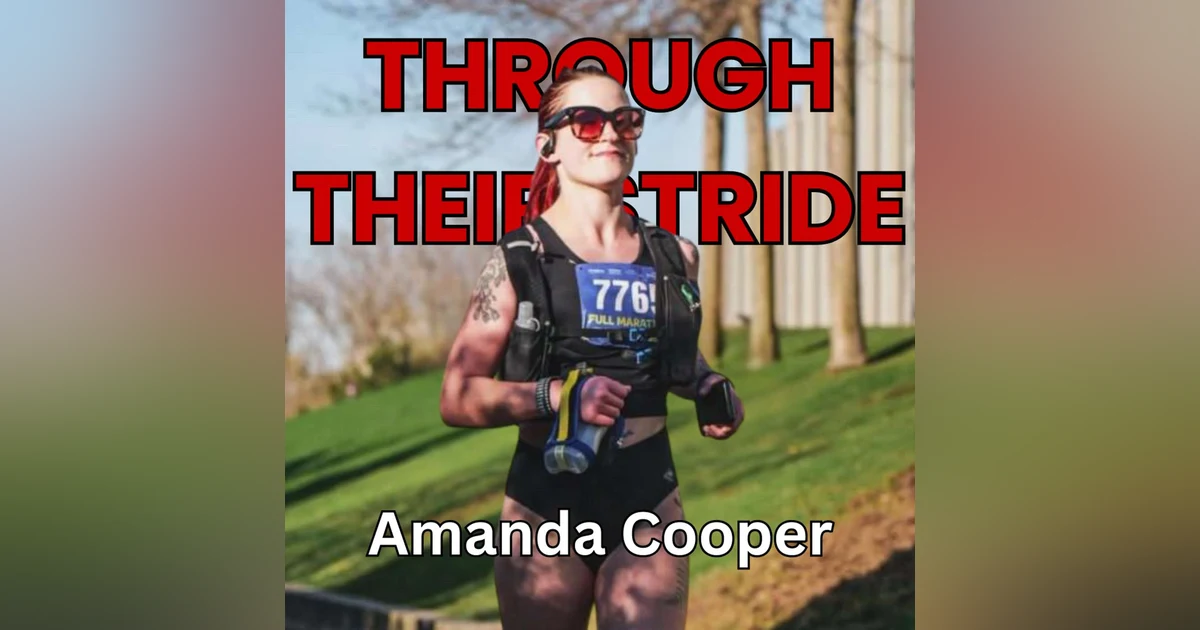


When Amanda Cooper first started trying to run at 17, her relationship with exercise became intertwined with an eating disorder that led to hospitalization. Returning to a healthier place took time and work, mentally and physically.
When she started running again in 2025, her reasons were different. She was doing it for herself—for who she’d been and who she wanted to become.
In this episode of Through Their Stride, Amanda (@send_me_no_hills) joins Sam Sutton to talk about recovery, running 11 marathons in one year, and the burnout that prompted her move to ultramarathons. She shares the story of an eventful 100-mile race, the serious challenges she encountered along the way, and what finishing as the first overall woman meant to her.
We also talk about finally achieving her Boston-qualifying goal with a 3:10:58 marathon on September 12, 2026—and why the meaning behind those miles matters beyond the finish line.
I think it's to prove to myself that I'm capable of so much more than I thought I was, and I'm so much stronger than I thought I was, and I owe it to my like previous self to see some of these things through because I don't want people to see me as weak. And I like I know I'm not weak. And so I just want to continue to get better. And if I can, you know, show other people like it's possible to get better too, like then that's amazing. Like I would love to inspire other people and just continue to grow and branch out and do different things. Like I had a lot of fun this year too. Like I never thought I would do a 50 miler or a hundred miler. And so just trying different things and um getting all of those experiences because you know, if you only get one shot, you know, to do these things. Why not?
SPEAKER_03Yeah, definitely.
SPEAKER_00Welcome back to Through Those Drive. I'm your host, Sam Sutton, and today I'm joined by Amanda Cooper. You might know Amanda as Send Me No Hills on Instagram, but today we're getting to know the person behind the miles and how much her relationship with running has changed. Amanda started trying to run in college during a chapter of her life that became consumed by an eating disorder. At her lowest, she weighed just 72 pounds. She was hospitalized and told she needed to gain 20 pounds before she could go home. Even then, she was sneaking jumping jacks in the hospital bathroom, a glimpse into just how difficult it was to let herself rest. Getting to a healthier place took time, both mentally and physically. And when she returned to running in 2025, she wanted something different from it. This time she was running for herself, for the person she'd been and the person she wanted to become. That year, Amanda ran 11 marathons. She finished her first in four hours, two minutes, twenty-three seconds, broke four hours a week later, and set her sights at Boston. But after a year of marathons left her burned out, she turned to longer distances. What followed included a 50-mile with nine falls and a 100-mile race with enough complications for several episodes. A leaking water bottle, 96-degree heat, episodes of passing out, a mountain lion encounter, and a deadhead lamp that left her sharing another runner's light through the night. Those were serious dangers, not a checklist for proving toughness. Amanda ultimately finished as the first overall woman, but the result was only part of what that experience meant to her. Then, on September 12, 2026, she reached the goal she'd been chasing, a Boston qualifying marathon time of three hours, 10 minutes, and 58 seconds. Today we talk about recovery, ambition, burnout, and what it means to return to something with a different reason for doing it. More than anything, this is a conversation about possibility and building a life you once couldn't picture for yourself. Here's Amanda Cooper. Okay, welcome back to Through Their Stride. I'm your host, Sam Sutton. And if you're watching this one, um you can see it that it's dark in my room and a little bit lighter in her room. Is it four around your time?
SPEAKER_01It is, yeah, it's 4.03.
SPEAKER_00Yeah, we're already enjoying a 6 p.m. sunset from the uh time change.
SPEAKER_01So lovely.
SPEAKER_00Yeah, well, I'm joined by Amanda Cooper, uh, and it's Send Me No Hills on Instagram, which I thought was the best uh Instagram name. And I was saw that and I was like, that's hilarious. So I love that. Very creative.
SPEAKER_03Thank you.
SPEAKER_00So I wanted to have you on because I was telling you off recording that I saw your 402 uh and your journey from 402 in the marathon all the way down to a BQ time. What was the time again? Three uh 310. 310. So and I I thought that was super inspiring because that's kind of my journey as well. And I think a lot of my listeners trying to get to the BQ standard. And so I thought this would be a really inspiring conversation. And then I saw a lot of your other posts that were even more inspiring, I think. So, but just to uh introduce yourself. Do you want to say a little bit of words about who you are and and how you got started running?
SPEAKER_01Yeah, sure. Um, I'm Amanda Cooper. Um, I've kind of been on and off running since I was 17. Um, I kind of feel like running is kind of like a book that maybe sometimes you put down and then you come back to later. Um, and so I basically had a couple of different times where it was like I got into running when I was 17 and then during COVID and then more seriously in the past just like two years, um, where I feel like I've really gotten into and like honed into the running scene. Um, so I originally was just doing like my first race was a 10K, and then I thought I was like, why not just jump into a marathon? And so you know, a few months later I did a marathon um and ended up doing 11 of them in 2025, which don't recommend. Yeah, it's highly don't recommend it. It was a great experience, learning experience, but um a bit rough. But um, yeah, and so now I'm like I've got my BQ. I ended up doing somehow getting into ultra marathons this year. So I did a 50 miler and a hundred miler. And um, now my next goal is to obviously uh do the Boston marathon. Uh I already registered for the Chicago marathon next year, and then um ideally I would love to do the Moab 240 at some point, but further on in the in the future. Yeah.
SPEAKER_00In a year where you're doing Boston and Chicago, Moab is on top of that. It's gonna be quite the heavy load.
SPEAKER_03Yeah.
SPEAKER_00But you're used to it. I mean, 11 11 marathons in a single year, that's kind of impressive. How did that turn into from just your debut to 11 marathons? What kind of started that?
SPEAKER_01I don't know. Sheer honestly, just like just drive, but like in a stupid way, because I was so determined to get that VQ that year. And I just was like, I have to get it this year. You know, it was sort of like a lot of runners don't get it their first year, and somehow I just was like, but no, I'm going to get it this year. And so I ended up doing the Whidby Island Marathon, which is super hilly for my first marathon. And it like I learned a ton from it because I mean, I just didn't have enough water. I think my first mile, I went out at like a 650 per mile or something, and it was all uphill. So I just all gas, no breaks, you know. Yeah. And um learned like a lot from that too. Um, and then so I decided after that, like that that wasn't enough, even though I could barely like sit down the next day. I decided to register for the Tacoma Marathon, which was a week later. And so I was like, okay, well, 402, I can get sub four in a week, no problem. And I did, I ended up getting a 356, but I just I plateaued so bad and like the like mile 12, I think I just hit the wall. And I just I had to walk. I was crying. I like called my mom. I was like, I can't do this, you know. But you just you you manage and like you push through. It's like there's something, it's like, okay, well, I'm not gonna quit, obviously, right? Like there's nothing physically wrong. It's just like I'm just having a really hard time with it right now. And it's like you kind of know that, okay, well, this isn't gonna be my race, and that's okay. And you know, you just have to push through that. And then I took a little bit of a break for a couple months, or I guess only a month, actually. Now that I think about it, I took a one month and then I did another marathon, which was even hillier than the would be one, and that was that was my slowest marathon time to date. It was really hard, but it meant a lot to me because it was on um San Juan Island, which uh, because I grew up in Dallas, and then me and my mom moved to San Juan Island in 2009, and so I lived there for a while and then went to school in Seattle. So that's when I moved up here in 2014. Um, so I did that one, and it meant a lot to me, but it was just like just one more kind of like box to check to, you know, it's like, okay, I've tried this and this and this. Um, and then I yeah, I just ended up registering for for more after that. Um learned a lot from each one, though, for sure.
SPEAKER_00So uh what what did the training look like for your very first one? Because going from 404 to 350 to sub four a week later, that's pretty impressive. So it it sounds like maybe you had a really good training block your first one, and then maybe your first one kind of had to learn some lessons pretty, pretty head on.
SPEAKER_01So yeah, yeah. I mean, I trained for I think I registered for the Widby Allen Marathon like sometime around Thanksgiving or December. Um, so like a good four months of a training block, and I like locked in hard. Like I was so determined. I mean, I so I go to work at um my shift starts at 6 45 every morning. So I'm up and at the gym at like three in the morning. And I I was so determined back then too. So I like my training was like, okay, I'm gonna get up at 2.45 at Monday through Friday and just hit the treadmill hard. But I wasn't really doing any strength training either. Uh very, very minimal strength training, and just all of my runs were kind of at the same speed, just kind of all locked into that like BQ pace. And so I felt like the the closer it got to the marathon, the less prepared I was for it.
SPEAKER_03Yeah.
SPEAKER_01Um, but yeah, so I was just I was training like locked in every day, and then yeah, had the the Widby marathon. And then obviously the course for the Tacoma one is about half of what the Widby one is. So that definitely was in my favor for sure. And I think I was just really determined after that to like get the sub four. It's like, okay, I'm I'm crazy. I registered for a marathon a week after my first one. Like I've got to get this, you know. So I think it did help because like a lot of the lessons I did like learn right off the like right off the bat. It's like, okay, I'm gonna bring way more water. I am going to walk if I need to, because I didn't walk at all during the whippy one. And I've kind of used that as like for some of the harder ones, it's necessary. And it's like not a weakness because I feel like people kind of knock on that a lot, but it's like it can be really helpful and help you in the long run too.
SPEAKER_00Yeah. I um I don't know. Uh if you know uh Jeff Galloway, he does the uh he was famous for writing the book about the run-walk method where he talked about Yes, yeah, like running and walking in circuit. And you know, he was uh I think an Olympian and he uh was one of the faster runners, you know, out there. He he was a run walker. So even like he is living he well, unfortunately he passed away, but he was living proof that like you can be you can walk. Walking is not a weakness, it's it's yeah, a way to manage your pace and fatigue.
SPEAKER_01So that's absolutely, absolutely.
SPEAKER_00So um this it was this year that you finally got the Boston qualifier, but yes 2026 was a I I when I was looking at your page, a much bigger year for you than just getting a Boston qualifier. So I think was it the what you had a couple of first place 5K's and then you had a place in the 100 miler. So talk a little about how you got into trail running and what in a 100 miler. That's pretty impressive.
SPEAKER_01Yeah, I think a lot of it for me too was like, I mean, trail running is just like I got into it when I did the um Jack and Jill marathon last year. It was the downhill one through the tunnel, the snowqualming tunnel. It's beautiful. Um, and that's actually uh not the Jack and Jill one, it's a similar course. I got my BQ on the um Cascade Express, which is uh a very similar course, and it's all it's trail, and I absolutely fell in love with it. I mean, it's just it it was beautiful. Um, but I feel like I really like this year, I was like, okay, well, maybe if I'm gonna take a break from a the marathon, because I went into this year kind of thinking, okay, well, clearly like last year of my last marathon was not great, and I was really burned out. So I'm like, okay, I'm gonna take like six months to not do a marathon. So I'm like, maybe I should try something else, you know, maybe I should try something different and just like get back into running because it's it's not like I stopped running, but it's just like my drive for it wasn't there. I think I was just so burned out at that point, um, because I had done so many last year. So I'm like, let's just do something different. And I mean, maybe something different shouldn't have been let's double it, you know, let's just double the distance. But I thought I was like, you know, I'm gonna try to do a 50 miler. I'm like, why not? You know, and um so I ended up doing this one over in Quincy, Washington called Ancient Lakes, and it's gorgeous out there. I ended up falling nine times. It was the like it was rough, it was really rough. Like, because a lot of the terrain you can't really see, like there's these rocks that are kind of like in the ground with covered up in sand, and you know, you're out there for a long time, so it's just it it gets challenging. Um, but I fell in love with just like that, like the scenery being out there is some of like the most beautiful scenery that I've seen. And also it really challenged me in a like I wouldn't say it's more challenging than a marathon, but I think it's challenging in a different way because you are like you have got to manage like your time really well. Um, not that you don't in a marathon, but it's just different, right? Yeah, because you've gotta like, okay, I can't just go up these hills really fast because I'm gonna gas that like you know, you're out there for hours, it's not just a marathon effort. And so I ended up getting fourth female at that, and I was super happy. It was like one of the best days that I've had in a long time. And and then I was like, well, what if I did a hundred? Like, what let's just double it again, let's just keep doubling it and see what happens. And um, that was like probably the most life-changing event that I've had the this year, um, and one of the the best experiences of my life for sure.
SPEAKER_00Yeah, yeah. I think a lot of people when talking about 100 milers, like you know, you it's one of those and I've never done one, I've never even done ultra, but um it's one of those races that it sounds like you've gotta be honest with yourself and you've gotta be honest with who you are coming into the day, what it's gonna be like, how you feel, like and honestly be able to be humble in the moment. So talk about the 100 mile race and talk about what it looked like to train for that, to get ready for that, and then to just what it was like running it.
SPEAKER_01Yeah, um, I mean, training for it, I definitely feel like I could have done a little bit more with my pack because I mean I spent so much money on equipment because it's like you I mean, it's brand new. It's like, I mean, you can, you know, look online and see like what's the best headlamp, what's the bet like what are the best trekking poles? But sometimes you just don't know, and certain things just don't work for you. So you have to try a bunch of things out. And so I spent months trying to figure out like the like best setup for me, you know. And um, I did a few runs with the like with my pack because uh I did the Devil's Gulch 100 Miler and it's uh in July in Wenatchee, so it was 90 plus degrees, um, which is uh actually one of the cooler years that they've had. So I was thankful for that. But um it you you do have to carry a lot of water and a lot of supplies and just be like prepared for pretty much anything. Um, and so I, you know, had all of my stuff. Um and I just like I went into the race just kind of uh like thinking, okay, this is going to suck, and this is going to be so hard, but you can do it because like I've had like you like running is one of those things where it kind of pushes you to do hard things and like but they're they're hard things that you choose. So like when things that happen to you that are hard, like it makes that easier, and that's kind of how I looked at the hundred miler. It's like, okay, I've been through way worse things in my life. Like this is something that I'm choosing to do because I know I can, yeah. And that was the biggest thing for me, like going into it mindset-wise. It's like I can do this, it's going to be really hard, but I can do it.
SPEAKER_03Yeah.
SPEAKER_01And you kind of have to lie to yourself a little bit sometimes because it's like, okay, I like there's no um there's no cell phone service out there, so you're like on your own for a lot of it. Um, the aid stations are pretty spread out. I ended up actually running out of water. Um and I yeah, I carried so I I carried three liters of water, which sounds like a lot because it's heavy to carry that much water, but I just one of the um the lids broke on my water, and so I didn't realize I was losing some of it. Um, the seal. And so I was just like, well, I had a life straw, but there's no streams around because you're out there, and so I ended up at mile 42. Um, is one of the craziest things. So I ended up at mile 42, I was at the aid station. Just I need like all the water that I can get my hands on, right? Just give me all the water. And I stood up and I fainted. So yeah, I fainted twice. And so I was in the back of the car, just like telling, like, telling the person that came to check on me, like, I'm fine, don't worry, I'm gonna get up in a second. I'm just gonna be right back out there. And she's like, No, you you need to like actually sit down. We have to get your temperature down because you will not be allowed to be back out on the trail, like because the next aid station isn't for 20 miles or you know, something like that, you know. And so sh that was that was wild. So I did end up staying there for an hour. They got my body temperature down, I got some food in me, because that's the one thing I will say the next ultra that I do, because you're not hungry, like you're absolutely not hungry, and I was not eating nearly as much as I should have been, and I think that's what definitely in combination with the water, that's why I just passed out like that.
SPEAKER_00Yeah, yeah. Do you um I don't know if you know who uh Mark Doddle is, but he uh is a pretty big ultra marathoner, and I I heard a podcast him talking today where he eats whole foods in the middle of his ultra marathons, and I'm like it's crazy because like in a marathon, it's just gels, you know what I mean? Like quick carbs, easy or or liquid carbs, whatever you choose, but it's not real food. But in a 100 miler, like it's you gotta have real food. So that's yeah, yeah. And and you're not you, I can't imagine you'd be hungry.
SPEAKER_01No, it's like the last thing that you want, and like so. When they told me that I could leave, they're like, Okay, we're gonna pack you some food. So what I ended up leaving the aid station was with a quesadilla and four strips of bacon, and I thought to myself, I'm like, I am like a bear magnet right now. So I'm you know, so I ended up eating everything super quick after I left the aid station because I was like, I've already seen a mountain lion at mile 15. Yeah, it was another thing. So I saw a mountain lion at mile 15. Um, it scared the bejesus out of me. Um, but it was the most beautiful thing that I've ever seen. Uh he or she was only like three feet in front of me. Um, and I mean, they're more afraid of you than than you are of them. And it's just so I just raised my trekking poles and just was like, hey, get, you know, and I feel bad because I'm yelling get at this this creature's home, you know. But I you so like the mountain lion ran away and it was fine, but it was just like you they warn you about all of these things, but sometimes you just don't expect to actually see them. And I'm sure it's something I may not ever see again, so that's why it is really special. Um, but with that being said, I'm like, okay, there's a lot of wildlife out here, maybe, and maybe I don't want to have this bacon on me while I'm going, you know, in the middle of the woods. So um, yeah, it was after that, I had like I was going through the night and I ended up meeting another uh another runner and we ran together through the night. Um, because my my headlamp died. That was the other thing. I I had extra batteries, but I think I just I had it on like the brightest setting, and I think maybe it just didn't last as long. I'm not even sure what happened with it, but I'm just very thankful uh that I met someone that had like would loan me theirs as well. Um, so we went through the night together, and uh that was it's crazy. I remember like the next morning, I think I was on mile 76, and I was like, okay, I just have a marathon to go. And that's a sentence I never thought I would say. Like just what's one more, you know, and then the jail is. It's twenty thousand plus feet of elevation gain. And so it it hurts. Like at some points there are like times where you think that like downhill is gonna be easier. And at the end, I was like, give me all the uphill because downhill is absolutely destroying my thighs right now.
SPEAKER_03Send me all the hills.
SPEAKER_01Yeah, exactly. Send me all the hills. I'm contradicting my own username and Instagram right now. Like, please.
SPEAKER_00And you won this race.
SPEAKER_01I yeah, I was first female, yeah.
SPEAKER_00Yeah, I mean to go from like borderline heat exhaustion to seeing a mountain lion who wants the food that's on your body potentially to losing your like light and having to run with your body to winning the race. I mean that how what it sounds like you're in my it sounds to me like you know how to like take a lot of bad and make it into something really good.
SPEAKER_01Yeah. I I will say like I feel like that was the thing. It's like I you have to, or otherwise you're not going to to make it, you know? And I like I think I was on mile 88. It's like the next day, right? Because it I finished it in 36 hours and 14 minutes. And that takes a toll on your body to be awake for that long because I didn't sleep at all. Um, so I just was like up for the entire amount. And uh I think I was like, yeah, mile 88, and like your your mind is kind of like a little disoriented because things start to look really similar after a while. And I was like convinced that I had somehow gotten lost and gotten like on the other side of the creek. And so I was like panicking about that, but then I was like, okay, let me just look at the footprints on the ground, let's see, like, let's just not panic, let's not lose our senses and just keep going and um just keep pushing through, and it was fine, but you do have to kind of like talk yourself down in those moments because it's really easy, I think, to let your anxiety spiral out of control. And I'm someone who has terrible anxiety just in general, and so getting like thinking I'm getting lost and and you're already so tired is like really terrifying. Um, so yeah, you just have to kind of lie to yourself a little bit and just be like, okay, well, I'm I'm only like 12 miles away, except that course is really mean and it's uh a hundred and uh three miles, not a hundred miles. So add on an extra three just for kicks and giggles, you know. Um, but yeah, I mean it was it was the best and and worst experience of my life.
unknownYeah.
SPEAKER_00Well and and you posted after it uh on your story it was one of the probably big best days of your life, more than just running a 100 mile or like it more than just running. And you talked a little bit about your eating disorder and uh about some hard things that you've experienced in your life. Um and it sounds like that might be kind of a fuel for what keeps you in this, but can you talk a little bit about your story in that and and kind of how you were able to climb your way out of that and and grow through just life training and just in recovery?
SPEAKER_01Yeah, absolutely. Um, so I had well, I went for my very first run when I was 17, and it was like that journey started uh really poorly because I had some something very unfortunate happened to me. And the next morning I felt awful. So I went for a run. And I loved the way that that made me feel, like it just took my mind off of things, it made me feel just like I felt like a horse, just like out in the middle of you know, the field, just like keeping going. And I but then it kind of turned into a a negative thing because I realized the more I ran, like the less hungry I was. And the more I ran, it was kind of like I was just using it as a distraction to instead of dealing with the actual problem. And so I was in the zone from like ages 17 to 21. I ended up getting hospitalized for my eating disorder. Um, I dropped down from 117 to 72 pounds in uh less than a year, and um I was not in a good spot at all. Um, I used to sneak out of my house to go running in the middle of the night. Um, just and I didn't even have a headlamp, I didn't have any headphones. It was just like I was just like a robot, just like I had to deal with it, you know. And I hate that I thought of running as like almost a like a punishment for myself because that wasn't like my intention and it shouldn't have been my fault. Um, but I was able eventually, it took many years and many years of just trial and error and hitting rock bottom. Like you really have to hit like your absolute lowest low. And for me, I think that was being in the hospital and realizing that I was sneaking into the bathroom to do jumping jacks while my mom was like in the other room, just because they were like, you can't leave this hospital until you gain 20 pounds. And like I telling someone who's 72 pounds and has a very bad eating disorder that they can't leave until they gain 20 pounds is like the worst possible thing you can say to someone like that in that state. And so I um like I ended up getting discharged from the hospital only a few pounds uh heavier, but I really decided like after I was like I was losing my hair, and I lost my period for a year and a half. Um, there are a lot of things that just I felt so tired all the time. And so running wasn't even like I wouldn't even say at that point I really enjoyed running, but it was getting harder to do, and that was kind of my wake-up call too. Um, because getting discharged from the hospital, one of the conditions is like you can't run, right? Yeah, you can maybe walk for like 10 minutes a day, but you absolutely cannot run. And um every week I had to go in and get reweighed, and uh I ended up putting rocks in my shoes to try to like tip the scale anything so I could start running again. And like so many years of that, it's just it takes a toll on your body, and like one day you just kind of wake up and you realize it doesn't matter how many people are trying to tell you, like, oh, you need you need to get better, you need to gain weight. You really don't get to that point until you have made that decision for yourself. Yeah, and it took me a really long time, and so I had to like slowly get back into fitness. I started doing the elliptical, um, and then I didn't really start running again until I was it was 2020. Um, so I took uh several years uh off essentially, and um then when I did come back in 2020, I was in a much healthier state of mind. It took years of working on myself, but I started getting out and I was like, okay, running is actually fun and it's enjoyable, and I'm doing this because like it's fun, not because of like I'm using it as a reason to punish myself or to lose weight.
SPEAKER_00Yeah, yeah. And I think for a lot of people, it it is you you've got to get better before you can do the thing that you love, because it that the thing that you love can be the thing that's like leading to destruction. So uh it it sounds like you were able to kind of mentally get to that point. But as you wrote in your uh post that reader, recovery is not just like one day and you're better. It's no every single day, even when you've like fully recovered, you s probably still have to um to keep doing things to to keep you on the path. So what does today look like and and what does that process look like today?
SPEAKER_01Yeah, absolutely. I mean, I think I've gotten over this point in the eating disorder where it's like, yes, I have realized that it's something I'm probably going to struggle with for the rest of my life in some way, shape, or form. But I'm at a point now where I'm not going to let that take over my life. It's like I can acknowledge that I feel that way and deal with that anxiety, but I don't have to act on it. And I think that's the biggest thing. And it took me years to get to that point, but I'm so glad I did because I just I can't imagine like uh going to do like a hundred mile or it running and and being as thin as I was, like I just would have collapsed. It wouldn't have been possible at all. And so being able to get healthy and to just, you know, I mean, I still go to therapy. It's like it's still something that I'm going to deal with, and that's okay. But that's like that's the biggest thing. It's like that's all right. And um, as long as I'm working towards it, and it's like I am over that point where it's like I'm not going to let it control my life.
SPEAKER_00Yeah. That's awesome. And it seems like 2026 for you, like you've obviously had a lot of growth in running. Um you know, you've taken times off when you need to take times off to work on the progress that you that you needed to not burnt out to, you know, alter your training. And yeah, you've done first place, multiple first places in 5Ks, a first place 100 miler, um, you know, Boston qualifier, and it sounds like, you know, there's a lot of growth in running, but maybe a lot of growth as a person as well this year. So what has 2026 opened up for you kind of mentally, spiritually, physically, um, for for going forward, I guess?
SPEAKER_01Yeah, I mean, it's definitely made me realize that sometimes I feel like I think I put this mental block on myself, like, okay, you're not you're not able to do this. Like, that's crazy. Like, but then you realize, oh, I actually can. And and that was the biggest thing with like the hundred miler. It's like putting myself in that situation where it's gonna be really hard, but then coming out on the other side, I felt so good about myself. Like, I, you know, cried the last three miles of the race just because it wasn't because I was sad, it was because I was so happy that I was actually able to do something that I love and that I'm like I'm in a spot where I'm healthy enough to do that. And that was the biggest thing for me. And so it's kind of like, okay, well, maybe I'm gonna continue this pattern of just doubling my instances. We'll see. You know, um, I think the biggest thing, it's like there's a point where you have to realize like you have to get comfortable with being uncomfortable. And I think that was the biggest thing for me this year that I've realized that's made my progress so so much. Um, because in the past I feel like, okay, I've not not given up because I don't really like to use that, but like I've definitely pulled back where I'm like, okay, this doesn't feel great. But it's like running is not supposed to feel great all the time when you're pushing yourself, you know? And um, so it's kind of getting past that point where it's like, okay, am I like, do I actually have a physical pain right now? Or am I just in my head? And that's sort of the thing I think that's helped me grow the most this year. It's like at points in races where I'm like, okay, well, do I have anything left in the tank? If the answer is yes, then it's it's a clear like answer that you just you have to push yourself and keep going. And I'm not an advocate for for like running when you're injured, right? Like that's completely different. Like, if there's a difference, right? And I'm talking about like running when it's like you are tapping out mentally, but you you can still keep going physically. Um, like if there's nothing physically going on with you, like if you don't have like a pulled muscle or something like that, and there's still a reason to keep going than to get over that mental block um to keep pushing forward. I think that's been the biggest thing for me and my growth this year. It's uh like with my last marathon, it's I kind of was panicking a little bit uh during the middle of the race because I looked at my watch and I'm like, wow, I'm going really fast. Like, when am I going to like, when am I going to kind of hit that wall or am I going to, you know? And it's it's kind of like trusting that and and just feeling like doing a check-in with yourself almost. Cause I was like, okay, well, why am I feeling this way? Do I is something actually hurting? Like, are my knees hurting? Are my feet hurting? Like, how's my posture, my lungs? If the answer is no, like you're you're fine, and then it's just it's like, okay, well, I'm just having a moment. I'm gonna just acknowledge that and move forward, you know.
SPEAKER_00Yeah, yeah. I did want to talk a little bit about the uh the marathon, the Boston qualifier. So did you say it was a trail race?
SPEAKER_01It was, yes.
SPEAKER_00That's fantastic. I don't I I would never be able to qualify for the Boston Marathon on a trail. I think that's pretty significant in and of itself. But going into the race, kind of where was your head at? Um, were you thinking BQ that day was possible from your training? Or were you thinking like this? I'm gonna have a dang good day. I know I'm gonna PR. What did that look like for you?
SPEAKER_01Yeah, so I want to preface it too. Like when I said trail race, it's like loosely packed gravel. It's not like you're out in the wilderness, like you're on uh like parts of the trail, but it's not like big rocks or anything like that. It's definitely an easier like trail race. Um, but so I think when that day I went into it because I had that was my second BQ. The 310 was my second BQ because I got my first one on the same trail um three months earlier in June. And so I was able to do a 320.02. That was my very first BQ in June. Yeah. And so I was like in June, I thought, I'm like, well, what if it's not a good enough buffer? Because that's only a four-minute, 58-second buffer. Do I want to get to the end of the year and realize I missed it by like two seconds? So I signed up to do it again. And I thought, well, I was aiming for 315. And I was thinking, I'm like, well, I don't know if that's possible, but I'm certainly gonna go for it. And I just like my fueling was a little bit different going into this one where I did the 310. I was really intentional about making sure I drank water every two miles and I had a gel, you know, every four miles, and just kind of making it a little bit more manageable because that is what I think stopped me in the June marathon um when I did 320, because I hit the wall hard at uh mile 24. Like the last two miles were really hard for me. Um I dropped by like a minute per mile in pace, and it was it was rough. And I just had not been fueling properly. Um, and so this time going in, I was like, okay, I'm gonna have a strategy. Maybe it's gonna work, maybe it's not. I didn't really have anything, like I don't have a trainer or anything. It's a lot of my stuff is just by trial and error. And so yeah, I and I I mean I'm interested in maybe doing some training at some point, but for now I'm just kind of figuring out what works best for me based on things that have failed in the past. And um, so I went into that that morning pretty confident about a 315, but the fact that I got a 310 was absolutely, completely unexpected because I just kept I felt so good, like the entire race. And I kept thinking, like, when am I gonna crash? And it just never happened. And I crossed the finish line completely just I felt great. Like, I mean, I've crossed finish lines before where it's like I've fallen over, you know. And and this one I just felt like I could have kept going. And so I think it just I putting like the trust in the process and being like, okay, we're gonna try this. Maybe it's gonna work, maybe it's not, but you've been training, you know, for it. So let's just give it a go and see what happens.
SPEAKER_00Yeah. Yeah, going finishing a race without hit hitting the wall is like that golden experience. Because yeah, I think most of the time, if you're doing hard endurance things like we're doing, you know, marathons, ultra marathons, like eight eight times out of ten at least, you're gonna hit the wall. And yeah. I I back in 2025, I I tried to break four hours for the first time uh in the marathon, and I did 350-12. And uh in that race, I never hit a wall. And it was that feeling of like mile 18 came, and that's when I typically hit a wall. So I'm like, okay, it's probably gonna come soon. Didn't happen. Mile 20, I'm like, okay. And then like mile 23 with only a 5k to go, I'm like, oh my god, like yeah, that feeling is so euphoric. You're like, did I just master this?
SPEAKER_01Right? Absolutely, it is. It's such an amazing feeling.
SPEAKER_00Yeah, awesome. Um and so uh talking a little bit about you know, your continuous put pursuit, continuous pursuit of growth in in the race and in your personal life, and it sounds like kind of you do this not only to grow, but to share and to maybe inspire and help people who are um who have similar experiences. I mean, I saw you know your first post is about your eating disorder. So um it sounds like you're doing this for more than just yourself. Can you talk a little bit about that?
SPEAKER_01Yeah, absolutely. I mean, I started the page originally just to kind of share like my experience and you know, my journey with running and to see if maybe that that could help other people. Because when I was really struggling, I didn't have anybody to talk to and I didn't know how to reach out. I didn't like there was nobody I could relate to. And so I just feel like using myself as an example, um, and how it is possible to come out from that dark place. Because I remember when I was in it, it's really hard to see a way out. Like you think that you're just going to be in there forever, there's no escape. And I wanted to show to other people that there is. You just maybe it's not like right away. Maybe it's like, I mean, because growth is not linear. It's like you're gonna, you're gonna have some progress and then you're gonna maybe have a couple steps back. And you know, it's this continuous kind of cycle, but there is a time when you will break out of that. And every time you do that, I feel like you grow as a person and eventually you can you can get out. Um, and I just wanted to be able to show, you know, it is possible, and also to just be a sounding board for other people, too, because I mean, it's hard. You don't want to talk to people sometimes, uh especially if you can't relate to them or you feel like they might judge you, you know. And and so I'm always like my my DMs are open too. Like I'm happy to listen to people who have had similar experiences or struggling, and just to kind of help in any way that I can. Um, because I mean I'm not perfect, I'm still growing, but to connect with other people, it does make you feel like you have more connections and that there is more help. I mean, I know that I said that a lot of like you do have to make that decision for yourself, but the support of like family and friends and other people who have similar experiences can help. It does help.
SPEAKER_00Yeah, I feel like it's very I mean, I obviously don't have an eating disorder and I can't relate to that specifically, but I you know, it does help when you're going through some things and going through a lot of hard times to know that pe there are people out there who can relate. Because I think a lot of people in your immediate circle sometimes it's like I can't talk to them because it's like you know, my mom doesn't have an eating disorder, my brother doesn't have an eating disorder, you know, or whatever, whatever it is, and you're just like I okay, I'm just gonna live with this by myself, you know what I mean? Like this myself. So but to be able, you know, for you to to to put yourself out there and show like to people, hey, whoever else is going through this, you're not alone, we're not alone. Let's like let's work, let's work with each other to to make each other better. And I I think that's really empowering.
SPEAKER_01Yeah, absolutely. Because I mean it can be, it's very isolating. Um, and it's just you do, you feel very alone. And so if you do have more people to connect with, and there aren't like your like what you were saying, your immediate family, because I felt like I didn't want to stress out like my mom or anything with it, and I knew that she would worry. And so I tried to hide a lot of that, you know, from you know, my family and my friends, even though I knew that they it's like they knew something was going on, but they didn't really they they wanted to help, but it's like you can just tell that they don't. Know how, and and that's just how it goes sometimes. And that's okay. But then if you can also talk to people who are maybe far enough along in their their journey, like because I don't know if necessarily it would have been good for me to talk to someone who was going through the exact same thing as I was like at that point, but if you're able to talk to someone who's like past that hump, I think that makes a huge difference.
SPEAKER_00And when you get DMs, you know, from people who uh you know are going through similar things or or overcoming, like they hit they hit a milestone, right? And they're like, Yeah, oh my gosh, Amanda, like I've been following your content for a while. You've been really inspired me. And you know, I I've gotten over the hump in something, you know. Whenever you get those DMs, what does that mean to you in that moment to to hear from them? And you know, what how do you respond?
SPEAKER_01Yeah, I mean, it's honestly it's amazing because I mean, I've gotten a lot of people following me over the past year, and a lot of them have had struggles with similar things and they have reached out and it's meant everything to me that they feel comfortable enough to share. Um, because that's a huge thing in and of itself, is because it's really hard to talk about a lot of those things. And so it makes me feel really like happy that they're able to come to me with that. Um, and just like I want to be like their biggest cheerleader too, along the way, because it does, it takes time and the more support you have, the better. And yeah, so I'm just always happy to talk to people like that.
SPEAKER_00Yeah.
SPEAKER_01Yeah.
SPEAKER_00Awesome. And so going forward with you, I mean, you so you can say you said you're running Boston in April. Um do you have anything else planned between now and April race-wise? What's the what's the calendar look like for 2027 and beyond?
SPEAKER_01Yeah, um, well, for the rest of this year, I've got the Seattle marathon and then the Dallas marathon. I'm going back uh yeah, back to Texas for that. So I'm super excited for it.
SPEAKER_00And um have you have you done that one before?
SPEAKER_01I have actually I've done both of them before. It'll be my second time.
SPEAKER_00Okay, cool. Yeah. Did you do Dallas the first time?
SPEAKER_01Last year, actually, it was my last marathon before um uh the June marathon that I did when I BQ'd. Okay, cool.
SPEAKER_00I Dallas in uh 2024. Um oh nice. Uh tried for sub four then. I was self-coached at the time, and um I my fueling wasn't the best, so I was I was like, oh, I was thinking taking it taking in gel every five miles was gonna be what was gonna keep me in it. And yeah, it keeps that keep kept me in it for about 17 and a half miles, and then yeah, a really bad wall, like mile 17, 18, and um did 417, but it's a good race.
SPEAKER_01Um yeah, yeah.
SPEAKER_00I think I don't know if you had this extent the same experience, but when you're when you go into the park, you know, you're going over those concrete bridges, yeah, and when you look at the bridge, you just think it's gonna be fine and you're gonna run over it, but it kind of moves under your feet. Did you have that exam experience?
SPEAKER_01I I did actually. It's really funny you say that because I thought the same thing because I was like, oh my god, like am I is something wrong with my muscles? Because I feel like I'm having a spasm or something, but it's just the bridge.
SPEAKER_00I was like, am I like I was like, am I like what like wobbling? Like, am I dehydrated? What's going on? Yeah.
SPEAKER_01Yeah, it's really easy to get in your head like that too, because I was like, oh my god, am I like is am I having a cramp or am I having something happening to something's happening to me right now? Um, but yeah, no, last year I did it was like the last marathon of the year, and it was a high of 32 degrees uh that year, and the wind chill was like down to 14 degrees, and I was it was so hard. I mean, that was one of the harder ones that I've done, partly because I was so gassed at the end of the year. I had just done like I had just done the Seattle marathon two weeks before that. And um, but Dallas was special to me because it's where I grew up, and um, so I kind of looked at it more as like, okay, I'm just gonna have fun this race. I'm just gonna do my best. I am cold, so it's just not gonna be a great race. It's fine, but I'm just gonna have fun and and it was fun. So um yeah, yeah. And then um, so sorry, I'm doing that one again this year, and uh next year, my first marathon is uh Boston, and then I've got um Chicago in October because I got into that one as well, so super excited about that. And uh I'm doing the ultrafest uh 100 miler in September. So um, and I wanted to do another 100 miler, maybe one that was not 20,000 feet of elevation gain just to kind of test the waters and see, you know, for like a better time. Um, but yeah, so those are kind of the three main ones that I have on the books. I'm sure there'll be more that will pop up um over the over the course of the year, but yeah.
SPEAKER_00Man, you a hundred miler before a marathon. I'm that would you could never do that. But it sounds like that's like right in your wheelhouse.
SPEAKER_01Yeah, I mean, I'm I've got like I'm I got the nutrition down this time. I've got, you know, I'm gonna make sure that I don't get rabbed out again because I actually was uh I I got rhabdo after my last hundred miler, and uh it was that was so painful. I ended up going to the hospital the next day because I just I could barely move, and and so I ended up getting like three bags of IV fluids. And so now I've learned from that, okay, I'm gonna hydrate more, clearly. Um, so yeah, I will be taking that information to the next hundred miler that I do.
SPEAKER_00Rabda's rough. I might uh the first coach that I worked with um for my the coach who helped me break sub four, she did a 100 miler in 20 November of 24. And uh she did really well. I think she I forgot what time it was under 24 hours though. Wow. And but she got she got rhabdo and uh like almost like couldn't walk for a couple of days uh after um yeah, it that sounds like probably one of the worst things you can get.
SPEAKER_01Oh yeah, it was it was awful. I mean, the next day, because I I had like knew that that could have been a possibility, and so the next morning when I woke up, I was in the most pain that I've been in in a long time. Like I tried to move my leg to get out from under the covers, and I just started crying because it hurts so bad. Like your entire muscles just hurt. Um and so uh now that I know uh I know that that is a thing, like I will be making sure I'm actually doing more electrolytes and and hydrating and just a little bit more prepared next time.
SPEAKER_00So awesome. Cool. Um, well, I know we're getting close to 50 minutes here, and uh my wife is almost done with dinner, so I'm probably gonna help her here in a minute. Nice. But before I let you go, so um if I could ask kind of what your why is to why you're chasing these big goals and why you're you're you know you're sharing everything on social media. What what is the big why behind why you do this?
SPEAKER_01I think it's to prove to myself that I'm capable of so much more than I thought I was, and I'm so much stronger than I thought I was, and I owe it to my like previous self to see some of these things through because I don't want people to see me as weak, and I like I know I'm not weak, and so I just want to continue to get better, and um, if I can, you know, show other people like it's possible to get better too, like then that's amazing. Like I would love to inspire other people and just continue to grow and branch out and do different things. Like I had a lot of fun this year too. Like, I never thought I would do a 50 miler or a hundred miler, and so just trying different things and um getting all of those experiences because it's you know, you only get one shot, you know, to to do these things. So why why not?
SPEAKER_00Yeah, definitely.
SPEAKER_01Yeah.
SPEAKER_00And then for someone who is kind of in the process of healing in an eating eating disorder, but not just that, in whatever they're healing, in whatever they're getting over. Where whatever, you know, there are a ton of people in the world that are probably in really dark places and trying to go all their way out. If you could tell someone who is in a dark place, give them some advice, give them some, you know, help, what would you what would you tell them?
SPEAKER_01I think I would tell them that it's going to take time and to know that it's going to take time. Like, don't expect yourself to get better overnight. I think that was the biggest thing for me. It's because I when I did want to get better, I just wanted to be like, okay, I want to get better tomorrow. Like I, but it doesn't work that way. And so it's these small steps and to celebrate those steps and to just keep going, realizing that there's gonna be moments where you're gonna take a few steps back and that's okay. And I think that's the biggest thing to think of. It's like acknowledge, like, don't be so hard on yourself and know that healing is not per, like it's not gonna be perfect and it's not gonna be linear. And to just acknowledge that and take it one day at a time. And if you can take one win from the next day, then that's something that should be celebrated.
SPEAKER_00Awesome. Yeah. And then if somebody wants to follow you and follow your journey, um, where can they find you? Um, how can they follow you?
SPEAKER_01Yeah, so I'm on Instagram, uh, send me no hills. I've got um underscores in between each uh the words, and yeah, Amanda Cooper.
SPEAKER_00I'll put it in the show notes as well so people can find you and follow you. So awesome. Well, Amanda, I really appreciate you coming on and sharing your Sunday night with the podcast here. Um and this will be out, let's see, what today is this the first? So it'll be out this Friday on the sixth. So uh look for then and yeah, thank you so much again. I will definitely continue following your journey.
SPEAKER_01So yeah, likewise, likewise. Thank you so much, and yeah, I'm honored to to be a part of it. So thanks for inviting me.


